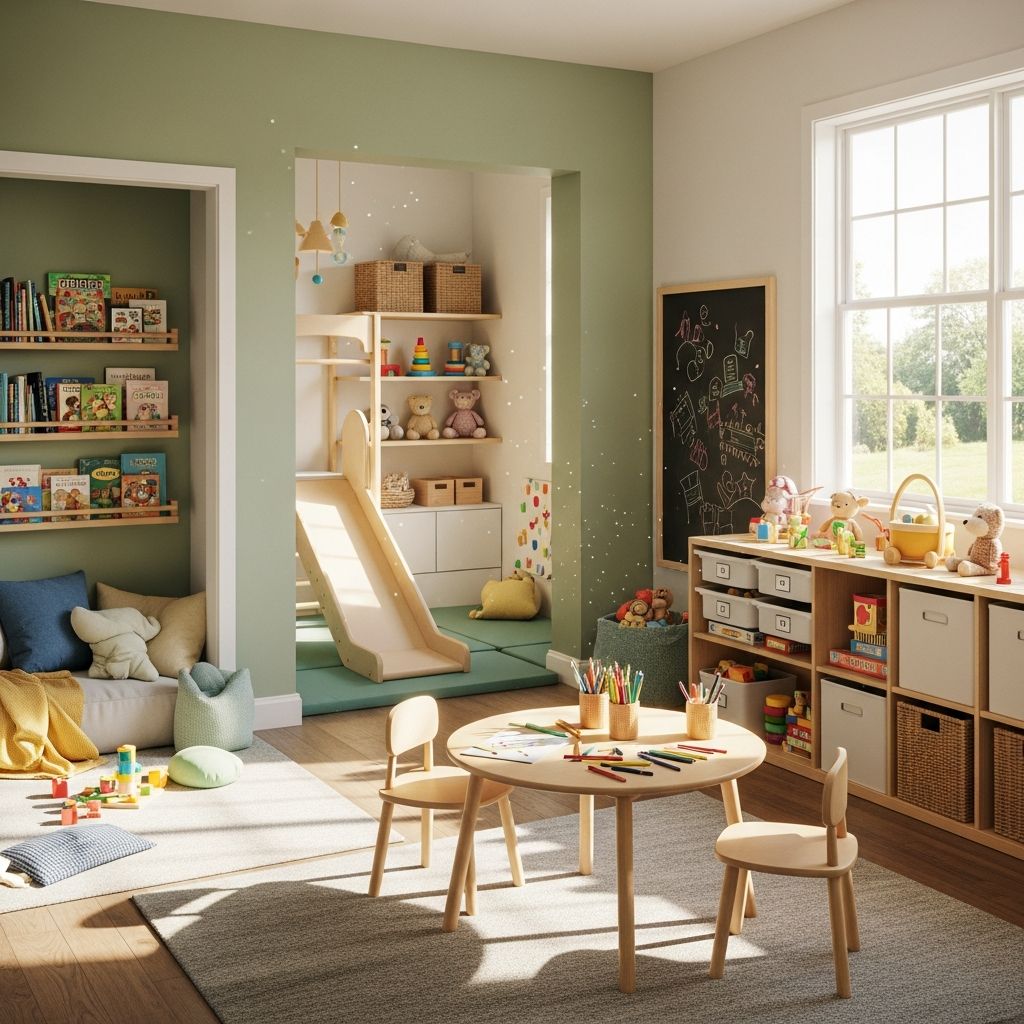
A well-designed playroom is more than a room full of toys. It is a space where your child can explore, imagine, practice independence, and develop skills in an environment that feels safe and joyful for the whole family.
Why a Thoughtful Playroom Matters
Children spend countless hours experimenting, pretending, building, and creating, and the space around them quietly shapes how they play. A thoughtful playroom design helps reduce clutter, supports focus, and makes it easier for kids to entertain themselves without constant adult direction.
Instead of chasing the latest toy trend, the goal is to create a flexible environment that can evolve with your child from toddlerhood through the elementary years and beyond.
- Encourages independent play by making toys visible and accessible.
- Reduces daily stress for adults through smart storage and clear zones.
- Supports motor, social, and cognitive development in subtle, everyday ways.
Step One: Clarify the Purpose of the Room
Before choosing paint colors or furniture, decide what you want the playroom to do for your family. Some homes need a high-energy space for movement, while others need a quieter zone for reading, art, or homework.
Taking ten minutes to list your priorities helps prevent random purchases and makes every design decision more intentional.
Questions to Ask Yourself
- Will this room be used daily, or mostly on weekends and holidays?
- Do you want it to double as a guest room, office, or TV space?
- Are your kids close in age, or does the room need to serve multiple stages at once?
- How much toy storage do you realistically need, including future birthdays and holidays?
- Do you prefer a calm, minimal look or a colorful, energetic vibe?
Designing Functional Zones
Breaking the room into activity zones gives the space structure while still allowing for flexible, open-ended play. You do not need a large room for this approach; even a corner of a living room can be divided into mini areas using rugs and furniture placement.
Think about what your children love to do now and what they may enjoy in the next few years, then build zones that can be adapted as their interests shift.
Common Playroom Zones
- Reading nook: Soft seating, a basket of books, and warm lighting.
- Building and construction: Low table or mat, bins for blocks, trains, and small-world play.
- Art and creativity: Child-height table, easy-clean surface, and accessible art supplies.
- Pretend play: Play kitchen, dolls, costumes, or a small market stall.
- Movement area: Open floor space, soft mats, and optional gross motor equipment.
- Quiet corner: A cozy spot for calming down or retreating from group play.
Sample Layout in Table Form
| Room Area | Main Purpose | Suggested Items |
|---|---|---|
| Near a window | Reading and quiet play | Bookshelf, floor cushions, small armchair, soft rug |
| Center of the room | Building and games | Low play table, bins for blocks, puzzles, and construction sets |
| Wall with easy-to-clean surface | Art and crafts | Kid-sized table, washable paint, paper roll, storage caddies |
| Corner with more privacy | Pretend play and dress-up | Costume rack, mirror, small play kitchen or shop, toy stroller |
| Closest to door or open area | Movement and active play | Soft mats, balance toys, tunnel, or mini trampoline (if safe) |
Choosing Furniture That Works Hard
Playroom furniture should be simple, durable, and scaled to your child. Oversized pieces quickly crowd a room, while a few well-chosen items create a sense of order and possibility.
Look for furniture that can handle rough use and adapt as your child grows, rather than themed items that will feel dated in a year or two.
Essential Furniture Pieces
- Low shelves: Open shelving allows children to see and reach toys, encouraging independence and easier clean-up.
- Child-height table and chairs: Perfect for art, building, snacks, and early homework.
- Comfortable seating: Beanbags, floor cushions, or a small sofa for reading and snuggling.
- Storage bench: Provides seating while hiding bulky items like trains, stuffed animals, or dress-up accessories.
- Rug or play mat: Defines the play area and softens hard floors for crawling or tumbling.
Safety and Durability Tips
- Fix tall shelves and large storage units to the wall to prevent tipping.
- Avoid furniture with sharp glass or fragile details in high-traffic areas.
- Choose washable covers and wipeable surfaces wherever possible.
Smart Toy Storage and Organization
A beautiful playroom quickly loses its charm if toys spill into every corner. The key is not to hide everything, but to display a manageable number of items while keeping the rest neatly stored and rotated over time.
Good storage systems are simple enough that even a toddler can understand where items belong and help with cleanup.
Types of Storage to Consider
- Open bins and baskets: Ideal for frequently used toys like blocks, cars, or stuffed animals.
- Labeled containers: Use pictures and words so pre-readers can recognize where items go.
- Clear boxes with lids: Great for puzzles, art supplies, and small sets that can be stored on higher shelves.
- Wall storage: Pegboards, hooks, and wall pockets free up floor space for play.
- Under-furniture storage: Rolling bins beneath a sofa or bench take advantage of hidden space.
Toy Rotation for Less Clutter
Instead of displaying every toy at once, keep a portion of toys stored away and swap them out every few weeks. This approach keeps the room calmer and makes old toys feel exciting again when they reappear.
Toy rotation also makes it easier for children to focus; fewer visible choices mean less overwhelm and more intentional play.
Designing for Different Ages
A dream playroom should be able to grow along with your child. The same room can serve a toddler and later a school-aged child if the core pieces are flexible and the details are easy to update.
Think about the space in layers: start with a neutral foundation, then change toys, textiles, and wall decor as your child matures.
Ideas by Age Group
For Toddlers
- Focus on low shelves, sturdy toys, and large motor activities like tunnels and push toys.
- Include simple shape sorters, stackers, chunky puzzles, and basic pretend play objects.
- Choose soft rugs and corner protectors for extra safety.
For Preschoolers
- Add play kitchen sets, dress-up clothes, more complex blocks, and early board games.
- Introduce a simple art station with crayons, washable markers, and sticker books.
- Offer a defined reading nook with picture books and storytime props.
For School-Age Children
- Incorporate a desk or work surface for building kits, homework, and creative writing.
- Upgrade toys to include strategy games, chapter books, and more detailed construction sets.
- Allow your child to participate in decor choices, such as posters, colors, or themes.
Color, Lighting, and Atmosphere
Color and light influence the overall feel of a playroom just as strongly as the toys inside it. A space can be energetic without being chaotic and soothing without feeling dull.
Start with a base that feels calm, then add playful touches that can be swapped easily, such as artwork, pillows, and wall decals.
Choosing a Color Palette
- Use softer neutrals on large surfaces like walls and big furniture pieces.
- Bring in brighter colors through rugs, cushions, and toy storage.
- Limit the number of dominant colors to two or three to avoid visual overload.
Lighting Essentials
- Combine overhead lighting with lamps or string lights to create cozy pockets of light.
- Use warm bulbs in reading and quiet zones to encourage relaxation.
- Ensure art tables and building areas have enough light to prevent eye strain.
Safety and Practical Considerations
Safety may not be the most exciting design topic, but it is the foundation of a truly carefree play space. A little planning prevents accidents and lets both kids and caregivers relax more fully.
Consider your child’s current abilities, but also plan for the next stage of mobility and curiosity, especially if younger siblings will eventually use the room.
Key Safety Checks
- Secure heavy furniture to the wall and avoid placing climbable items near windows.
- Cover electrical outlets and keep cords out of reach whenever possible.
- Choose non-slip rugs and avoid small items that pose choking hazards for toddlers.
- Store messy or sharp art supplies higher up, using child-proof latches if needed.
Adding Personality and Imagination
Once the basics are in place, the fun begins. Personal touches help your child feel that the room is truly theirs and invite them to step into the stories they create.
The goal is not perfection, but a space that feels loved, lived-in, and reflective of your unique family.
Easy Ways to Make It Special
- Hang your child’s artwork in simple frames or clipboards for an ever-changing gallery wall.
- Create a small “museum shelf” for displaying special Lego creations or craft projects.
- Add a play tent, canopy, or cardboard house as a hideaway for reading and pretend play.
- Use removable wall decals or posters related to your child’s current interests.
Simple Maintenance Habits That Keep the Room Tidy
Even the best-designed playroom needs daily habits to stay pleasant rather than overwhelming. Consistency matters more than strict rules or complicated systems.
Short, predictable cleanup routines teach kids that taking care of their space is part of play, not a punishment afterward.
Helpful Habits
- Set a five- or ten-minute cleanup timer before meals or bedtime.
- Model putting one activity away before starting the next, especially for younger children.
- Review toys every few months and donate or store those that are broken, outgrown, or rarely used.
- Keep a small donation box or bag in a closet so it is easy to let go of items.
Frequently Asked Questions
How small can a playroom be and still work?
There is no minimum size for a successful play space. A single wall of shelving and a rug in the family room can function as a “mini playroom” if zones are defined clearly and toys are edited regularly. The secret is not square footage, but thoughtful storage and a realistic number of items.
Do I need to follow a particular educational approach?
Some families draw inspiration from Montessori, Reggio Emilia, or other philosophies, but you do not need to commit to a single approach. Most playroom principles overlap: accessible materials, child-centered design, open-ended toys, and respect for your child’s pace and interests.
How many toys is too many?
There is no universal number, but if your child seems overwhelmed, moves quickly from toy to toy, or avoids playing in the room, it may be a sign that there is too much available at once. Try putting half the toys in storage for a few weeks and observe whether play becomes deeper and more focused.
What if my kids have very different ages or interests?
In a shared playroom, separate the space vertically as well as horizontally. Place delicate or small-piece toys on higher shelves for older children, while keeping sturdy, age-appropriate items at ground level for younger siblings. This respects everyone’s needs and lowers daily conflict.
How can I create a nice playroom on a tight budget?
Start with what you already own and rearrange before buying anything new. Repurpose bookshelves, baskets, and stools from other areas of the home. Secondhand furniture, DIY art displays, and homemade pretend play props can look charming and function beautifully without a large investment.
Bringing Your Dream Playroom to Life
Designing a dream playroom is not about perfection, expensive furniture, or matching sets. It is about creating an environment where your child feels free to explore, be messy, calm down, and grow into new stages of life with confidence.
Start small, focus on one zone at a time, and remember that this room will evolve alongside your family. With a few thoughtful choices and realistic routines, your playroom can become one of the most loved and functional spaces in your home.