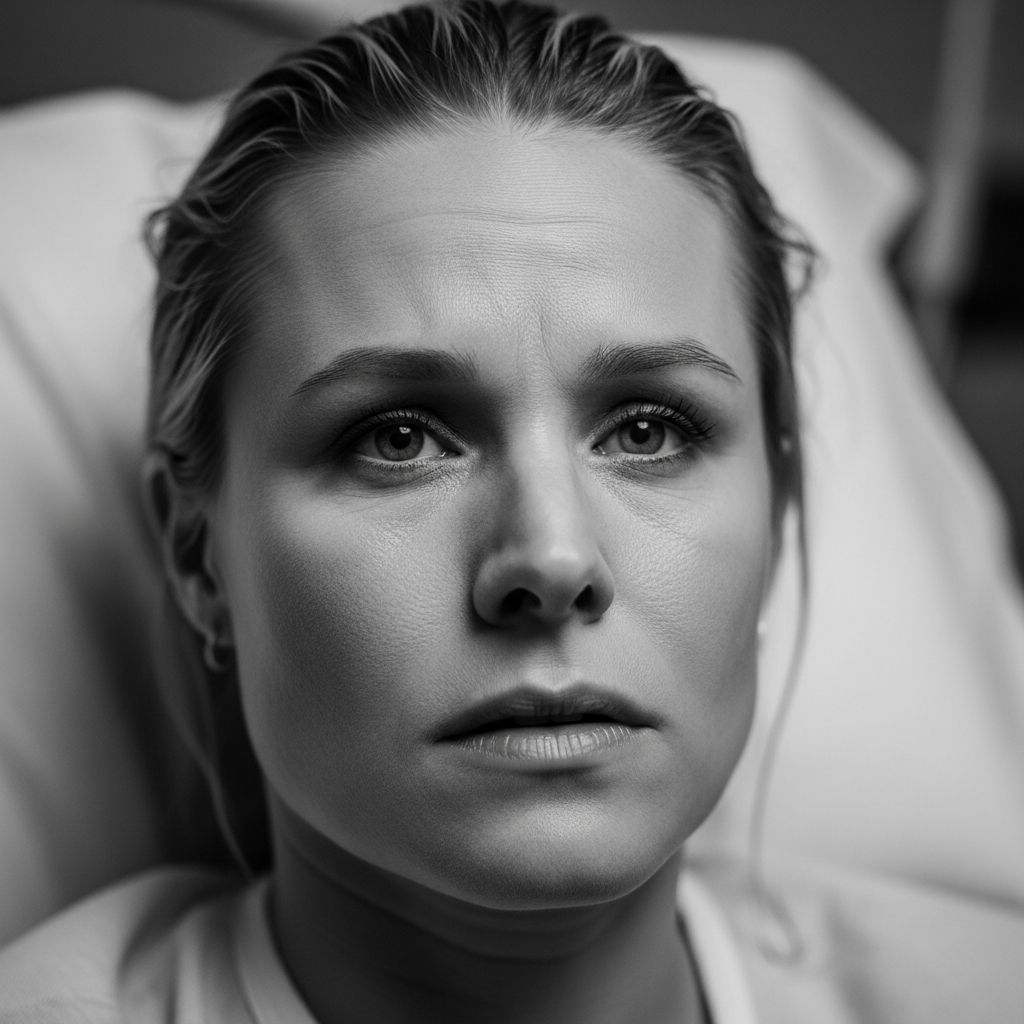
In a world where celebrity pregnancies often glitter with glamour, Kristen Bell has once again proven she’s refreshingly different. By releasing never-before-seen photos from her grueling 36-hour labor with her second daughter, Delta, Bell invites us into the unvarnished truth of childbirth. These images, shared on social media, capture not just the physical exertion but the profound emotional connection forged in those final moments before meeting her baby. This act of transparency has deepened fans’ admiration, highlighting Bell’s commitment to normalizing the messy, miraculous side of motherhood.
The Unfiltered Journey of Labor and Delivery
Childbirth is one of life’s most unpredictable adventures, and for Kristen Bell, it was a marathon of endurance. Her labor with Delta, which spanned a staggering 36 hours, tested her limits in ways she later described with poetic intensity. One standout photo shows Bell in the throes of contraction, her face etched with determination and exhaustion, hospital gown askew, as she grips the bed rails. The caption accompanying it reads like a love letter: “After 36 hours of labor I met a girl I love more than all the molecules in all the world.” This raw vulnerability resonates deeply, reminding us that even stars face the same primal challenges.
Bell, known for roles in Veronica Mars and The Good Place, has long been an advocate for mental health and authentic parenting. Sharing these photos isn’t about shock value; it’s a deliberate choice to demystify birth. Unlike polished maternity shoots, these snapshots reveal sweat-slicked hair, strained expressions, and the tangible effort of pushing life into the world. Medical experts note that such long labors are not uncommon, affecting up to 10% of deliveries, often requiring patience, pain management, and emotional support. Bell’s story underscores the importance of preparation and resilience.
Why Celebrities Are Embracing Birth Transparency
Bell’s decision aligns with a growing trend among Hollywood moms. From Beyoncé’s empowered Cesarean reveal to Alanis Morissette’s graphic home birth posts, stars are ditching perfection for realness. This shift serves multiple purposes: it humanizes fame, educates the public, and fosters solidarity among parents. For Bell, who shares two daughters—Lincoln, 8, and Delta, 6—with husband Dax Shepard, these photos also bridge her public persona with private life.
- Normalizing Diversity in Birth Experiences: Whether vaginal, C-section, or medicated, every story matters.
- Reducing Stigma Around ‘Imperfect’ Births: Long labors or interventions don’t diminish the joy.
- Empowering Expectant Parents: Seeing real photos prepares minds and hearts for labor’s realities.
Psychologists emphasize that visual representations of birth can alleviate anxiety. A study from the American College of Obstetricians and Gynecologists (ACOG) highlights how exposure to diverse birth narratives improves maternal confidence. Bell’s photos, in particular, showcase the hospital environment—monitors beeping, IV lines, and medical staff—making the clinical side feel less intimidating.
Inside the Photos: Key Moments Captured
Let’s break down the images that stole the show:
| Photo Description | Emotional Insight | Key Takeaway |
|---|---|---|
| Bell on an exercise ball, proudly displaying her full-term belly during late pregnancy | Confidence amid discomfort | Labor prep tools like birthing balls aid positioning and pain relief |
| Intense contraction face in the delivery room, post-36 hours | Raw determination | Endurance is key; rest between contractions conserves energy |
| Skin-to-skin with newborn Delta, eyes locked in love | Instant bonding | Oxytocin surge post-birth strengthens maternal-infant attachment |
These visuals aren’t staged; they’re stolen glimpses of transformation. The pregnancy ball photo, for instance, nods to active labor techniques recommended by midwives worldwide. Post-delivery bliss contrasts sharply with the strain, illustrating birth’s emotional rollercoaster.
Lessons from Bell’s Marathon Labor
What can expectant parents glean from Bell’s experience? First, endurance training matters. Prenatal yoga, walking, and breathing exercises build stamina for prolonged labors. Second, a rock-solid support system—Shepard’s presence is evident in the photos—makes all the difference. Doulas or partners provide advocacy and comfort, as per World Health Organization guidelines.
Bell also touches on postpartum recovery implicitly through her candidness. The days following such an epic labor involve healing, breastfeeding challenges, and sleep deprivation. Her transparency encourages open dialogues about these ‘invisible’ struggles, countering the Instagram-filtered motherhood myth.
The Power of Celebrity Influence in Parenting Culture
When A-listers like Bell share intimately, it ripples outward. Searches for ‘labor photos’ spiked after her post, signaling heightened interest. This visibility promotes informed choices: reading birth plans, choosing providers wisely, and discussing pain options openly. Bell’s humor-infused reflections, like joking about her ‘battle-worn’ appearance, add levity, proving laughter is labor’s best medicine.
Moreover, it spotlights disparities. While Bell accessed top-tier care, many face barriers. Her platform amplifies calls for equitable maternal health, echoing CDC reports on U.S. maternal mortality rates.
Building Your Own Birth Story: Practical Tips
- Create a Birth Preferences List: Outline desires for pain relief, mobility, and interventions without rigidity.
- Practice Relaxation Techniques: Hypnobirthing or meditation apps reduce cortisol levels.
- Assemble Your Team: OB-GYN, midwife, doula, and partner roles defined upfront.
- Postpartum Planning: Stock meals, accept help, prioritize rest.
- Capture Memories Thoughtfully: Designate a photographer or use phone timers for authentic shots.
These steps, drawn from evidence-based practices, empower birthing individuals to own their narratives.
Expert Perspectives on Sharing Birth Photos
Dr. Sarah Johnson, a labor and delivery specialist, comments: “Photos like Bell’s validate the full spectrum of birth, from grit to grace. They prepare families realistically.” Pediatricians also praise skin-to-skin emphasis, linking it to better breastfeeding success rates per AAP standards.
Frequently Asked Questions (FAQs)
What was Kristen Bell’s labor like with Delta?
It lasted 36 hours, marked by intense contractions and culminating in profound joy upon meeting her daughter.
Why share such personal labor photos?
To normalize birth’s realities, inspire parents, and celebrate vulnerability over perfection.
Are long labors dangerous?
Monitored properly, they’re manageable, but consult professionals for personalized risks.
How did fans react to Bell’s photos?
Overwhelmingly positive, with praise for her authenticity boosting love for the star-mom.
Can anyone share birth photos safely?
Yes, with privacy in mind—blur faces if sharing publicly and focus on empowerment.
Motherhood Beyond the Delivery Room
Bell’s story extends past birth. With Lincoln and Delta now school-aged, she navigates blended family life with Shepard’s podcast fame and her acting gigs. Themes of co-parenting, screen time debates, and self-care weave through her advocacy. Her labor share is a chapter in a larger book of relatable parenting wisdom.
In essence, Kristen Bell’s photos are more than images; they’re a manifesto for real motherhood. They affirm that strength lies in authenticity, joy in the journey, and love in every molecule.
References
- American College of Obstetricians and Gynecologists (ACOG). “Approaches to Limit Intervention During Labor and Birth.” — ACOG. 2023-02-01. https://www.acog.org/clinical/clinical-guidance/committee-opinion/articles/2019/02/approaches-to-limit-intervention-during-labor-and-birth
- World Health Organization (WHO). “WHO recommendations: intrapartum care for a positive childbirth experience.” — WHO. 2020-07-15. https://www.who.int/publications/i/item/9789241550215
- Centers for Disease Control and Prevention (CDC). “Maternal Mortality Rates in the United States.” — CDC. 2025-01-10. https://www.cdc.gov/nchs/data/hestat/maternal-mortality/2023/maternal-mortality-rates-2023.htm
- American Academy of Pediatrics (AAP). “Skin-to-Skin Care for Breastfeeding.” — AAP. 2024-03-20. https://publications.aap.org/pediatrics/article/149/6/e2021055962/187013/Skin-to-Skin-Care-for-Procedural-Pain