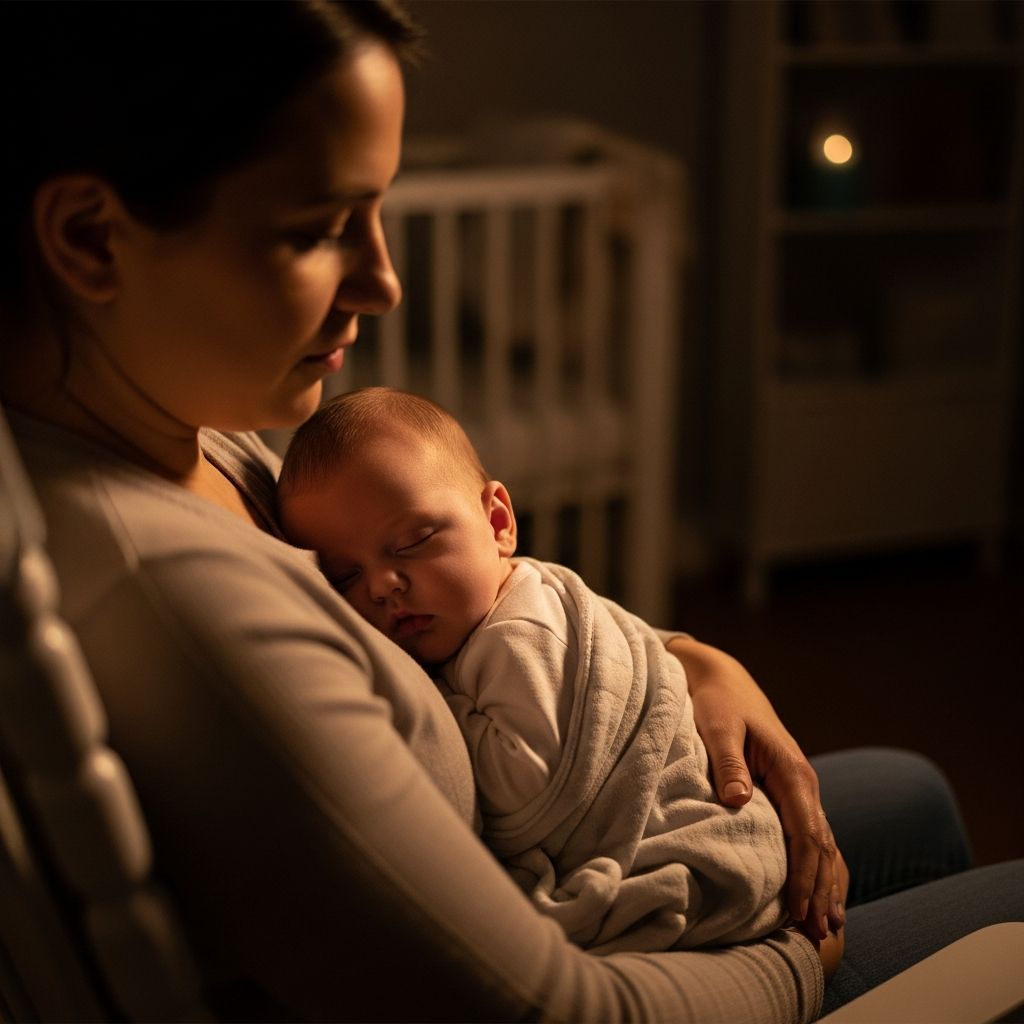
Rocking a baby to sleep can feel instinctive, but doing it safely, calmly, and without exhausting yourself is a skill any parent or caregiver can learn. This guide focuses on safe body positions, gentle motion, and realistic expectations, with a special eye toward new fathers or caregivers who may feel unsure at first.
Why Rocking Helps Babies Fall Asleep
Before birth, babies experience near-constant motion as their parent walks, turns, and moves. Rocking after birth gently recreates that rhythmic motion, which can help babies settle their nervous system and ease into sleep.
- Rhythmic motion can support the brain’s natural sleep rhythms and help promote deeper sleep stages.
- Close contact helps regulate a baby’s temperature, heart rate, and stress hormones, especially in the early months.
- Gentle vestibular stimulation (movement sensed by the inner ear) may support calming and relaxation when it is slow and predictable.
Rocking is not the only way to soothe, but when done safely it is a powerful, comforting tool for many families.
Core Safety Rules Every Rocking Parent Should Know
Safe rocking starts with respecting how fragile a young baby’s body is, especially their head, neck, and airway. Several evidence-based safe-sleep recommendations can be adapted directly to rocking.
- Always support the head and neck. Newborns and young infants cannot hold their heads up. Keep one arm or hand under the neck and upper back when lifting, lowering, or changing positions.
- Never shake a baby. Quick, forceful, or jerking movements can cause serious brain injury (abusive head trauma).
- Avoid face-down or chin-to-chest positions during sleep. When rocking to sleep, make sure the nose and mouth are unobstructed and the chin is not pressed tightly toward the chest, which can narrow the airway.
- Transfer to a safe sleep surface. Once a baby is asleep, place them on their back on a firm, flat surface with no loose bedding or soft objects, as recommended by pediatric safe sleep guidelines.
- Stay awake while holding a sleeping baby. If you are at risk of dozing off, put the baby down in a safe sleep space before you sit or lie in a soft surface like a couch or bed.
| Safe Rocking Practice | Risky Rocking Practice |
|---|---|
| Slow, steady, predictable motion | Fast jiggling, bouncing, or jerking |
| Baby’s face visible, nose and mouth free | Baby’s face pressed into chest, blanket, or arm |
| Parent alert, seated or stable | Parent half-asleep in a chair or on a couch |
| Transfer to crib or bassinet for sleep | Leaving baby to sleep unattended in swing or car seat at home |
Preparing the Environment for Easier Rocking
A calm space can make rocking more effective and help your baby associate certain cues with sleep.
- Dim the lights. Lower light levels can help the body prepare for sleep, especially in the evening.
- Reduce sudden noise. Use soft background sound like white noise or a quiet fan to mask household noise.
- Lower stimulation. Put away bright toys, screens, and loud chatter during wind-down time.
- Keep the temperature comfortable. Aim for a range most babies sleep well in, roughly 68–72°F (20–22°C), while following local guidance on safe room temperatures for sleep.
Finding a Comfortable Position for You and Your Baby
How you hold a baby while rocking matters both for their safety and your long-term comfort. Poor posture or awkward holds can cause sore shoulders, back strain, or wrist pain, especially during long nights.
Key Principles for Safe, Comfortable Holds
- Keep the baby close to your center of gravity. Hold them snugly against your chest or torso rather than out at arm’s length.
- Relax your shoulders. Let your shoulder blades drop down rather than hunching around the baby.
- Use your larger muscles. Let your knees and hips create the motion instead of only your arms.
- Support your arms. Use pillows, an armrest, or the back of a chair when possible.
Three Popular Rocking Holds
You can adapt these holds to what your baby prefers and what feels most natural to you.
- Cradle Hold (Semi-Upright)
Place the baby across your body as if in a cradle, with their head in the crook of your elbow and their body along your forearm. Support the upper back and neck with your forearm and hand.
- Good for: younger infants, sleepy babies, and feeding-to-rocking transitions.
- Watch for: chin pressed too tightly into the chest; adjust so the airway is open.
- Upright Over-the-Shoulder Hold
Hold the baby upright against your chest with their head on your shoulder, one hand supporting the upper back and neck, and the other under the bottom.
- Good for: babies with reflux, gassy babies, and those who dislike lying flat.
- Watch for: baby sliding too low; keep them high enough so their head is well supported.
- Football or Side-Carry Hold
Support the baby’s chest and tummy along your forearm, facing down or to the side, with your hand between their legs or holding the hip, and their head supported along your arm.
- Good for: fussy periods, some colicky babies, or when you want more control of motion.
- Watch for: keeping the head lifted enough that breathing is easy and unobstructed.
Mastering the Motion: How to Rock Safely and Calmly
Effective rocking is gentle, predictable, and responsive to your baby’s cues. Fast or erratic movements may startle them rather than calm them.
Step-by-Step: A Simple Rocking Pattern
- Get secure first. Choose a hold, check that the head and neck are supported, and that you feel stable—seated or standing with feet hip-width apart.
- Start with tiny movements. Begin with a small, slow sway from side to side or a gentle forward-back motion from your hips or knees.
- Match your breathing. Breathe in for a few seconds and out for a few seconds; let the motion follow your exhale. Your calm breathing can help steady your baby.
- Watch your baby’s face and body. Calming signs include relaxed shoulders, softer crying, slower breathing, and less rigid limbs. If they stiffen or fuss more, adjust the rhythm or hold.
- Keep a steady rhythm. Many parents find a slow beat similar to a calm song’s tempo (around 60–70 beats per minute) feels natural and soothing.
Signs the Rocking Is Working
- Crying reduces in volume or frequency.
- Arms and legs loosen; fists slowly open.
- Breathing becomes deeper and more regular.
- Eyes become heavy, then close, sometimes fluttering briefly before deeper sleep.
Combining Rocking with Other Soothing Strategies
Researchers and pediatric experts often recommend multi-sensory soothing—using more than one calming cue at a time. Rocking works particularly well when paired with other gentle strategies.
- Swaddling (for younger babies who are not rolling)
Snug, hip-healthy swaddling can reduce startle reflexes and help babies feel contained. - Soothing sounds
Soft shushing, humming, or quiet lullabies add an auditory cue for calming and sleep. - Non-nutritive sucking
A clean finger or pacifier (if you choose to use one) can be soothing for many babies and is often combined with rocking. - Skin-to-skin contact
For newborns, holding them skin-to-skin on a parent’s bare chest can stabilize temperature and heart rate and support bonding.
Rocking Without Wearing Yourself Out
Rocking should be sustainable. When it turns into an hour-long workout every night, both your body and patience can suffer.
Protecting Your Body
- Use a supportive chair. A stable chair with armrests can allow you to rock with smaller, less tiring motions.
- Alternate sides. Switch which arm or side you use to hold the baby to avoid overloading one shoulder or wrist.
- Bend your knees, not your back. If you rock standing up, let your knees and ankles create the motion instead of rounding the spine.
- Set a mental time limit. Decide in advance how long you will rock before trying a different soothing strategy.
When Rocking Becomes the Only Sleep Association
Over time, some babies learn to rely on movement to fall asleep and may struggle to connect sleep cycles without it. This does not mean you have done something wrong, but you may reach a point where you want to reduce how often or how long you rock.
Gently Reducing Rocking Over Time
Many families keep some rocking as part of their bedtime routine but gradually reduce how much motion the baby needs to fall asleep. A stepwise approach can help.
- Shorten the rocking window.
Rock until your baby is drowsy but not fully asleep, then hold them still in your arms for a few minutes before placing them in their crib or bassinet. - Shift from big motions to small ones.
Move from walking and bouncing to slower rocking in a chair, then to gentle patting or rubbing while you hold them. - Introduce new, calm cues.
Keep the rocking minimal but repeat the same song, phrase, or white noise each night so your baby learns these as new sleep signals. - Transfer earlier in the process.
Once your baby can settle with very little motion in your arms, begin placing them in their sleep space while still drowsy and staying close to pat, shush, or offer reassurance.
This gradual approach helps babies practice falling asleep with less motion while still feeling safe and supported.
Common Rocking Challenges and Practical Fixes
1. The Baby Cries Harder When You Start Rocking
- Pause and check basics: Are they hungry, wet, too hot, or uncomfortable?
- Try a different hold—some babies dislike lying flat and prefer being more upright, especially if they have reflux.
- Slow down the motion; overstimulating movement can escalate crying instead of soothing.
2. The Baby Wakes Up as Soon as You Stop Moving
- Start reducing motion in stages rather than stopping suddenly—gradually make the movement smaller and slower.
- Add a steady alternative cue (patting, gentle shushing) that continues when the rocking stops.
- Give them a few moments; some babies briefly fuss when motion stops but settle again if you stay calm and consistent.
3. You Are Too Tired or Sore to Keep Rocking
- Choose seated rocking over walking whenever possible.
- Share soothing duties with another caregiver so your body can rest.
- If you feel extremely fatigued or dizzy, prioritize placing the baby safely on their back in a crib or bassinet and take a short break.
Sample Calming Bedtime Flow Using Rocking
Use this example as a template and adjust to match your baby’s age and your family’s style.
- Quiet play and feeding in a softly lit room.
- Diaper change and pajamas, with brief, gentle conversation.
- Optional swaddle or sleep sack (depending on age and mobility).
- Rocking in a comfortable hold while singing the same short lullaby each night.
- As your baby grows, gradually shorten the rocking and transfer them drowsy-but-awake to their safe sleep space.
Frequently Asked Questions (FAQs)
Q: Is it bad to rock my baby to sleep every night?
A: Rocking is not inherently harmful and can be a nurturing way to help your baby fall asleep, especially in the early months. The main concerns are safety (avoiding risky positions or surfaces) and whether you feel the routine is sustainable. If you are comfortable with the routine and your baby is sleeping safely on their back on a firm surface, rocking can remain part of bedtime. If it becomes exhausting or your baby wakes very often needing motion, you can gradually reduce rocking over time.
Q: When should I stop rocking my baby to sleep?
A: There is no strict age limit, but many parents start scaling back once frequent night wakings or heavy dependence on motion becomes challenging, often sometime after 4–6 months when sleep patterns change. The right time is when you are ready to shift toward other soothing methods and your baby can tolerate a bit more awake time in their crib with your support.
Q: Is it safe for my baby to sleep all night in a swing or bouncer if rocking helps?
A: For unsupervised sleep, safety organizations recommend that infants sleep on their backs on a firm, flat surface without swings, bouncers, or inclined sleepers, because these devices can allow the head to tip forward or the airway to become blocked. Rocking in a swing or bouncer should be supervised and followed by a transfer to a crib or bassinet once the baby is asleep.
Q: My baby only calms with fast bouncing. Is that okay?
A: It is important to avoid any rough, rapid, or jerking motion that could risk shaking or jarring the baby’s head and neck. If your baby seems to want more intense movement, keep the motion controlled and supported—smaller, quicker pats or gentle rhythmic sway—rather than large, fast bounces. If you are unsure whether your method is safe, ask your pediatrician to observe and advise.
Q: Can rocking interfere with long-term sleep training?
A: Rocking can become a strong sleep association, but it does not prevent later sleep training if you decide to use a structured method. When you are ready, you can gradually adjust your routine so that rocking becomes a brief, calming pre-sleep cue rather than the main way your baby falls asleep.
References
- Sleep-Related Infant Deaths: Updated 2022 Recommendations for Reducing Infant Deaths in the Sleep Environment — American Academy of Pediatrics. 2022-06-21. https://publications.aap.org/pediatrics/article/150/1/e2022057990/188547/Sleep-Related-Infant-Deaths-Updated-2022
- Infant and Young Child Feeding — World Health Organization. 2023-09-19. https://www.who.int/news-room/fact-sheets/detail/infant-and-young-child-feeding
- Rocking synchronizes brain oscillations during sleep — Perrault et al., Current Biology. 2019-02-04. https://www.cell.com/current-biology/fulltext/S0960-9822(18)31640-3
- Using the 5 S’s to Soothe a Crying Baby — Harvey Karp, Happiest Baby. 2022-01-10. https://www.happiestbaby.com/blogs/baby/the-5-s-s-for-soothing-babies
- How to Stop Rocking to Sleep: 5 Top Tips — Gemma Coe, Child Sleep Specialist. 2023-05-15. https://childsleepspecialist.co.uk/blog/stop-rocking-to-sleep/
- Gently Wean Your Baby Off Being Rocked to Sleep — The Sleep Store NZ. 2022-08-04. https://www.thesleepstore.co.nz/sleep-advice/gently-wean-your-baby-off-being-rocked-to-sleep/
- The Most Common Baby Sleep Training Methods — Huckleberry. 2023-04-11. https://huckleberrycare.com/blog/what-are-the-most-common-sleep-training-methods