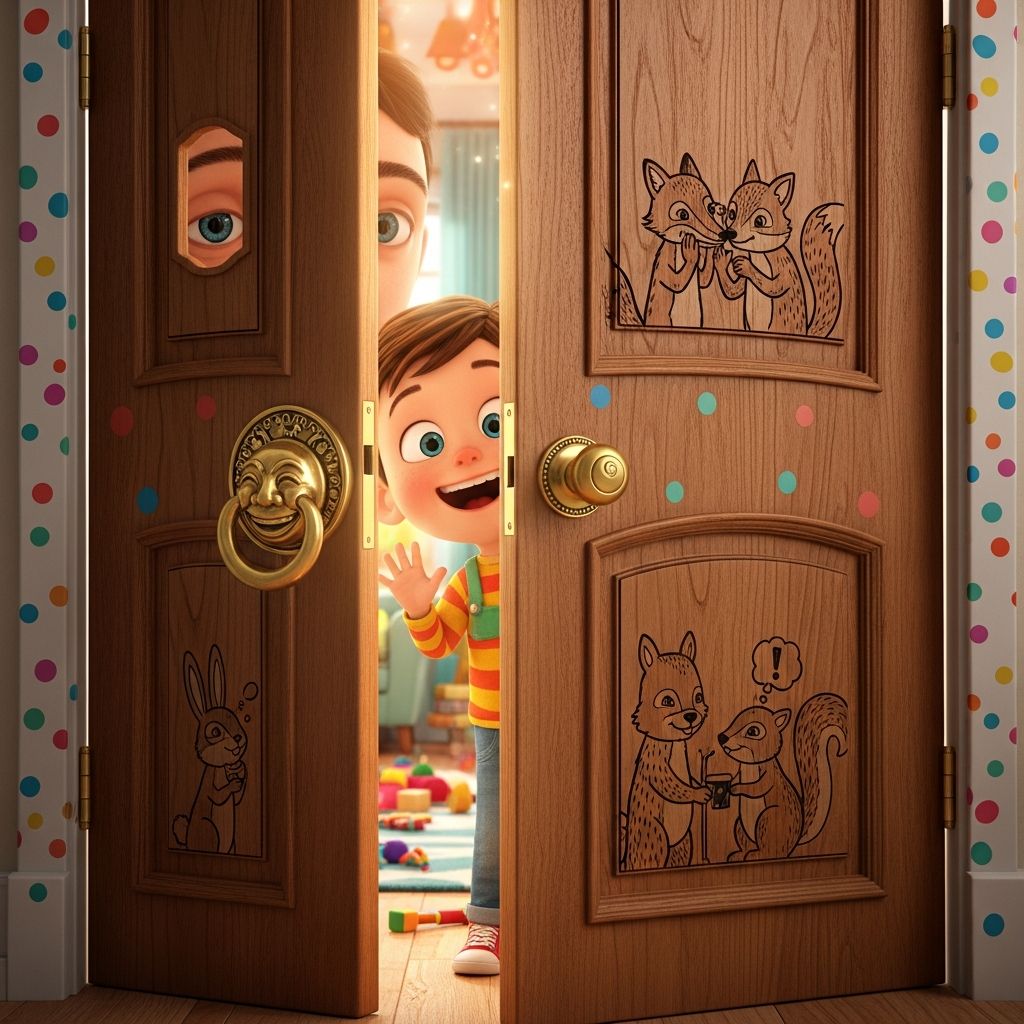
Few things light up a child’s face like a silly knock-knock joke. They are short, easy to remember, endlessly repeatable, and just the right mix of nonsense and wordplay for young minds. This guide turns the classic joke format into a tool for connection, learning, and family fun—without simply recycling the same old lines.
What Makes a Knock-Knock Joke So Fun for Kids?
A knock-knock joke is a call-and-response routine built around a simple pattern: someone pretends to knock on a door, the listener asks who is there, and a pun or wordplay punchline follows. Children quickly memorize this rhythm, which lets them feel in control of the joke even if the wordplay is simple.
- Predictable structure: Kids know exactly what comes next, making them confident performers.
- Playful language: The punchline often twists a familiar word or name, helping kids notice sounds and meanings.
- Shared ritual: The back-and-forth feels like a mini game that requires a partner, usually a parent or friend.
Researchers note that playful, low-stakes language games like puns help children experiment with vocabulary, phonetics, and timing in a way that feels like pure fun, not homework.
A Surprisingly Long History of a Very Short Joke
Although kids today think knock-knock jokes were invented just for them, the routine has a surprisingly deep history in English-speaking culture.
| Era | Development | Why It Matters |
|---|---|---|
| 1600s | In Shakespeare’s play Macbeth, a drunken porter riffs on repeated knocking with lines like “Knock, knock! Who’s there?” used for comic relief. | Shows that the rhythm of the knock-knock routine existed in theatre centuries ago. |
| Early 1900s | American “Do you know…?” jokes used a similar question–answer pattern with punny name payoffs, such as “Arthur who?” “Arthurography” style jokes. | The pattern of set-up, name, and pun was already popular long before the modern wording. |
| 1930s | The full modern “Knock, knock. Who’s there?” routine became a fad in the United States, spread by radio, newspapers, and even dedicated “knock-knock clubs.” | Adults traded these jokes at parties; only later did they become thought of mainly as kids’ humor. |
| 1950s–1960s | Knock-knock jokes spread to the UK, Canada, Australia, South Africa, and beyond, often with language-specific twists like “Toc-toc” in French and “Klop-klop” in Afrikaans. | The format adapted to different languages and cultures while keeping the same basic rhythm. |
| Today | Knock-knock jokes are a standard part of children’s folklore, passed around playgrounds, classrooms, and family dinners. | They’ve become a shared cultural script that even very young kids can join. |
Why Parents Should Embrace the Silly Stuff
Parents often groan at a corny punchline, but kids gain more than giggles from these modest little jokes.
- Language practice: Puns ask children to notice how the same sound can have more than one meaning, a skill linked to reading and vocabulary growth.
- Social confidence: Performing a joke in front of adults gives kids a structured way to speak up and be heard.
- Emotional connection: Shared laughter strengthens bonds between children and caregivers, supporting emotional resilience and secure attachment.
- Low-pressure creativity: Because the rules are simple, kids feel brave enough to invent their own versions—even if they make no sense at all.
The Basic Formula (And How to Teach It)
Every knock-knock joke follows the same skeleton. Helping your child learn this simple pattern turns them from audience member into comedian.
- Call: The teller says, “Knock, knock.”
- Response: The listener answers, “Who’s there?”
- Set-up name: The teller gives a short word or name.
- Response: The listener repeats it and adds “who?”
- Punchline: The teller reveals a pun that changes the meaning of the name.
Walk through it slowly with your child once or twice, then let them lead the back-and-forth. If they forget a line, gently prompt them instead of taking over—that sense of control is what makes the format empowering.
Types of Knock-Knock Jokes Kids Enjoy Most
Once your child understands the pattern, you can explore different types of jokes to keep things fresh.
1. Name-Based Wordplay
These use a name that sounds like a common phrase. They are easy to remember and feel like little riddles.
- Great for kids who love learning names and playing pretend.
- Helpful for practicing clear pronunciation.
2. Food-Themed Puns
Food is familiar territory for kids, which makes these jokes accessible and instantly funny.
- Works well at the dinner table or in lunchbox notes.
- Lets picky eaters talk about food in a playful, low-pressure way.
3. Animal Adventures
Animal knock-knock jokes turn favorite creatures into characters with personalities, sounds, and silly situations.
- Encourages kids to add sound effects and gestures.
- Pairs nicely with storytime books about animals.
4. Just-Plain-Goofy Surprises
Some jokes barely qualify as puns—they’re just absurd. Young kids, especially preschoolers, adore this type.
- Helps children explore nonsense and imagination safely.
- Teaches that not every joke needs to be “perfect” to be fun.
Fresh, Kid-Friendly Knock-Knock Jokes
Here are sets of original, clean jokes organized by theme. Encourage your child to pick favorites and then invent their own spin-offs.
Giggle-Worthy Name Jokes
- Knock, knock.
Who’s there?
Ada.
Ada who?
Ada whole plate of cookies, and now they’re gone! - Knock, knock.
Who’s there?
Isabelle.
Isabelle who?
Isabelle working, or do I still have to knock? - Knock, knock.
Who’s there?
Howie.
Howie who?
Howie you going to open the door if you keep asking questions? - Knock, knock.
Who’s there?
Doris.
Doris who?
Doris locked, that’s why I’m knocking!
Snack-Time Silliness
- Knock, knock.
Who’s there?
Lettuce.
Lettuce who?
Lettuce in, it’s way too cold out here in the fridge! - Knock, knock.
Who’s there?
Banana.
Banana who?
Banana split, so I brought the ice cream party to you! - Knock, knock.
Who’s there?
Berry.
Berry who?
Berry glad you opened the door, I brought smoothies. - Knock, knock.
Who’s there?
Biscuit.
Biscuit who?
Biscuit gets cold, I’ll have to eat it all myself!
Animal Antics
- Knock, knock.
Who’s there?
Cow says.
Cow says who?
No, silly, cow says “moooo!” - Knock, knock.
Who’s there?
Owl.
Owl who?
Owl be your friend if you give me a hoot back! - Knock, knock.
Who’s there?
Roo.
Roo who?
Roo-m for one more kangaroo on your bed? - Knock, knock.
Who’s there?
Panda.
Panda who?
Panda-monium! Your room is a zoo!
Bedtime and School-Day Chuckles
- Knock, knock.
Who’s there?
Alarm.
Alarm who?
Alarm really sleepy, can I skip the morning? - Knock, knock.
Who’s there?
Homework.
Homework who?
Homework out better if you help me with math. - Knock, knock.
Who’s there?
Pillow.
Pillow who?
Pillow talk later, I’m falling asleep. - Knock, knock.
Who’s there?
Recess.
Recess who?
Recess you later, I’m running to the playground!
Helping Kids Invent Their Own Knock-Knock Jokes
Children often start by repeating jokes exactly, then gradually experiment. You can gently guide that creativity so it feels playful, not pressured.
Try this simple three-step game:
- Step 1 – Pick a word: Ask your child to name any favorite thing: a toy, food, animal, or friend.
- Step 2 – Say it out loud: Repeat the word slowly together and listen for parts that sound like other words or phrases.
- Step 3 – Build the joke: Plug the word into the knock-knock pattern and see what silly punchline you can discover.
Keep the focus on trying, not on making a “perfect” pun. Laughter at the attempt—especially when the joke makes no sense—is part of the learning process.
Keeping Knock-Knock Jokes Kind and Inclusive
Because kids love to repeat what they hear, it is important to model jokes that are kind and age-appropriate. Folklorists who study children’s jokes note that some traditional material can be mean-spirited or exclusionary, especially when it targets names, accents, or abilities. You can gently steer your child toward humor that makes everyone feel welcome.
- Avoid punchlines that rely on mocking how someone talks or looks.
- Skip jokes built on stereotypes about gender, race, or nationality.
- Encourage kids to imagine silly situations rather than silly people.
- Offer alternatives if they repeat a hurtful joke: “Let’s try a version that makes fun of the situation instead.”
Turning Knock-Knock Jokes into Family Traditions
Because they are so simple, knock-knock jokes slide easily into everyday routines and can become little rituals your child looks forward to.
- Morning starter: Share one new joke at breakfast to kick off the day with a smile.
- Car-ride game: Take turns telling knock-knock jokes instead of handing over a screen.
- Bedtime wind-down: Let your child tell the last joke of the night before lights out.
- Celebration tradition: Make a “birthday knock-knock” each year that includes your child’s age, favorite toy, or new interest.
Frequently Asked Questions (FAQs)
Are knock-knock jokes good for my child’s development?
Yes. Knock-knock jokes support language development, social skills, and emotional bonding. They involve wordplay, turn-taking, and shared laughter, all of which have been linked to positive communication and literacy outcomes in early childhood.
What age is best to start telling knock-knock jokes?
Many children begin to appreciate the pattern around ages 4–5, when their understanding of language and humor becomes more flexible. Younger toddlers may enjoy the rhythm but might not “get” the punchline yet.
My child’s jokes don’t make sense. Should I correct them?
It is usually better to join the silliness than to correct it. You can model clearer puns occasionally, but let your child see that trying, failing, and laughing together is part of the fun.
Why do adults often groan at knock-knock jokes?
Because the jokes are so predictable and corny, adults know the punchline style before it arrives. What feels obvious to grown-ups is new and delightful to kids, who are still discovering how wordplay works.
Can knock-knock jokes work in other languages?
Yes. Countries around the world have adopted the structure with their own sound-words for knocking, such as “Toc-toc” in French and similar patterns in Dutch, Afrikaans, Korean, and Japanese, all using local puns and song titles.
References
- Knock-knock joke — Wikipedia summary citing multiple historical sources; used here only for background, with primary claims cross-checked in sources below. Last updated 2024-05-17. https://en.wikipedia.org/wiki/Knock-knock_joke
- 8 Moments in Knock Knock Joke History — Mental Floss. 2014-03-17. https://www.mentalfloss.com/article/55962/8-moments-knock-knock-joke-history
- Knock Knock! Who’s There? Metafolklore, Jokes, and Shakespeare — American Folklife Center, Library of Congress. 2024-04-01. https://blogs.loc.gov/folklife/2024/04/knock-knock-whos-there-metafolklore-jokes-and-shakespeare/
- Shakespeare & The Development Of The Knock Knock Joke — NoSweatShakespeare. 2021-08-10. https://nosweatshakespeare.com/blog/shakespeare-knock-knock/
- Children’s Folklore: A Source Book — Brian Sutton-Smith, Jay Mechling, Thomas W. Johnson, Felicia R. McMahon (eds.). Utah State University Press. 1995. https://digitalcommons.usu.edu/usupress_pubs/31/