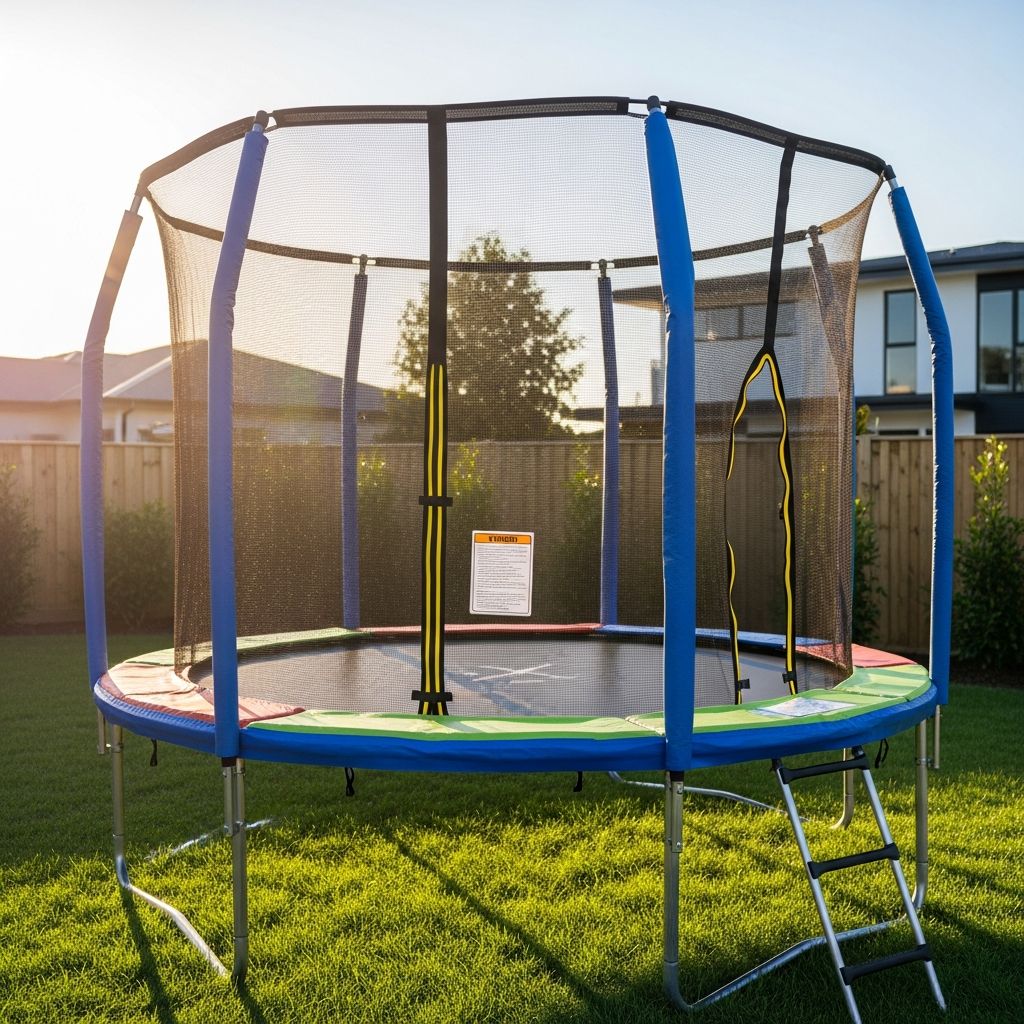
Trampolines can turn an ordinary backyard or playroom into a place of daily adventure. For many families, they offer an easy way to get kids moving, laughing, and burning off energy. At the same time, pediatric organizations warn that trampolines are linked to a significant number of childhood injuries each year, especially when safety basics are ignored. Balancing fun with safety starts long before the first bounce—when you decide what to buy, where to place it, and how your family will use it.
This guide walks you through every key decision, from choosing the right kids’ trampoline to creating rules that keep children safer while they jump.
1. Why Trampolines Appeal to Kids (and Parents)
Children are naturally drawn to movement that feels slightly daring—bouncing, climbing, hanging upside down. A trampoline allows them to explore that urge in a contained space. Beyond the excitement, regular trampoline play can provide legitimate physical and developmental benefits when done appropriately.
- Built-in motivation to move: Many kids will happily jump for long stretches without being coaxed into “exercise.”
- Whole-body activity: Jumping recruits the legs, core, and stabilizing muscles as kids balance, land, and adjust.
- Balance and coordination: Research shows trampoline training can improve balance, coordination, and motor control in school-aged children.
- Sensory input: The up-and-down motion stimulates the vestibular and proprioceptive systems, supporting body awareness and spatial orientation.
These advantages do not erase the risks, but they explain why many families look for a safer way to introduce trampolines into their children’s lives.
2. Understanding the Risks: What Doctors Want You to Know
The American Academy of Pediatrics (AAP) has consistently advised against recreational trampoline use at home and on playgrounds because of the injury burden. Trampoline-related injuries often involve the limbs, spine, or head and can occur even with safety nets in place.
Common risk factors include:
- Multiple kids jumping together: Most injuries occur when more than one person is on the trampoline at the same time.
- High, uncontrolled bouncing: Flips, somersaults, and attempts at advanced tricks increase the chance of neck and spinal injuries.
- Falls off the trampoline: Even with enclosures, children can fall from the edge or collide with the frame and springs.
- Very young users: Children under about 6 years have poor coordination and lighter body weight, making them particularly vulnerable to fractures and other injuries.
Knowing this, your goal is to minimize the most dangerous scenarios through thoughtful equipment choices and firm household rules.
3. Types of Kids’ Trampolines
Not all trampolines are alike. The right design depends on your child’s age, your available space, and how you expect it to be used.
| Type | Typical Size | Best For | Key Safety Notes |
|---|---|---|---|
| Mini / Toddler Trampoline (with handle) | About 36–48 inches diameter | Supervised indoor play for older toddlers and preschoolers | Look for a sturdy handlebar, low height, and non-slip feet; one jumper at a time. |
| Indoor Kids’ Fitness Rebounder | 36–50 inches diameter | School-age children and adults, light cardio | Set away from furniture; use on firm, level flooring. |
| Backyard Round Trampoline | Typically 8–15 feet diameter | General family play | Choose a safety net enclosure, padding over springs, and follow strict rules. |
| Rectangular Trampoline | Variable, often longer | Advanced users, gymnastics-style use | Produces higher bounce; should be reserved for older, trained kids with extra supervision. |
4. Age and Development Guidelines
Age recommendations on trampoline boxes are not arbitrary; they reflect how coordination, strength, and bone maturity change over time.
- Under 2 years: Independent jumping is not recommended. If parents use small rebounders as sensory equipment under a therapist’s guidance, this should involve supported, gentle bouncing only.
- 2–5 years: The AAP advises that children in this age group should not use full-size trampolines. If you choose a toddler trampoline, keep sessions short, use a handlebar, and maintain constant close supervision.
- 6–12 years: With clear rules and safety features, many families introduce larger trampolines at this stage. Focus on low, controlled bouncing rather than tricks.
- Teens: Adolescents are stronger and heavier, so the force of impact is greater. They also tend to attempt riskier maneuvers. Remind them frequently about “no flips” and one-jumper rules.
Regardless of age, supervision is essential when children are bouncing, and high-risk moves should be prohibited for all recreational users.
5. Safety Features to Look For Before You Buy
Thoughtful design can reduce, though not eliminate, the likelihood of injury. When comparing models, prioritize safety over bounce height or novelty features.
5.1 Frame and Springs
- Sturdy frame: A heavy-gauge, rust-resistant steel frame improves stability and durability.
- Spring coverage: Thick, weather-resistant padding should fully cover springs, hooks, and the frame edge.
- Alternative systems: Some modern designs replace exposed springs and hard edges with flexible rods or hidden mechanisms to reduce impact hazards.
5.2 Enclosure and Netting
- High safety net: The enclosure should extend well above the tallest expected jumper to prevent going over the top.
- Inside or outside mount: Nets that attach inside the padding keep children away from the springs and frame.
- Secure entrance: Look for overlapping or zippered entrances that children cannot easily fall or tumble through.
5.3 Mat and Surface
- Quality jumping mat: UV-resistant material helps prevent tears and sagging.
- Even tension: The mat should sit flat without noticeable dips or raised spots when assembled correctly.
5.4 Certification and Weight Limits
- Certification: Check whether the trampoline meets relevant safety standards for your region.
- Weight capacity: Respect both the single-user limit and the total load limit. Overloading the trampoline significantly increases failure and injury risk.
6. Setting Up Your Trampoline Safely
Safe setup is just as important as the product itself. Incorrect installation or a poor location can undermine every other precaution.
- Choose level ground: Place outdoor trampolines on flat, stable surfaces away from slopes, patios, and driveways.
- Clear the area: Keep the space under and around the trampoline free of rocks, furniture, fences, trees, and play equipment.
- Allow clearance: Leave generous headroom (no low tree branches or overhead wires) and several feet of space around the perimeter.
- Anchor the frame: Use stakes or anchor kits to secure the trampoline against movement or tipping in strong winds.
- Follow the manual: Assemble the frame, springs, mat, and enclosure exactly as instructed—missing bolts or misaligned parts can cause collapse.
7. Family Rules That Reduce Injuries
Establishing clear, non-negotiable rules is critical. Children should understand that the trampoline is not a free-for-all zone.
- One jumper at a time: This is one of the most effective ways to prevent collisions and many common injuries.
- No flips or somersaults: These maneuvers carry a higher risk of head and neck injuries and are discouraged for recreational use.
- Always supervise: An attentive adult should be within sight and close enough to intervene quickly.
- No rough play: Prohibit tackling, wrestling, or pushing on or near the trampoline.
- Proper entry and exit: Children should use a step or ladder to climb on and off—never jump from the trampoline to the ground.
- Remove risky objects: No toys, balls, or hard objects on the jumping surface that kids could land on awkwardly.
8. Maintenance and Inspection Checklist
Weather, heavy use, and general wear all impact trampoline safety over time. Make inspection part of your normal routine.
- Check the frame for rust, bends, or cracks.
- Look for frayed stitching or tears on the mat.
- Ensure all springs are intact, firmly attached, and covered by padding.
- Inspect the netting for holes, sagging, or broken attachment points.
- Confirm that anchors and ground stakes are secure after storms or strong winds.
- In winter climates, consider disassembling the mat and net or using a cover to protect against snow and ice.
9. Turning Bouncing Into Healthy, Structured Play
When used with care, a trampoline can become part of your family’s physical activity toolkit instead of just a novelty.
- Set time limits: Shorter, frequent sessions (for example 10–15 minutes) help prevent fatigue, which can lead to poor landings.
- Warm up gently: Encourage a few minutes of marching in place or light stretching before more vigorous jumping.
- Focus on control: Teach kids to land with slightly bent knees, maintain their balance, and stop on command.
- Combine with other play: Alternate trampoline time with biking, ball games, or playground use so bouncing is one of many active options.
Some research suggests that structured mini-trampoline programs can support not only motor skills but also aspects of cognitive performance in children. At home, this can translate into simple patterns such as “jump–pause–turn” or counting jumps aloud to build listening and sequencing skills along with fitness.
Frequently Asked Questions (FAQs)
Q: Are trampolines safe for toddlers?
Major pediatric organizations recommend that children under about 6 years not use full-size trampolines because they are at higher risk for fractures and other injuries. Some families choose small, low toddler trampolines with handlebars for closely supervised, gentle play, ideally after discussing the risks with a pediatrician.
Q: What is the safest type of trampoline for kids?
No trampoline is completely safe, but models that eliminate or shield springs and hard edges, include a well-designed safety enclosure, and sit low to the ground help reduce some of the most serious hazards. Equally important are strict rules such as one jumper at a time and no flips.
Q: Do safety nets and pads prevent most injuries?
Safety nets and padding are important, but they do not remove the risk. Children can still collide with each other, land awkwardly on the mat, or hit the frame if the net fails. Nets and pads should be seen as one layer of protection, not a reason to relax supervision or rules.
Q: How often should I inspect our trampoline?
A quick visual check before each use is wise: look at the mat, springs, frame, and net. Perform a more detailed inspection—testing connections, tightening bolts, and checking anchors—every few weeks during heavy use and after severe weather.
Q: Should my child wear shoes while jumping?
Many families prefer bare feet or soft grip socks so children can feel the surface and maintain traction. Hard shoes can damage the mat and increase the risk of landing on another child’s foot, while socks without grip may be slippery.
References
- Trampolines: What You Need to Know — American Academy of Pediatrics / HealthyChildren.org. 2019-09-09. https://www.healthychildren.org/English/safety-prevention/at-play/Pages/Trampolines-What-You Need-to-Know.aspx
- Pros and Cons of Trampoline Use: A Look at Benefits & Risks — American Sports & Fitness Association. 2023-05-12. https://www.americansportandfitness.com/blogs/fitness-blog/pros-and-cons-of-trampoline-use-a-look-at-benefits-risks
- The Benefits of At-Home Trampolines for Toddlers and Babies: A PT/OT Perspective — Vida Kids Therapy. 2023-08-16. https://www.vidakidstherapy.com/post/the-benefits-of-at-home-trampolines-for-toddlers-and-babies-a-pt-ot-perspective
- Effect of Mini-Trampoline Physical Activity on Executive Functions in Preschool Children — L. Zeng et al., International Journal of Environmental Research and Public Health. 2018-06-05. https://pmc.ncbi.nlm.nih.gov/articles/PMC5971292/
- How Trampolining Benefits Your Kids’ Cardiovascular Health — Run Jump-n-Play. 2022-04-21. https://www.runjumpnplay.com/how-trampolining-benefits-your-kids-cardiovascular-health/
- The Profound Benefits of Trampolines for ADHD — Springfree Trampoline. 2022-08-15. https://www.springfreetrampoline.com/blogs/beyond-the-bounce/benefits-of-trampoline-for-adhd