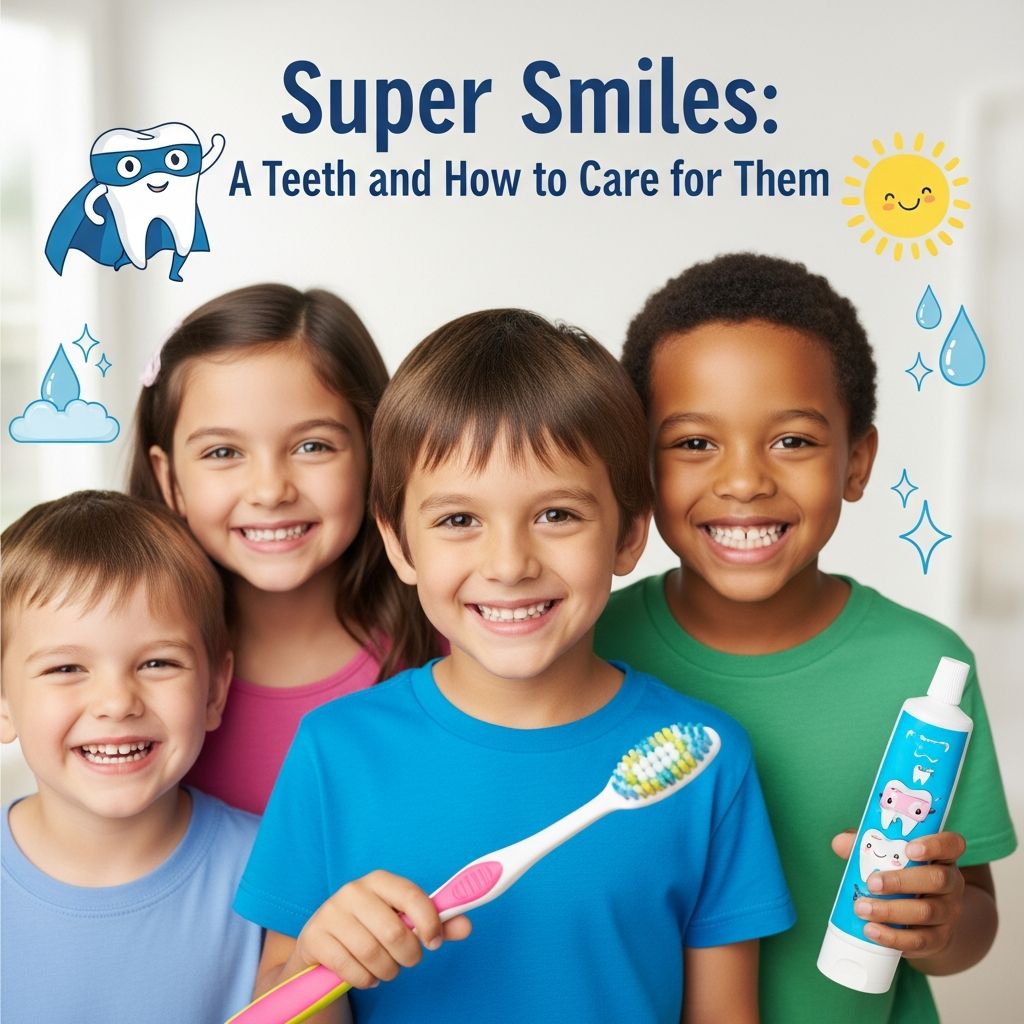
Every time you talk, smile, or munch a crunchy snack, your teeth are hard at work. Teeth may look simple from the outside, but they are busy little tools that help you eat, speak clearly, and feel confident about your smile. This guide explains what teeth are, how they grow, and what kids can do every day to keep them strong and healthy.
Why Teeth Matter So Much
Teeth do much more than just decorate your smile. They help bite, chew, and grind food into tiny pieces so your body can use it for energy and growth. Teeth also shape the way you say certain words, and they support your lips and cheeks so your face looks balanced.
- Healthy teeth help you chew foods like apples, carrots, and nuts so you can enjoy many kinds of meals.
- Clear speech sounds like “t,” “s,” and “f” depend on teeth working together with the tongue and lips.
- Strong, clean teeth help you feel proud when you laugh, smile, and talk with friends.
Meet Your Teeth: The Different Types
Not all teeth are the same. The teeth in the front of your mouth have different jobs than the ones in the back. Each type of tooth has a special shape and purpose that helps you eat and speak.
| Tooth Type | Where It Is | What It Looks Like | Main Job |
|---|---|---|---|
| Incisors | Front and center, top and bottom | Thin and flat with sharp edges | Cut and bite into foods like sandwiches and fruits |
| Canines | Next to the incisors | Pointed and slightly longer | Tear and hold foods like meat and crunchy snacks |
| Premolars (in grown-ups) | Behind the canines | Broader with ridged surfaces | Crush and grind food into smaller bits |
| Molars | At the very back of the mouth | Largest teeth with wide, bumpy tops | Grind food thoroughly so it is easy to swallow |
Baby Teeth vs. Adult Teeth
Kids usually have two sets of teeth in life. The first set is called baby teeth, and the second set is called adult or permanent teeth. Even though baby teeth eventually fall out, they are very important and deserve good care.
- Baby teeth: These smaller teeth show up in early childhood and help you learn to chew and speak clearly.
- Adult teeth: These are larger and meant to last for the rest of your life if you take good care of them.
- Baby teeth act like space-holders, keeping room open for future adult teeth to come in straight.
How Teeth Grow and Change
Even before you were born, tiny tooth buds were forming under your gums, waiting for their turn to appear. As you grow, teeth slowly push through the gums, and later, baby teeth loosen and fall out to make space for adult teeth.
- In early childhood, baby teeth usually appear one after another until there is a full set.
- As you get older, baby teeth wiggle and fall out, and grown-up teeth begin to replace them.
- The last adult teeth to appear are usually molars at the back of the mouth, which help with heavy chewing.
What a Tooth Is Made Of
Each tooth has several layers, and every layer has a different job. From the tough outside to the sensitive inside, these layers work together to protect the tooth and keep it strong.
- Enamel: The shiny outer coat you can see. It is the hardest substance in your body and protects the tooth from biting and chewing.
- Dentin: A firm layer under the enamel that supports it and carries sensations like hot and cold.
- Pulp: The soft center that contains nerves and blood vessels, which keep the tooth alive and growing.
- Root: The part hidden in the gum and jawbone that anchors the tooth in place.
How Teeth Help You Speak
Teeth, tongue, and lips work together to make sounds. When air moves out of your lungs, your mouth shapes it into words. Without teeth, many sounds would be tricky or even impossible to say clearly.
- Front teeth help form sounds where the tongue taps or rests against them.
- Teeth also guide how the tongue moves when forming speedy speech sounds.
- Missing or damaged teeth can make some words sound fuzzy or unclear.
What Can Harm Your Teeth
Teeth are strong, but they are not unbreakable. Certain habits and foods can slowly damage them, especially if they are not cleaned regularly. Knowing what can hurt your teeth helps you protect them.
- Sticky candies and sugary drinks can feed germs that create acids and lead to cavities.
- Chewing on hard objects like ice, pencils, or opening packages with your teeth can chip or crack them.
- Not brushing and flossing allows plaque, a thin film of bacteria, to build up and wear away enamel.
Building a Superhero Brushing Routine
A good brushing routine is like a daily shield for your mouth. When you brush the right way and often enough, you knock away food bits and germs that can cause problems. Brushing does its best work when paired with flossing and smart food choices.
- Brush at least twice a day: once in the morning and once before bed.
- Use a soft-bristled toothbrush that fits comfortably in your mouth.
- Squeeze a pea-sized dot of fluoride toothpaste onto the brush.
- Brush gently in small circles over every surface: front, back, and chewing sides of all teeth.
- Keep brushing for about two minutes so every tooth gets attention.
- Spit out the extra toothpaste when you are done and rinse if your dentist suggests it.
Flossing: Cleaning Where Brushes Can’t Reach
Even the best toothbrush cannot reach between teeth where food pieces like to hide. That is where floss comes in. Floss slides into the tight spaces between teeth and under the gumline to remove bits that brushing misses.
- Floss at least once a day, especially before bedtime.
- Use a gentle back-and-forth motion and curve the floss in a C-shape around each tooth.
- Floss holders or kids’ floss picks can make it easier to reach the back teeth.
Smile-Friendly Foods and Drinks
What you eat and drink affects your teeth just like it affects the rest of your body. Some foods help keep teeth strong, while others make it easier for cavities to form. Choosing tooth-friendly snacks is a smart way to protect your smile.
| Better Choices | Why They Help | Limit These | Why They Can Hurt |
|---|---|---|---|
| Fresh fruits like apples and pears | Crunchy texture helps wipe away some plaque while you chew | Sticky candies and caramel | Stick to teeth for a long time and feed cavity-causing germs |
| Vegetables like carrots and celery | Full of vitamins and take work to chew, which helps clean | Sugary sodas and sports drinks | Extra sugar and acids can wear down enamel |
| Cheese, yogurt, and milk | Contain calcium, which helps keep teeth and bones strong | Frequent sipping on fruit juice | Bathes teeth in sugar over and over throughout the day |
| Nuts and plain popcorn | Crunchy, low-sugar options for snacking | Cookies, pastries, and sweet cereal | Lots of sugar that can stick in grooves of back teeth |
Visiting the Dentist: What to Expect
Regular dental visits help catch tiny problems before they turn into big ones. A dentist and dental hygienist are like coaches for your mouth, teaching you how to care for your teeth and checking that everything is healthy.
- Many kids visit the dentist for a checkup about every six months, or as recommended.
- During a visit, your teeth may be cleaned, polished, and checked for cavities or other issues.
- The dentist might suggest dental sealants or fluoride treatments to give extra protection.
Protecting Teeth During Sports and Play
Running, jumping, and team sports are fun, but they can be risky for teeth. A bump to the mouth can chip or knock out a tooth. Using the right gear keeps your smile safer.
- Wear a mouthguard during contact sports such as basketball, soccer, martial arts, and hockey.
- A properly fitted mouthguard cushions teeth, gums, and jaws if you get hit.
- Helmets with face guards can help protect teeth during certain activities like biking or skating.
Signs Your Teeth Need Extra Help
Sometimes teeth send warning signals that something is wrong. Paying attention to how your teeth and gums feel can help you ask for help early. Quick care often means easier treatment.
- Tooth pain, especially when chewing or eating something hot or cold.
- Red, puffy, or bleeding gums when brushing or flossing.
- A chipped, cracked, or loose tooth after a fall or accident.
Daily Dental Care Checklist for Kids
Healthy teeth depend on steady daily habits more than anything else. A simple checklist makes it easier to remember everything your mouth needs. You can post this in your bathroom and check it off each day.
- Brush teeth in the morning for about two minutes.
- Brush again at night, making sure to clean every side of every tooth.
- Floss once a day to clean between teeth.
- Choose water instead of sugary drinks most of the time.
- Snack on fruits, vegetables, dairy, and nuts more often than sweets.
- Wear a mouthguard during sports or rough play when needed.
- Visit the dentist regularly for checkups and cleanings.
Fun Ways to Make Tooth Care Easier
Taking care of teeth does not have to feel like a boring chore. Turning dental care into a game or challenge can keep kids motivated. Small rewards and fun routines encourage healthy habits that last for years.
- Use a timer, song, or brushing app to make sure you brush long enough.
- Let kids choose their own toothbrush with a favorite color or character.
- Make a family brushing chart and give small rewards for streaks of good brushing.
Frequently Asked Questions About Kids’ Teeth
1. Why do baby teeth fall out?
Baby teeth are like practice teeth that help you chew and talk while your jaw grows. When your mouth is ready for bigger adult teeth, the roots of baby teeth shrink, and the teeth become loose and fall out to make space.
2. Is it really bad to eat candy?
Having candy once in a while is okay if you brush and floss regularly, but eating sugary treats all day makes it easier for cavities to form. It is better to save sweets for special times and rinse with water or brush afterward.
3. What is a cavity?
A cavity is a tiny hole or damaged spot in the hard surface of a tooth. It forms when bacteria in your mouth use sugar from food and drinks to create acids that slowly eat away enamel.
4. Does brushing harder clean better?
Brushing too hard can actually damage gums and wear down enamel over time. Gentle, small circles with a soft brush clean teeth well without scratching them.
5. What if I am scared of the dentist?
Feeling nervous is normal, especially before a first visit. Let your dentist know, ask questions, and bring a trusted adult or a comfort item to help you relax during the appointment.
6. How can I tell if I am brushing well?
Your teeth should feel smooth, not fuzzy, when you run your tongue over them. Checking in a mirror and having a parent or dentist watch your brushing can help you improve your technique.
Growing Up With a Healthy Smile
Teeth do a lot for you every day, from helping you chew your favorite foods to giving you confidence when you smile. With smart habits, regular checkups, and a little attention, you can keep them strong for life. Start building a good routine now, and your future self will be grateful for the bright, healthy smile you protected as a kid.