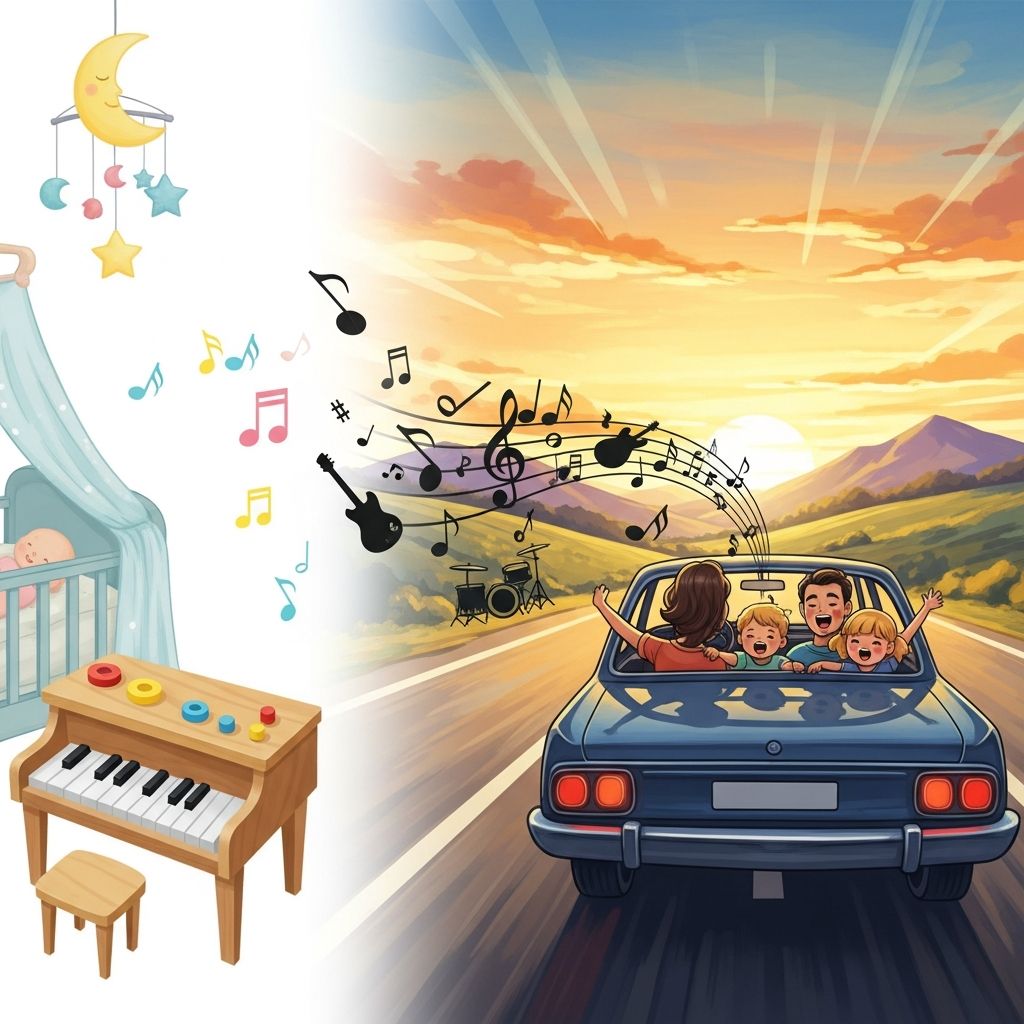
Children’s music does not have to be shrill, repetitive, or something adults merely tolerate. With a little intention, your home, car, and family gatherings can be filled with songs that respect your child’s needs and your grown-up ears at the same time.
Why Shared Music Matters More Than You Think
Music is one of the easiest ways to create connection in a family because everyone can participate at their own level: babies can sway, toddlers can clap, older kids can sing, and adults can harmonize or simply enjoy the moment. When parents genuinely like the music they are playing, children sense that authenticity and are more likely to engage deeply, instead of being passively entertained by background noise.
Shared musical experiences also build small rituals: the song that always plays at bath time, the playlist that signals “time to clean up,” or the album that means “we’re going on a trip.” Over time, those sounds become emotional anchors that help kids feel safe, calm, or excited in predictable ways.
What Makes Kids’ Music Enjoyable for Adults?
Not all children’s music is created with adults in mind, but there are some clear traits that separate “tolerable” from “let’s play that again.” Instead of focusing only on age labels, pay attention to musical and lyrical qualities that appeal across generations.
- Thoughtful lyrics: Songs that avoid talking down to kids and instead treat them like curious, capable listeners.
- Real instruments and rich production: Acoustic guitars, pianos, horns, and layered harmonies feel less like toys and more like real music.
- Melodic variety: Catchy but not monotonous melodies keep adults from feeling like each track is a clone of the last.
- Subtle humor: Jokes and references that kids enjoy on one level and parents appreciate on another can make repeated listening surprisingly fun.
- Reasonable repetition: Familiar choruses help children learn and sing along, but the best songs avoid endless loops that wear thin quickly.
Age-by-Age Music Ideas the Whole Family Can Enjoy
As children grow, what feels engaging and appropriate shifts. Instead of replacing your entire collection every year, think of your family’s listening like expanding circles, where favorite songs stay in rotation while new layers are added.
Babies and Toddlers: Gentle, Simple, and Warm
For the youngest listeners, the goal is comfort and interaction, not complexity. They respond most strongly to the sound of familiar voices, clear rhythms, and simple patterns.
- Choose acoustic or lightly produced songs with clear melodies and warm vocals.
- Look for lullaby-style albums that adults might play even without kids present, such as gentle folk, soft jazz, or instrumental covers of well-known songs.
- Favor shorter tracks, so each song feels like its own small moment instead of a long wall of sound.
Preschoolers: Stories, Rhymes, and Big Feelings
Preschoolers love music that tells a story, invites them to move, or gives them a chance to try out big emotions in a safe way. They are also at the perfect age to begin recognizing patterns in rhythm and rhyme.
- Pick songs with clear narratives: characters, small adventures, and everyday situations they recognize (visiting the park, getting dressed, sharing toys).
- Look for playful call-and-response sections so kids can shout, clap, or echo words and sounds.
- Avoid music that relies solely on noisy sound effects; prioritize songs where the tune would hold up even without the gimmicks.
Early School Age: Curiosity and Catchy Choruses
Once kids are in school, they can handle more varied topics and more sophisticated musical structures. This is a great time to introduce child-friendly songs in genres you personally enjoy.
- Introduce clean, upbeat tracks from genres you love: soul, classic pop, world music, light rock, or movie soundtracks.
- Seek out educational songs that are genuinely tuneful, so kids remember concepts (like days of the week or science facts) without feeling like they are in a classroom.
- Mix in songs with slightly longer forms—verses, bridges, and key changes—to stretch their musical attention span.
Preteens: Building Taste Without Losing Boundaries
By the tween years, kids often want more control over what they hear, while parents want to maintain reasonable content boundaries. Thoughtfully chosen family playlists can bridge that gap.
- Look for edited or family-friendly versions of mainstream songs in genres they like.
- Explore artists known for positive themes, clever lyrics, and minimal explicit content.
- Use this stage to talk about lyrics: what they mean, how they make us feel, and what your family’s values are.
Designing Family Playlists for Real-Life Moments
Instead of one giant all-purpose playlist, build a small set of purposeful mixes tied to your daily routine. This makes transitions smoother and also limits the number of songs you will hear on infinite repeat.
| Playlist Name | When to Use It | What It Should Feel Like |
|---|---|---|
| Morning Sunshine | Breakfast, getting dressed, school prep | Gentle, optimistic, mid-tempo songs that help everyone wake up without feeling rushed. |
| Car-Careoke Classics | School runs, errands, weekend drives | High-energy, singalong-friendly tracks both you and your kids can belt out. |
| Focus & Calm | Homework, quiet play, wind-down time | Soft instrumentals, acoustic pieces, and relaxed rhythms that lower the overall noise level. |
| Dance Break | After-school energy release, indoor days | Rhythmic, beat-driven tunes with clear grooves for jumping, twirling, and silly moves. |
| Sleepy Stars | Bedtime routine | Slow songs, hushed vocals, and predictable patterns that signal “it’s time to rest now.” |
Each playlist only needs 15–25 songs to feel complete, and it is perfectly fine if favorites appear on more than one list. The point is not variety for its own sake; it is using music as a tool for emotional regulation, togetherness, and a sense of rhythm in family life.
How to Evaluate a New Kids’ Album in Minutes
With endless options available, deciding what deserves a spot in your rotation can feel overwhelming. A quick listening ritual can help you determine whether an album will delight or irritate you long before your child fixates on it.
- Step 1: Sample three tracks. Choose one at the beginning, one in the middle, and one near the end to get a sense of consistency.
- Step 2: Listen for voice and tone. Ask yourself if the singer’s voice is pleasant to hear on repeat and whether the overall tone feels kind, playful, or grating.
- Step 3: Check the lyrics. Focus less on perfection and more on whether the themes align with what you want echoed around your home.
- Step 4: Picture the twentieth listen. If you already feel annoyed during the first pass, it will not magically become more bearable later.
- Step 5: Get your child’s input. Offer a small selection of parent-approved options and let your child choose favorites from within that safe pool.
Blending “Grown-Up” and Children’s Music Safely
Many families find their sweet spot in the overlap between kid-focused artists and mainstream musicians who naturally appeal to children. You do not have to limit yourself to material marketed explicitly as “for kids” as long as you keep an eye on content.
- Search for instrumental or orchestral versions of songs you love; they can be soothing for younger kids and nostalgic for adults.
- Explore genres like jazz, folk, and world music, where lyrics (if present) are often slower and easier to screen.
- Create “bridge” playlists that pair a few child-focused tracks with milder mainstream songs so your kids slowly become familiar with the music you enjoy.
Creative Ways to Use Music in Daily Routines
Beyond simple entertainment, music can be a practical parenting tool. Matching certain tunes to specific tasks creates predictable associations that kids eventually follow with less resistance.
- Transition cues: Use the same song every time it is time to get shoes on, clear the table, or start bedtime; after a few weeks, the music itself becomes the reminder.
- Time markers: For tasks that drag (like toothbrushing or tidying a room), pick songs with clear lengths and tell kids, “We clean until this song ends.”
- Emotion check-ins: Invite children to pick a song that matches how they feel, then talk about why they chose it once the track finishes.
- Family performances: Designate an occasional “stage night” where each person can perform—sing, dance, or play an instrument—to a favorite song.
Handling the Song on Endless Repeat
Most parents eventually encounter the track their child wants every hour of every day. Instead of banning it outright, which can turn it into forbidden treasure, set gentle boundaries while respecting your child’s attachment.
- Introduce a simple rule such as “three times in a row, then we switch to something else” and stick to it calmly.
- Rotate similar songs with the same vibe so your child still gets the mood they crave without burning out one recording.
- Offer choices within limits: “We can listen to your favorite now or save it for the car ride—what do you prefer?”
Simple House Rules for Lyrics and Themes
Every family’s comfort level is different, but having a few clear, shared rules for what counts as “okay” music helps avoid case-by-case arguments. Explain these guidelines positively, focusing on what your family chooses to listen to, rather than shaming other tastes.
- Decide which topics (violence, explicit language, mature relationships) are off-limits for now and communicate that calmly to your kids.
- Teach older children how to skim lyrics or look up song descriptions, and invite them to help screen new tracks for the whole family.
- Model what to do when you discover a song is not a good fit (skipping, deleting, or moving it to an adults-only playlist) without dramatizing the decision.
Frequently Asked Questions About Kids’ Music Adults Can Enjoy
How many kids’ albums does a family really need?
There is no magic number, but a small, well-loved collection is better than a huge library no one knows well. A few favorite albums, plus some curated playlists, are usually enough to cover most daily situations without overwhelming anyone.
Is it okay if my child listens to the same songs for months?
Repetition is a natural part of child development, especially with music. As long as the lyrics and volume are healthy, repeated listening can help kids feel secure and deepen their understanding of rhythm, language, and pattern.
What if my taste in music and my partner’s (or co-parent’s) are completely different?
That difference can become a strength if approached with curiosity instead of competition. Consider building separate playlists that reflect each adult’s style and treat them as themed “music nights,” so children see variety as normal and fun.
Do I need to play music all day long?
Continuous music is not required, and silence can be just as valuable. Using music intentionally at key moments—mornings, transitions, and special family times—prevents listening fatigue and helps children notice the emotional cues each playlist provides.
How can I tell if a song is developmentally appropriate?
Focus on three factors: language complexity, emotional intensity, and thematic content. If your child seems overwhelmed, confused, or upset by what they are hearing, that song may belong on a “later” list rather than your current family rotation.
Bringing It All Together
The goal is not to create a perfectly curated soundtrack but to discover a shared musical language for your family. When kids’ music is chosen with care, it becomes less about enduring endless choruses and more about building memories, easing tough moments, and enjoying the same songs—together.
By paying attention to quality, age-appropriateness, and your own enjoyment, you create a listening environment where everyone’s needs matter. Over time, the albums and playlists you build now may become the songs your children remember most fondly when they think about home.