Most kids collect bruises as part of growing up, but not every bruise is the same. Understanding why bruises appear, how they heal, and when they might signal something more serious can help parents respond calmly and confidently.
What Exactly Is a Bruise?
A bruise, also called a contusion, happens when small blood vessels under the skin are damaged, usually after a bump, fall, or hit. Blood leaks into the surrounding tissue, creating a discolored patch on the skin.
The skin itself usually stays intact, so there is no open wound, but the tissue underneath is injured. That’s why bruises can be tender or painful even when the surface looks smooth.
Why Children Bruise So Often
Active children naturally end up with more bruises because they run, jump, climb, and explore. Their coordination is still developing, which makes them more likely to bump into furniture, fall on the playground, or collide with other kids.
- Young kids are closer to the ground and tend to fall more often.
- Sports and physical play increase the chance of minor impacts.
- Children’s skin and tissues can be more delicate than adults’, so blood vessels may break more easily with impact.
Common Causes of Bruises in Kids
Most bruises in children are linked to everyday activities and minor accidents. Some typical scenarios include:
- Falling while learning to walk, run, or ride a bike.
- Colliding with furniture edges, doors, or playground equipment.
- Sports injuries during soccer, basketball, gymnastics, or martial arts.
- Rough-and-tumble play with siblings or friends.
- Carrying heavy backpacks that press on shoulders or hips.
Occasional bruises in expected places (like shins and knees) that match your child’s activity level are usually not a cause for concern.
Where Bruises Usually Appear
Where a bruise shows up on the body often tells you how it happened. Some areas bruise more easily simply because the bone is close to the skin or because they are used constantly in play.
- Common, less worrying locations: shins, knees, elbows, forearms, and sometimes the forehead.
- Areas that deserve closer attention: back, chest, abdomen, cheeks, ears, neck, inner arms, or inner thighs, especially if bruises appear there repeatedly without clear explanation.
How Bruises Change Color as They Heal
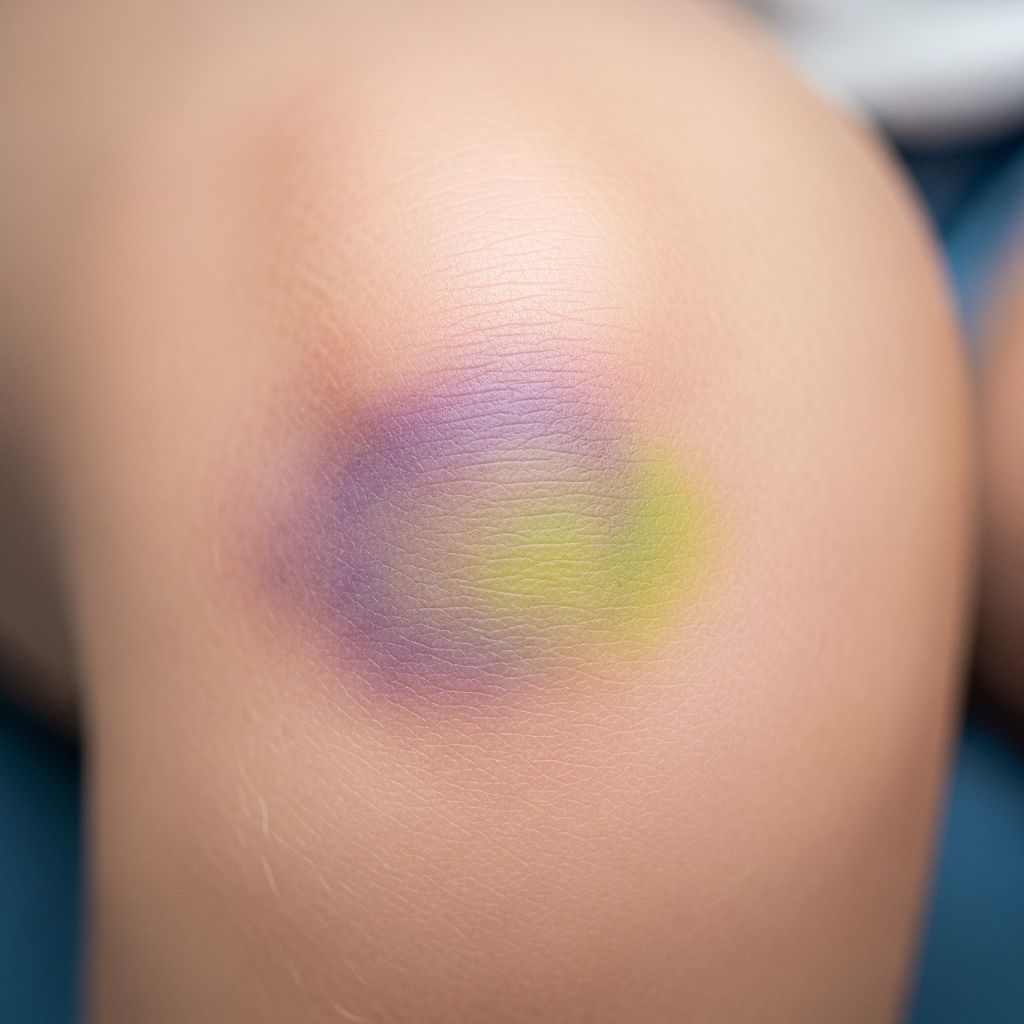
A bruise does not stay the same color from start to finish. As the body breaks down and reabsorbs the leaked blood, the color gradually shifts. These color changes are a normal sign of healing.
| Approximate Time After Injury | Typical Color | What It Means |
|---|---|---|
| Immediately to first 1–2 days | Red, pink, or dark purplish | Fresh blood has leaked under the skin. |
| 1–5 days | Blue, purple, or nearly black | Blood has lost oxygen and darkened. |
| 5–10 days | Green or yellow | The body is breaking down blood pigments. |
| 10–14 days and beyond | Light brown, yellow-brown, then fading | Remaining blood is reabsorbed and the bruise disappears. |
Every child is different, and skin tone affects how obvious each color stage looks, but most simple bruises fade within about two weeks.
Types of Bruises You Might See
Not all bruises are the same. Understanding the type can help you decide what care is needed.
- Superficial skin bruises: The most common type, limited to tissue directly under the skin and usually harmless.
- Muscle bruises: Deeper bruises that may cause stiffness or pain when the muscle is used, often from sports or hard falls.
- Bone bruises: More serious, very painful bruises affecting bone tissue; they may take longer to heal and sometimes need medical follow-up.
- Large, firm bruises (hematomas): A bigger pocket of blood that may feel like a lump under the skin and can be more painful.
First Aid Steps Right After a Bruise
Quick, gentle first aid can reduce pain and limit the size of a bruise. These steps are most helpful during the first day or so after an injury.
- Stay calm and reassure your child. A parent’s reaction strongly influences how frightening the incident feels.
- Check for more serious injury. Make sure your child can move the area, bear weight if the leg is affected, and is alert and responsive.
- Apply a cold compress. Use a clean cloth wrapped around an ice pack or a bag of frozen vegetables, then place gently on the area for 10–20 minutes at a time.
- Raise the injured area. If possible, prop the bruised arm or leg on a pillow above the level of the heart to help limit swelling.
Never place ice directly on the skin, and avoid pressing hard on the bruised spot, as this can increase pain and tissue damage.
Ongoing Care Over the Next Few Days
Once the initial swelling has settled, comfort care and gentle activity usually support healing. Most simple bruises do not need special treatment beyond home care.
- Consider warmth after the first couple of days: A warm cloth or bath may feel soothing once swelling has gone down.
- Use age-appropriate pain relief if needed: Speak with a healthcare professional before giving any medicine, and follow dosing directions carefully.
- Encourage gentle movement: Completely avoiding movement can cause stiffness; mild, pain-free motion often helps circulation and recovery.
- Watch the bruise over time: It should slowly become less tender and change color as it fades.
When Bruises May Signal a Bigger Problem
While most bruises are harmless, certain patterns or symptoms can indicate a more serious issue that requires medical attention. Trust your instincts if something feels “off.”
- Bruises that appear without any clear reason or with very minor contact.
- Very large or painful bruises after seemingly small bumps.
- Bruises that do not start to fade after about two weeks.
- Bruising accompanied by nosebleeds, frequent gum bleeding, or tiny red or purple spots on the skin.
- Bruises in unusual places, especially if they occur repeatedly and do not match your child’s activity or explanations.
Warning Signs: Seek Urgent Help
Some symptoms suggest that a bruise may be part of a more serious injury or illness. In these situations, timely medical care is very important.
- Severe pain in the bruised area that gets worse or does not improve with rest.
- Inability to walk, move a limb, or use a joint after an injury.
- Swelling that rapidly increases or a bruise that feels tight and extremely tender.
- Bruising near the eye with changes in vision, severe headache, or confusion.
- Any sign of head injury with vomiting, loss of consciousness, or unusual sleepiness.
- Sudden, widespread bruising without clear cause, especially if your child also has fever, weakness, or looks very unwell.
Medical Conditions That Can Affect Bruising
Occasional bruises are normal, but some children bruise more easily because of underlying medical factors. Only a healthcare professional can diagnose these conditions, but awareness helps parents ask the right questions.
- Blood clotting disorders: Conditions that affect clotting factors or platelets can lead to frequent or heavy bruising.
- Vitamin deficiencies: Low levels of certain vitamins, such as vitamin C or vitamin K, may contribute to fragile blood vessels or clotting issues.
- Medications: Some medicines, including certain pain relievers and blood thinners, can make bruising more likely.
- Chronic illnesses: Liver disease, kidney problems, or immune conditions can sometimes alter clotting or blood vessel health.
If your child suddenly starts bruising more than usual, or the pattern of bruises changes significantly, it is important to discuss this with a healthcare provider.
Preventing Unnecessary Bruises
Not all bruises can be prevented, and some are an inevitable side effect of childhood play. Still, a few precautions can reduce the number and severity of bruises.
- Use protective gear such as helmets, knee pads, and elbow pads for sports and wheeled activities.
- Make the home environment safer by padding sharp furniture corners and securing loose rugs.
- Ensure good lighting in hallways and staircases so kids can see where they are going.
- Teach safe play rules: no pushing on stairs, careful use of playground equipment, and respect for personal space.
- Support balanced nutrition to help maintain strong blood vessels and healthy tissues.
Talking to Kids About Their Bruises
Bruises can worry children, especially when they look dramatic. How parents talk about them can shape how kids understand their bodies and injuries.
- Explain in simple terms that a bruise is just “some leaked blood under the skin” that the body will clean up over time.
- Use color changes as a mini science lesson and track how the bruise looks each day.
- Reassure them that minor aches and color changes are normal and temporary.
- Encourage kids to tell you how injuries happen, building trust and open communication.
How Long Do Bruises Usually Last?
Most mild bruises in children begin to look better within a few days and fade within about one to two weeks. Deeper or larger bruises, such as those from sports collisions or falls on hard surfaces, may last longer.
Healing time varies with the child’s age, location of the bruise, skin tone, and overall health. Bruises on legs, where circulation is slightly slower, often linger longer than bruises on the face or arms.
Healthy Lifestyle Tips to Support Healing
While no diet or routine can prevent every bruise, supporting overall health helps the body repair everyday injuries more efficiently.
- Offer a variety of fruits and vegetables to provide vitamins that support blood vessel strength.
- Encourage regular physical activity appropriate for your child’s age to build coordination and muscle tone.
- Promote good sleep habits, since rest allows the body to repair tissues.
- Ensure regular checkups so a healthcare provider can monitor growth, development, and any new symptoms.
Frequently Asked Questions About Bruises in Children
Is it normal for my active child to have several bruises at once?
For energetic children who run, climb, and play sports, it is common to see multiple small bruises on shins, knees, and other bony areas. What matters most is whether the bruises match your child’s activities and whether your child otherwise seems healthy and active.
Should I be worried if a bruise looks very dark?
Darker bruises can simply mean more blood has collected under the skin or that your child has a naturally deeper skin tone, which can make color changes less obvious. Concern is higher if the bruise is extremely painful, very swollen, or does not show any signs of fading after about two weeks.
Can I massage a bruise to help it go away?
Massaging a fresh bruise is not recommended because it can damage more tissues and may increase discomfort. After the first couple of days, gentle, light touch around (not directly on) the bruise can promote comfort, but always stop if your child feels pain.
Is it safe to keep my child in sports when there are bruises?
Mild bruises that are not very painful and allow full movement usually do not require stopping everyday activity, though your child may need to modify or avoid direct contact to the injured area. If a bruise is large, very tender, or limits movement, rest from sports until a healthcare professional confirms it is safe to return.
What information should I share with the doctor about my child’s bruises?
Be prepared to discuss how injuries happened, how often bruises appear, and how long they take to heal. Also mention any family history of bleeding problems, recent changes in medications, and any other symptoms such as fatigue, frequent infections, or unexplained fevers.
Key Takeaways for Parents
- Most bruises in children come from everyday bumps and falls and heal completely with simple home care.
- Tracking where bruises appear, how they change color, and how your child feels can help you spot normal healing versus warning signs.
- When in doubt, especially if bruises look unusual, appear suddenly, or are linked with other concerning symptoms, reaching out to a healthcare professional is always the safest choice.