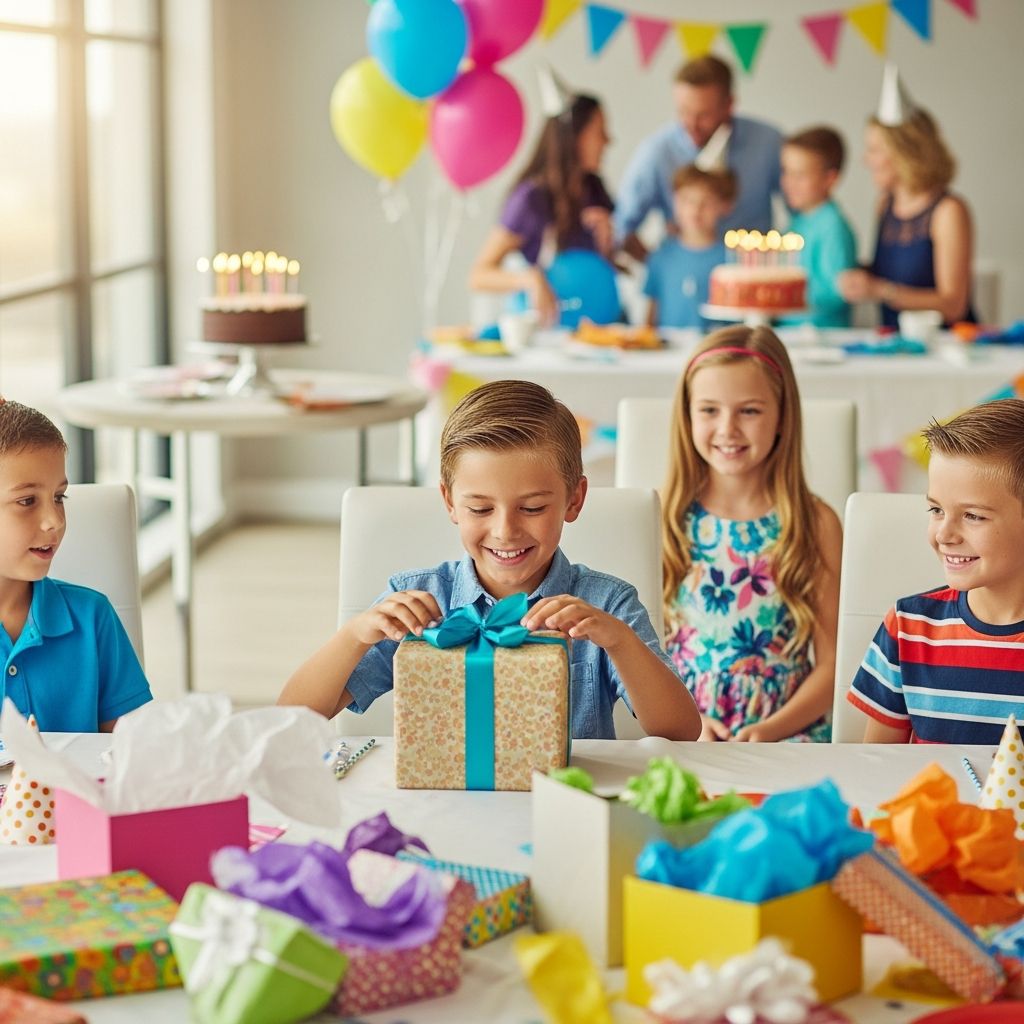
Few moments at a child’s birthday party create as much excitement and anxiety as opening presents. Parents worry about hurt feelings, rude reactions, and total chaos, while kids are just eager to tear into the wrapping paper. With a bit of planning and some age-appropriate coaching, present opening can become a positive, low-stress part of the celebration instead of the main source of drama.
Why Present Opening Feels So Tricky
Gift opening sits at the intersection of big emotions, social comparison, and young children who are still learning empathy. That combination explains why it can feel so loaded for both kids and adults.
- Children have strong feelings about fairness and may compare the size or “coolness” of gifts.
- The birthday child may react honestly (and bluntly) if a gift is not what they hoped for.
- Guests and parents often want to see their gift appreciated, which adds pressure to the moment.
Understanding these emotional dynamics helps you make intentional choices rather than simply repeating what you remember from your own childhood parties.
Should Gifts Be Opened During the Party?
There is no single “correct” answer about when to open presents. The right choice depends on the size of the gathering, the ages of the children, and your own comfort level as host.
| Approach | What It Looks Like | Main Benefits | Potential Drawbacks |
|---|---|---|---|
| Open during the party | All kids gather while the birthday child opens each gift in front of them. | Guests see their gift opened; chance to teach public gratitude. | Jealousy, hurt feelings, and chaos if not well managed. |
| Open after guests leave | Presents are set aside and opened later with family only. | Less pressure on the birthday child; easier to manage emotions. | Guests may feel disappointed not seeing their gift opened. |
| Hybrid approach | A few gifts are opened at the party; the rest later. | Some shared excitement without overwhelming the group. | Requires clear communication so expectations are managed. |
Instead of assuming there is a universal rule, decide what best protects the emotional well-being of both your child and their guests. You can always adjust your approach as the children get older and more socially aware.
Factors to Consider Before You Decide
When choosing a gift-opening strategy, think about these context clues rather than relying only on tradition.
- Age group: Preschoolers and early elementary kids are still learning to filter their reactions and handle disappointment gracefully.
- Party size: Ten or more guests can make gift opening drag on, especially if attention spans are short.
- Venue rules: Locations like trampoline parks or play gyms often leave little time for organized present opening.
- Guest diversity: Not every child may be able to bring a gift, and you may not know this in advance.
Treat these factors like dials you can adjust. The more intense the environment, the more helpful it can be to simplify or shorten public gift opening.
When Opening During the Party Works Well
Opening gifts at the party can be meaningful, particularly in smaller, more intimate gatherings where kids are old enough to sit, watch, and take turns. When done thoughtfully, this moment can reinforce thankfulness, generosity, and social skills.
- Small groups of close friends or family tend to feel less performative and more personal.
- Older children can better handle disappointment and usually understand how to respond politely.
- Guests may enjoy seeing their gift unwrapped and hearing genuine appreciation in real time.
If you choose this route, your role is to shape the experience so that the spotlight never becomes a searchlight exposing who gave what or who did not bring a present at all.
When It’s Better to Wait
Sometimes, delaying gift opening is the most compassionate decision. Large parties, extremely young children, or situations where not all guests are able to bring a present are strong reasons to keep presents for later.
- If many guests are present, the process can feel endless, and children may get restless or upset.
- If you are aware of financial differences among families, not highlighting gifts publicly can prevent awkward, painful comparisons.
- If your child is easily overwhelmed or very blunt, opening later can protect relationships and avoid unnecessary embarrassment.
In these situations, you can still emphasize gratitude with photos, thank-you notes, or private messages after the party rather than public reactions in the middle of the event.
Preparing Your Child Before the Party
Whatever method you choose, the key to smooth gift opening is preparation. Treat this as part of the party planning, not an afterthought.
- Explain clearly when presents will be opened and how it will work.
- Practice a few simple, polite responses for different situations.
- Remind your child that every gift represents someone’s effort and care, even if it isn’t their favorite item.
Short role-play sessions can make a big difference. Pretend to hand your child a gift they already own or do not like, and let them practice responding kindly and calmly.
Teaching Kind, Honest Reactions
Children need language tools that allow them to be truthful without being hurtful. Teach them to focus on the giver rather than judging the object itself.
- Shift from “Do I like this?” to “Someone chose this for me.”
- Encourage looking at the giver’s face, smiling, and using the person’s name when thanking them.
- Normalize the idea that not every present will become a favorite, but each still deserves appreciation.
Over time, these skills spill over into other areas of life—holidays, classroom exchanges, and even adult celebrations.
Sample Scripts for Common Gift Moments
Sometimes children are unkind simply because they do not know what else to say. Giving them specific phrases helps them default to politeness when they are surprised or disappointed.
- If they already own the gift: “Thank you! I really like this game.” (Conversations about duplicates can happen privately later.)
- If it’s not their style: “Thanks so much for thinking of me!”
- If they feel shy: “Thank you, I’m excited to try it later.”
You can remind your child that politeness in the moment does not force them to love or keep every item forever; it just honors the giver’s thoughtfulness.
Managing the Group While Gifts Are Opened
If you do open presents during the party, a bit of structure transforms chaos into something closer to a group activity.
- Ask children to sit in a semicircle or around a rug so everyone can see without crowding.
- Decide in advance how you will choose the order (for example, draw names or follow the order of gifts on the table).
- Set expectations with a short, friendly announcement before you begin, explaining that everyone will get a turn to have their gift opened.
Your presence nearby is also important. Gently guide the pace, keep an eye on children who look upset, and be ready to step in with humor or redirection if competition starts to surface.
Setting Up a “Gift Corner”
Even if presents are opened later, having a designated area for gifts gives the process a sense of order and respect. A simple “gift corner” prevents bags from being scattered and makes it easy to track who brought what.
- Place a small table or clearly labeled space near the entrance for guests to drop off gifts.
- Consider keeping a notepad or your phone nearby to note the giver’s name and a brief description of the item.
- Keep wrapping paper and packaging away from high-traffic play areas to avoid tripping hazards.
If you are opening gifts as guests arrive at a very small gathering, the gift corner can double as a mini “thank-you station” where your child opens and acknowledges each present individually.
Protecting Kids’ Feelings and Dignity
Thoughtful etiquette is not about perfect manners; it is about protecting relationships. In the context of birthday gifts, that means minimizing opportunities for embarrassment or shame.
- Avoid announcing who forgot a gift or highlighting who brought the “biggest” or “best” one.
- Watch guests’ faces. If someone looks deflated, offer a quiet word of reassurance or distraction.
- Model the idea that thoughtfulness matters more than price or size by complimenting creativity or personal touches.
By keeping the focus on kindness and connection, you create a party atmosphere where every child feels seen and valued, regardless of what they brought.
Handling Duplicates, Unwanted Gifts, and Regifting
Parents often wonder what to do with toys their child already has or items that are not a good fit. There is an etiquette layer here too, and it mostly happens after the party is over.
- Talk privately with your child about duplicates or items they do not love, reinforcing that gratitude for the gesture comes first.
- Decide together whether to donate, exchange, or store the item, depending on your values and the store’s policies.
- If you choose to regift, do so thoughtfully and never within the same social circle where it might be recognized.
These conversations are an opportunity to teach generosity and reduce clutter, as long as they are framed with respect for the original giver.
Thank-You Notes in a Kid-Friendly Way
Follow-up gratitude does not have to be elaborate to be meaningful. Simple, age-appropriate thank-you messages help children understand that appreciation extends beyond the party itself.
- For young kids, a photo of the child playing with or holding the gift, sent with a short caption, can function as a modern thank-you.
- Early writers can sign their name or write a short phrase while an adult fills in the rest.
- Older children can write brief, specific notes mentioning the gift and one thing they like about it.
Make thank-you notes feel like part of the celebration rather than punishment by setting aside a short, relaxed time to create them together, perhaps with stickers or colored pens.
Inclusive Ideas When Not Everyone Brings a Gift
Real life does not always match the idealized version of birthday parties. Sometimes families forget a gift, cannot afford one, or choose to give in a non-material way. You can help your child navigate this gracefully.
- Talk beforehand about how attending the party is already a form of showing care and friendship.
- Emphasize that no guest should ever be quizzed about where their gift is or why they did not bring one.
- Invite non-material contributions, like leading a game, helping bake, or making a drawing for the birthday child.
These conversations reinforce that people matter more than packages, which is a powerful message for children to internalize early.
Adapting Traditions as Kids Grow
The way you handle present opening can—and should—evolve as children grow more mature. What works for a four-year-old will be different from what makes sense at age ten or fifteen.
- With younger kids, prioritize simplicity, short time frames, and minimal social pressure.
- With older kids, involve them in decisions about when and how to open gifts.
- With tweens and teens, consider group experiences as gifts, which naturally shift the focus away from unwrapping objects.
By revisiting the question each year instead of defaulting to habit, you allow your family’s approach to stay aligned with your child’s emotional development.
SEO-Friendly FAQs About Kids’ Birthday Present Opening
Do kids have to open birthday presents in front of their guests?
No. There is no universal rule requiring kids to open birthday presents in front of their guests. Families can choose to open gifts during the party, after guests leave, or use a hybrid approach based on what best suits the children involved.
What is the best age to start opening gifts at the party?
Many families find that children around six or seven are better able to handle the social expectations of opening gifts in front of others. However, maturity varies widely, so it is more important to consider your individual child’s temperament than their exact age.
How can I stop kids from crowding around during gift opening?
Set clear expectations before you start: ask everyone to sit in a designated area, explain that each guest will get a turn, and remind them that they will see each gift from where they are. Having an adult nearby to hand presents to the birthday child also reduces crowding and grabbing.
What should I do if my child reacts rudely to a gift?
If the reaction is minor and the giver seems unbothered, you can gently prompt your child to try again with a “let’s say thank you together” reminder. If feelings are clearly hurt, a private apology after the excitement has died down—paired with some coaching for next time—can repair the moment.
Are thank-you notes still necessary after a kids’ birthday party?
Formal notes are not mandatory, but some form of acknowledgment is a thoughtful gesture. Whether you choose traditional cards, quick texts with photos, or simple in-person thanks at school or activities, what matters is teaching your child to close the loop with appreciation.
How do I word the invitation if we plan to open gifts later?
You can include a brief, positive note such as “Gifts will be opened after the party so we can maximize playtime together.” This sets expectations for parents without calling attention to who brings what or adding pressure to guests.
What if I prefer no gifts at all?
If you want a no-gift party, say so clearly on the invitation using warm language, such as asking guests simply to bring their presence, not presents, or suggesting a group donation instead. Still prepare your child to thank friends for coming and to focus on shared experiences rather than things.
With a bit of thought and gentle coaching, birthday present opening can become a natural extension of the celebration—one that teaches gratitude, empathy, and joy instead of stress and comparison. Every family will land on its own version of “good etiquette,” but the heart of it remains the same: treating each other with kindness while remembering that the real gift, for children and adults alike, is being together.