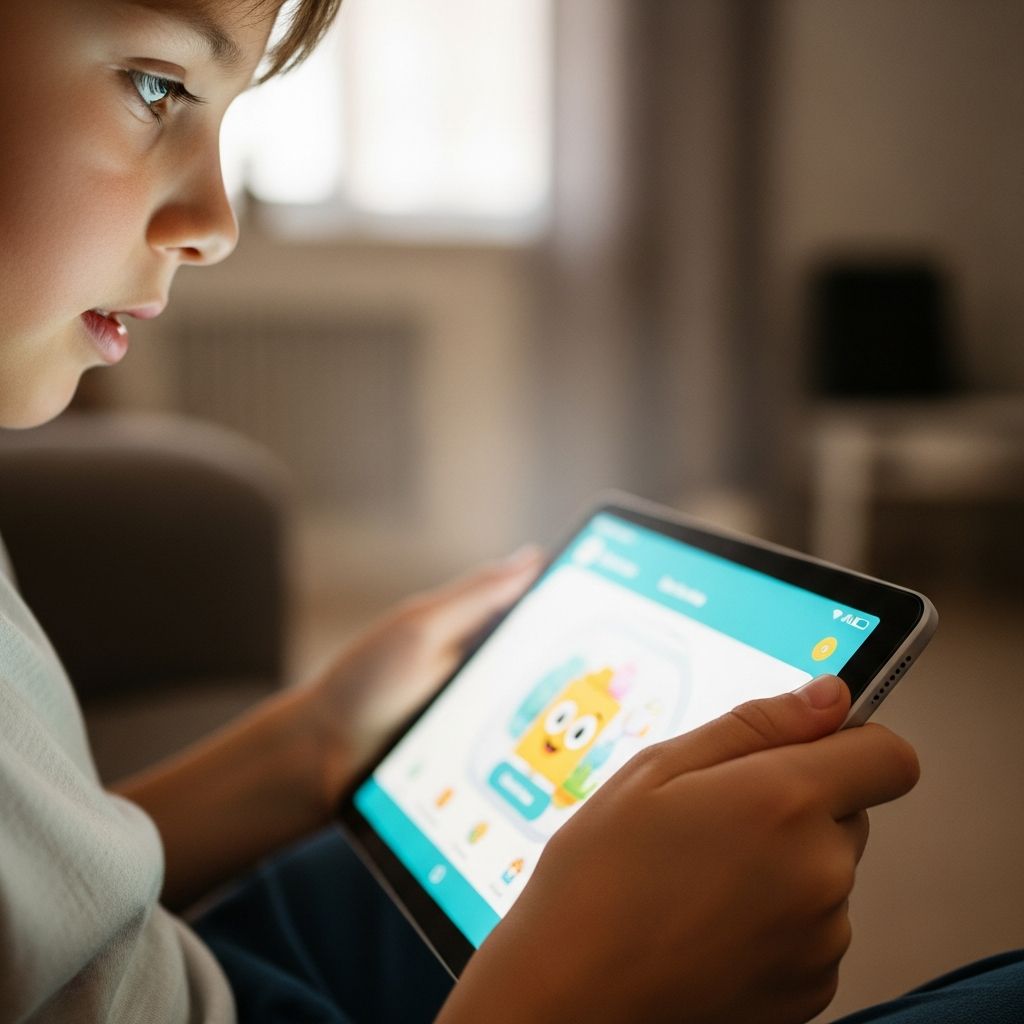
Young children are increasingly immersed in tablet screens from toddlerhood, with significant shifts in content consumption and parental management practices shaping their early experiences. This article delves into current trends, potential impacts, and actionable guidance for parents navigating this landscape.
Explosion of Early Device Ownership Among Kids
Tablet and smartphone ownership among very young children has skyrocketed in recent years. Data reveals that 40% of children possess their own tablet by age 2, climbing to 60% by age 4. By ages 8 and younger, 51% now have a personal mobile device, up from 45% in 2017. Among children under 13, 81% own a device, with over half starting screen use before age 2.
This trend reflects broader accessibility, as 68% of kids ages 12 and younger use tablets and 61% smartphones, with TV viewing at 90%. Nearly half of children 8 and under own a tablet, averaging 2.25 hours daily on digital media.
Daily Screen Time Breakdown by Age Group
Average screen exposure varies sharply by age, highlighting the need for age-tailored limits. Infants 0-2 years average 1 hour 3 minutes daily, 2-4 year-olds reach 2 hours 8 minutes to over 2 hours, 5-8 year-olds log 3 hours 28 minutes to 3.5 hours, and 8-12 year-olds hit 5 hours 33 minutes for entertainment alone.
| Age Group | Average Daily Screen Time (Entertainment) | Source |
|---|---|---|
| 0-2 years | 1 hour 3 minutes | |
| 2-4 years | 2 hours 8 minutes – 2+ hours | |
| 5-8 years | 3 hours 28 minutes – 3.5 hours | |
| 8-12 years | 5 hours 33 minutes |
Overall U.S. daily screen time for kids 8 and under stands at 2 hours 27 minutes in 2024, with minimal rises but evolving uses like more gaming over TV. Tweens’ entertainment screen time jumped from 4 hours 36 minutes in 2015 to 5 hours 33 minutes in 2021, with 20% exceeding 8 hours daily.
Shift from Traditional TV to Short-Form Mobile Videos
Children’s media diets are pivoting dramatically from linear TV to bite-sized content on platforms like YouTube Shorts, TikTok, and Instagram Reels. Under-2s now average 1 hour 3 minutes daily, up slightly, but total time for 5-8 year-olds hits 3.5 hours, favoring mobile over cable.
Weekly breakdowns show smartphones dominating at 16 hours 24 minutes (2 hours 21 minutes daily), tablets at 4 hours 19 minutes (37 minutes daily), and TV at 32 hours 18 minutes (4 hours 37 minutes). Gaming surges among young users, replacing some TV time.
- TV/videos: 1 hour 28 minutes (0-8 years), rising to 3 hours 16 minutes (13-18).
- Gaming: 38 minutes (0-8), peaking at 2 hours 40 minutes (8-12).
- Short-form videos drive mobile spikes, with 17% of parents noting kids use devices to self-soothe emotions.
Why Parents Rely on Screens: Practical Realities
Despite 75-80% parental worry over impacts, screens serve critical roles. 66% use them to occupy kids for tasks or breaks, 57% for learning, 56% for bonding, and 47% as rewards. Common uses include calming upset children (17%), eating at home (23%), or restaurants (22%).
This mirrors survival tactics amid busy lives, though experts urge intentional choices like co-viewing educational content such as Ms. Rachel videos.
Potential Effects on Emotional and Cognitive Growth
Excessive early tablet use correlates with emotional challenges. A JAMA Pediatrics study links 3.5-year-old tablet time to heightened anger/frustration at 4.5 years, creating a bidirectional cycle persisting to 5.5 years. Over-reliance may hinder self-regulation, exacerbating frustration loops.
Brain development concerns arise from prolonged exposure, with averages like 2.25 hours daily for under-8s potentially affecting attention and social skills. Shifts to addictive short-form content amplify risks, as dopamine-driven loops compete with real-world interactions.
Age-Based Guidelines from Leading Health Authorities
The American Academy of Pediatrics (AAP) provides clear benchmarks: no screens under 18 months except video chats; high-quality programming for 18-24 months with co-viewing; 1-hour limit for 2-5 years of educational media; consistent limits for 6+ with balanced activities. Prioritize tech-free meals/bedtimes and connect screens to offline play.
| Age | AAP Recommendation |
|---|---|
| 0-18 months | Avoid screens; video chats OK |
| 18-24 months | Introduce quality shows with parent co-viewing |
| 2-5 years | Max 1 hour/day educational content |
| 5+ years | Set consistent limits, prioritize sleep/exercise |
Proven Strategies for Parents to Regain Control
Effective management starts with boundaries. Establish device-free zones (meals, bedrooms) and times (bedtime routines). Use parental controls on tablets for time limits, app restrictions, and content filters.
- Co-engage: Watch together, discuss plots, mimic actions to bridge digital-real worlds.
- Curate content: Opt for ad-free educational apps over unvetted YouTube.
- Model behavior: Limit your own screen use to set examples.
- Balance activities: Pair screen time with outdoor play, reading, crafts.
- Monitor habits: Track usage via built-in reports; adjust for emotional cues.
Pew data shows 60% of 11-12 year-old parents manage smartphones, emphasizing proactive talks on rules.
Choosing Age-Appropriate Tablet Content and Apps
Prioritize interactive, slow-paced educational tools fostering language, math, creativity. Avoid fast-cut videos promoting passivity. Favorites include PBS Kids apps, Duolingo ABC for literacy, Toca Boca for open-play simulation.
Steer from algorithmic feeds pushing endless shorts; enable YouTube Kids with restrictions. Look for PEGI/ESRB ratings, no in-app purchases, offline modes.
Navigating Challenges: Common Pitfalls and Fixes
Tantrums over limits? Use visual timers, offer choices like “park or puzzle first.” Gaming addiction signs (irritability sans device)? Enforce 1:1 screen-offline swaps. Dining screen use? Start with 5-minute free-play transitions.
For school-age kids with rising times (8-12: 5+ hours), integrate family media plans via AAP tools.
Frequently Asked Questions
At what age should kids get their own tablet?
Experts recommend delaying until at least age 5-6, after establishing habits; 40% have one by 2, but AAP advises against under 18 months.
Is 2 hours of daily screen time safe for a 4-year-old?
For 2-5s, cap at 1 hour quality content; exceeding risks emotional dysregulation per studies.
How can I reduce my toddler’s YouTube addiction?
Switch to ad-free apps, co-view, set timers; replace with sensory play for soothing.
What if screens help my child learn letters?
Beneficial if interactive and limited; pair with physical books for reinforcement.
Are educational games better than videos?
Yes, they promote active engagement vs. passive viewing, aligning with AAP co-use.
Building a Healthy Digital Future for Families
By blending vigilance with purposeful use, parents can harness tablets’ potential while safeguarding development. Regular check-ins, evolving rules, and prioritizing real connections ensure screens enhance, not eclipse, childhood wonder.
References
- 40% of Kids Have Their Own Tablet by 2, Report Finds — The Bump. 2025. https://www.thebump.com/news/screen-time-kids-report
- Revealing Average Screen Time Statistics for 2026 — Backlinko. 2026. https://backlinko.com/screen-time-statistics
- Half of young children own a cell phone or tablet — K12 Dive. 2024. https://www.k12dive.com/news/half-of-young-children-own-a-cell-phone-or-tablet/741318/
- How Parents Manage Screen Time for Kids — Pew Research Center. 2025-10-08. https://www.pewresearch.org/internet/2025/10/08/how-parents-manage-screen-time-for-kids/
- Screen Time Statistics Shaping Parenting in 2025 — Lurie Children’s. 2025. https://www.luriechildrens.org/en/blog/screen-time-2025/
- What Does Too Much Screen Time Do to Children’s Brains? — NewYork-Presbyterian Health Matters. N/A. https://healthmatters.nyp.org/what-does-too-much-screen-time-do-to-childrens-brains/