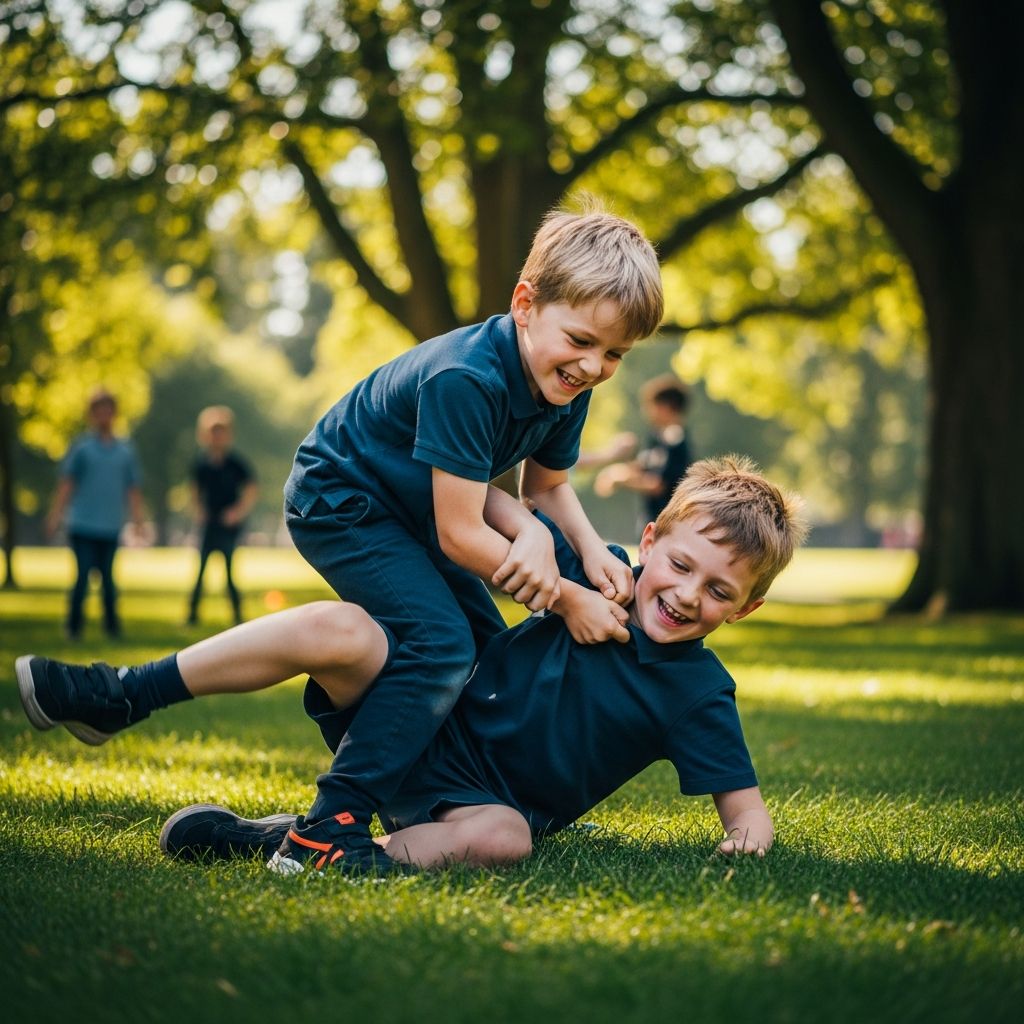
Rough-and-tumble play, including wrestling, chasing, and mock battles, is a common sight among young children and serves critical developmental roles when guided properly. Research indicates it aids in emotional regulation and social skills, but context matters to prevent escalation into real harm.
Understanding the Instinct for Physical Play
Children naturally gravitate toward vigorous physical interactions as part of their developmental wiring. This type of engagement, often seen between ages 2 and 6, helps them explore physical boundaries, strength, and social dynamics in a controlled environment. Unlike true aggression, which intends harm, rough play features laughter, role reversal, and mutual consent, fostering resilience rather than conflict.
Longitudinal studies show that physical play frequency correlates with reduced aggression when adults model dominance and limits effectively. For instance, fathers who maintain playful control during sessions help children internalize self-regulation, lowering everyday aggressive acts. This interaction builds emotional decoding skills, enhancing peer popularity and positive feelings.
Key Benefits of Rough-and-Tumble Interactions
- Emotional Regulation: Play-fighting teaches children to manage impulses, recognize when to stop, and handle frustration, reducing chronic aggression risks.
- Social Competence: It promotes understanding of consent, rules, and cooperation, breaking down gender biases and empowering participants.
- Physical Development: Vigorous activity strengthens motor skills, boosts confidence, and encourages healthy exertion.
- Problem-Solving: Scenarios involving pretend power struggles enhance imagination and strategic thinking.
Experts emphasize that such play prepares children for real-world interactions by allowing safe trial-and-error. Children learn peer dynamics without severe consequences, leading to better adult sociability. Boys, in particular, benefit from unrestricted playful aggression to meet developmental needs.
When Pretend Violence Emerges in Play
Fantasy elements like weapon play or war themes often accompany rough activities. Children use sticks as swords or chant aggressive phrases to process fears, assert power, or mimic observed events. This is developmentally normal, especially for those in environments with military or law enforcement influences.
Through socio-dramatic play, kids distinguish fantasy from reality, developing prosocial skills unless antisocial traits dominate. Banning these elements may hinder growth, creating play deficits and unpreparedness for challenges.
Spotting the Line Between Play and Real Aggression
Not all roughhousing is benign. Distinguish by intent: playful exchanges end in smiles and equity, while aggression involves one-sided dominance, injury, or distress. Persistent high aggression post-age 3 signals risks like later psychosocial issues, including crime and mental health problems.
| Healthy Rough Play | Concerning Aggression |
|---|---|
| Laughter and turn-taking | One child always wins/dominates |
| No intent to hurt; stops on cue | Inflicts pain; ignores ‘stop’ |
| Balanced power shifts | Imbalance leads to tears/injury |
| Builds bonds | Isolates or bullies peers |
Parental dominance in play moderates outcomes: less control links higher RTP to increased aggression. Monitor for media influences, as repeated violent screens can desensitize, normalize harm, or prompt imitation.
Risks from External Violence Exposure
Beyond play, real violence exposure disrupts development across stages. Infants may show alarm responses or numbness; toddlers regress in skills; preschoolers exhibit anxiety, shame, or revenge-seeking. Cumulative exposure heightens risks for attachment issues, poor academics, and exploitative relations.
CHADD notes media violence strongly associates with aggression spikes, urging limits on realistic, unpunished depictions. A single exposure can heighten short-term effects.
Parental Strategies for Safe Play
Parents play a pivotal role in channeling instincts positively. Demonstrate boundaries by letting kids briefly ‘win’ but regaining control to teach limits. Supervise to intervene early, redirecting to verbal resolutions.
- Set clear rules: No real hits, respect ‘stop’ signals.
- Model calm dominance: Stay in charge playfully.
- Balance with calm activities: Follow rough play with quiet time.
- Discuss emotions: ‘How did that feel? What if we tried this?’
- Limit media: Curate content avoiding glorified violence.
For at-risk kids, enhance RTP quality as intervention, targeting self-regulation deficits. Programs fostering prosocial skills aid those with emotional challenges.
Age-Specific Guidance
Tailor responses by stage:
- Ages 2-3: Short bursts; teach basic consent amid high energy.
- Ages 4-6: Encourage peer RTP for social gains; watch dominance.
- School Age: Channel into sports; address media influences.
Encourage inclusive play to dismantle biases, empowering all genders.
Expert Insights on Long-Term Outcomes
Peer rough play links to competence, skills, and popularity. Restricting it may stunt boys’ development. Yet, for children with antisocial patterns, more violent play predicts real-world issues. Early interventions leveraging guided play promise better trajectories.
Frequently Asked Questions
Is rough play normal for all kids?
Yes, it’s a universal developmental phase, especially physical for boys, aiding regulation and bonds when consensual.
Should I ban weapon pretend play?
No, it helps process fears and power needs; guide to ensure no real harm intent.
How much rough play is too much?
When it causes injury, distress, or imbalance; intervene to teach limits.
Does media violence cause aggression?
Strong association exists, especially realistic/unpunished; monitor exposure.
What if my child is overly aggressive?
Observe context; seek prosocial training or professional input if persistent.
This article spans approximately 1670 words, drawing on peer-reviewed insights for balanced parenting advice.
References
- Rough-and-Tumble Play and the Regulation of Aggression — Flanders J, Leo V, Paquette D, Pihl RO, Seguin JR. 2012-02-29. https://pmc.ncbi.nlm.nih.gov/articles/PMC3283567/
- Children and Violent Behavior: Where it Comes From and What to Do — CHADD. 2023-01-01. https://chadd.org/attention-article/children-and-violent-behavior-where-it-comes-from-and-what-to-do/
- Aggressive Play and Weapon Play: What It Means, Why Kids Do It — Bright Horizons. 2024-06-15. https://www.brighthorizons.com/article/education/aggressive-play-and-weapon-play
- Screens, Violence, and the Impact on Children — Brown University Health. 2023-05-10. https://www.brownhealth.org/be-well/screens-violence-and-impact-children
- Impact of Exposure to Violence on Development — The CAP Center. 2022-11-01. https://www.thecapcenter.org/medical/pdf/toolkit/Impact%20of%20Exposure%20to%20Violence%20on%20Development.pdf
- Young Children’s Play Fighting and Use of War Toys — Child-Encyclopedia. 2023-08-20. https://www.child-encyclopedia.com/play/according-experts/young-childrens-play-fighting-and-use-war-toys
- What Is Rough and Tumble Play? An Educator’s Guide — Rasmussen University. 2024-03-12. https://www.rasmussen.edu/degrees/education/blog/rough-and-tumble-play/