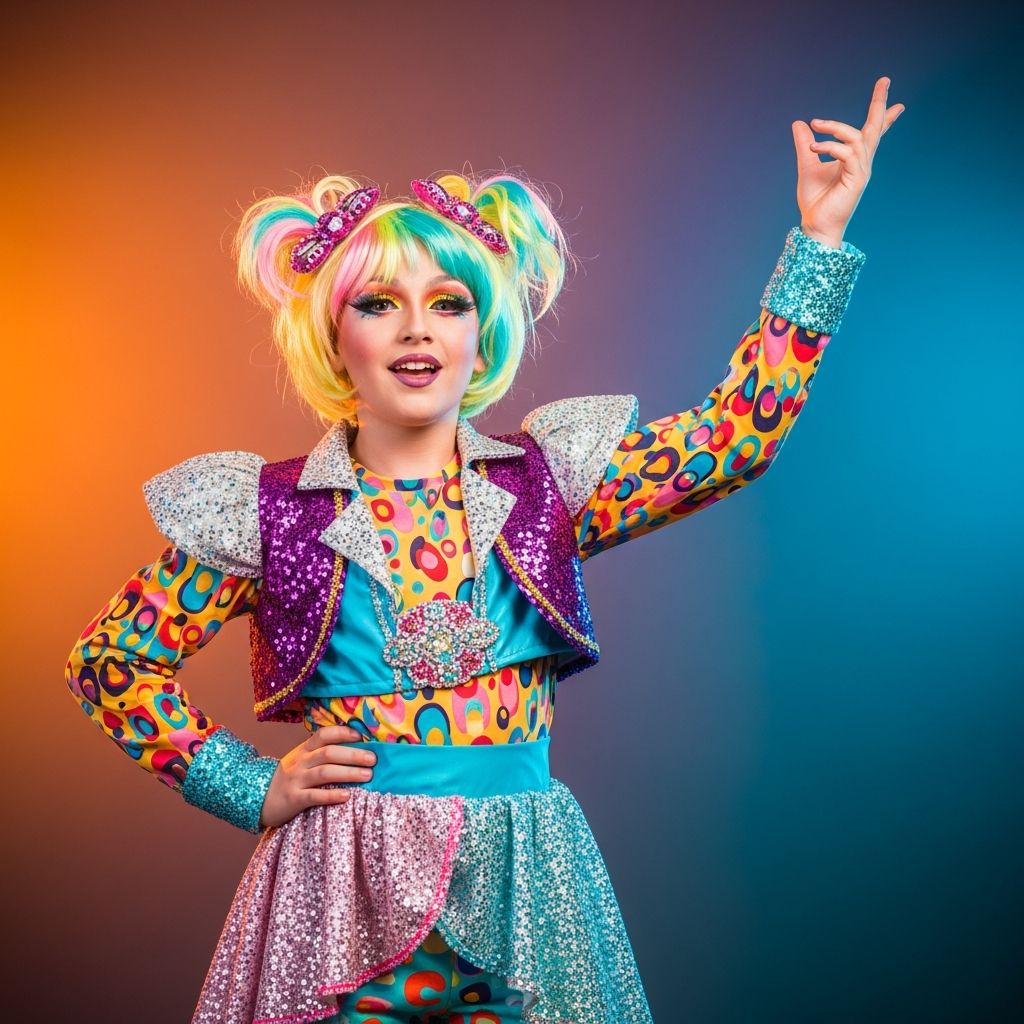
When a child discovers drag, many adults see only sequins and shock value. Look closer, and something more complex appears: a child experimenting with art, identity, and courage in a world that often insists on narrow rules about who they should be.
This article explores what it really means when a young person embraces drag, how families navigate public attention and criticism, and how parents can create a home where creativity and safety exist side by side.
What Is Drag, Really?
Drag is a performance art built around playing with gender, fashion, and persona to tell a story or evoke a strong emotional reaction. It often uses exaggerated makeup, clothing, and movement to highlight how arbitrary many gender rules truly are.
For kids, drag can feel like an extension of dress-up: a costume that comes with a stage, a name, and the freedom to act larger than life. Unlike a simple Halloween outfit, though, drag invites them to step into a character they shape and refine over time.
- Drag is not the same as being transgender; it is a performance, not a permanent identity.
- People of any gender can do drag, including boys, girls, and nonbinary kids.
- Drag can be campy and comedic, glamorous and dramatic, or quietly artistic and experimental.
Why Drag Attracts Some Kids
Children are natural shape-shifters. They become pirates, astronauts, wizards, and superheroes with little more than a hat and a story. Drag simply adds glitter, music, and an audience to that same impulse.
For some kids, especially those who feel different from their peers, drag offers a rare space where difference is not just tolerated but celebrated. It becomes a way to turn vulnerability into power.
Common reasons kids gravitate toward drag
- Love of performance: Kids who constantly sing, dance, and put on shows often see drag as a natural next step.
- Fascination with fashion and makeup: Drag allows them to experiment with color, texture, and style beyond everyday clothing.
- Need for self-expression: Gender-creative kids may find in drag a language for feelings they cannot yet fully explain.
- Desire for community: Young drag performers often find friends and mentors who affirm their creativity and identity.
The Emotional Power of a Drag Persona
Many young drag performers choose a stage name and persona that feels braver, wilder, or more glamorous than their everyday self. This alter ego functions like armor and amplifier at the same time.
Onstage, a shy child may become fearless, speaking into a microphone, commanding a crowd, or dancing with a confidence that would surprise their teachers at school.
How a persona helps kids grow
- Creates emotional distance: Mistakes feel less personal when they happen to the character rather than the child.
- Encourages experimentation: Kids may test out new ways of moving, speaking, or dressing under the “protection” of their drag name.
- Builds resilience: Learning to take feedback, handle applause, and manage nerves strengthens emotional skills they can use anywhere.
Family Life Behind the Eyeliner
For families, a child’s drag journey rarely begins with a fully formed persona and stage bookings. It usually starts with small things: a kid reaching for a sparkly dress, insisting on bolder makeup for playtime, or dancing obsessively to a favorite song.
Over time, these moments can grow into something bigger if parents say yes often enough and remain open to the unexpected path that follows.
Everyday realities in a drag-supportive household
- Living rooms turned into rehearsal stages, complete with improvised lighting and sound.
- Kitchen tables that double as craft stations for wigs, costumes, and rhinestones.
- Family calendars filled with school events, doctor appointments, and occasional performances.
- Ongoing conversations about safety, boundaries, and how to respond when people react badly.
Parents who support a young drag performer usually describe a mix of pride and fear. They see their child light up onstage and at the same time feel the weight of a culture that does not always understand or welcome difference.
Parenting a Young Drag Performer: Balancing Joy and Protection
Supporting a child in drag is not about handing them unchecked freedom or forcing them into the spotlight. It is about walking a careful line between nurturing their creativity and setting developmentally appropriate limits.
Healthy support means holding two commitments at once: honoring who the child is and keeping them physically, emotionally, and socially safe.
Key principles for supportive parents
- Listen first: Ask what your child loves about drag, what makes them nervous, and what they actually want to do.
- Move at their pace: Let the child, not adults, set the speed and scale of public exposure.
- Separate your dreams from theirs: Parents should be honest about their own excitement or anxiety and careful not to project adult ambitions onto a child’s hobby.
- Check in regularly: As kids grow, their needs and boundaries change; conversations about comfort levels should be ongoing.
Public Performances and the Online Spotlight
Modern childhood unfolds partly online, and drag magnifies that reality. Photos, videos, and interviews can travel far beyond the original audience, bringing both opportunity and risk to a child performer.
Families must think carefully about how visible a child should be, who controls that visibility, and how to handle the attention that follows.
Questions to ask before going public
- Is my child able to understand, in age-appropriate terms, what it means to be seen by strangers?
- Who decides which events are appropriate, and which are not?
- What are our rules around photography, video recording, and tagging on social media?
- Which adults can help us vet events for safety and suitability?
Some families choose to limit performances to youth-centered events, community spaces, or private gatherings. Others allow carefully selected public shows while declining offers that feel more about shock value than genuine artistry.
When Childhood Meets Controversy
Young drag performers can become symbols in public debates they never chose. Strangers may interpret a photo or short video clip through their own political or moral lens, projecting fears and assumptions onto a child they have never met.
This scrutiny can be painful for families, even when they feel confident in their choices and boundaries.
Common misunderstandings about kids and drag
- “Drag is automatically adult content.” In reality, content and context matter. Kid-appropriate drag looks very different from late-night club shows.
- “A child doing drag means they are being forced into an identity.” Many kids initiate their involvement themselves, and their interests may evolve over time.
- “Supporting kid drag is the same as rejecting traditional childhood.” Children who do drag still navigate homework, chores, friendships, and family rules like any other child.
Parents often become advocates by necessity, learning how to respond calmly to criticism, educate others, and choose when silence is the healthiest option.
Healthy Boundaries: Where Parents Must Draw the Line
Affirmation is not the same as permissiveness. Protecting a young drag performer means saying no to situations that are unsafe, sexualized, or emotionally overwhelming, even when they come wrapped in flattery or glamorous opportunities.
Families earn criticism from all sides: some say they go too far, others say they are too cautious. The real measure is not public approval but the child’s wellbeing.
Examples of reasonable boundaries
- No performances in venues that primarily serve alcohol or have explicit adult themes.
- Set time limits on rehearsals and appearances to protect sleep, schoolwork, and unstructured play.
- Require the presence of a trusted adult at all events and backstage spaces.
- Establish rules about costumes and choreography that match the child’s age.
- Retain control over all contracts, social media accounts, and public statements.
How Drag Can Strengthen a Child’s Skills
When handled thoughtfully, drag can become an intense workshop for life skills that serve children far beyond the stage. Many of these benefits mirror those associated with theater, dance, and music.
Instead of simply asking whether drag is “good” or “bad,” it is useful to look at concrete areas where kids can grow.
| Skill Area | How Drag Helps Develop It |
|---|---|
| Confidence | Performing onstage, even for small audiences, helps kids practice being seen and heard without shrinking into the background. |
| Creativity | Designing looks, choosing music, and inventing a persona push children to make original artistic decisions. |
| Resilience | Handling mistakes, costume malfunctions, or awkward moments teaches kids to recover and keep going. |
| Empathy | Stepping into a character’s shoes can expand a child’s understanding of different experiences and emotions. |
| Communication | Talking with event organizers, other performers, and curious audience members requires clear speech and social awareness. |
Supporting Gender-Creative Kids Beyond Drag
Even if a child eventually loses interest in drag, their need for affirmation and safe exploration remains. Parents can create a home environment where all forms of gender expression are possible without making drag the sole focus of the child’s identity.
That means treating drag as one hobby among many while remaining attentive to the ways it connects to deeper questions about self and belonging.
Practical ways to show support
- Offer a variety of clothes and toys without labeling them as “for boys” or “for girls.”
- Read age-appropriate books that feature diverse gender expressions and families.
- Connect with local or online communities for parents of LGBTQ+ and gender-creative kids.
- Work with teachers and school staff to ensure your child is safe from bullying and discrimination.
- Consider affirming mental-health support if your child faces ongoing stress, anxiety, or harassment.
Talking With Your Child About Identity
Drag can spark big questions: “Does this mean I’m gay?” “Am I a boy or a girl?” “Why do people get mad about what I wear?” Parents do not need all the answers, but children do need honest, age-appropriate conversations.
The goal is not to label your child prematurely but to open a safe space where they can wonder and explore without fear of punishment or shame.
Conversation tips for caregivers
- Use simple language and let your child set the pace of the discussion.
- Differentiate clearly between performance (“This is a character you play”) and identity (“This is who you are every day”).
- Acknowledge that adults sometimes react badly because they are afraid of what they do not understand.
- Reassure your child that your love is not dependent on how they dress, who they become, or whether they change their mind later.
Schools, Peers, and the Wider Community
Even if a child’s drag persona never appears at school, their gender expression and interests will inevitably show up in classrooms and on playgrounds. Preparing for that reality is as important as planning any performance.
Parents who support a young drag performer often become informal educators, helping others understand that dress-up and performance are not threats but extensions of childhood imagination.
Steps to foster a safer environment
- Meet with school staff to discuss bullying policies and how they apply to gender-creative kids.
- Encourage teachers to include diverse gender representations in stories, lessons, and classroom materials.
- Help your child practice simple, confident responses to teasing or invasive questions.
- Build connections with other families who value inclusion, so your child has allies among peers.
Frequently Asked Questions About Kids and Drag
Does a child doing drag mean they are LGBTQ+? Not necessarily. Drag is a performance style, not a sexual orientation or gender identity. Some young performers later identify as LGBTQ+, some do not, and many are still figuring things out. The most important response is acceptance rather than prediction. Is it safe for a child to perform in drag? Safety depends entirely on context. Kid-appropriate events, supportive adults, and clear rules about costumes and venues can make drag as safe as any other performing art. Parents should carefully vet opportunities and prioritize the child’s comfort and consent. What if my child changes their mind about drag? Interests shift as children grow. If a child moves on from drag, that does not make earlier support a mistake. It simply means you respected who they were at the time, giving them room to experiment and evolve. How do I respond to relatives who disapprove? Set firm but calm boundaries. You might say that while others are entitled to their opinions, decisions about your child’s clothing, hobbies, and activities belong to you and your child. Protecting your child’s dignity takes priority over keeping the peace at every cost. Is it possible to support drag and still value privacy? Yes. Families can keep performances within a small circle of friends, avoid posting images online, or use only private accounts. Visibility is not a requirement for authenticity; a child can be just as much a drag artist on a living-room stage as under bright club lights.
Letting Childhood Be Both Ordinary and Extraordinary
Behind the lashes and the spotlight, a young drag performer is still a child who needs bedtimes, boundaries, homework help, hugs, and boring days with nothing scheduled. Drag does not erase these needs; it simply becomes one more thread in the tapestry of their growing-up years.
When families treat drag as a form of play and art, not a spectacle or battleground, children gain room to become fully themselves — in and out of costume. The real achievement is not a flawless performance but a childhood where self-expression and safety can coexist.