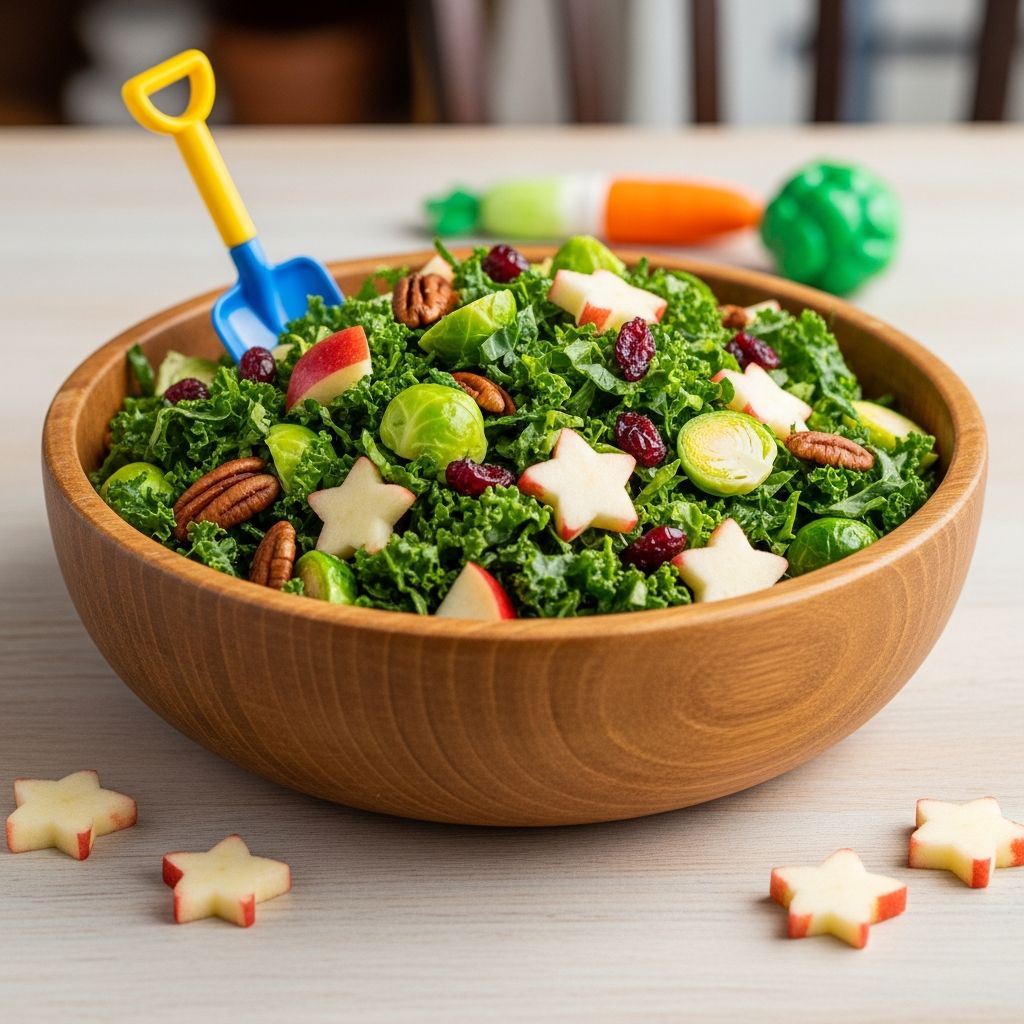
Kale and Brussels sprouts are two of the most nutrient-dense vegetables in the produce aisle, but they often land on the “no, thank you” list for kids. This guide will show you how to transform these tough greens into a crunchy, flavorful salad your whole family can enjoy, without pressure or battles at the table.
Why These Two Veggies Are Worth the Effort
Kale and Brussels sprouts belong to the cruciferous vegetable family, which means they offer an impressive package of vitamins, minerals, fiber, and plant compounds that support long-term health. They are especially known for supplying vitamins A, C, and K, along with antioxidants that help protect cells and support the immune system.
For growing kids, these vegetables contribute to strong bones, healthy vision, and better digestion. They also provide fiber that helps keep kids full longer after meals, which can reduce constant requests for snacks and help stabilize energy levels throughout the day.
Breaking Down the Nutrition in Kid-Friendly Terms
You do not need to lecture your child on biochemistry to explain why these vegetables matter. Instead, link the nutrients to simple, everyday benefits that make sense to children and teens. This takes the focus away from rules and puts it on how food helps their bodies do cool things.
- Vitamin A: Supports eye health and night vision, which kids can relate to reading, sports, or seeing in a dim room.
- Vitamin C: Helps the immune system and keeps skin and gums healthy, which parents can connect to staying well during school season.
- Vitamin K and calcium: Team up for strong bones and teeth, which matters for active kids who run, jump, and play sports.
- Fiber: Keeps digestion regular and helps kids feel comfortably full after meals.
What Makes Raw Kale and Sprouts Tough for Kids
Their natural texture and flavor work against them if served plain. Raw kale can be fibrous and bitter, while Brussels sprouts can taste strong and sulfuric, especially when overcooked. Kids often react to texture and smell as much as taste, so addressing these elements matters as much as seasoning.
A successful family salad softens the leaves, balances bitterness with bright or sweet flavors, and adds familiar crunch from kid-approved toppings. When you shift the texture and surrounding flavors, even skeptical children may be willing to take a curious bite.
Building a Kid-Friendly Kale & Brussels Sprouts Salad Base
Think of the salad as a customizable template instead of one rigid recipe. The base is always finely shredded greens, which are easier to chew and absorb dressing more quickly than large pieces. Prepare the greens in advance so they are ready whenever you want to assemble a fast meal.
- Choose the kale: Lacinato (dinosaur) kale is usually softer and milder than curly kale, which can be more bitter and frilly.
- Prep the Brussels sprouts: Trim the ends, remove any loose outer leaves, and slice them very thinly so they resemble shredded cabbage.
- Shred finely: Use a sharp knife or food processor to slice both vegetables into very thin ribbons. The thinner the slices, the more kid-friendly the texture tends to be.
Softening the Greens: The “Massage” Step
One of the simplest ways to make kale and Brussels sprouts more appealing to kids is to soften them before assembling the salad. A quick “massage” with dressing or just oil and lemon juice helps break down the tough fibers and reduce bitterness.
- Place the shredded kale and Brussels sprouts in a large bowl.
- Drizzle with a small amount of olive oil and a squeeze of lemon or a splash of mild vinegar.
- Use clean hands to gently rub and squeeze the greens for one to two minutes, until they look slightly darker and more flexible.
This step makes the salad taste more mellow and feel less scratchy, which can be a game-changer for children who are sensitive to textures.
Kid-Approved Flavor Profiles to Try
Dressings and mix-ins can turn a plain bowl of greens into something exciting. Instead of forcing kids to accept grown-up flavors immediately, build bridges using ingredients they already love, then gradually introduce more complex tastes over time.
| Flavor Style | Key Ingredients | Why Kids May Like It |
|---|---|---|
| Sweet & crunchy | Apple slices, dried cranberries, toasted pumpkin seeds, light honey-lemon dressing | Sweet fruit and crunchy seeds distract from bitterness and add fun texture. |
| Cheesy & savory | Parmesan shavings, mild grated cheese, sunflower seeds, creamy yogurt-based dressing | Familiar cheesy flavor makes the greens feel more like a favorite pasta topping. |
| Taco-inspired | Black beans, corn, shredded cheese, crushed tortilla chips, lime-cilantro dressing | Reminds kids of taco night, with crunchy toppings and bright flavors. |
| Rainbow bowl | Carrot ribbons, purple cabbage, red bell pepper, orange segments, light citrus dressing | Colorful presentation makes it feel like a “challenge” to eat all the colors. |
Simple Dressing Ideas That Work for Families
Many adults default to strong, tangy vinaigrettes for hearty greens, but these can overwhelm young taste buds. Start with milder dressings and keep the acidity moderate, then adjust gradually as your children become more comfortable with the salad.
- Mild lemon-honey dressing: Olive oil, lemon juice, a small amount of honey, and a pinch of salt. Whisk until creamy and taste for sweetness.
- Yogurt-herb dressing: Plain yogurt, olive oil, lemon or lime juice, a little garlic, and chopped fresh herbs like dill or parsley.
- Creamy “ranch-style” twist: Mix Greek yogurt with a splash of milk, garlic powder, onion powder, dried chives, and a small pinch of salt.
Prepare the dressing in a jar so kids can help shake it. Involving them in the process boosts curiosity and increases the chance they will actually try the salad.
Making the Salad Feel Familiar
Children are more likely to try new vegetables if the dish includes something they already enjoy. Use that to your advantage by pairing kale and Brussels sprouts with familiar flavors and fun textures. This does not mean hiding the vegetables; it means building a bridge from comfort foods to new experiences.
- Sprinkle a small amount of shredded cheese over the top if your child loves cheesy foods.
- Add crunchy elements like roasted chickpeas, seeds, or small croutons so each bite includes something fun.
- Serve the salad alongside a favorite main, such as grilled chicken, pasta, or burgers.
Age-by-Age Strategies for Introducing the Salad
There is no single age when kids suddenly become open to kale and Brussels sprouts. Adjust the approach based on your child’s stage and personality, and allow repeated exposure over time rather than expecting instant success in one meal.
- Toddlers and preschoolers: Offer tiny portions on a separate plate, without insisting they eat it. Let them touch and explore the salad at their own pace.
- Elementary-age kids: Invite them to choose toppings from a short list, such as picking between apples or dried cranberries, or between cheese or seeds.
- Tweens and teens: Involve them in shredding the greens, mixing the dressing, or looking up different variations online, then let them season their own portion.
Turning Salad Prep into a Family Activity
Kids are often more willing to eat a food they helped make. Treat salad prep as a simple kitchen project where each person has a role. This builds confidence in the kitchen and turns vegetables into something connected with family time rather than just another rule at the table.
- Young children can rinse the leaves, tear kale into smaller pieces, or sprinkle toppings.
- Older kids can grate cheese, slice soft fruits, or whisk dressings with supervision.
- Teens can be in charge of selecting a flavor theme for the salad and arranging it in a serving bowl.
Meal Prep Tips for Busy Weeks
This type of salad holds up better than delicate lettuce, which makes it ideal for meal prep. The sturdy nature of kale and Brussels sprouts means they can sit in the refrigerator, lightly dressed, without turning soggy as quickly as other greens.
- Shred a large batch of kale and Brussels sprouts at the beginning of the week and store them in an airtight container.
- Keep dressing and crunchy toppings separate until serving time to preserve texture.
- Use leftovers as a base for grain bowls by adding cooked quinoa, brown rice, or roasted potatoes.
Common Pitfalls and How to Avoid Them
Even with a well-designed salad, certain missteps can turn kids off quickly. Paying attention to small details like temperature, seasoning, and portion size helps prevent unnecessary resistance and makes the experience more positive.
- Serving portions that are too big: Start with just a few bites, so the salad looks manageable and not overwhelming.
- Making it a battle: Avoid using dessert or rewards as leverage. Instead, invite curiosity by describing the salad’s crunch or color.
- Skipping the softening step: If the greens are too tough, kids may decide instantly that they dislike them, making future attempts harder.
Creative Ways to Repurpose Leftover Salad
If you end up with extra kale and Brussels sprouts salad, you do not have to serve it the same way the next day. A little creativity can keep leftovers interesting and help reduce waste. Repurposing the salad into other dishes also expands your family’s exposure to these vegetables in different contexts.
- Warm it gently in a skillet with a splash of broth and serve as a side dish with eggs or grilled fish.
- Stir into cooked grains or pasta with extra olive oil and cheese to create a warm, hearty bowl.
- Use as a topping for flatbreads or pizzas, combined with a mild cheese.
Sample Build-Your-Own Salad Night Plan
One fun way to encourage kids to try kale and Brussels sprouts is to set up a build-your-own salad bar at home. Lay out a small but colorful selection of ingredients and let everyone create their own bowl. This gives children a sense of control and turns trying new foods into a low-pressure activity.
- Base: Massaged kale and shredded Brussels sprouts.
- Proteins: Grilled chicken strips, beans, boiled eggs, or shredded cheese.
- Crunch: Seeds, nuts (if safe), croutons, or crushed whole-grain crackers.
- Sweet bites: Apple chunks, mandarin orange segments, or a sprinkle of dried fruit.
- Dressings: Offer two or three mild options in small jars so kids can “shake and pour.”
Frequently Asked Questions
1. Is it safe for kids to eat raw kale and Brussels sprouts?
For most healthy children, raw kale and Brussels sprouts are safe when washed well and cut into small, manageable pieces. If your child has digestive issues or specific medical conditions, consult a healthcare provider before adding large amounts of raw cruciferous vegetables.
2. How often should my child eat this salad?
There is no strict rule, but including cruciferous vegetables several times a week can support a varied, nutrient-rich diet. You can rotate this salad with other vegetable sides to avoid fatigue and keep meals interesting.
3. What if my child refuses to try it?
Refusal is common, especially when a food looks very green or unfamiliar. Continue offering very small portions without pressure, and keep involving your child in shopping and preparation so the salad becomes familiar over time rather than a one-time surprise.
4. Can I cook the salad for kids with sensitive digestion?
Yes. Lightly sautéing or steaming the shredded kale and Brussels sprouts for a few minutes can make them easier to digest and milder in flavor. Once cooled slightly, you can still toss them with dressing and toppings for a warm salad.
5. How can I pack this salad for school lunch?
Use a sturdy container and keep dressing in a small lidded cup to pour on just before eating. Add a cold pack to keep the salad fresh and include a child-friendly fork or spork so it is easy to eat at a school desk.
Bringing It All Together
Kale and Brussels sprouts may never become your child’s favorite foods overnight, but they can become familiar, even welcome, parts of your family’s routine. By softening the greens, balancing flavors, and involving kids in the process, you turn this powerful pair of vegetables into a crunchy, colorful salad that supports both nutrition and positive mealtime experiences.