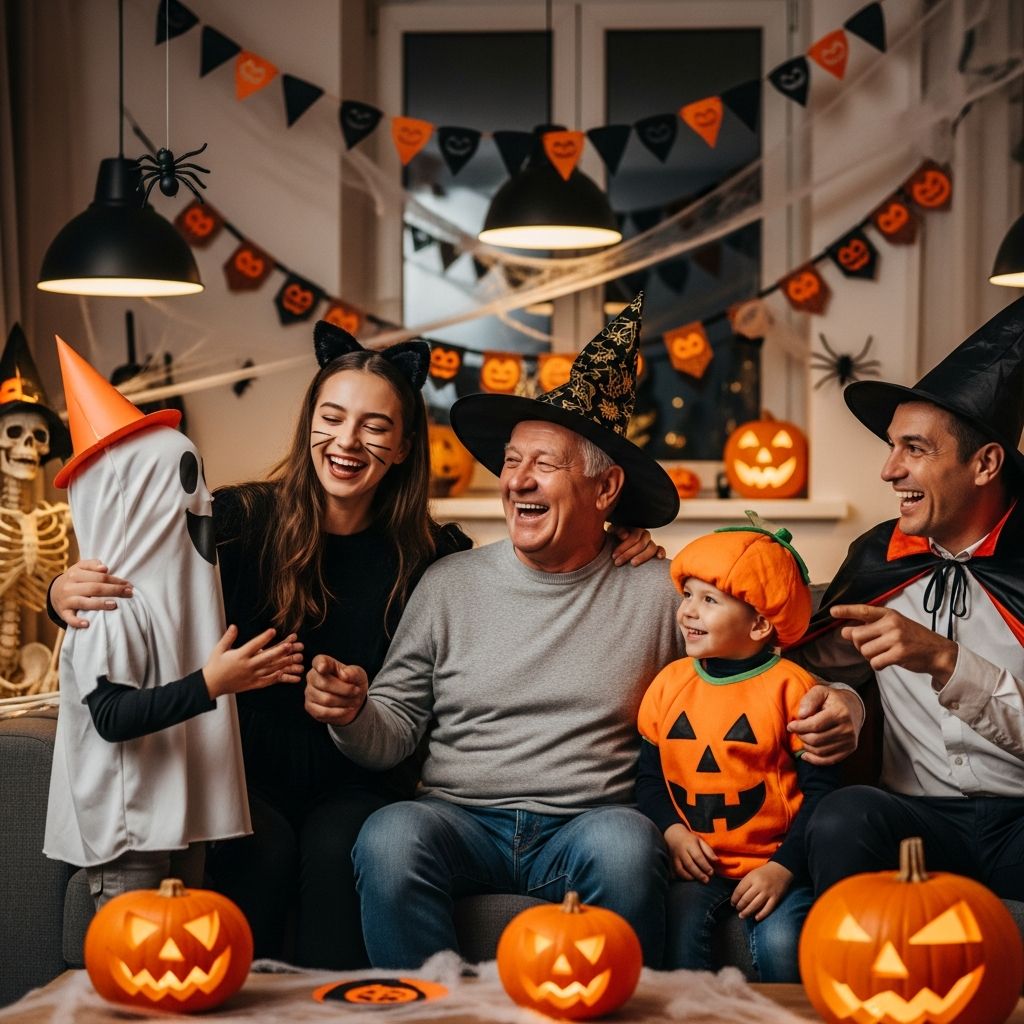
Halloween does not have to be all jump scares and creepy costumes. For many families, it is the one night a year when kids can be as silly as they are spooky. A good stash of kid-friendly Halloween jokes can turn a dark, chilly evening into a giggle-filled celebration that even the most easily frightened child can enjoy.
This guide gathers playful ideas for Halloween humor, explains why jokes are great for kids, and offers practical ways to use jokes at home, in classrooms, or at parties. You will also find themed joke lists, age-appropriate tips, and simple activities that make the most of every punchline.
Why Halloween Jokes Are Great for Kids
Halloween humor does more than get kids laughing. It also helps them explore big feelings—like fear, excitement, and curiosity—in a light, manageable way.
- Reduces fear: Turning ghosts, skeletons, and monsters into the butt of a joke can make them less scary for young children.
- Builds language skills: Many Halloween jokes depend on puns, wordplay, and double meanings, which can support vocabulary and reading development.
- Encourages social connection: Sharing jokes encourages turn-taking, listening, and responding, all of which support social and emotional skills.
- Boosts creativity: Kids often start inventing their own jokes once they hear a few favorites, practicing flexible thinking in the process.
Educational organizations note that age-appropriate humor activities can support communication skills and help children feel more confident speaking in a group.
How to Use Halloween Jokes Throughout the Season
Instead of saving jokes for a single party, you can sprinkle them across the entire Halloween season.
- Morning mood booster: Start the day leading up to Halloween with one quick joke at breakfast.
- Car-ride entertainment: Keep a printed list or digital note of jokes to read on the way to school or to the pumpkin patch.
- Classroom brain breaks: Teachers can use a one-minute joke break between lessons as a reset that still involves language and listening.
- Party icebreaker: Put a joke on each plate or cup so kids have something to read and share as they arrive.
- Trick-or-treat surprise: Older kids can offer a joke along with their “trick or treat,” spreading laughter door to door.
Popular Halloween Joke Themes Kids Love
Most kid-friendly Halloween jokes fall into a few familiar categories. Using themes can help you organize games, decorations, or even costume choices around specific joke types.
| Theme | Typical Characters | Humor Style | Best For |
|---|---|---|---|
| Ghosts & Spirits | Casper-style ghosts, friendly phantoms | Gentle puns, silly mistakes, disappearing acts | Young kids who are nervous about scary stories |
| Skeletons & Bones | Clumsy skeletons, bony band members | Puns about ribs, skulls, and bones | School-age kids who enjoy wordplay |
| Witches & Wizards | Forgetful witches, friendly spell-casters | Spells gone wrong, broomstick mishaps | Kids who love fantasy and magic stories |
| Vampires & Monsters | Clumsy vampires, goofy werewolves | Puns on “fangs,” howls, and late-night snacks | Older kids who want “spooky” but still silly |
| Pumpkins & Candy | Jack-o’-lanterns, trick-or-treaters | Food jokes, candy wordplay, costume mix-ups | All ages, especially during parties and events |
Guidelines for Keeping Halloween Jokes Kid-Friendly
Not every Halloween joke online will be right for every child. To keep things safe, light, and age-appropriate, families and teachers can use a few simple guidelines.
- Watch the fright level: For preschoolers and young elementary children, avoid jokes that emphasize gore or realistic horror. Child development experts note that children under 7 can struggle to separate fantasy from reality in frightening themes.
- Avoid mean-spirited humor: Skip jokes that tease specific people, cultures, or appearances. Focus on situations, wordplay, and fictional characters instead.
- Check for understanding: If a joke relies on a complex pun, be ready to explain the wordplay or pick something simpler.
- Match jokes to your setting: A joke that works at home may not be right for a large classroom or mixed-age party. Consider the youngest or most sensitive kids first.
Public health agencies and education departments encourage adults to talk with children about scary or confusing media, including holiday themes, and to adjust content based on each child’s reactions.
Ideas for Sharing Halloween Jokes at Home
With a little planning, parents and caregivers can turn Halloween jokes into a family tradition.
- Joke jar: Write jokes on small slips of paper and place them in a pumpkin-shaped bowl or decorated jar. Let kids draw one each night in October.
- Table talk starters: Place one joke under each plate before dinner. Take turns reading them aloud and explaining the punchline.
- Joke-of-the-day calendar: Use a simple wall calendar. Each day, tape or write a new Halloween joke in the square for kids to find.
- Bedtime “boo” jokes: Replace one short bedtime story a week with five or six silly Halloween jokes, ending the day with laughter instead of fear.
Classroom and Party Activities Using Halloween Jokes
Teachers, group leaders, and party hosts can easily turn jokes into interactive games that get kids talking, reading, and moving.
1. Joke Matching Game
Print or write jokes on one set of cards and punchlines on another set. Shuffle and hand them out randomly. Kids must walk around, reading cards aloud to find their correct match. This supports reading practice and social interaction.
2. Make-Your-Own Monster Jokes
Give children a simple structure to build their own jokes, such as:
- “Why did the monster go to the place?”
- “Because it wanted to funny action.”
Kids fill in the blanks and try their new jokes on classmates. Encouraging joke creation can support creative thinking and narrative skills.
3. Trick-or-Treat Joke Stations
For parties or school events, create small “joke stations” around a room:
- Each station has a bowl of jokes with a matching theme (ghosts, pumpkins, witches, and more).
- Children collect a joke and a small treat from each station.
- Older kids can be in charge of reading jokes aloud to younger ones.
4. Halloween Joke Wall
Hang a large piece of paper or poster board on the wall. Ask each child to write (or dictate) their favorite Halloween joke and draw a small picture to go along with it. Add to the wall throughout October as kids discover or invent new ones.
Balancing Humor and Safety on Halloween Night
Even while everyone is laughing, adults still need to think about safety during trick-or-treating and parties. A calm, playful atmosphere can help kids remember safety rules more easily.
- Use jokes as reminders: Turn safety tips into playful lines, such as a silly rhyme about staying with the group or using a flashlight.
- Practice knock-knock jokes: Before heading out, rehearse how to knock, step back from the door, share a quick joke if invited, and say “thank you.”
- Pause for breaks: Use joke stops along a walking route—every few houses, stop to tell a joke and check that everyone is together.
Health and safety organizations recommend planning trick-or-treat routes, staying with trusted adults, and using reflective gear or flashlights so children remain visible in the dark.
Creating Your Own Halloween Joke Book
Collecting jokes into a homemade “book” can be a fun art and literacy project for home or school.
- Step 1 – Gather jokes: Invite each child to contribute three to five Halloween jokes they like or create.
- Step 2 – Design pages: Give each child one sheet of paper to write their joke and draw an illustration.
- Step 3 – Bind the pages: Staple, clip, or tie pages together with yarn to create a simple book.
- Step 4 – Read-aloud time: Hold a “book launch” where everyone reads their pages aloud.
Projects that combine reading, writing, and drawing can support multiple learning goals at once, particularly in early elementary grades.
Age-by-Age Tips for Halloween Humor
Children’s understanding of jokes changes as they grow. Adjusting jokes by age group can help everyone feel included.
Preschool (Ages 3–5)
- Use very simple jokes, often based on silly sounds or obvious mismatches.
- Explain that ghosts, monsters, and witches in jokes are pretend characters.
- Focus on friendly images and avoid realistic horror details.
Early Elementary (Ages 6–8)
- Introduce easy puns and knock-knock jokes involving pumpkins, candy, and costumes.
- Encourage kids to tell jokes to each other and practice speaking clearly in front of small groups.
- Be prepared to explain why a joke is funny; kids at this age are just starting to grasp double meanings.
Upper Elementary (Ages 9–11)
- Offer more complex puns and wordplay involving vampires, skeletons, and monsters.
- Invite children to write original jokes and share them during class or family gatherings.
- Remind them that a good comedian reads the audience—if someone looks uncomfortable, it is time for a different joke.
Sample Themed Joke Ideas (Without the Punchlines)
To inspire your own creativity, here are some setups you can adapt. Add your own endings or let kids come up with the punchlines.
- “Why did the pumpkin bring a backpack to school?”
- “What did the friendly ghost say when it met a new friend?”
- “Why did the skeleton join the marching band?”
- “What happens when a witch forgets where she parked her broom?”
- “Why did the vampire check a cookbook out of the library?”
- “What did the monster bring to the costume party instead of a mask?”
Having kids invent answers gives them ownership of the humor and often leads to wonderfully unexpected punchlines.
Frequently Asked Questions (FAQs)
Q: How many Halloween jokes should I plan for a party?
A: For a one- to two-hour kids’ party, 15–25 jokes is usually enough, especially if they are spread out across games and activities rather than told all at once.
Q: Are Halloween jokes appropriate for school?
A: Yes, as long as they are age-appropriate, avoid violent or frightening imagery, and do not target specific individuals or groups. Simple wordplay about costumes, candy, and friendly monsters usually works well in classrooms.
Q: What if my child gets scared by Halloween jokes?
A: Let your child know it is okay to skip any joke or activity that feels uncomfortable. Choose friendlier themes like pumpkins and silly costumes, and avoid ghosts or monsters until they feel more confident.
Q: How can I help shy kids feel comfortable telling jokes?
A: Start with small audiences—one parent, a sibling, or a close friend. Practice the joke together, then gradually invite them to share it with larger groups when they are ready. Using picture prompts can also help kids remember the setup and punchline.
Q: Can Halloween jokes support learning at home?
A: Yes. Reading jokes aloud builds fluency, and explaining punchlines exercises comprehension and vocabulary. Writing or illustrating jokes adds extra practice in spelling and drawing.
References
- Halloween Health and Safety Tips — Centers for Disease Control and Prevention. 2022-10-24. https://www.cdc.gov/family/halloween/index.html
- Teaching Your Child to: Become a Good Listener — U.S. Department of Education. 2021-01-15. https://www2.ed.gov/parents/academic/help/reader/index.html
- Social and Emotional Learning in Early Childhood — Collaborative for Academic, Social, and Emotional Learning (CASEL). 2023-03-10. https://casel.org/fundamentals-of-sel/what-is-the-case-for-sel/
- Children and Media Tips — American Academy of Pediatrics. 2020-11-02. https://www.healthychildren.org/English/family-life/Media/Pages/Tips-for-Parents-Digital-Age.aspx
- Fun Ways to Build Your Child’s Vocabulary — Reading Is Fundamental. 2021-05-06. https://www.rif.org/literacy-central/collections/family-literacy-tips