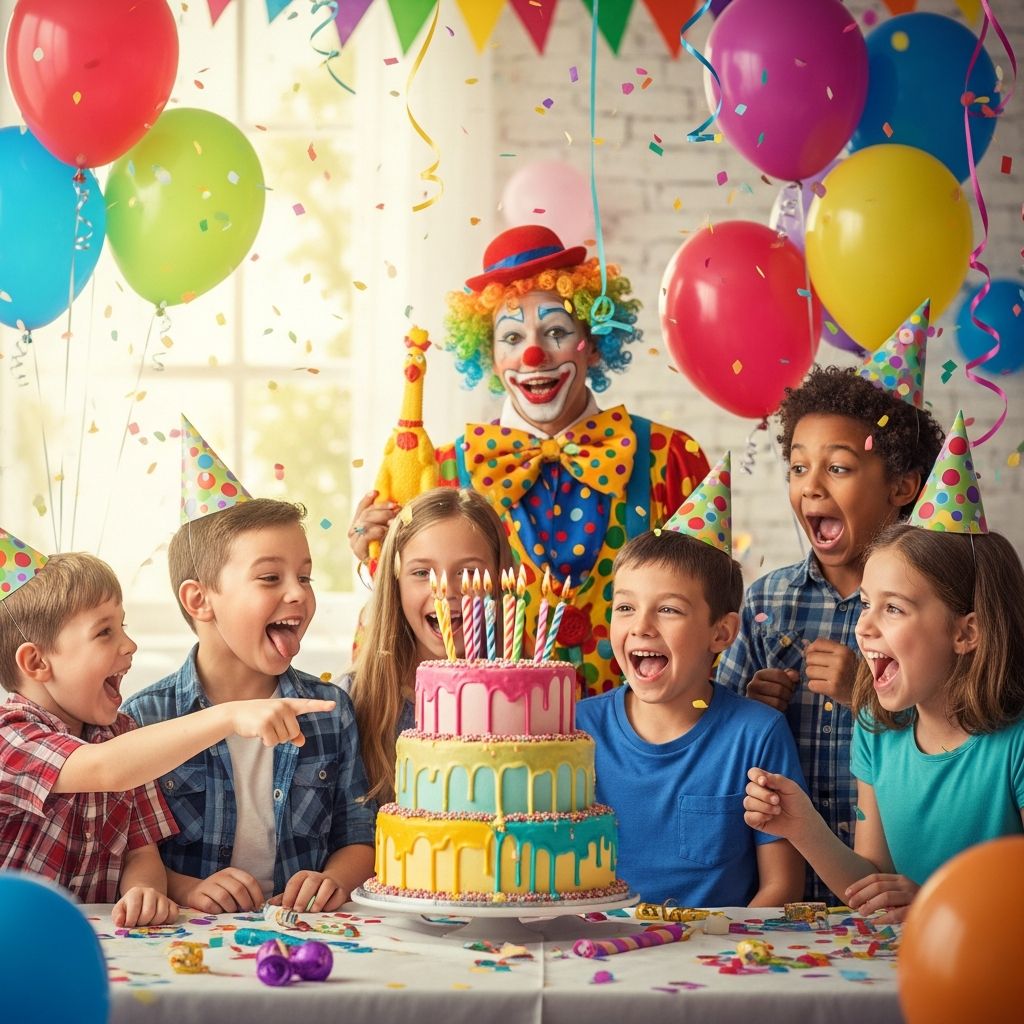
Kids rarely remember what flavor the cake was, but they almost always remember how much fun they had. One of the easiest ways to turn a regular party into an unforgettable celebration is to fill it with laughter using simple, silly birthday jokes.
This guide offers parents and caregivers a big batch of kid-friendly birthday humor, plus ideas on how to use jokes throughout the party so every age group feels included and every child gets a turn to laugh.
Why Laughter Belongs at Every Birthday Party
Jokes at a birthday party are more than just silly wordplay. They can help kids feel relaxed, build connections, and create positive memories that last long after the candles are blown out.
- Instant icebreaker: A quick joke can help shy kids feel more comfortable joining in group activities.
- Shared joy: Laughing together helps kids bond and strengthens friendships.
- Stress buster: Research shows that humor can reduce stress and support emotional well-being in children and adults alike.
- Confidence boost: Telling a joke and hearing others laugh can make kids feel heard, capable, and proud.
Light-hearted humor is especially helpful during big, high-energy events like birthdays, when some kids may feel overwhelmed or nervous.
What Makes a Joke Great for Kids?
Not every joke is suitable for young audiences. A good birthday joke for kids should be easy to understand, gentle in tone, and completely safe to share in a mixed-age group.
- Simple language: Short sentences and words most kids already know.
- Playful puns: Wordplay on birthdays, cake, candles, animals, and favorite foods.
- No meanness: Avoid jokes that tease anyone in the room or target the birthday child.
- Clean content: Skip bathroom humor, scary topics, or anything that relies on insults.
- Big, bright images: Jokes about balloons, dinosaurs, robots, and magical creatures are usually a hit.
For very young kids, jokes that are more about silly images than clever wordplay often work best. As children get older, they enjoy more complex puns and twist endings.
Easy Birthday One-Liners Kids Can Learn Fast
Short, snappy one-liners are perfect for kids who are just starting to tell jokes. These can be used in birthday cards, written on party signs, or read aloud before cake time.
- Cake capers: Jokes that play on frosting, candles, and slices are easy for kids to grasp.
- Party props: Balloons, hats, and presents make great punchlines.
- Age jokes: Gentle “you’re one year older” wordplay gets laughs without embarrassing the birthday child.
Encourage your child to choose one or two one-liners to practice before the party. When everyone gathers to sing, they can share their favorite joke and kick off the celebration with a giggle.
Knock-Knock Jokes That Work for Birthday Parties
Knock-knock jokes are ideal for group fun because they have a built-in call-and-response, which keeps kids involved and listening closely.
- Predictable rhythm: Kids quickly learn the pattern: “Knock knock” – “Who’s there?” – and so on.
- Lots of variations: You can adapt the punchline to match your party theme (pirates, space, animals, superheroes).
- Shared spotlight: Every child can get a turn to be the joke-teller while others answer the lines.
You can even set up a “knock-knock corner” where kids line up, knock on a cardboard door, and tell a birthday-themed knock-knock joke to enter the “party zone.”
Animal-Themed Birthday Jokes Kids Adore
Animals are comedy gold for kids. They already love imagining how cats, cows, frogs, or dinosaurs might talk, so combining animals with birthday silliness is an easy win.
- Farmyard fun: Cows, pigs, and sheep lend themselves to funny sounds and playful word twists.
- Wild celebrations: Lions, tigers, and jungle animals can “roar” about birthdays or throw wild parties.
- Punny pets: Dogs and cats can wish people a “paw-some” or “purr-fect” birthday.
- Ocean jokes: Fish, crabs, and clams can “shell-abrate” and “wave” happy birthday.
If your child is obsessed with a particular animal, try turning that favorite creature into the star of your party jokes. For example, dinosaur lovers might enjoy imagining a “party-saurus” with a cake almost as big as its tail.
Food and Cake Jokes for Sweet-Toothed Kids
Birthday parties and food are inseparable, which makes snacks and desserts a great target for harmless punchlines.
| Food Theme | Type of Joke | Why Kids Love It |
|---|---|---|
| Cake & cupcakes | Puns about slices, layers, and frosting | Kids instantly picture the dessert table and giggle. |
| Ice cream & sprinkles | Jokes about melting, scoops, and “cool” friends | Connects laughter with a favorite treat. |
| Fruit & veggies | Silly personalities for bananas, grapes, or carrots | Makes healthy food feel more fun and less serious. |
| Drinks & straws | Unexpected punchlines about cups and fizzy bubbles | Turns ordinary items into surprise stars of the joke. |
To build excitement, you can place one food-themed joke at each table or tape them near the snack station so kids discover new punchlines as they go back for refills.
How to Turn Jokes into Party Games
Instead of just reading jokes one after another, you can turn them into simple games that keep kids active and engaged.
1. Joke Jar Challenge
Before the party, write clean birthday jokes on slips of paper and fill a colorful jar.
- Let each child draw a slip before they grab their slice of cake.
- If they are comfortable reading aloud, they tell the joke to the group.
- If not, an adult or older sibling can read it for them while they enjoy the punchline.
2. Pass-the-Punchline
In this game, kids sit in a circle. One person reads the question from a joke and passes a small object (like a plush toy) while music plays.
- When the music stops, the child holding the toy has to guess the punchline.
- If they don’t know, the group can shout out silly answers until someone guesses the real one.
- Make sure to celebrate every try, not just correct answers, to keep things lighthearted.
3. Joke Hunt
Hide printed jokes around the party area like a treasure hunt.
- Kids search for joke cards instead of (or in addition to) candy or small toys.
- When they find a card, they bring it back to the birthday child, who reads it aloud.
- This keeps the birthday child at the center of the fun while allowing others to explore.
Helping Shy Kids Join the Laughter
Not every child wants to stand up and tell jokes. Some kids are naturally more reserved, and that is completely fine. A thoughtful approach can make sure they still feel included without pressure.
- Offer roles that feel safe: Shy kids might enjoy choosing which joke is read next or holding up a picture that matches the punchline.
- Use small groups: Let kids share jokes in smaller circles rather than in front of everyone at once.
- Normalize all reactions: Some children will laugh loudly; others may just smile. Both responses are okay.
- Model gentle humor: Adults can demonstrate that jokes never target someone’s appearance, mistakes, or fears.
The goal is to create an environment where every child feels safe to laugh, or not, in the way that feels comfortable to them.
Tips for Grown-Ups: Keeping Humor Safe and Inclusive
As the adult in the room, you set the tone for what kind of humor is welcome. Keeping jokes kind and inclusive helps everyone enjoy themselves.
- Skip teasing about age: Light jokes about “another year older” are fine, but avoid comments that might make a child feel self-conscious about growing up.
- Respect cultural and family values: Some families are more sensitive about certain topics, so keep your humor broad and friendly.
- Watch for copycat behavior: Kids often imitate the jokes they hear, so make sure yours are a good model.
- Include everyone: Avoid inside jokes that only a few people understand; the best birthday humor is easy for all guests to enjoy.
Remember that children learn a lot about kindness and empathy from how adults use humor. Parties are an ideal moment to show that joking around never has to come at anyone’s expense.
Adding Jokes to Birthday Cards and Decorations
Jokes can brighten more than just the party program. You can weave them into almost every element of the celebration.
- Invitations: Start the fun early by including a short birthday pun on the invite.
- Banners and posters: Hang joke-filled signs around the room so guests discover new punchlines throughout the party.
- Place cards: Add a tiny joke to each child’s seat card for a personalized giggle.
- Thank-you notes: After the party, send a note with a fun joke attached to keep the smiles going.
This not only adds personality to the celebration but also gives your child opportunities to participate in the planning by choosing their favorite jokes for each item.
Frequently Asked Questions (FAQs)
What age is best for birthday jokes?
Simple, visual jokes work as early as preschool, while school-age kids enjoy wordplay and puns. Adjust complexity to match your audience’s age range.
How do I know if a joke is appropriate for kids?
Check that there is no name-calling, no scary topics, no adult themes, and no one in the room is the target. If it relies on kindness and silliness, it is usually safe.
How many jokes should I plan for a party?
A small collection of 10–20 short jokes is usually plenty. You can sprinkle them across games, decorations, and cake time without overwhelming the schedule.
What if the kids don’t laugh at a joke?
Stay relaxed and move on. Kids sometimes find unexpected details funny, or they may need a moment to understand the wordplay. Keep the tone light and avoid drawing attention to a “miss.”
Can jokes help with birthday anxiety?
Yes. Gentle, familiar jokes can reduce stress and give anxious kids something predictable and fun to focus on when the crowd or noise feels overwhelming.
References
- Martin RA. — “Humor, Laughter, and Physical Health: Methodological Issues and Research Findings.” In: Psychological Bulletin. 2001-01-01. https://doi.org/10.1037/0033-2909.127.4.504
- American Psychological Association. — “The Healing Power of Humor.” 2019-04-01. https://www.apa.org/monitor/2019/04/humor
- McGhee PE. — “Children’s Sense of Humor: A Developmental Perspective.” Routledge. 2013-01-01. https://doi.org/10.4324/9780203774944
- U.S. Department of Agriculture, MyPlate. — “Kids’ Healthy Eating Tips.” 2021-06-01. https://www.myplate.gov/life-stages/kids
- National Association for the Education of Young Children (NAEYC). — “Using Humor to Support Children’s Social and Emotional Development.” 2020-03-01. https://www.naeyc.org/resources/pubs/yc/mar2020/using-humor