Condiments like ketchup are everyday staples, but recent disruptions reveal vulnerabilities in their supply chains. Surging demand for single-serve packets combined with environmental pressures on tomato farming signal potential shortages ahead. This article explores the current challenges, historical context, and future outlook for ketchup production.
Understanding the Packet Shortage Phenomenon
The buzz around ketchup shortages began with reports of depleted stocks in restaurants and foodservice operations. Demand for ketchup packets skyrocketed, outpacing inventory for several suppliers over the past ten months. Small eateries and major chains alike faced allocation limits, driving up prices and forcing operators to seek alternatives.
Manufacturers like Red Gold, a key player in U.S. tomato products, have responded aggressively. By developing new pre-portioned options and doubling production capacity since May 2020, they’ve aimed to fill the gap left by dominant brands. This flexibility highlights how foodservice distributors are stepping in to maintain supply without sacrificing convenience.
- Increased consumer purchases: Retail ketchup sales rose 15%, with some brands growing 34%.
- Market share dynamics: Heinz holds about 57% of units, followed by store brands at 29%.
- Persistent surge: Demand shows no signs of slowing, evoking memories of toilet paper runs.
Tomato Production: The Heart of Ketchup Supply
Ketchup relies on processing tomatoes, varieties like Roma and Heinz types prized for their thick paste and vibrant color. California dominates, producing over 90% of U.S. processing tomatoes and nearly half the global supply, alongside China and Italy.
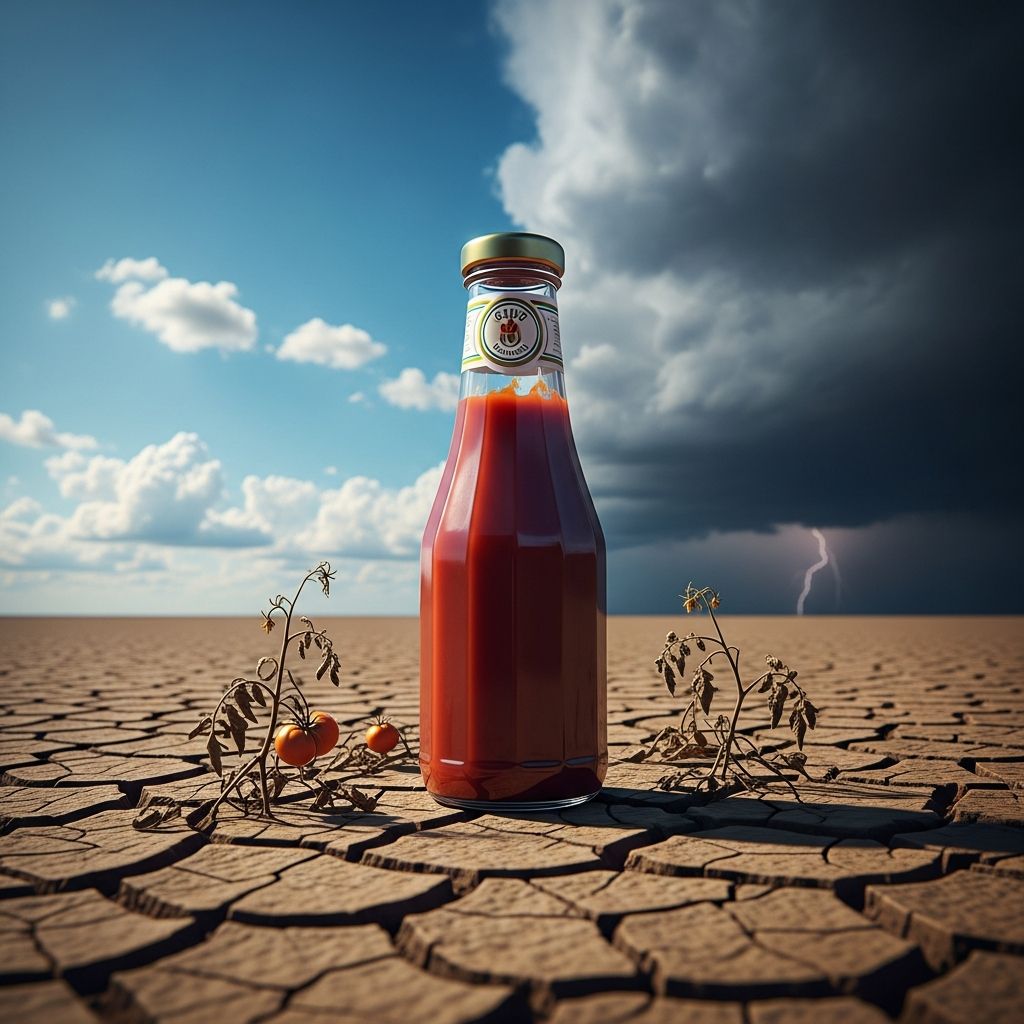
These crops face mounting pressures. In 2022, droughts and heat waves in California led to a 10% shortfall from expected yields, following a 5% drop in 2021. A risk index of 95/100 marked it as the worst in two decades, inflating prices amid labor, fertilizer, and transport costs. Growers negotiated a 5.6% price hike to offset expenses.
| Region | Share of Global Supply | Key Challenges |
|---|---|---|
| California, USA | ~50% | Drought, heat, water restrictions |
| China | Significant | Climate variability, quality concerns |
| Italy | Notable | Heat stress, production declines |
Climate Change: A Long-Term Menace to Yields
Researchers from Denmark, the U.S., and Italy warn of severe impacts on processing tomatoes. Warmer temperatures accelerate growth cycles, reducing development time and yields. Projections indicate a 6% global decline by 2050, potentially halving harvests between 2050 and 2100.
California growers emphasize water as the critical factor. At $2200 per acre-foot, costs strain operations amid ongoing droughts. Local farmers remain optimistic, citing soil quality and adaptive ingenuity: “California is a great place to grow tomatoes… We just need water”.
Groundwater reliance has surged, but statewide limits add complexity. Extreme events like the 2022 drought not only cut volumes but degrade quality, affecting paste saturation vital for ketchup’s signature hue.
Industry Adaptations and Innovations
Companies are innovating to counter these threats. Kraft Heinz invests in climate-resilient practices, while alternatives like Chinese tomatoes tempt buyers despite reliability issues. Red Gold’s expanded lines demonstrate how diversification mitigates packet shortages.
Consumer trends amplify pressures. Post-pandemic dining booms and stockpiling fears sustain high demand. IRI data shows robust category growth, underscoring ketchup’s enduring popularity.
- Production scaling: Doubling capacity for packets and new formats.
- Sustainable sourcing: Prioritizing resilient varieties and regions.
- Price adjustments: Negotiated increases to cover rising inputs.
Global Perspectives on Tomato and Ketchup Supply
Beyond the U.S., climate patterns disrupt key exporters. Italy and China grapple with heat, prompting questions about import stability. Without resilient solutions, shelves won’t empty immediately, but prices will climb, and sourcing will shift.
Farmers adapt through ingenuity, potentially altering planting timelines or irrigation. Yet, water scarcity remains the linchpin: “Will we be growing in the exact same time frames? Maybe not,” notes one grower.
Consumer Impacts and Practical Advice
For households, packet shortages mean restaurant tweaks—fewer fries drowned in red. Retail sees steady supply but watch for price hikes from crop shortfalls. Stockpiling risks echoing past panics, but moderation preserves availability.
- Explore alternatives: Mustard, mayo blends, or housemade sauces.
- Support local: Regional tomato products bolster resilience.
- Stay informed: Monitor USDA crop reports for updates.
Bulk buying remains viable, as no broad retail shortage exists.
Frequently Asked Questions (FAQs)
Is there currently a ketchup shortage in stores?
No, retail ketchup supplies are stable, though packet demand exceeds supply for foodservice.
How does climate change affect ketchup production?
It shortens tomato growth cycles, reduces yields, and increases water needs, with a predicted 6% drop by 2050.
Which regions produce most processing tomatoes?
California (90%+ U.S.), China, and Italy lead global output.
Are manufacturers addressing the packet shortage?
Yes, firms like Red Gold doubled capacity and introduced new packaging.
Will ketchup prices rise soon?
Likely, due to crop reductions and input costs; 2022 saw significant increases.
Looking Ahead: Securing Ketchup’s Future
The ketchup conundrum blends immediate demand spikes with chronic climate risks. While no apocalypse looms, proactive measures—innovation, conservation, diversified sourcing—are essential. Consumers and producers must navigate these waters to keep the condiment flowing.
Optimism persists among growers confident in adaptation. As one put it, farmers’ ingenuity outpaces predictions. Balancing demand with sustainability will define ketchup’s trajectory through 2050 and beyond.
References
- Red Gold Ramps Up Ketchup Packet Production to Meet Demand — Food Manufacturing. 2021-04-08. https://www.foodmanufacturing.com/supply-chain/news/21378290/red-gold-ramps-up-ketchup-packet-production-to-meet-demand
- Climate Change Threatens Tomato Production—What’s Next? — ClimateAi. 2025-02-27. https://climate.ai/blog/climate-change-threatens-tomato-production-whats-next/
- Scientists Predict Future Ketchup Shortage as Climate Change Damages Crops — The National Desk. 2022-06-23. https://thenationaldesk.com/news/americas-news-now/scientists-predict-future-ketchup-shortage-as-climate-change-damages-crops-tomatoes-farmers-farming-agriculture-harvest-nature-food-weather-science-study-condiments-italy-denmark-united-states-china-world-supply-paste-sauce-woolf-farms-2050-prediction
- Scientists Predict Future Ketchup Shortage as Climate Change Damages Crops — KRCR TV. 2022-06-23. https://krcrtv.com/news/nation-world/scientists-predict-future-ketchup-shortage-as-climate-change-damages-crops-tomatoes-farmers-farming-agriculture-harvest-nature-food-weather-science-study-condiments-italy-denmark-united-states-china-world-supply-paste-sauce-woolf-farms-2050-prediction
- Scientists Predict Future Ketchup Shortage as Climate Change Damages Crops — KATV. 2022-06-23. https://katv.com/news/nation-world/scientists-predict-future-ketchup-shortage-as-climate-change-damages-crops-tomatoes-farmers-farming-agriculture-harvest-nature-food-weather-science-study-condiments-italy-denmark-united-states-china-world-supply-paste-sauce-woolf-farms-2050-prediction