New parents often face the challenge of a crying infant, a natural communication method for babies expressing discomfort, hunger, or tiredness. Understanding how to respond effectively can reduce stress for both parent and child, fostering secure attachment and better sleep patterns. This guide draws from pediatric research to outline practical, safe methods that encourage calming and gradual self-soothing abilities.
Understanding Infant Crying and the Need for Soothing
Infants cry to signal needs, with peaks around 6 weeks of age. Responsive parenting—promptly addressing cues like fussiness or drowsiness—builds trust and aids emotional regulation. Studies show that attuned responses help babies develop self-soothing skills, where they independently settle upon waking without hunger or diaper issues. Over time, this leads to fewer night wakings and improved sleep consolidation by 12 months.
Cortisol levels, a marker of stress, remain stable during gentle interventions, indicating these techniques are safe short-term. Long-term, babies naturally improve sleep without intervention, but supportive strategies accelerate this positively.
Creating a Calming Environment for Your Baby
A soothing setup mimics the womb’s security, using sensory inputs like sound and touch. Key elements include:
- White Noise Machines: Steady sounds like fans or shushing recordings drown out startling noises, signaling bedtime. Turn them on consistently to cue sleep.
- Dim Lighting: Low light promotes melatonin production, easing transitions to drowsiness.
- Consistent Routines: Predictable bedtime sequences, such as bath then feed, help babies anticipate rest.
Research confirms white noise calms many infants, complementing other methods without over-reliance.
Physical Comfort Techniques: Touch and Motion
Hands-on methods provide immediate reassurance through proprioceptive input—deep pressure that feels secure.
| Technique | How to Do It | Benefits |
|---|---|---|
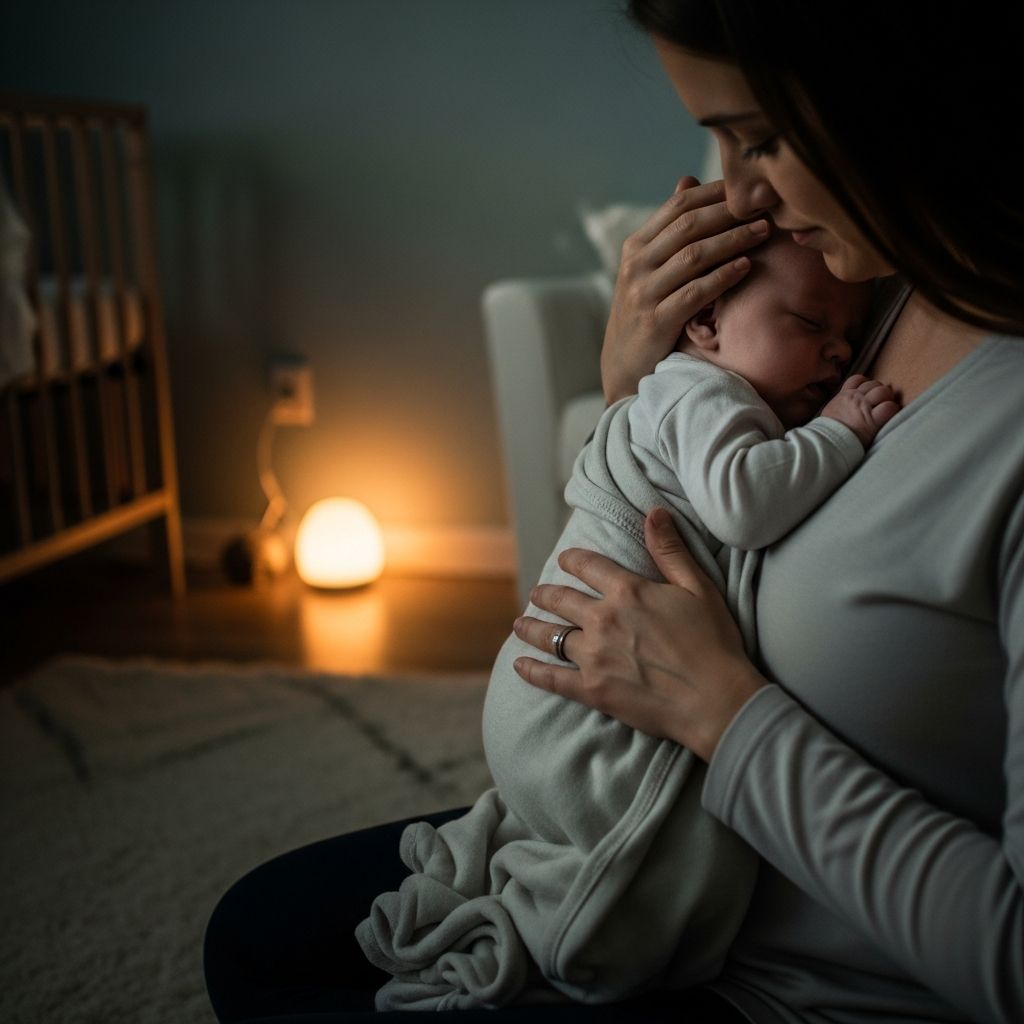
| Swaddling | Wrap snugly in a soft blanket, arms tucked, hips loose for safe hip development. | Mimics womb; reduces startle reflex. |
| Gentle Rocking | Hold close, sway rhythmically or bounce knees while standing. | Replicates maternal heartbeat motion. |
| Back Stroking | Lightly rub from shoulders to lower back in slow circles. | Relaxes muscles, promotes digestion. |
Try one technique for 5 minutes before switching to avoid overstimulation. Holding firmly while offering a pacifier combines pressure and sucking for double calming. Avoid intense bouncing on exercise balls until head control is strong.
The Power of Non-Nutritive Sucking and Pacifiers
Pacifiers satisfy the innate sucking reflex, aiding self-soothing for babies under 1 year. Insert during fussy states or bedtime, paired with white noise. Limit to sleep times to prevent dependency; by 12 months, most infants self-soothe 46% of awakenings independently.
- Guide hand or thumb to mouth if pacifier refused.
- Use with swaddling for enhanced effect.
- Wean gradually as other skills develop.
Studies link pacifier use with higher self-soothing rates at 12 months.
Promoting Self-Soothing: From Co-Regulation to Independence
Self-soothing evolves from parental co-regulation. At 8 weeks, allow 2-3 minutes for settling; extend to 10-15 minutes by 3 months. Predictors include less crib time removal, high quiet sleep at birth, and delayed parental response at 3 months.
Graduated approaches like waiting progressively longer before intervening improve sleep onset by 12-15 minutes without raising stress long-term. Bedtime fading—staying until drowsy—works similarly. By 12 months, over half awakenings may still need help, but consistent practice reduces this.
Vocal and Auditory Soothing Methods
Your voice is a powerful tool, recognizable from pregnancy.
- Sing lullabies softly or hum rhythmic tunes.
- Use ‘shushing’ sounds matching womb noise intensity.
- Talk calmly about daily events to engage alert states.
Combine with motion: walk while singing. These low-effort methods build bonding and calm without props.
Mobility-Based Calming: Strollers and Car Rides
Motion soothes via vestibular stimulation. Safe options:
- Stroller walks outdoors for fresh air and rhythm.
- Secure car seat drives (for travel only, not sleep).
- Baby carrier for skin-to-skin contact.
Ensure car seats are used properly; never for routine naps due to suffocation risks.
Nutrition and Timing: Ruling Out Basic Needs
Always check hunger, wet diapers, or temperature first. Feed if due, burp thoroughly. For colic-like crying, upright holding post-feed aids gas release.
Advanced Strategies for Persistent Fussiness
For inconsolable episodes:
- Assess for illness (fever, rash).
- Try tummy time on your chest for pressure.
- Introduce a familiar scented cloth as a transitional object.
Maternal self-efficacy influences soothing success; confident parents use diverse strategies effectively.
Frequently Asked Questions (FAQs)
Is it okay to let my baby cry for self-soothing?
Short, graduated waits (starting 2-3 minutes) are safe per studies, improving sleep without long-term stress. Monitor cues and intervene if needed.
When should I introduce a pacifier?
After breastfeeding is established (around 3-4 weeks), limit to sleep for self-soothing.
How long to try one soothing method?
5 minutes per technique allows processing without overwhelm.
Does white noise work for all babies?
Many find it calming, but adjust volume and type; combine with swaddling.
Can self-soothing harm attachment?
Responsive practices build secure bonds; sleep improves naturally by 12 months.
Building Long-Term Sleep Habits
Combine techniques into routines: swaddle, white noise, feed, rock, pacifier, bed. Track progress; consult pediatricians for persistent issues. Responsive parenting yields self-regulating toddlers.
(Word count: 1678)
References
- Letting Babies Cry – The Facts Behind the Studies — La Leche League GB. 2015-10-20. https://laleche.org.uk/letting-babies-cry-facts-behind-studies/
- Study Shows How Parents Can Help Their Babies Sleep Better — University at Buffalo. 2023-01-17. https://www.buffalo.edu/ctsi/ctsi-news/buffalo-research-news/news.host.html/content/shared/www/ctsi/articles/buffalo-research-news/how-parents-can-help-their-babies-sleep-better.detail.html
- Nighttime sleep-wake patterns and self-soothing from birth to one year — PMC (NCBI). 1995-03-01. https://pmc.ncbi.nlm.nih.gov/articles/PMC1201415/
- Self-Soothing: Help Your Baby Learn This Life Skill — American Academy of Pediatrics. 2023-07-12. https://www.healthychildren.org/English/ages-stages/baby/crying-colic/Pages/Self-Soothing-Helping-Your-Baby-Learn-This-Life-Skill.aspx
- 6 Ways To Help Your Baby Self-Soothe and Find Calm — Cleveland Clinic. 2023-05-11. https://health.clevelandclinic.org/self-soothing-techniques
- How to Calm a Crying Baby — Children’s Hospital Colorado. 2024-02-15. https://www.childrenscolorado.org/just-ask-childrens/articles/calm-a-crying-baby/
- From co‐regulation to self‐regulation: Maternal soothing strategies — Wiley Online Library. 2023-08-01. https://onlinelibrary.wiley.com/doi/full/10.1002/imhj.22098