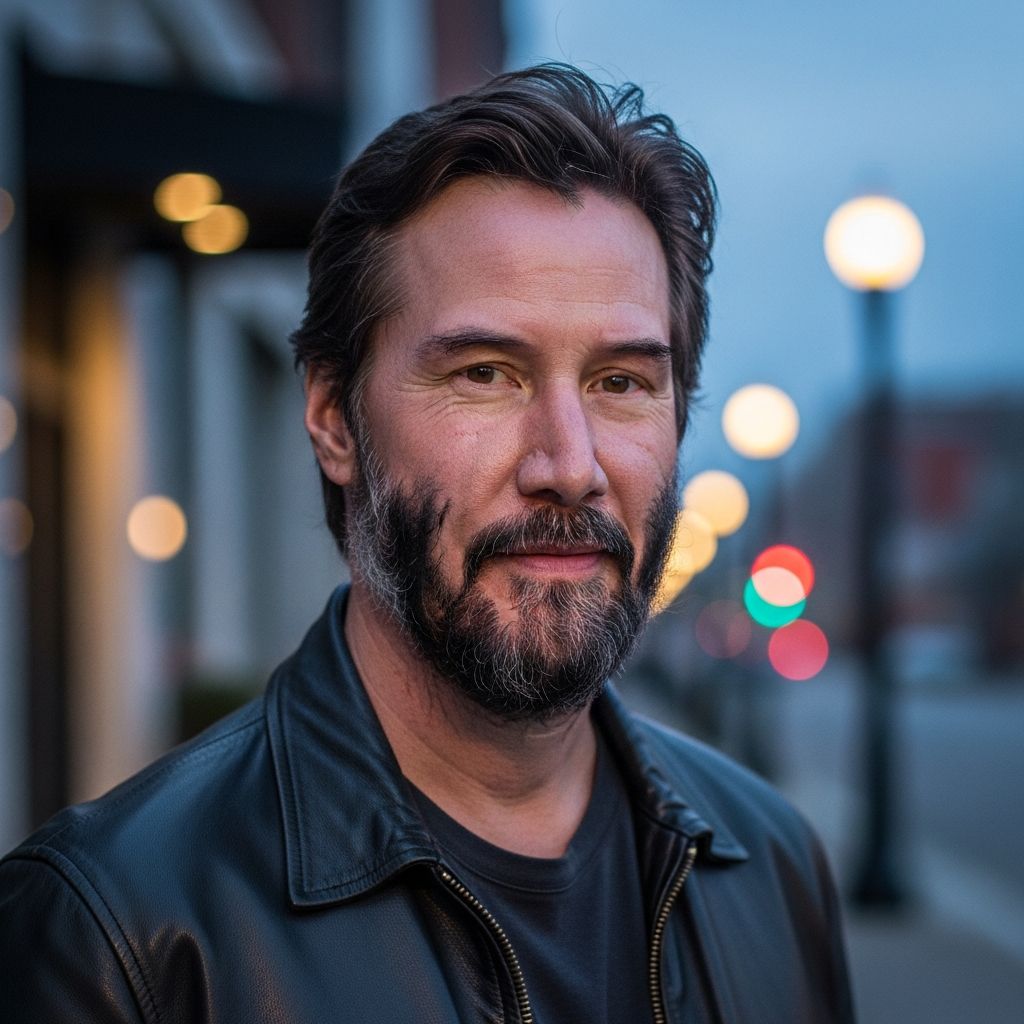
Keanu Reeves has become a modern icon of relaxed masculinity, and his beard plays a big part in that image — even though it is famously uneven and sparse in places.
Instead of chasing a perfectly dense beard, his look shows how confidence, grooming, and personal style can turn patchiness into a unique signature.
Why Patchy Beards Deserve Respect
For many men, facial hair grows at different densities across the cheeks, chin, and jawline, leaving visible gaps that can feel frustrating. Genetics are usually the main reason some areas stay sparse, even when the mustache or chin grows thicker.
Keanu Reeves’ beard illustrates that uneven growth does not have to be hidden or “fixed”; it can be worn as-is and still look stylish, approachable, and authentic. This acceptance helps shift grooming norms away from the idea that only full, uniform beards are attractive.
What Causes Patchy Facial Hair?
Patchy beards are usually linked to hair follicle distribution and hormone sensitivity, which determine where thicker hair develops on the face. Even among celebrities, it is common for some regions — especially the cheeks — to grow less hair than the chin or mustache area.
Temporary factors such as stress, poor skin care, or lack of sleep can make patchiness more noticeable by weakening existing hair or irritating the skin underneath. However, no routine can override basic genetics, which is why embracing natural patterns, as Keanu does, is often more realistic than chasing a perfectly uniform beard.
Lessons From Keanu’s Imperfect Beard
Over the course of his career, Reeves has appeared with everything from light stubble to a fuller, scruffier beard, and in each case the gaps in his growth remain visible. Instead of disguising them, he allows the irregular pattern to be part of his overall style, which makes the look seem effortless rather than over-engineered.
Observers often point out that his facial hair projects a “lived-in” quality that suits his motorcycle-riding, low-maintenance persona. This consistency between grooming and personality is a key reason his patchy beard reads as intentional and cool instead of accidental or sloppy.
Core Principles of a Successful Patchy Beard
- Confidence first: Patchiness looks best when worn without apology, much like Reeves’ relaxed red-carpet and everyday appearances.
- Intentional grooming: Trimming, shaping, and basic maintenance signal that the uneven pattern is a style choice, not neglect.
- Harmony with hairstyle: Matching beard length and hair length (for example, longer hair with a slightly longer beard) creates a balanced, cohesive look.
- Comfort over perfection: Keeping the beard at a length that feels easy to manage helps the look fit naturally into daily life.
Patchy Beard Styles Inspired by Keanu
Keanu Reeves has demonstrated several combinations of hair and beard length that work well despite, or even because of, his inconsistent growth. These variations provide a useful starting point for experimenting with your own patchy beard style.
| Hair Length | Beard Length | Why It Works |
|---|---|---|
| Long, flowing hair | Short, natural beard | The relaxed contrast emphasizes a laid-back, “not trying too hard” aesthetic, similar to Reeves’ more unkempt phases. |
| Long hair | Medium scruff | A slightly longer beard visually connects with longer hair, and scattered gray hairs can soften the impact of thin areas. |
| Short, classic haircut | Neat short beard | A tidier cut around the sides and back gives structure, letting the patchy beard feel deliberate rather than messy. |
| Long hair | Light stubble | Stubble heightens the visibility of gaps, but pairing it with relaxed long hair leans into a more bohemian, devil-may-care vibe. |
Grooming Routine for an Imperfect Beard
A simple routine can dramatically improve how a patchy beard looks and feels, even if the underlying growth pattern does not change. The goal is to keep the hair healthy, the skin comfortable, and the overall shape intentional.
- Cleanse regularly: Use a gentle beard wash several times a week to remove oil, sweat, and buildup without stripping natural moisture.
- Condition and soften: A nourishing beard oil or butter keeps hair flexible, helps reduce itch, and gives the beard a subtle, healthy sheen.
- Brush into place: Brushing encourages hair to lie in a more unified direction, helping to visually cover some thinner regions.
- Trim borders: Cleaning up the neckline and cheek lines with a trimmer or razor prevents the patchy beard from bleeding into stray, random stubble.
Shaping Strategies That Flatter Patchiness
Smart shaping can subtly redirect attention from sparse patches to stronger areas such as the chin or mustache. This approach favors designs that concentrate visual weight where your growth is naturally densest.
- Emphasize the chin: Leaving more length at the chin while keeping the cheeks slightly shorter can create the impression of a fuller lower face.
- Highlight the mustache: Allowing the mustache to grow a bit longer than nearby cheek hair draws focus toward the center of the face.
- Soften sharp gaps: Gently fading from thicker zones into thinner areas (instead of abrupt cutoffs) makes gaps feel less stark.
Mindset: Wearing Your Beard, Not Hiding Behind It
Many grooming experts note that the success of a patchy beard depends as much on the wearer’s attitude as on any specific styling trick. Keanu’s example shows that repeating the same imperfect pattern across public, red-carpet, and casual appearances sends the message that he genuinely likes the look.
Leaning into this mindset means accepting that close observers will notice the gaps and recognizing that this visibility is part of the charm. When facial hair aligns with the rest of your style and body language, patchiness stops being a flaw and becomes just another distinctive feature.
When to Consider Alternatives
Not everyone will enjoy the feeling of a patchy beard, and it is reasonable to explore other options if the look does not feel like you. Some men prefer a clean shave or a minimalist mustache-and-chin combination rather than a full but uneven beard.
More involved solutions such as hair restoration or cosmetic filling products exist, but they demand time, money, and maintenance, and outcomes vary widely. Weigh these costs against the possibility of embracing your natural growth pattern and styling it strategically, as many find that a low-pressure, Keanu-style approach offers a better balance of authenticity and effort.
Quick Tips for a Keanu-Inspired Beard
- Let your beard grow for a few weeks before judging its pattern; some areas fill in more slowly than others.
- Aim for a relaxed, slightly rugged outline rather than rigid, ultra-sharp lines if you want a similar easygoing energy.
- Match your wardrobe — casual jackets, worn-in denim, or simple suits — to the understated nature of a patchy beard.
- Accept visible gray hairs; on a patchy beard they can add texture and soften the contrast between dense and sparse zones.
FAQs About Patchy Beards
Can a patchy beard ever become full?
Some men experience thicker growth in their late twenties or thirties as hormone levels stabilize, but many will always have areas that remain lighter. Focusing on health, sleep, and nutrition can support hair quality in general, though it rarely transforms fundamentally sparse regions into dense ones.
Is shaving more often going to fix patchiness?
There is no credible evidence that frequent shaving changes the number or placement of hair follicles. What shaving can do is offer a clean, intentional reset when you decide a particular length or style is not working for you.
Should I fill in gaps with makeup or fibers?
Some products can temporarily darken skin under thinner areas to reduce contrast, but they require careful application and may look unnatural close up. If you choose this route, consider using a light touch and pairing it with good grooming so the underlying beard still appears healthy and well-kept.
How often should I trim a patchy beard?
Most patchy beards benefit from a light shape-up every one to two weeks to control stray hairs and maintain a clear outline. You may trim the cheeks and neckline slightly more often while letting the chin or mustache grow longer to build visual density.
What if I just don’t like how it looks?
If you consistently dislike your patchy beard, it is perfectly valid to return to a clean shave or try a different facial hair pattern. What matters most is that your grooming choices support your confidence and comfort, whether that means embracing imperfection or starting over.