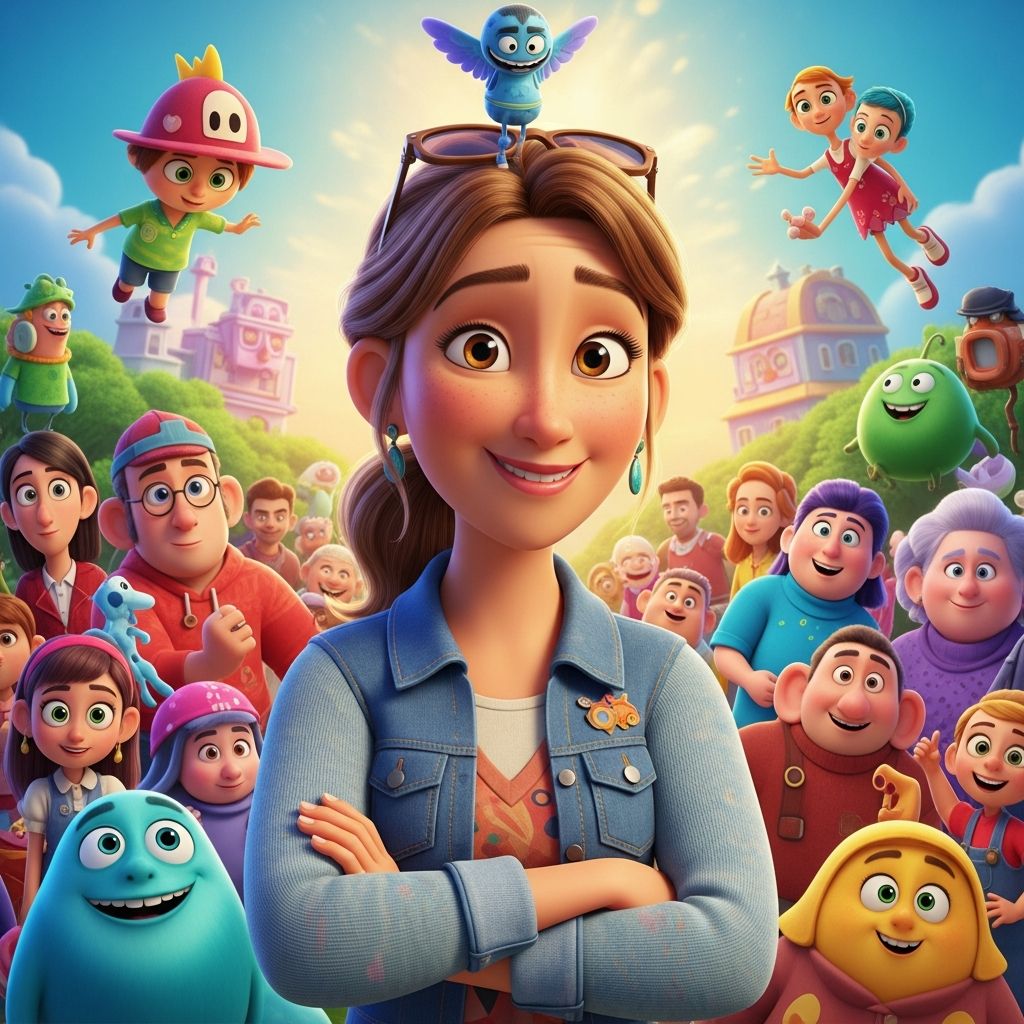
From Commercial Vision to Animation Pioneer
The entertainment industry has witnessed the rise of countless creative minds, but few have managed to transition so seamlessly from one medium to another while maintaining exceptional quality. Kelli Bixler represents a unique breed of producer—one who understood that storytelling transcends format. Her journey began not in animation studios but in the world of commercials, training videos, and live-action production. This unconventional path would eventually lead her to revolutionize how children’s programming is conceived, produced, and distributed to audiences worldwide.
Bixler’s early career in Chicago exposed her to the fundamentals of visual communication and narrative structure. She worked extensively with emerging talent, including future television stars, honing her craft in an era when production technology was far more constrained than today. This foundation proved invaluable when she later shifted her focus to animation. Unlike many producers who begin their careers with a singular vision, Bixler’s varied background allowed her to approach creative projects with flexibility and a comprehensive understanding of production logistics.
The Genesis of Bix Pix Entertainment
In 1998, Kelli Bixler made a pivotal decision that would define the next quarter-century of her career. She established Bix Pix Entertainment, a stop-motion animation studio that would become known for meticulous craftsmanship and emotionally resonant storytelling. The timing was deliberate—Bixler had spent years developing her creative vision, gathering talented collaborators, and securing initial projects that would establish the studio’s reputation.
The founding of Bix Pix was rooted in philosophy as much as business acumen. Bixler envisioned a studio that would serve as a collaborative space where artists could thrive, where quality would never be compromised for expedience, and where every frame would reflect intentional artistic choices. This approach distinguished Bix Pix from larger, more commercially driven animation houses. The studio’s first major project adapted Dorothea Warren Fox’s beloved children’s book “Miss Twiggley’s Tree” into a stop-motion short that garnered festival recognition and established the studio’s aesthetic identity.
Building a Creative Ecosystem
What truly sets Bixler apart from many producers is her commitment to cultivating a thriving creative environment. Rather than viewing artists as interchangeable production resources, she has consistently emphasized the importance of maintaining a studio culture that prioritizes artistic integrity and personal well-being. Over the studio’s 26-year history, Bix Pix has grown to employ more than 100 creative professionals at various times, each contributing specialized skills to productions.
The studio’s infrastructure reflects Bixler’s understanding that exceptional animation requires exceptional people. She has deliberately built teams that balance technical expertise with creative vision, ensuring that stop-motion animation—a labor-intensive and detail-oriented discipline—remains both artistically fulfilled and professionally sustainable. This approach has attracted award-winning talent and fostered an environment where experimentation and innovation flourish alongside rigorous quality standards.
Tumble Leaf: A Breakthrough Achievement
When Bix Pix Entertainment partnered with Amazon Studios to develop “Tumble Leaf,” the project represented both a culmination of Bixler’s previous work and a new frontier for children’s programming. The series introduced Fig, a small blue character navigating a fantastical island filled with mysteries and adventures. What distinguished “Tumble Leaf” from conventional children’s entertainment was its philosophical depth combined with visual enchantment.
The production process for “Tumble Leaf” presented unprecedented challenges. Creating engaging content for preschool audiences required balancing educational value with genuine entertainment, developing narratives that resonated with both children and parents, and maintaining consistent animation quality across 52 episodes. Bixler’s production strategy emphasized patience and intentionality. Rather than rushing episodes to meet broadcast schedules, the team invested time in developing characters, perfecting animation techniques, and ensuring that every element served the larger creative vision.
The accolades accumulated rapidly. Within its first two seasons, “Tumble Leaf” received eight Emmy Awards, cementing its status as a landmark achievement in children’s animation. The series also earned two Parents’ Choice Gold Awards, two Annie Awards, and special recognition at the Annecy International Animated Film Festival. These honors reflected not merely technical proficiency but emotional resonance—audiences and industry professionals alike recognized that “Tumble Leaf” represented something rare in children’s programming: authentic artistry.
Technical Excellence and Artistic Innovation
Stop-motion animation stands apart from digital animation in its tactile, handcrafted nature. Every movement requires physical manipulation of puppets and sets, frame by frame, often resulting in production timelines that span months for content that audiences experience in minutes. Bixler understood that this labor-intensive process demanded not just skill but philosophical commitment to the medium itself.
The technical achievements of Bix Pix productions extend beyond traditional animation mechanics. The studio has pioneered approaches to character design, set construction, and lighting that enhance emotional storytelling. In “Tumble Leaf,” the island environment evolves across episodes, with subtle changes in lighting, weather, and landscape suggesting passage of time and emotional transitions. These details, easily overlooked by casual viewers, represent countless hours of deliberate artistic choice.
The studio’s work on other projects demonstrates the versatility within stop-motion animation. From “Shape Island” for Apple TV+ to contributions to “Adventure Time” and “Bob’s Burgers,” Bix Pix has consistently demonstrated technical mastery across diverse stylistic approaches. This range underscores Bixler’s leadership in allowing artists to develop individualized creative voices while maintaining studio-wide standards of excellence.
Industry Recognition and Awards
The cumulative recognition received by Bix Pix and its creator reflects the studio’s standing within the animation industry. Across nearly three decades of production, the studio has accumulated thirteen Emmy Awards for individual artistic achievements. The BAFTA, Annie Awards, and recognition from prestigious international festivals validate the studio’s commitment to both technical mastery and artistic vision.
These accolades extend beyond “Tumble Leaf.” Projects like “Holidaze: The Christmas That Almost Never Happened,” which featured adult Fred Savage in a nostalgic return to animation, demonstrated the studio’s ability to create content with multigenerational appeal. The special’s success—105 episodes across four seasons translated into seventeen languages and nominated for 35 Emmy Awards with 16 wins—established Bix Pix as a formidable force in animated television.
Partnerships and Industry Relationships
Throughout its history, Bix Pix Entertainment has collaborated with major entertainment entities including Disney, NBC, Sony, Hasbee, ABC, and the Jim Henson Company. These partnerships reflect the studio’s reputation for delivering quality content on schedule while maintaining creative standards. Unlike production companies that operate primarily as service providers to larger studios, Bix Pix has maintained its identity as a creative force capable of both original concept development and collaborative production.
The partnership with Amazon Studios on “Tumble Leaf” proved particularly significant. Streaming platforms have invested substantially in original children’s programming, recognizing that quality content drives subscriber engagement and brand loyalty. Amazon’s commitment to “Tumble Leaf” demonstrated confidence in Bixler’s creative vision and the studio’s production capabilities. The series became a flagship program for Amazon’s children’s offerings, showcasing the platform’s dedication to artistic excellence alongside commercial objectives.
Educational Impact and Parental Reception
Beyond industry recognition, “Tumble Leaf” achieved something rarer in children’s programming: genuine appreciation from parents and educators. The series employs problem-solving narratives that encourage cognitive engagement without resorting to didactic instruction. Fig’s adventures on the island present puzzles, challenges, and social situations that invite children to think critically and emotionally about narratives.
The parents’ choice awards and educational endorsements reflect recognition that “Tumble Leaf” respects young viewers’ intelligence. Rather than simplifying narratives or relying on frenetic pacing to maintain attention, the series trusts that children can engage with measured storytelling, visual beauty, and genuine emotional content. This approach has influenced broader conversations within children’s media about quality programming and appropriate production standards.
Evolution and Future Direction
Bixler’s more recent work demonstrates continued evolution in her creative approach. “Shape Island,” developed for Apple TV+, represents a new chapter in the studio’s development. The series garnered a First Jury Prize at the 2023 Annecy Festival and has already accumulated multiple Emmy and Annie nominations. This recognition indicates that Bixler’s fundamental creative philosophy—prioritizing artistic excellence and emotional authenticity—remains resonant even as production technologies and distribution platforms evolve.
The studio’s composition has also evolved. While maintaining the core creative teams that established Bix Pix’s reputation, the organization has expanded to include artists specializing in contemporary animation techniques. This balance between traditional stop-motion approaches and modern technological possibilities positions Bix Pix as a studio capable of honoring animation’s historical legacy while embracing future possibilities.
Personal Philosophy and Creative Leadership
Underlying Bixler’s professional achievements is a coherent personal philosophy about creativity and community. She has consistently emphasized that excellent animation emerges from collaborative environments where artists feel valued and supported. This commitment extends beyond production logistics to encompass genuine care for the people involved in creative work.
In interviews, Bixler has highlighted the joy of witnessing individual artists develop their skills and contribute meaningfully to collective projects. She describes the studio environment as intentionally cultivating “a safe space to play,” recognizing that artistic innovation flourishes when people feel psychological safety alongside professional accountability. This humanistic approach to production management contrasts with more impersonal industrial models while remaining operationally effective.
Legacy and Industry Influence
Kelli Bixler’s career demonstrates that excellence in children’s entertainment need not be sacrificed for commercial viability. Through demonstrated artistic achievement and industry recognition, she has helped establish stop-motion animation as a viable medium for high-quality television production. Her influence extends beyond Bix Pix, shaping broader industry conversations about production values, artistic integrity, and the importance of investing in quality children’s programming.
The success of “Tumble Leaf” and subsequent projects has influenced how streaming platforms and broadcasters approach children’s content development. Networks and studios now increasingly recognize that parental audiences seek programming that aligns with their values regarding education, emotional intelligence, and artistic quality. Bixler’s work has helped validate this market demand, creating space for producers and studios committed to similar principles.
Frequently Asked Questions
Q: What is stop-motion animation and why did Kelli Bixler choose this medium?
A: Stop-motion animation involves photographing physical puppets and sets frame-by-frame, with subtle adjustments between shots creating the illusion of movement. Bixler was drawn to the medium’s handcrafted, tactile quality after initially working in live-action production. She recognized that stop-motion could convey emotional depth and artistic authenticity particularly valuable for children’s programming.
Q: How many Emmy Awards has Tumble Leaf won?
A: “Tumble Leaf” won eight Emmy Awards within its first two seasons, establishing it as one of the most decorated children’s animated series. The show also received Parents’ Choice Gold Awards, Annie Awards, and special recognition from international animation festivals.
Q: What other major projects has Bix Pix Entertainment produced besides Tumble Leaf?
A: Bix Pix has created content for numerous high-profile clients including Disney, NBC, Sony, and Cartoon Network. Notable projects include “Shape Island” for Apple TV+, stop-motion sequences for “Bob’s Burgers” and “Adventure Time,” and the holiday special “Holidaze: The Christmas That Almost Never Happened.”
Q: How long does it typically take to produce a stop-motion animation episode?
A: Stop-motion animation production is extraordinarily time-intensive. Each episode requires puppeteers, animators, and technicians to manually adjust characters and sets frame-by-frame. A single episode often requires months of dedicated production work, which is why studios like Bix Pix maintain large creative teams.
Q: What educational value does Tumble Leaf provide for young viewers?
A: “Tumble Leaf” presents problem-solving narratives and social situations that encourage critical thinking without resorting to explicit instruction. The series respects children’s intelligence by offering measured storytelling, visual beauty, and genuine emotional content rather than relying on frenetic pacing.
References
- Kelli Bixler IMDb Profile — IMDb. Updated 2025. https://www.imdb.com/name/nm1064778/
- Kelli Bixler ’81 Alumni Profile — Syracuse University S.I. Newhouse School. https://la.syr.edu/alumni/alumni-profiles/la-alumni/bixler-kelli.html
- Meet Kelli Bixler of Burbank, CA — Voyage LA Magazine. https://voyagela.com/interview/meet-kelli-bixler-of-burbank-ca/
- Bix Pix Entertainment People — Bix Pix Entertainment Official Website. https://www.bixpix.com/people
- Kelli Bixler – Movies, Bio and Lists — MUBI. https://mubi.com/cast/kelli-bixler
- Speaker Kelli Bixler – Kidscreen Summit 2017 — Kidscreen Summit. https://summit.kidscreen.com/2017/speakers/908688/kellibixler/