Kawaii coloring pages turn everyday objects, animals, and characters into irresistibly cute art that anyone can enjoy, from toddlers with crayons to adults looking for a calming creative break.
This guide walks through what kawaii means, how these pages help kids and adults, and how to get the most fun and relaxation out of your coloring time.
What Makes Art \”Kawaii\”?
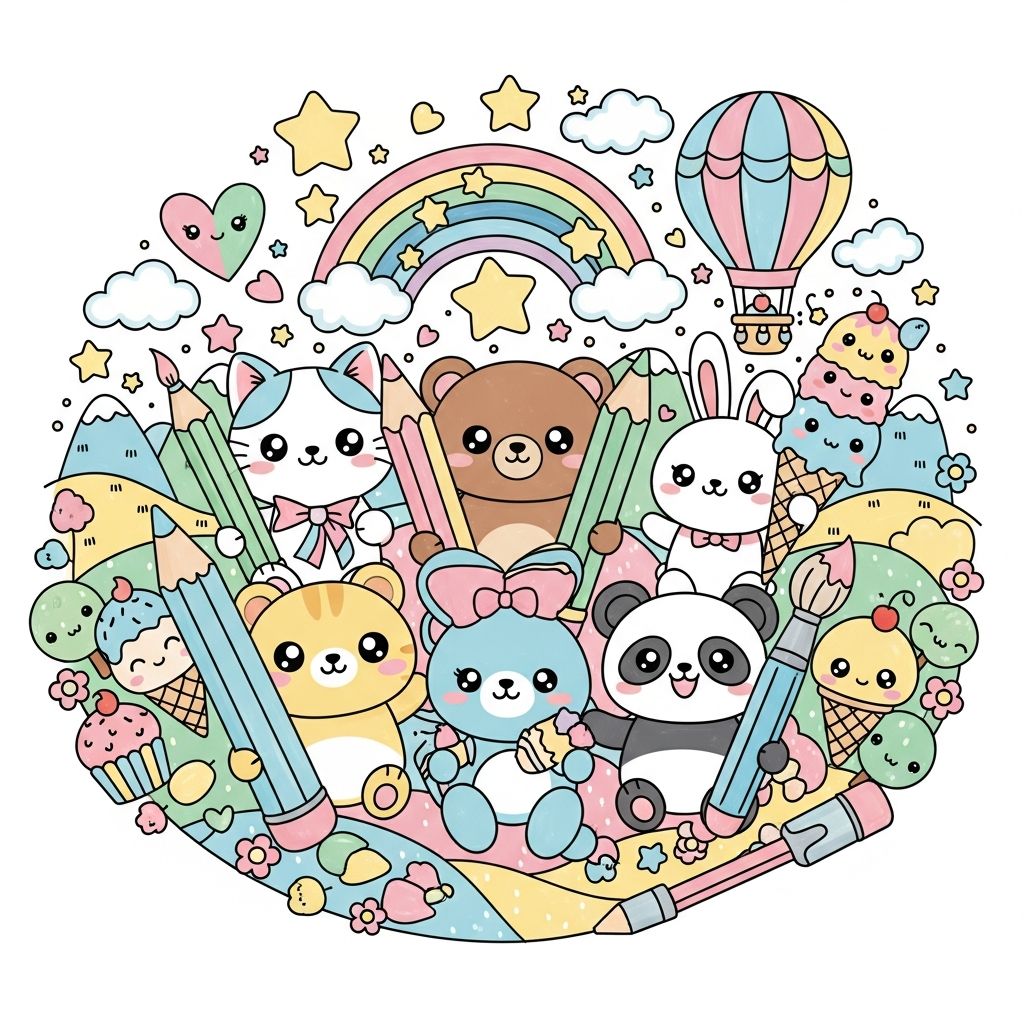
\”Kawaii\” is a Japanese word that roughly means cute, lovable, and charming, and in art it usually describes soft, rounded drawings with big eyes and playful expressions. Kawaii coloring pages often turn simple things—like food, stars, plants, and animals—into sweet, smiling characters that feel friendly and comforting.
Because the style is so gentle and approachable, it works well for children’s activities, stress-relief coloring books, classroom worksheets, party printables, and even decor for planners and bullet journals.
Why Kawaii Coloring Pages Are So Popular
Kawaii coloring pages ride the wave of global interest in cute Japanese-inspired culture, from chibi characters to pastel stationery and adorable plushies. Coloring these designs is both nostalgic and trendy, which is why kids, teens, and adults all gravitate toward them.
Because the mood is playful rather than serious, people who feel intimidated by realistic drawing often find kawaii pages less stressful and more welcoming.
Benefits for Kids and Adults
Coloring is more than a way to pass time; it supports a wide range of emotional, cognitive, and physical skills. Kawaii coloring adds a bonus layer of comfort and joy, which makes it especially helpful on long days or after busy schedules.
Below is a quick overview of how different age groups can benefit.
| Age Group | Main Benefits | Best Page Features |
|---|---|---|
| Toddlers & Preschoolers | Practices grip, hand-eye coordination, color recognition, and early focus. | Large shapes, thick outlines, simple smiling characters. |
| Early Elementary Kids | Boosts creativity, storytelling, patience, and fine-motor control. | Small groups of characters, easy backgrounds, speech bubbles. |
| Older Kids & Preteens | Encourages self-expression, style exploration, and stress relief. | More detailed scenes, patterns, outfits, and props. |
| Teens & Adults | Offers relaxation, mindfulness, and a low-pressure creative outlet. | Complex compositions, layered backgrounds, tiny details for shading. |
Popular Themes in Kawaii Coloring Pages
Almost anything can be drawn in a kawaii style, but certain themes are especially loved because they feel cozy and fun to color. Mixing themes keeps kids interested and lets adults explore different moods and color palettes.
Here are some common kawaii themes that work well for home, classroom, or party activities:
- Kawaii animals: Cats, puppies, bunnies, bears, pandas, hamsters, axolotls, and other chubby, round-cheeked creatures.
- Sweet treats and food: Cupcakes, donuts, fruit, boba tea, ice cream, candy, and breakfast foods with tiny faces.
- Weather and nature: Clouds, raindrops, suns, moons, stars, flowers, mushrooms, and plants with smiling expressions.
- Everyday objects: Books, pencils, laptops, headphones, cameras, and even cleaning supplies turned into cute characters.
- Fantasy and magic: Unicorns, dragons, mermaids, fairies, magical wands, potions, and tiny spell books.
- Seasonal scenes: Cozy autumn snacks, winter holidays, spring flowers, and summer beach days—all in kawaii form.
Choosing the Right Coloring Pages
The best kawaii coloring page is one that matches the artist’s age, interests, and attention span. Younger kids need simple layouts and clear boundaries, while older kids and adults often enjoy more details and layered scenes.
Use the tips below to pick pages that keep everyone happily engaged instead of overwhelmed.
For Toddlers and Preschoolers
- Look for thick outlines and large spaces so scribbles still feel successful.
- Choose big, single characters instead of busy group scenes.
- Avoid tiny patterns that will frustrate little hands.
For School-Age Kids
- Offer a mix of simple and medium-detailed pages to match changing moods.
- Select themes that connect with their interests: animals, gaming, snacks, or fantasy worlds.
- Encourage them to add their own background doodles or text to personalize the page.
For Teens and Adults
- Pick pages with patterns, layered elements, and small accessories for detailed work.
- Look for sets organized by theme so you can build a whole series or mini \”collection.\”
- Consider double-sided printing only when markers will not bleed through; otherwise, use single-sided pages.
Best Supplies for Kawaii Coloring
You do not need fancy tools to enjoy kawaii coloring pages, but the right supplies can make colors smoother, lines cleaner, and finished pieces more durable. Always test new pens or markers on the page margin to check for bleeding or smudging.
Here are popular tools and how they work for kawaii art:
- Crayons: Great for young kids because they are thick, durable, and easy to grip; perfect for filling large kawaii characters quickly.
- Colored pencils: Ideal for school-age kids and adults who enjoy layering, shading cheeks, and adding soft details.
- Water-based markers: Bright, bold colors that work well for outlines, accessories, and lettering; may need thicker paper to prevent bleed-through.
- Gel pens: Fun for highlights, sparkles, and metallic accents on stars, jewelry, or magic items.
- Pastel highlighters: An easy way to achieve a soft, kawaii palette on planners or notebook pages.
Building a Soft Kawaii Color Palette
One of the most recognizable features of kawaii art is the gentle color scheme; instead of harsh, high-contrast shades, kawaii designs tend to use muted or pastel tones. This softer approach gives drawings a cozy, daydreamy feeling that pairs well with rounded shapes and happy faces.
Consider putting together a small palette of your favorite kawaii colors so kids can grab them quickly without digging through a full art box.
- Light pinks and blush tones for cheeks, hearts, and bows.
- Mint, pale teal, and soft greens for plants, drinks, and backgrounds.
- Baby blues and lavender for sky elements, oceans, and magical themes.
- Cream, light beige, and soft yellows for bread, pastries, and friendly stars.
- Dark brown or deep gray instead of pure black for gentle outlines and eyes.
Simple Techniques for Extra Cuteness
Small details can dramatically change how cute your finished page looks, even if you are using basic supplies. Try adding one or two of these techniques each time you color to build confidence and a personal style.
None of these ideas require advanced drawing skills, just a bit of patience and curiosity.
Add Cheek Blush and Highlights
- Use a light pink pencil or marker to draw soft circles or ovals on each character’s cheeks.
- Leave tiny white spots in the eyes to mimic light reflections, or add them using a white gel pen.
- Place highlight dots on shiny surfaces like candy, cups, or raindrops.
Layer Colors for Depth
- Start with a light base color, then shade the edges with a slightly darker version of the same hue.
- Blend with gentle circular motions when using colored pencils to avoid harsh lines.
- Darken areas under hats, hair, or objects to hint at shadows without making the drawing look serious or realistic.
Decorate the Background
- Fill empty spaces with tiny hearts, stars, bubbles, dots, or clouds instead of leaving them blank.
- Create soft gradients by lightly layering two or three pastel shades in the sky or behind characters.
- Add washi tape borders, stickers, or handwritten messages around the colored page for a scrapbook look.
Creative Ways to Use Finished Pages
Once a kawaii coloring page is complete, it does not have to disappear into a drawer or recycling bin. Finished pages can become practical, decorative, or giftable items that bring even more joy.
Reusing artwork also shows kids that their creative efforts have value beyond a single activity session.
- Room decor: Trim and frame favorite pages to hang on bedroom walls or display on a corkboard.
- Bookmarks: Cut finished characters into rectangles, laminate if possible, and punch a hole for a ribbon.
- Cards and tags: Fold colored sheets into greeting cards, or cut small characters out and glue them to blank tags.
- Planner inserts: Hole-punch smaller pages and add them to binders, journals, or planners as mood-boosting dividers.
- Party decor: Use mini prints as cupcake toppers, place cards, or favor bag labels.
Turning Coloring Time into a Relaxing Ritual
Coloring can become a comforting ritual when it is paired with calming routines, especially for children who struggle to wind down after school or before bed. A consistent setup helps the brain associate coloring time with quiet, safety, and creativity.
The goal is not to finish a page quickly but to enjoy the slow process of choosing colors, making small strokes, and watching the image come to life.
- Keep a small basket of kawaii pages and supplies where kids can easily reach them.
- Pair coloring with soft music or an audiobook instead of screens.
- Set a gentle timer so children know when the session ends, but let them return to unfinished pages later.
- Join in and color your own page to show that creative play is valuable at every age.
Fun Kawaii Coloring Ideas for Families
Families can turn individual coloring time into shared projects that build connection and communication. Cooperative art activities are especially useful for siblings with different ages and skill levels, because everyone can contribute at their own pace.
Try turning kawaii coloring pages into games and prompts rather than stand-alone worksheets.
- Story starter pages: After coloring, ask kids to invent a short story about the characters and their world.
- Color challenges: Let each person draw three random colors, then create a page using only those shades plus black and white.
- Pass-the-page game: One person colors a part of the page, then passes it to the next person to add more color or details.
- Theme nights: Choose a theme like \”kawaii cafe\” or \”space friends\” and have everyone color different pages that match.
FAQs About Kawaii Coloring Pages
Are kawaii coloring pages suitable for very young children?
Yes, as long as you select pages with large, simple designs and use child-safe, washable supplies. Avoid overly detailed pages for toddlers, because tiny spaces can lead to frustration and scribbling that feels out of control.
What paper works best for kawaii coloring?
Standard printer paper is fine for crayons and colored pencils, but heavier paper is better if you plan to use markers or water-based brush pens. For projects like bookmarks or wall art, consider cardstock so the finished piece is sturdier.
How can beginners learn to shade and highlight kawaii characters?
Start by picking one light color and one darker version of the same color; fill the whole area with the lighter shade, then gently add the darker color around the edges. Practice placing highlights on the opposite side of the shadow to suggest a light source without worrying about strict realism.
Can kawaii coloring pages be used in classrooms?
Definitely. Teachers often use them as fast-finisher activities, art warm-ups, reward coupons, or calm-down corner resources. They also work well for language arts prompts, where students describe the characters, write short stories, or create dialogue based on the page.
Is digital coloring an option?
Yes, many people enjoy importing coloring pages into drawing apps or tablets and using digital brushes to color them. Digital coloring allows easy undo, layering, and experimenting with new color palettes without wasting paper or ink.
Key Takeaways
Kawaii coloring pages combine simple, charming art with the calming rhythm of coloring, making them a versatile activity for kids, teens, and adults. With pastel palettes, rounded shapes, and playful themes, they bring a sense of lighthearted joy to everyday life and offer an easy doorway into creative expression for artists of every skill level.