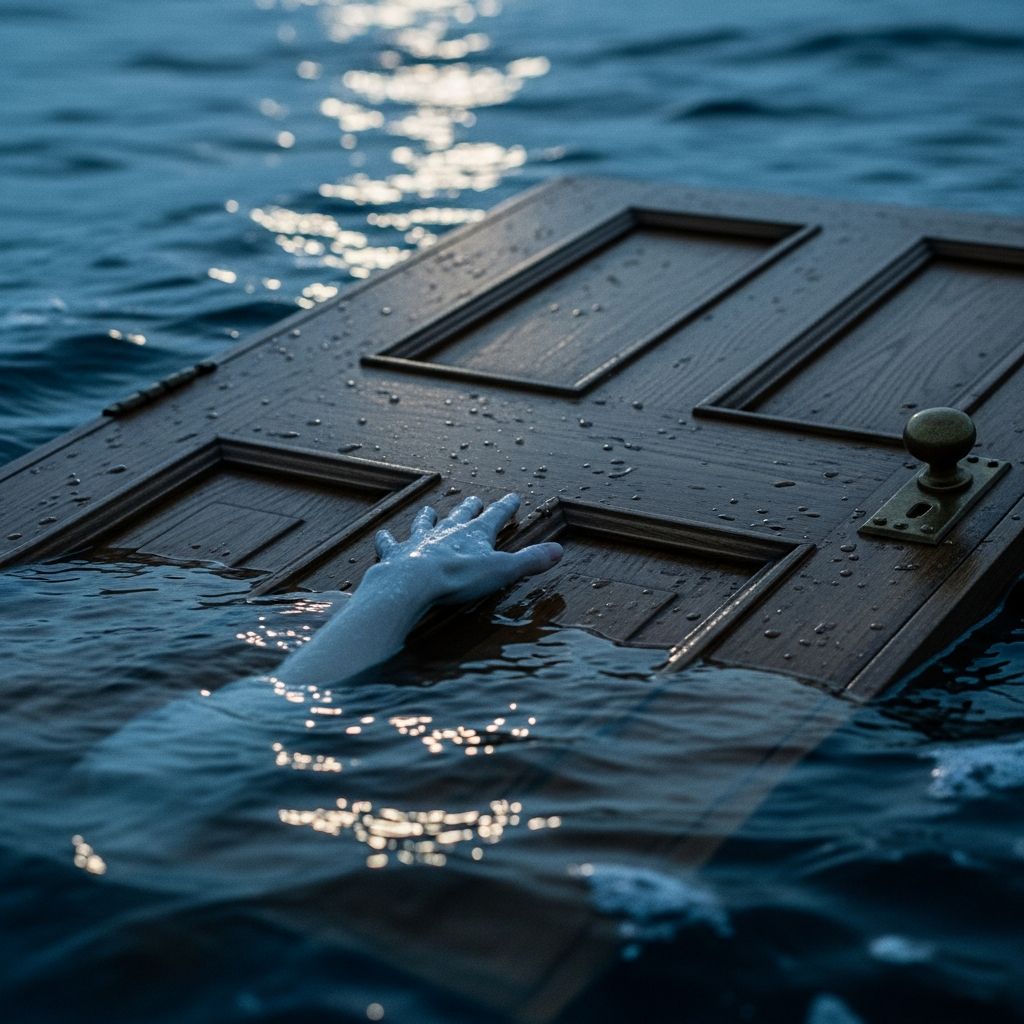
Decades after Titanic first premiered, the floating door scene is still one of the most passionately debated moments in movie history, and Kate Winslet has finally weighed in again with new behind-the-scenes details and a playful nod to fans who insist Jack could have survived.
Overview of Kate Winslet’s New Comments
In a recent interview, Kate Winslet revisited the climactic scene in which Rose lies on a floating piece of debris while Jack clings to the freezing water beside her, ultimately sacrificing his life so she can survive. Her comments reignited the never-ending debate about whether there was enough room on the makeshift raft for both characters, and how much of the moment was about physics versus storytelling and emotion.
Winslet’s tone in describing the scene was light and self-aware, reflecting how she has learned to embrace the cultural life the scene has taken on, even while clarifying some of the practical realities of filming and the creative choices that drove the final version audiences know.
Recap of the Iconic Door Scene
Near the end of Titanic, after the ship sinks into the Atlantic, Jack and Rose struggle to survive in the frigid water amid floating wreckage. Rose pulls herself onto a wooden panel that appears to be part of a door or piece of cabin furniture, while Jack holds onto the side, fully exposed to the icy ocean. As Rose lies shivering on top of the debris, Jack encourages her to live a long life and never let go of the promise they made to each other, before he freezes to death and sinks beneath the surface.
This moment rapidly became one of the film’s most emotionally devastating scenes, cementing Titanic’s reputation as both a sweeping romance and a tragedy. At the same time, viewers immediately started questioning whether Jack had to die at all, pointing to the size of the wood and the apparent possibility that both could have stayed afloat.
Why Fans Still Argue Jack Could Have Lived
From the film’s release to the present day, fans have obsessively analyzed screenshots, behind-the-scenes clips, and even independent tests to determine whether Jack and Rose could both have fit on the debris. Social media memes, online forums, and even pseudo-scientific breakdowns have all proposed ways Jack might have survived if the pair had positioned themselves differently or used the door more efficiently.
The debate has become a kind of shared pop-culture joke, where people half-seriously insist that the real tragedy of Titanic was poor door management rather than the sinking ship. While some viewers focus on buoyancy and surface area, others point out that the scene is meant to dramatize Jack’s ultimate sacrifice and Rose’s transformation from a sheltered aristocrat to a survivor who chooses to live.
- Viewers have produced diagrams showing multiple possible positions for Jack and Rose on the wood.
- Online discussions often contrast the emotional logic of the scene with the physical logic of survival.
- The debate resurfaces every time the film is re-released, referenced in media, or discussed by cast members.
Kate Winslet’s Playful Response to the Debate
When asked yet again about the floating door, Kate Winslet responded with a mix of humor and candor, acknowledging that she is fully aware of the longstanding fan argument and the many jokes at her character’s expense. She has, over the years, gone from gently defending the storytelling choice to laughing along with fans who tease Rose for not making more room.
In her latest remarks, Winslet leaned into the playful side of the debate, suggesting that people might be giving Rose too hard a time while still admitting that visually the door does seem to have more space than the film’s outcome suggests. At the same time, she underscored that the scene was carefully designed to emphasize Jack’s selflessness and Rose’s survival, not to serve as a physics demonstration.
Not Just About the Door
Winslet has also hinted that focusing on the surface area of the wood alone oversimplifies the character dynamics. The sequence is structured to show Jack putting Rose’s safety above his own, choosing not to risk capsizing the makeshift raft by adding more weight, and thereby giving her the best chance to be rescued. That character-driven logic continues to be the creative backbone of the scene no matter how many alternative survival scenarios fans imagine.
Behind-the-Scenes Realities of Filming the Scene
Part of Winslet’s recent commentary focuses on how different the set was from what audiences imagine. Rather than being adrift in a deep, endless ocean, she explains that the sequence was shot in a controlled water tank on a soundstage, with the water level much shallower than it appears on screen. Camera angles, lighting, and visual effects were used to create the illusion of a vast, perilous ocean in the dead of night.
These practical details highlight how cinematic magic can turn a relatively contained environment into something epic and immersive. Where viewers see two desperate lovers alone in the icy Atlantic, the reality on set involved safety divers, technical crew, and physical supports just out of frame, all working to keep the actors safe and the scene emotionally authentic.
How the Tank Setup Shaped the Scene
Because the scene was filmed in a tank, Winslet described how easy it actually was for her to step off the ‘door’ between takes, walk to the edge, and then climb back into position once cameras rolled again. That detail highlights the contrast between the on-screen illusion of mortal peril and the off-screen logistics of shooting complex water scenes with major stars who needed to perform take after take in cold conditions.
The tank setup also influenced how the debris itself could move and how much the actors could safely shift their weight during filming. Even if there might have been room in theory for two people to lie on the panel in the story, the physical prop and the staged environment had limitations that shaped how the actors could interact with it.
Storytelling Versus Physics: Why Jack Still Dies
While the fan argument usually centers on whether Jack could fit, the creative team behind Titanic has consistently emphasized that the question was never simply about space. The script and direction are designed so that Jack’s death becomes the emotional turning point for Rose, forcing her to choose life and carry his memory forward into a new existence free from the constraints of her old world.
From a narrative standpoint, Jack’s survival would fundamentally change the tone and message of the film’s final act. His death is not only a tragic consequence of the disaster but also the catalyst for Rose’s reinvention and the emotional payoff for their brief but intense love story. In that light, the floating door becomes more symbol than object—a visual representation of the narrow line between life and loss.
| Perspective | Focus | Conclusion About Jack |
|---|---|---|
| Fan Physics | Size and buoyancy of the wood, potential positions, distribution of weight | Jack arguably could have tried to share the door, at least briefly |
| Filmmaker Intent | Emotional impact, character development, thematic resolution | Jack’s death is essential to Rose’s story arc and the film’s tragic power |
| Performance & Safety | Actor safety in cold water, stability of the prop, camera framing | Practical constraints limited how the scene could be staged |
Kate Winslet’s Relationship With the Scene Over Time
When Titanic was first released, Winslet was suddenly catapulted into global fame, and questions about the door scene were often delivered with a level of intensity that could feel overwhelming. Over the years, however, she has grown more comfortable discussing the film’s most iconic moments, including the fate of Jack and the mechanics of the debris shot.
Today, Winslet tends to talk about the scene with a mixture of pride, nostalgia, and amusement. Rather than pushing back against fan theories, she plays along with the cultural phenomenon the door has become, while still gently steering conversation back to the artistic choices that made the moment so memorable in the first place.
Fan Reactions to Winslet’s New Insights
Each time Winslet revisits the topic, fans flood social media with reactions ranging from mock outrage—accusing Rose of hogging the wood—to heartfelt appreciation for the way the scene still moves them to tears after countless rewatches. Some fans use her comments as fresh fuel to resurrect the ‘Jack could have lived’ argument, while others embrace her perspective and accept the moment as emotionally necessary.
The enduring engagement demonstrates how deeply the film continues to resonate. The door has become a shorthand reference in pop culture, instantly evoking discussions of sacrifice, love, and the fine line between survival and tragedy. Winslet’s willingness to engage directly with that legacy helps keep the conversation relevant for new generations discovering the film.
- Many viewers jokingly insist they will never forgive Rose for not shifting over.
- Others defend the character, emphasizing that she was hypothermic, panicked, and not thinking like a strategist.
- Winslet’s playful attitude has encouraged more good-natured discussion rather than serious criticism.
What the Scene Says About Rose and Jack
Beyond the logistics of the door, the sequence encapsulates who Rose and Jack have become by the end of the story. Rose, who began as a young woman trapped by class expectations and an abusive engagement, is finally making her own choices, clinging to life because Jack insists her future matters. Jack, a drifter with nothing but his art and optimism, fulfills his role as the person who opens her eyes to a different way of living, even if he does not live to see it.
Their final exchange before Jack’s death underlines that the scene is about promises and identity as much as it is about survival. The door is simply the physical stage on which those emotional stakes play out, which is why the moment remains powerful even for viewers who are convinced there was technically room for two.
Lasting Cultural Impact of the Door Scene
More than twenty-five years after Titanic’s release, the floating door has become one of cinema’s most instantly recognizable images. It is regularly parodied in sketch shows, referenced in romantic comedies, and used online as a meme to symbolize unfair situations or stubbornly held beliefs. That enduring visibility is part of why Winslet’s comments draw so much attention whenever she mentions the scene.
The ongoing conversation also serves as a reminder of how a single visual—two lovers separated by a fragile piece of wood in a frozen sea—can linger in public memory and inspire debate across decades. The scene’s staying power owes as much to Winslet and Leonardo DiCaprio’s performances as it does to the engineering of the prop or the cinematic trickery that transformed a studio tank into an endless ocean.
Key Takeaways from Winslet’s Perspective
Drawing together Winslet’s latest remarks and the evolution of the fan conversation, a few core ideas stand out. First, she recognizes and even enjoys the fact that the door scene has become a pop-cultural touchstone, seeing the humor in people’s insistence that Jack could have survived. Second, she reminds audiences that filmmaking is full of illusions, with shallow tanks, clever framing, and carefully controlled props producing the on-screen sense of danger.
Most importantly, her reflections reinforce that Titanic’s emotional climax depends on Jack’s sacrifice and Rose’s survival. Whether or not the door could have supported them both is part of the fun debate, but it does not change the underlying narrative choice that made the scene so iconic—and that continues to make people talk about it whenever Kate Winslet shares a new behind-the-scenes detail.
- The floating door is both a literal prop and a symbolic device for sacrifice and survival.
- Filming realities, such as shallow tanks and safety needs, shaped what was practical on set.
- Winslet’s good-humored reaction keeps the debate light while honoring the film’s emotional core.
Frequently Asked Questions About the Titanic Door Scene
Could Jack really have fit on the door?
From a purely visual perspective, many viewers believe there appears to be enough surface area for Jack to climb onto the debris alongside Rose. However, the filmmakers have suggested that even if he could physically get on, the extra weight might have caused the panel to lose buoyancy or tip, putting both characters at risk. In the story’s logic, Jack stays in the water to give Rose the best chance at survival.
What has Kate Winslet said most recently about the scene?
In her latest comments, Winslet has spoken with a playful, self-aware tone, acknowledging the door debate and hinting that she understands why fans feel strongly about Jack’s fate. At the same time, she points to the scene’s emotional purpose and the practical realities of filming, emphasizing that the creative decision was about character and story, not an exact physics calculation.
Was the scene filmed in real open water?
No. The sequence was filmed in a controlled water tank environment designed to mimic the look and feel of the open ocean. Camera angles, set dressing, visual effects, and lighting were used to transform this relatively shallow and contained setup into the vast, dangerous seascape seen in the final movie.
Does Kate Winslet think Jack should have lived?
Winslet has occasionally joked about the likelihood of Jack’s survival but ultimately defers to the story as written and directed. Her comments suggest that she sees Jack’s death as integral to Titanic’s emotional impact and to Rose’s transformation, even if she is happy to laugh along with fans who insist they could have found a way for both characters to share the door.
Why does the debate keep coming back after so many years?
The door scene combines a simple, visually striking image with high emotional stakes, making it easy for people to revisit and reinterpret. Each new interview, re-release, or anniversary gives audiences a reason to reopen the discussion, and Winslet’s willingness to address it with humor and insight helps keep the conversation alive for both longtime fans and first-time viewers.