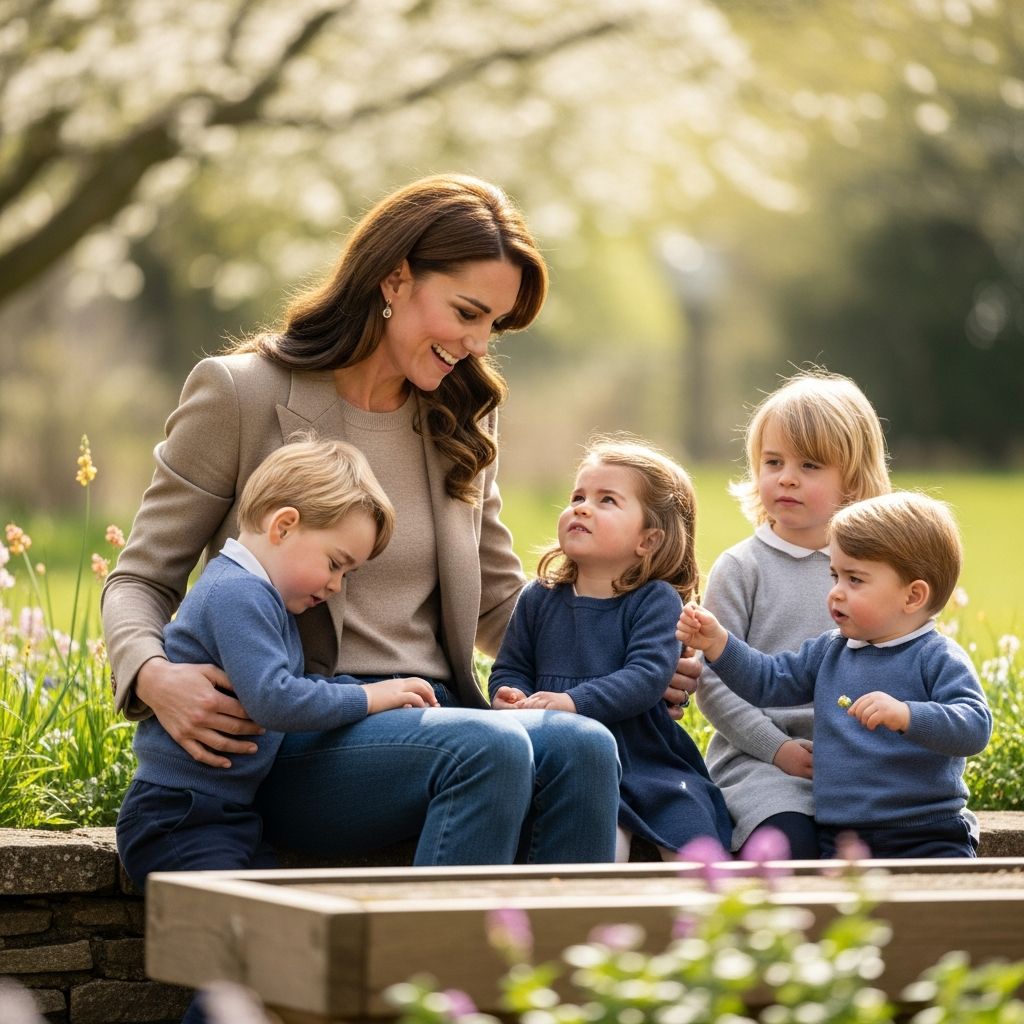
Princess Kate Middleton, now the Princess of Wales, exemplifies a balanced approach to parenthood that blends royal tradition with contemporary insights. As a mother to Prince George, Princess Charlotte, and Prince Louis, she navigates the challenges of public life while fostering a nurturing home environment. Her methods focus on emotional intelligence, moral grounding, and everyday normalcy, offering valuable lessons for parents everywhere.
Building a Foundation of Core Values
At the heart of Kate’s parenting philosophy is an unwavering commitment to instilling **core values** such as kindness, respect, and honesty. She has publicly emphasized that these qualities are as crucial as academic or athletic success. Drawing from her own upbringing, Kate ensures her children prioritize empathy over material possessions.
In interviews, she highlights how her parents modeled these traits, shaping her lifelong perspective. William and Kate actively teach their children that emotional wellbeing trumps extravagance, describing modern child-rearing as demanding yet rewarding when rooted in strong moral foundations.
- Kindness first: Daily interactions reinforce compassionate behavior.
- Respect for others: Encouraged through family discussions and example-setting.
- Honesty as a pillar: Promoted to build trust within the family unit.
Hands-On Parenting in a Royal Context
Despite their high-profile status, Kate and William are notably involved parents. They personally handle school drop-offs and attend their children’s events, striving for a sense of normalcy. This hands-on style contrasts with more traditional royal detachment, reflecting William’s desire to create a playful, casual family dynamic informed by his own childhood experiences.
Experts note William’s efforts to avoid the stiffness of past generations, allowing George, Charlotte, and Louis to appear relaxed and joyful at public outings. The family limits media exposure, protecting the children’s privacy while gradually introducing them to their future roles.
| Traditional Royal Parenting | Kate & William’s Approach |
|---|---|
| Reliance on nannies; formal structure | Personal involvement; casual play |
| High public exposure from early age | Limited appearances; focus on normalcy |
| Emphasis on duty over emotions | Balanced with emotional support |
The Power of Emotional Support
Kate stresses that true parenting success lies in providing robust emotional backing rather than accumulating toys or trips. She advocates for adults to model stability, helping children thrive amid today’s pressures. This approach aligns with her work through the Royal Foundation Centre for Early Childhood, where she promotes mental health awareness.
During homeschooling challenges, Kate demonstrated patience, particularly with educational tasks, complementing William’s more hands-on struggles. Their collaborative dynamic ensures consistent emotional availability.
Gentle Discipline Techniques
Kate employs calm, non-confrontational discipline methods. Instead of shouting, she uses phrases like “let’s take a break” to de-escalate situations, allowing children space to self-regulate. Counting to three serves as a gentle warning before timeouts, maintaining structure without harshness.
She gets down to her children’s eye level during meltdowns, validating their feelings and offering hugs over reprimands. This technique acknowledges overwhelm, especially in social settings, fostering open communication.
- Observe the behavior calmly.
- Count to three for compliance.
- Implement a short break if needed.
- Reconnect with empathy afterward.
Pacing: Allowing Children to Process
A key strategy Kate endorses is “pacing,” which involves pausing during interactions to let children respond at their own speed. Whether reading a book or asking a question, this method gives young brains time to absorb and reply thoughtfully.
By lingering on engaging pages or waiting silently, parents signal respect for the child’s pace, reducing frustration and enhancing understanding. This technique supports neurological development, promoting calmer processing.
Promoting Independence and Outdoor Play
Encouraging self-reliance is central to Kate’s routine. Strict screen time limits ensure ample outdoor activity, building physical health and resilience. The family engages in messy, hands-on play, strengthening bonds and creativity.
Kate acts as a “lighthouse parent,” guiding from afar while allowing exploration. This style, akin to authoritative parenting, sets clear boundaries with warmth, helping children develop confidence.
Grooming, Routines, and Self-Respect
Daily grooming routines instill dignity and pride. Kate dresses her children thoughtfully, coordinating outfits for family occasions to teach presentation as self-respect. Consistent bedtime rituals and mealtimes provide security, balancing royal duties with home life.
Accepting help from nannies or family allows Kate to recharge, modeling healthy boundaries for her children.
Lessons from Royal Parenting Diversity
Kate’s style stands out among royals. Compared to more hands-off approaches like Princess Anne’s “tortoise” method or Zara Tindall’s free-range freedom, Kate’s is nurturing yet structured. Sophie’s gentle empathy and the Queen’s traditional expectations highlight evolving trends toward emotional focus.
William’s influence draws from breaking cycles of emotional reserve, prioritizing fun and normalcy.
Frequently Asked Questions
What are Kate Middleton’s top parenting values?
Kindness, respect, honesty, and emotional wellbeing top her list, taught as equals to academic skills.
How does Kate handle tantrums?
She stays calm, uses eye-level communication, counting to three, or suggests breaks without yelling.
Does Kate limit screen time?
Yes, strictly, favoring outdoor play and family activities for healthy development.
What is pacing in parenting?
Pausing to let children process information at their pace, aiding calm brain responses.
How do Kate and William ensure normalcy?
Through school runs, limited public exposure, and hands-on involvement.
Applying Royal Wisdom to Everyday Families
Kate’s strategies transcend palace walls. Prioritizing values builds character; pacing enhances communication; gentle discipline preserves dignity. Parents can adopt outdoor mandates, eye-level talks, and break phrases for similar results.
Her emphasis on patience during homeschooling or events reminds us that consistency trumps perfection. By accepting help and modeling self-respect, families cultivate resilience.
In a fast-paced world, Kate’s blueprint—values-driven, emotionally attuned, independence-fostering—equips children for success. Her children’s poise at events underscores its efficacy.
Ultimately, Kate proves parenting thrives on presence, empathy, and unwavering principles, inspiring global parents to refine their own approaches.
References
- Princess Kate’s firm parenting rule for George, Charlotte and Louis — Hello Magazine. 2024-10-01. https://www.hellomagazine.com/royalty/835289/princess-kate-parenting-rule-george-charlotte-louis-values/
- What the royal parenting styles say about Kate, Meghan & Zara — Sue Atkins Parenting Coach. 2020-08-01. https://sueatkinsparentingcoach.com/2020/08/what-the-royal-parenting-styles-say-about-kate-meghan-zara/
- Princess Kate uses the ‘pacing’ parenting technique — The Independent. 2024-01-01. https://www.the-independent.com/life-style/kate-middleton-pacing-parenting-technique-b2803986.html
- 10 parenting rules Kate Middleton swears by — Today’s Parent. 2023-01-01. https://www.todaysparent.com/blogs/10-parenting-rules-kate-middleton-swears-by/
- Kate Middleton uses this parenting strategy to keep her kids disciplined — Times of India. 2024-01-01. https://timesofindia.indiatimes.com/world/uk/kate-middleton-uses-this-parenting-strategy-to-keep-her-kids-disciplined/articleshow/113539446.cms