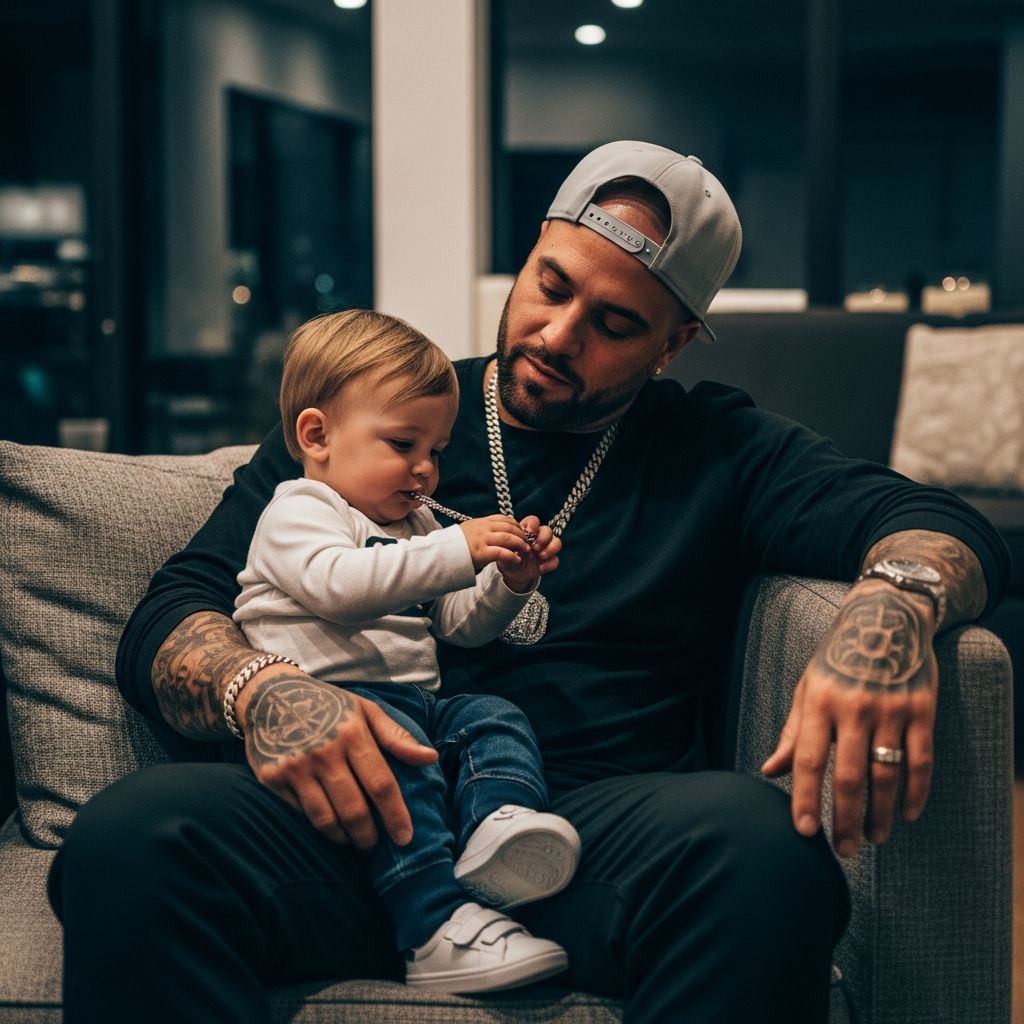
Hip-hop was born as the soundtrack of youth, rebellion, and survival. Four decades later, many of its pioneers and executives are in a different season of life: they are fathers, mentors, and community anchors. The same people who once rapped about late nights and fast living now talk about homework, mental health, and protecting their kids from the world that shaped them.
This shift is not just personal; it reflects a wider cultural change. Black fathers are more involved with their children than many stereotypes suggest, and hip-hop has become one of the most visible arenas where this new image of fatherhood is being written in real time.
The Evolution of the Hip-Hop Dad
Early hip-hop lyrics were dominated by stories of struggle, ambition, and escape. Many of the genre’s first stars grew up with absent or inconsistent fathers, so images of nurturing dads rarely appeared in songs or videos. As artists and behind-the-scenes figures aged, started families, and built enduring careers, the narrative began to shift.
Today, it is common to see rap icons and executives:
- Bringing children on tour, turning backstage into a family space.
- Posting school drop-offs and dance recitals instead of only club nights.
- Speaking publicly about therapy, vulnerability, and healing from their own childhood wounds.
These men still represent hustle and ambition, but they increasingly define success as being present for their kids, not just being famous in the world.
Balancing the Studio and the Living Room
Hip-hop is built on nonstop motion: late sessions, global travel, and unpredictable schedules. For fathers in this industry, work–life balance is not a buzzword; it is a daily negotiation.
Intentional Time, Not Just Leftover Time
Executives and artists who take parenting seriously often build rules into their lives that protect family time. Common strategies include:
- Setting hard limits on travel so they never stay away from home too long in a row.
- Scheduling “no phone” hours around dinner, bedtime, or morning routines.
- Bringing kids into their world — inviting them to shows, studios, or video sets when it is appropriate and safe.
Research on involved fathers shows that consistent, predictable presence — even in small windows — is associated with better emotional and academic outcomes for children. For a touring musician or a label boss, that might mean protecting a weekly ritual, like Sunday breakfast or school pickups on specific days, and treating those as non-negotiable commitments.
Managing the “Always On” Lifestyle
Hip-hop is deeply social. Relationship-building at events, clubs, and listening parties can affect careers. Yet fatherhood requires boundaries. Many dads in the culture quietly shift how they move:
- Leaving events earlier to make bedtime calls.
- Turning down some invites to avoid being gone for long stretches.
- Delegating more to trusted team members so they can show up at home.
This is part of a broader trend: fathers in many professions are demanding more flexibility to be present parents, and research shows that when workplaces support work–family balance, both employees and children benefit.
Raising Children Across Generations
Some of hip-hop’s power players became parents as teenagers and then had more children in their 30s or 40s. Raising children decades apart creates a unique perspective on growth, regret, and second chances.
| Aspect of Parenting | As a Teen Dad | As an Older Dad |
|---|---|---|
| Financial Stability | Limited resources, improvising to survive. | More stability, ability to invest in opportunities. |
| Emotional Tools | Unsure, often copying how they were raised. | More self-awareness, therapy, and reflection. |
| Time | Juggling school, work, and early career. | More control over schedule, but bigger responsibilities. |
| Perspective | Focused on immediate survival. | Thinking about legacy, education, and long-term safety. |
Many fathers who started young describe their early years as “learning in public.” They made mistakes, missed moments, or relied heavily on extended family. With later children, they often:
- Slow down more, enjoying everyday moments they once rushed through.
- Communicate more openly, encouraging kids to ask questions and share feelings.
- Plan more intentionally, from schooling to saving for the future.
Breaking Cycles: Discipline, Voice, and Respect
Many Black men in hip-hop grew up with strict, physical discipline and a culture where children were expected to be seen, not heard. As fathers, they often consciously choose different tools.
From Spanking to Conversation
While physical punishment was once normalized, a growing number of fathers in hip-hop — like many parents across the country — are rejecting it. This mirrors a broader shift: professional bodies such as the American Academy of Pediatrics advise against corporal punishment because it is associated with increased aggression and mental health issues in children.
In its place, dads are using:
- Natural and logical consequences (e.g., losing privileges tied directly to behavior).
- Calm but firm conversations about choices, feelings, and accountability.
- Agreed-upon rules, revisited as children grow and understand more.
Giving Children a Voice
Another major break with past norms is how children are allowed to speak. Many hip-hop dads emphasize that if adults are having a conversation in front of a child, that child is part of the room — and may have a viewpoint worth hearing.
This can look like:
- Inviting kids to share their opinion on family decisions that affect them.
- Letting them challenge ideas respectfully, without fear of punishment.
- Protecting them from adult topics by having sensitive conversations privately, not by silencing them once topics are raised.
Psychological research supports this approach: children who feel heard and respected tend to develop stronger self-esteem and better problem-solving skills.
Hip-Hop as a Classroom for Life
For fathers who built their lives in music, hip-hop is not just entertainment — it is a set of lessons about creativity, resilience, and business. Many use the culture as a kind of living curriculum.
Introducing Kids to the Music
Every dad handles this differently. Some play only clean versions, others prioritize older, more lyrical artists over current trends, and some wait until their kids are older to expose them to rawer songs. Common principles include:
- Context over censorship: Explaining harsh realities and language instead of pretending they do not exist.
- Teaching media literacy: Discussing why artists might glorify certain things and what is real versus performative.
- Sharing stories of origin: Linking songs to history — from the Bronx block parties to social movements — so kids see hip-hop as culture, not only as content.
Hip-Hop as a Model of Opportunity
One powerful message hip-hop dads convey is that talent plus opportunity can change a life — but that path is not the only way forward. Many executives and artists emphasize to their children:
- Music is one lane, but education opens many others.
- Not everyone will “get lucky” with a career based on ear and instinct; formal knowledge matters in most fields.
- Use every tool available — creativity, schooling, mentorship, and community — rather than betting everything on fame.
This message has weight. Studies show that educational attainment is one of the strongest predictors of long-term economic stability, and Black college graduates still face systemic barriers that make degrees and professional networks especially valuable.
Preparing Black Sons for a Biased World
For many Black fathers in hip-hop, parenting is inseparable from protecting children — especially sons — in a society where they face disproportionate scrutiny and danger. Conversations about racism, policing, and systemic inequality are not optional; they are survival tools.
“On 10 All Day, Every Day”
Fathers describe coaching their sons to be hyper-aware of how they are perceived. This includes:
- Explaining how to interact with authority figures, especially police.
- Teaching them to move carefully in public spaces, from stores to classrooms.
- Instilling confidence and pride, so vigilance does not become internalized shame.
Data underline these concerns: Black Americans, including youth, experience higher rates of police stops, searches, and use of force compared with white Americans, even when controlling for behavior. Black children are also more likely to be disciplined harshly in schools, beginning as early as preschool.
Tools, Not Just Warnings
Alongside cautionary talks, hip-hop dads aim to fill their children’s metaphorical “backpacks” with tools:
- Academic tools: Strong literacy, numeracy, and critical thinking skills.
- Social tools: The ability to read environments, advocate for themselves, and build networks.
- Emotional tools: Coping strategies, openness to mental health support, and language for feelings.
The goal is not only to help children survive discrimination but to thrive in spite of it — to be, as some fathers put it, “excellent on purpose” in systems that may underestimate them.
Community Fatherhood: Uncles, Crews, and Chosen Family
In hip-hop, the idea of family often extends far beyond biology. Crews, longtime business partners, and childhood friends become uncles and co-parents in practice.
Within these networks, it is common for:
- Close friends to correct or guide each other’s kids on the spot.
- Older artists to mentor younger fathers about parenting and balance.
- Groups to share resources — tutors, therapists, coaches, schools — to raise the next generation together.
Online, similar dynamics appear in dedicated spaces for Black fathers, where men exchange advice, celebrate everyday wins, and challenge stereotypes about absent dads. These communities can foster vulnerability and growth, especially for men who did not have strong father figures themselves.
Money, Legacy, and Teaching the Next Generation
Hip-hop has always talked about money, but fatherhood shifts the conversation from quick wins to long-term security. Dads in the culture are increasingly focused on what will outlast their careers.
From Flash to Foundation
Instead of only flaunting luxury, many fathers emphasize:
- Savings and investment, not just spending.
- Building businesses that children can one day join or inherit.
- Understanding contracts and ownership so the next generation keeps their rights and royalties.
This aligns with broader findings that financial education within families can significantly impact young people’s later financial behavior and stability.
Education as Non-Negotiable
Many hip-hop fathers did not attend college, instead finding success through talent, timing, and relentless work. Precisely because they know how rare that path is, they often insist their children pursue higher education or technical training. They frame degrees not as status symbols but as:
- A shield against some forms of discrimination.
- A toolkit for navigating complex institutions (banks, corporations, governments).
- A platform to choose from multiple careers, not just one dream.
How Lyrics Are Rewriting the Image of the Black Dad
As more artists rap about their kids — from fears about raising sons to soft moments with daughters — they are changing what is considered “cool” in hip-hop. The once-unspoken topic of fatherhood now appears in:
- Album covers featuring children and family scenes.
- Verses about custody battles, co-parenting, and loss.
- Public tributes at award shows, concerts, and on social media.
Representation matters. When high-profile men talk openly about being present, affectionate fathers, it sends a powerful signal: neglect is not aspirational. Love is.
Research on Black fathers supports what this imagery suggests: when fathers live with their children, Black dads, on average, are more likely than fathers of other races to be involved in key daily activities like bathing, reading, and playing. Hip-hop’s evolving storytelling brings that often-hidden reality into the spotlight.
Frequently Asked Questions (FAQs)
Q: Are fathers in hip-hop really more involved now than in the past?
A: There is no single measure for hip-hop specifically, but broader data on Black fathers show high levels of involvement with children, especially when they live in the same household. The visibility of artists and executives sharing their parenting lives publicly suggests that involvement is not only happening but also being celebrated more than before.
Q: How do hip-hop dads handle explicit content around their kids?
A: Approaches vary. Some use only clean edits, others delay exposure until kids are older, and many focus on explaining context and meaning. The emphasis is often on media literacy — helping children understand what they are hearing — rather than simply banning all explicit content.
Q: Do these fathers still encourage their kids to pursue music careers?
A: Many support creative expression but stress education and transferable skills. They often frame music as one option among many and encourage children to understand the business side — contracts, ownership, and finance — before pursuing it seriously.
Q: What is unique about how Black fathers in hip-hop parent their sons?
A: In addition to universal parenting concerns, they must prepare sons for racial bias in policing, schools, and workplaces. This leads to explicit conversations about safety, rights, and excellence, alongside efforts to build strong self-worth and joy despite systemic challenges.
Q: How can non-famous dads apply lessons from hip-hop fathers?
A: The core principles are widely applicable: protect time with your kids, reject harmful discipline, give children a voice, build support networks with other dads, and think long-term about education and legacy. Fame magnifies these choices, but the underlying values work in any household.
References
- Brown, T. Lee; et al. “Fathers’ Involvement With Their Children: United States, 2006–2010.” — National Center for Health Statistics (CDC). 2013-12-20. https://www.cdc.gov/nchs/products/databriefs/db071.htm
- “Effective Discipline to Raise Healthy Children.” — American Academy of Pediatrics. 2018-11-01. https://publications.aap.org/pediatrics/article/142/6/e20183112/37315/Effective-Discipline-to-Raise-Healthy-Children
- “Parenting Matters: Supporting Parents of Children Ages 0–8.” — National Academies of Sciences, Engineering, and Medicine. 2016-11-21. https://nap.nationalacademies.org/catalog/21868/parenting-matters-supporting-parents-of-children-ages-0-8
- “Black Dads and the Myth of the Absent Black Father.” — U.S. Department of Health and Human Services, Office of Minority Health. 2021-06-10. https://minorityhealth.hhs.gov/omh/browse.aspx?lvl=4&lvlid=23
- Scott-Clayton, Judith & Lydia Pendley. “Black-White Disparity in Student Loan Debt: Reconsidering the Evidence.” — Brookings Institution. 2019-10-09. https://www.brookings.edu/articles/black-white-disparity-in-student-loan-debt-reconsidering-the-evidence/
- “Contacts Between Police and the Public, 2018.” — U.S. Department of Justice, Bureau of Justice Statistics. 2020-12-07. https://bjs.ojp.gov/library/publications/contacts-between-police-and-public-2018