In vitro fertilization, commonly known as IVF, represents a groundbreaking assisted reproductive technology that has enabled millions of couples worldwide to overcome infertility barriers and build families. By combining eggs and sperm outside the body in a controlled laboratory environment, IVF bypasses common fertility obstacles such as blocked fallopian tubes or low sperm motility. This guide provides an in-depth, original exploration of the IVF journey, drawing from established medical protocols to empower prospective parents with clear, actionable knowledge.
Why Choose IVF? Common Indications and Eligibility
IVF is recommended for individuals or couples facing specific reproductive challenges. Primary candidates include women with damaged or absent fallopian tubes, ovulation disorders like polycystic ovary syndrome (PCOS), or diminished ovarian reserve due to age. Men with low sperm count, poor motility, or blockages also benefit, as do those using donor gametes or gestational carriers. Endometriosis, unexplained infertility, and genetic concerns further justify IVF, particularly when paired with preimplantation genetic testing (PGT).
Eligibility typically requires a thorough evaluation by a reproductive endocrinologist, including hormone assessments, semen analysis, and imaging like hysterosalpingography (HSG) to check uterine health. Age plays a pivotal role; women under 35 generally see higher success, while those over 40 may require donor eggs for optimal outcomes.
- Blocked fallopian tubes: IVF circumvents tubes entirely by transferring embryos directly to the uterus.
- Male factor infertility: Techniques like ICSI allow precise sperm selection.
- Advanced maternal age: Maximizes limited egg supply through stimulation.
- Single parents or LGBTQ+ families: Enables use of donor sperm, eggs, or surrogacy.
Preparing for Your IVF Journey: Initial Steps and Expectations
Preparation begins with a comprehensive fertility workup, often spanning 1-2 months. This includes baseline ultrasounds on cycle day 2-3 to assess antral follicle count (AFC), blood tests for FSH, AMH, and estradiol levels, and partner semen analysis. Lifestyle optimizations—quitting smoking, moderating alcohol, maintaining BMI between 19-30, and supplementing with prenatal vitamins—are crucial for enhancing outcomes.
Orientation sessions, offered by most clinics, demystify the process, covering emotional, physical, and financial aspects. Partners are encouraged to participate, fostering shared understanding. Financial counseling reviews insurance coverage, as IVF cycles can range from $12,000-$20,000 out-of-pocket in the U.S., with medications adding $3,000-$7,000.
The IVF Cycle Timeline: A Day-by-Day Breakdown
A standard fresh IVF cycle spans 4-6 weeks, from menstrual cycle day 1 to pregnancy confirmation. Here’s a structured overview:
| Phase | Duration | Key Activities |
|---|---|---|
| Baseline Monitoring | Days 1-3 | Ultrasound, bloodwork to confirm cycle start. |
| Ovarian Stimulation | Days 3-12 (10-14 days) | Daily injections of gonadotropins (FSH/LH analogs). |
| Trigger & Retrieval Prep | Days 12-14 | Trigger shot (hCG or GnRH agonist); coasting period. |
| Egg Retrieval | Day 14-15 | Transvaginal aspiration under sedation (20-30 mins). |
| Fertilization & Culture | Days 15-20 | ICSI or conventional; embryo growth to blastocyst. |
| Embryo Transfer | Day 19-20 (Day 5 post-retrieval) | Catheter placement under ultrasound guidance. |
| Luteal Support & Test | Days 21-35 | Progesterone; beta-hCG blood test ~14 days post-transfer. |
This timeline allows for multiple eggs to develop, unlike natural cycles yielding one.
Detailed IVF Procedures: From Stimulation to Transfer
Ovarian Stimulation: Building Your Egg Reserve
Stimulation aims to recruit 10-20 follicles using subcutaneous injections of synthetic FSH and LH (e.g., Gonal-F, Menopur), dosed 150-450 IU daily. Monitoring involves 4-6 transvaginal ultrasounds and blood draws to track estradiol (target 200-400 pg/mL per follicle) and prevent ovarian hyperstimulation syndrome (OHSS). Protocols vary: antagonist prevents premature ovulation; agonist flares mimic natural surges.
Triggering Ovulation and Egg Collection
Once leading follicles reach 18-22mm, a trigger injection matures eggs. Retrieval occurs 35-37 hours later via ultrasound-guided needle aspiration through the vaginal wall. Under light sedation, 10-20 eggs are typically collected, with follicular fluid immediately scanned for oocytes by embryologists. Risks are minimal: cramping, spotting, infection (<0.5%).
Laboratory Magic: Fertilization and Embryo Development
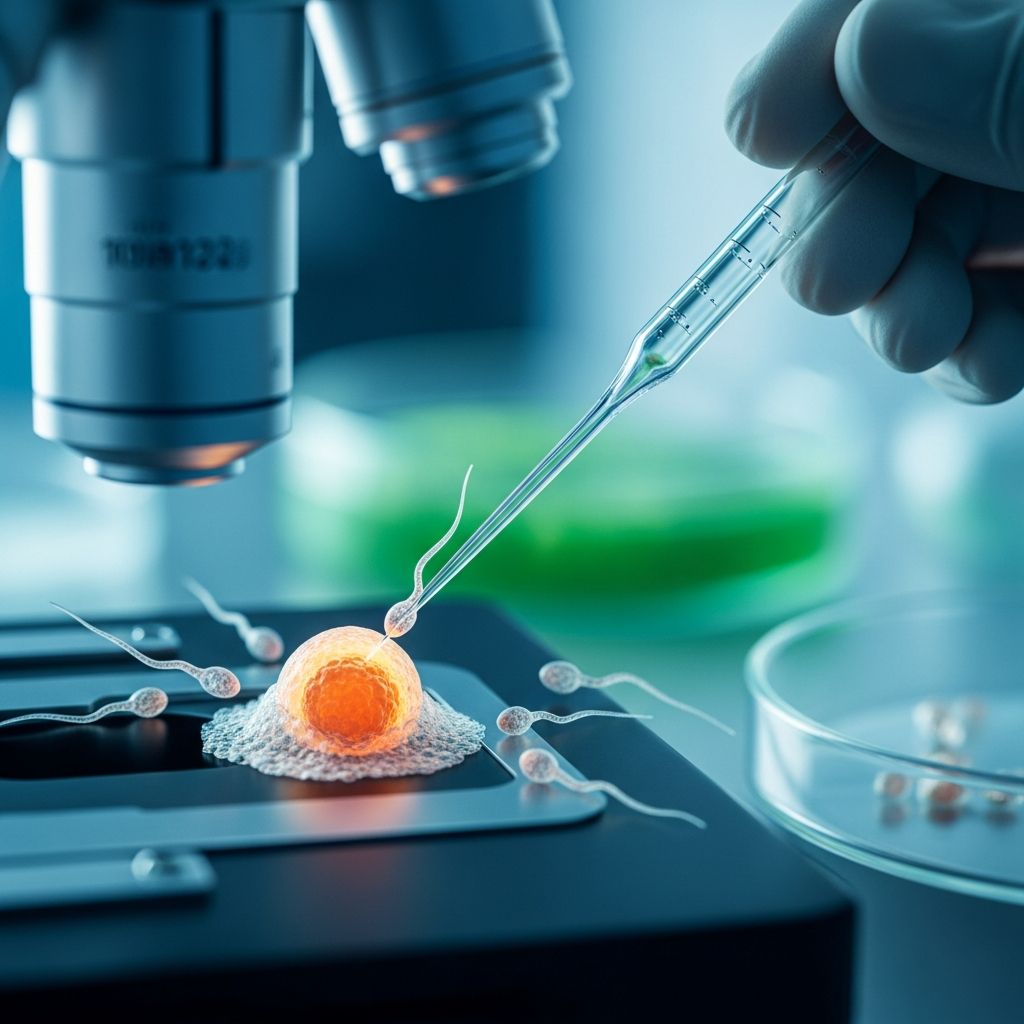
Eggs rest 2-4 hours post-retrieval, then fertilize via conventional insemination (50,000 sperm/egg) or ICSI for male issues—a micromanipulator injects one motile sperm directly. Day 1 zygotes cleave; by Day 3 (cleavage stage) or Day 5-6 (blastocyst), viable embryos are graded on expansion, inner cell mass, and trophectoderm quality. PGT screens for aneuploidy, reducing miscarriage risk.
Embryo Transfer: Placing Life in the Uterus
A ‘mock’ transfer precedes the real one, mapping cervical path. One or two euploid blastocysts load into a soft catheter with culture media, advanced 1-2cm from the fundus under abdominal ultrasound. No anesthesia needed; patients rest briefly post-procedure. Frozen transfers (FET) in subsequent cycles optimize endometrial receptivity.
Success Rates, Costs, and Financial Realities
Live birth rates per cycle: 50-60% for women <35, 40% for 35-37, dropping to 10-20% over 40 using own eggs. Cumulative rates with multiple cycles exceed 70% for younger patients. Costs average $15,000/cycle; grants, refunds, or mini-IVF reduce burdens. Insurance mandates in 20+ states aid access.
Potential Risks, Side Effects, and Complications
OHSS affects 1-5% (mild bloating to severe fluid shifts); mitigated by cabergoline, freeze-all. Ectopic pregnancy risk: 2-5%. Multiples (if transferring >1): preterm birth. Long-term, no increased childhood cancer or malformation rates per meta-analyses.
- Emotional toll: Grief cycles common; counseling vital.
- Physical: Bruising from injections, retrieval soreness.
- Financial strain: Multiple cycles often needed.
IVF Variations and Advanced Techniques
Mini-IVF uses lower doses for natural responders. Donor IVF boosts odds (60% success). PGT-A/M improves implantation. Time-lapse imaging refines selection. Mitochondrial replacement addresses age-related defects.
After Transfer: The Two-Week Wait and Beyond
Luteal progesterone (injections, vaginal gels) supports implantation (Days 6-10 post-transfer). Beta-hCG at 9-14 days: >5 mIU/mL indicates pregnancy; doubles every 48 hours. Early ultrasound at 6-7 weeks confirms viability.
Frequently Asked Questions About IVF
Is IVF painful?
Stimulation injections sting mildly; retrieval involves sedation with cramp-like discomfort resolving quickly.
How many embryos should I transfer?
Single euploid blastocyst recommended to minimize multiples risk.&sup>
Can I have IVF with frozen eggs?
Yes, egg freezing followed by thaw and fertilization yields high success, especially <35 at freeze.
What if the first cycle fails?
80% succeed within 3 cycles; adjust protocols based on response.
Does IVF increase birth defects?
No significant increase after adjustments; comparable to natural conceptions.
Emotional and Lifestyle Support During IVF
Support groups, acupuncture, and mindfulness reduce stress. Nutrition: Mediterranean diet, CoQ10, omega-3s. Exercise moderately pre-stimulation.
References
- In Vitro Fertilization Treatment Journey — ASRM ReproductiveFacts.org. 2023. https://www.reproductivefacts.org/patient-journeys/in-vitro-fertilization-treatment/
- IVF Process Day by Day — CCRM Fertility. 2024. https://www.ccrmivf.com/fertility/ivf-process/
- In Vitro Fertilization — NYU Langone Health. 2024. https://nyulangone.org/locations/fertility-center/in-vitro-fertilization-egg-freezing-embryo-banking/in-vitro-fertilization
- The Process of IVF Step-by-Step — Monash IVF. 2023. https://monashivf.com/services/fertility-treatment-options/the-ivf-process/
- IVF (In Vitro Fertilization): Procedure & How It Works — Cleveland Clinic. 2024-01-16. https://my.clevelandclinic.org/health/treatments/22457-ivf
- In Vitro Fertilization – StatPearls — NCBI Bookshelf, NIH. 2023. https://www.ncbi.nlm.nih.gov/books/NBK562266/
- In vitro fertilisation (IVF) — Human Fertilisation and Embryology Authority (HFEA). 2024. https://www.hfea.gov.uk/treatments/explore-all-treatments/in-vitro-fertilisation-ivf/