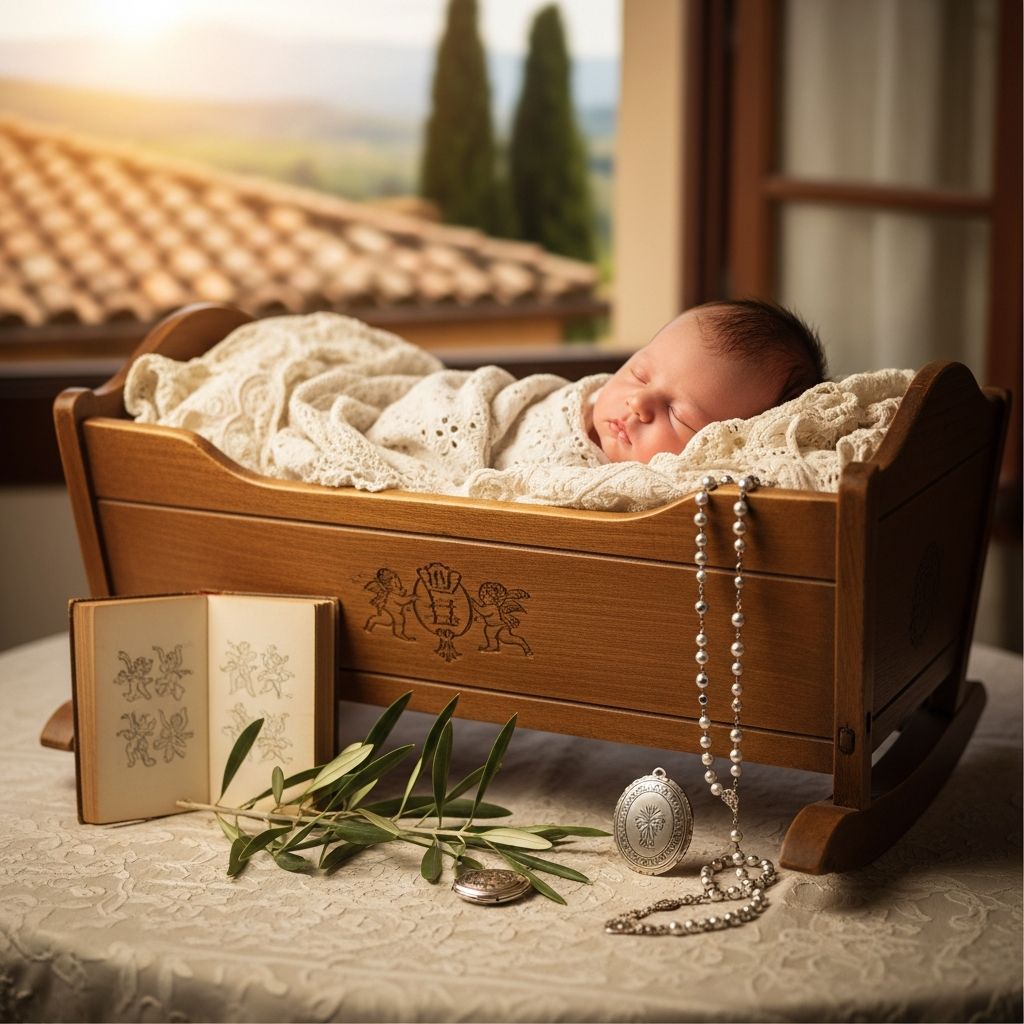
Italy’s approach to naming newborns weaves together deep family loyalty, religious devotion, and regional pride into a tapestry of cultural identity. These practices not only preserve lineage but also embed children within a broader spiritual and communal framework from birth. Understanding these customs reveals why certain names dominate Italian families and how they evolve with time.
Historical Roots of Naming Practices
Italian naming conventions trace back centuries, heavily influenced by Catholic traditions and patriarchal family structures. Families adhered to predictable patterns to honor elders, ensuring namesakes carried forward legacies. This system created tight-knit naming clusters within communities, where multiple generations shared identical monikers.
Central to this was the emphasis on grandparents as primary inspirations. The eldest son typically received his paternal grandfather’s name, reinforcing the father’s lineage. Subsequent sons drew from maternal sides, balancing familial ties. Daughters followed suit, with the first mirroring the paternal grandmother. This mirrored societal values prioritizing extended kin networks.
- Firstborn son: Paternal grandfather’s name
- Second son: Maternal grandfather’s name
- Firstborn daughter: Paternal grandmother’s name
- Second daughter: Maternal grandmother’s name
Later children often took cues from parents, aunts, uncles, or departed relatives, adding layers of tribute. If an infant passed young, the name frequently passed to the next of the same gender, perpetuating the cycle despite loss.
Legal Boundaries in Name Selection
Modern Italy upholds specific regulations to prevent confusion or embarrassment, overseen by civil registrars. Parents cannot duplicate a living father’s exact name without appending another, like Giuseppe Antonio for a father named Giuseppe. Identical names for living siblings are barred, as are surnames used as first names.
Restrictions cap first names at three and prohibit gender-atypical choices, except Andrea for boys or Maria as a secondary male name. Ridiculous, vulgar, or shameful combinations—especially when surname precedes first name in Italian style—are scrutinized. Officials may escalate dubious cases to judicial review; one family naming a child Venerdì faced rejection in favor of Gregorio, tied to the birth date’s patron saint.
| Prohibited Practices | Examples/Notes |
|---|---|
| Same as living father | Allowed with addition: Giuseppe Antonio |
| Same as living sibling | No duplicates permitted |
| Surname as first name | Banned outright |
| More than three first names | Strict limit enforced |
| Opposite gender names | Exceptions: Andrea (male), Maria (male secondary) |
Religious Influences and Name Days
Catholicism profoundly shapes naming, with many children receiving monikers linked to saints. The onomastico—saint’s feast day—grants a second celebration beyond the birthday. Parents select based on favored saints or birth proximity to feast dates. A June 24 birth might inspire Giovanni for San Giovanni Battista.
In southern regions, this ties directly to the sanctorale, the Roman Calendar’s saint cycle. Names like Natale for Christmas births or Pasqua near Easter reflect seasonal piety. This dual-birthday tradition doubles festivities, strengthening community bonds through shared observances.
Regional Variations and Local Flavors
Italy’s diverse dialects and histories foster name preferences by province. Northern areas favor international sounds, while southern zones cling to classics. Romolo thrives near Rome, honoring legendary founders; Brizio dots Umbria. Sicily and Calabria emphasize Arabic-influenced or Greek-rooted gems due to historical invasions.
Diminutives add affection: -ino/-ina (e.g., Carolina from Carola), -etto/-etta, or -ello/-ella, varying dialectally. These soften formal names, reflecting Italy’s melodic language.
Timeless Favorites and Contemporary Shifts
Enduring male staples include Marco, Alessandro, Luca, Giovanni, Giuseppe, Francesco, and Luigi—rooted in biblical or saintly origins. Females favor Anna, Maria, Giulia, Sofia, Aurora, and Valentina, blending tradition with elegance.
Today’s top picks lean modern: Leonardo, Sofia, Aurora lead charts, chosen for phonetic appeal over strict ancestry. Yet conventions linger, especially southwards, blending heritage with global trends.
Genealogical Clues from Naming Patterns
These customs aid ancestry research. Repeated names signal grandparental links, though exceptions abound—like infant deaths prompting renamings or orphans deviating entirely. Multiple Vitos in one generation from brothers naming first sons identically complicate trees. Cross-reference with baptismal records, listing all given names beyond civil singles.
Practical Tips for Choosing Italian Names
- Research saint feast days via the Roman Calendar for meaningful onomastici.
- Consult family elders to honor traditions thoughtfully.
- Check regional popularity to affirm cultural fit.
- Test full name flow, noting Italian surname-first convention.
- Explore diminutives for nicknames suiting personality.
Popular Italian Baby Names Today
| Category | Top Male Names | Top Female Names |
|---|---|---|
| Classic | Giovanni, Francesco, Giuseppe | Maria, Anna, Giulia |
| Modern | Leonardo, Alessandro, Luca | Sofia, Aurora, Valentina |
| Regional | Romolo (Rome), Brizio (Umbria) | Ginevra (North), Concetta (South) |
Frequently Asked Questions
Can I name my child after a living parent in Italy?
No, exact matches with a living father are forbidden, but adding a second name is allowed, such as Antonio Giuseppe.
What happens if a chosen name seems inappropriate?
Registrars may refer to prosecutors; courts intervened historically, like rejecting Venerdì for Gregorio.
Do all Italian families follow grandparent naming?
It’s traditional, strongest in the south, but exceptions for deaths, orphans, or modern preferences occur.
How do name days work?
Linked to a saint’s feast, celebrated like a second birthday with gifts and gatherings.
Are diminutives official names?
They serve as affectionate variants, dialect-dependent, alongside formal ones.
Preserving Legacy Through Names
Italian naming transcends labels, embedding newborns in ancestral, spiritual, and geographic narratives. Whether adhering to ancient patterns or embracing fresh vibes, these choices affirm identity. As globalization influences palettes, core elements—family reverence, saintly protection, regional essence—endure, linking past to future.
References
- Naming laws and traditions in Italy — Angel Research. 2021-03-02. https://angelresearch.net/2021/03/02/naming-laws-and-traditions-in-italy/
- The rules behind Italian baby names — Panoram Italia. 2023-02-22. https://panoramitalia.com/index.php/2023/02/22/the-rules-behind-italian-baby-names/
- Italian Naming Traditions and their Ramifications — Italian Genealogy. N/A. https://www.italiangenealogy.com/articles/italian-culture-traditions/italian-naming-traditions-and-their-ramifications
- The Secret Rules Behind Italian Names Revealed! — YouTube (Video Transcript). N/A. https://www.youtube.com/watch?v=OnJRoZrKUqc
- Italy Naming Customs — FamilySearch.org. N/A. https://www.familysearch.org/en/wiki/Italy_Naming_Customs
- Italian Naming Conventions and Traditions Explained — Grand Voyage Italy. N/A. http://www.grandvoyageitaly.com/culture/italian-naming-conventions-and-traditions-explained
- Italian name — Wikipedia. N/A. https://en.wikipedia.org/wiki/Italian_name