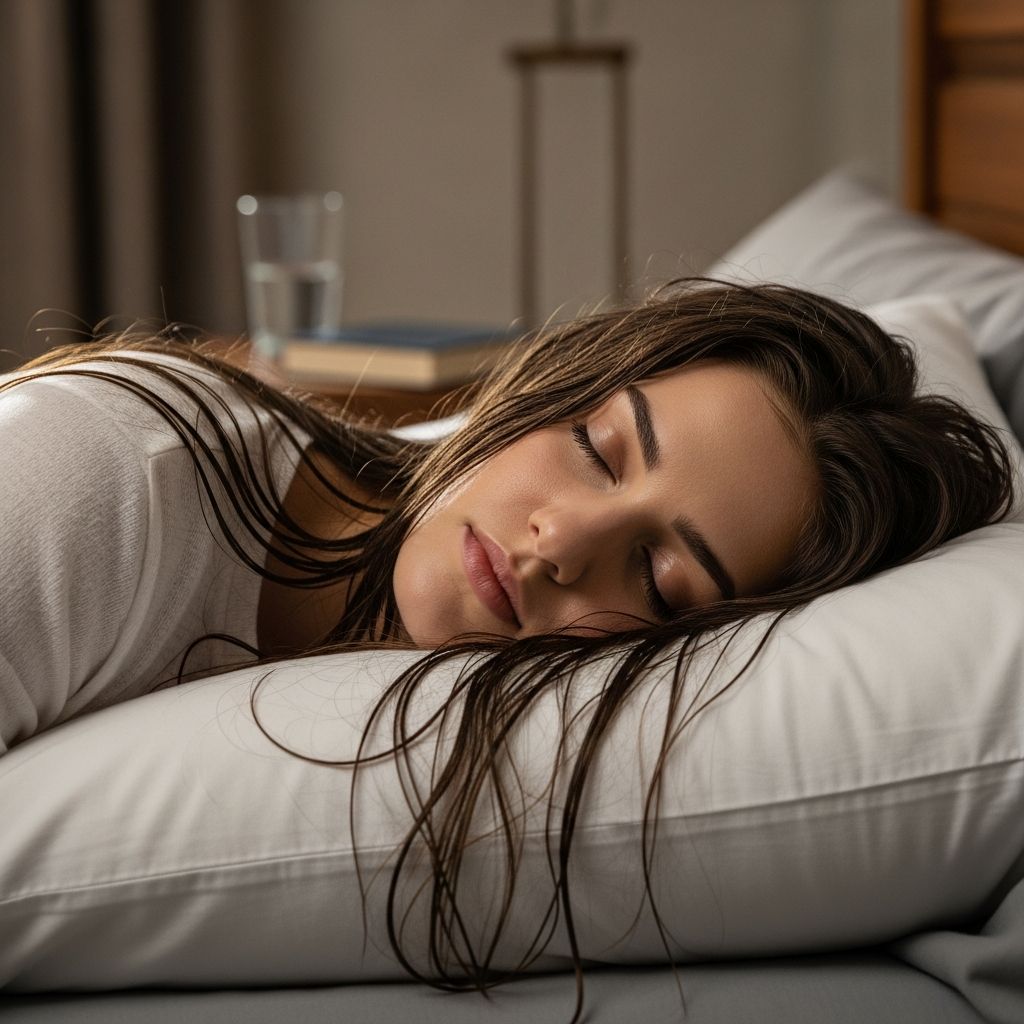
Night showers can be relaxing, time-saving, and essential if you work out late or have a hectic schedule. But if you often collapse into bed with damp hair, you have probably wondered whether that habit is secretly wrecking your hair or health. This guide explains what really happens when you sleep with wet hair, what the science and dermatology experts say, and how to build a night routine that keeps both your scalp and strands in good condition.
Is Sleeping with Wet Hair Always Bad?
From a medical perspective, sleeping with wet hair is not likely to cause a cold or flu, since those illnesses come from viruses, not from moisture on your head. However, experts do link damp hair at bedtime with a higher risk of scalp problems, fungal overgrowth, and increased breakage of already fragile hair.
In other words:
- It is not a guaranteed disaster if it happens once in a while.
- It can become a problem if you do it regularly, especially if you already struggle with scalp irritation, dandruff, or weak hair.
What Happens to Hair Fibers When They Stay Wet?
To understand the risks, it helps to know what water does to a strand of hair. Hair is made mostly of a protein called keratin, organized in layers. The outer layer (the cuticle) acts like overlapping shingles; when water enters, the fiber swells slightly and the structure becomes more vulnerable to physical stress.
Research on hair fiber mechanics shows that wet hair can stretch to about 30% of its length before permanent damage occurs, but the more it is stretched and rubbed, the more likely it is to break.
| State of Hair | Elasticity & Strength | Key Risk During Sleep |
|---|---|---|
| Dry hair | Less elastic, more stable | Normal friction, lower breakage risk |
| Wet hair | More elastic but structurally weaker | Higher chance of stretching, snapping, or frizzing |
| Chemically treated hair | Cuticle more porous and fragile | Greater risk of swelling damage and split ends |
Main Risks of Sleeping with Wet Hair
Different people will experience different effects, but dermatologists and sleep experts generally point to four main categories of concern.
1. Hair Breakage and Long-Term Damage
Wet hair plus friction from tossing and turning is a common recipe for damage. Dermatologists note that hair is at its weakest when it is wet; rubbing wet strands against a pillow all night can increase frizz and breakage.
- Friction from cotton pillowcases can cause strands to snag and stretch beyond their safe limit.
- Curly and coily hair types, which are already more prone to dryness and breakage, may be especially vulnerable.
- If your hair is bleached, relaxed, permed, or heavily color-treated, the cuticle is often more porous, making swelling and damage more likely.
Repeated cycles of swelling and drying, known in cosmetic science as hygral fatigue, can also weaken the cuticle over time, leaving hair rougher, more frizzy, and harder to detangle.
2. Scalp Irritation and Fungal Overgrowth
Your scalp naturally hosts yeast and bacteria, including species like Malassezia, which are linked to dandruff and certain forms of dermatitis when they overgrow. When you sleep with wet hair, moisture transfers into your pillow and lingers close to the scalp, creating a warm, humid micro-environment that favors this overgrowth.
Possible outcomes include:
- Worsening dandruff or flaking
- Redness, itching, or burning sensations on the scalp
- Exacerbation of existing scalp conditions such as seborrheic dermatitis
Dermatology sources emphasize that while not everyone who sleeps with wet hair will develop an infection, going to bed damp routinely can increase the risk, particularly for those already prone to scalp issues.
3. Skin and Acne Concerns
When wet hair soaks into your pillowcase, you are not just sleeping on water; you are lying on a mix of moisture, natural scalp oils, and any styling products that may transfer onto the fabric. Sleep medicine experts caution that a damp pillow can provide a more hospitable surface for bacteria and yeast and may worsen existing acne for some people.
Factors that can aggravate breakouts include:
- Heavy conditioners or oils left in the hair that transfer onto your face
- Residual hair spray, mousse, or creams accumulating on the pillow fabric
- Already oily or acne-prone skin in contact with a warm, humid pillow surface
Although there is no direct proof that wet hair alone causes acne, a dirty or damp pillowcase can contribute to clogged pores and irritation in people with sensitive or acne-prone skin.
4. Comfort, Sleep Quality, and Bedhead
On a purely practical level, damp hair can simply make it harder to sleep soundly. Moisture can feel cold, clingy, or uncomfortable when you move around. If this disrupts your rest, it may indirectly affect your skin and general well-being, since poor sleep is linked with higher inflammation and slower skin repair.
Cosmetically, going to bed with wet hair often leads to:
- Uneven waves or kinks that are hard to restyle in the morning
- Flattened roots with frizzier ends
- More time spent heat-styling or detangling, which can compound damage
Who Should Be Extra Careful About Wet Hair at Night?
Sleeping with wet hair occasionally is unlikely to cause serious harm for most people. Still, certain groups may want to avoid it as much as possible:
- People with scalp conditions such as dandruff, seborrheic dermatitis, psoriasis, or eczema.
- Those with fragile or thinning hair, including recent postpartum shedding, pattern hair loss, or hair weakened by illness or medications.
- Anyone with highly processed hair (frequent bleaching, relaxing, perming, or strong dyes).
- People with a history of recurrent fungal infections of the scalp or skin.
If you fall into one of these categories, aiming for mostly dry hair at bedtime can be a low-effort way to protect what you already have.
Safer Nighttime Strategies If You Must Sleep with Wet Hair
Life is messy, and there will be nights when air-drying completely is not realistic. Instead of panicking, try to lower the risk with a few smart adjustments.
Dry as Much as You Realistically Can
- Gently squeeze out water with a microfiber towel or a soft cotton T-shirt instead of rough rubbing, which can roughen the cuticle.
- Let hair air-dry for 20–30 minutes before getting into bed, even if it does not dry fully.
- Use a blow-dryer on a cool or low-heat setting just at the roots to reduce scalp dampness while leaving mid-lengths and ends slightly damp if needed.
Protect Your Hair from Friction
- Switch to a silk or satin pillowcase to reduce friction on both wet and dry hair.
- Gather hair into a loose braid or a very soft scrunchie at the top of your head (a “pineapple”) rather than a tight bun.
- Avoid elastic bands with metal parts or thin rubber ties that can pinch and snap damp strands.
Support Scalp and Skin Health
- Keep hair products light and non-comedogenic if they may touch your face or back.
- Change pillowcases regularly, especially if you often sleep with damp hair, to minimize buildup of oils and microbes.
- If you have a known scalp condition, talk with a dermatologist about medicated shampoos or treatments that can better control yeast and inflammation.
Building a Night-Friendly Hair Wash Schedule
The best long-term solution is usually not perfection, but a routine that works with your real life. Consider these adjustments if you prefer evening showers:
- Shift your wash earlier in the evening so your hair has a few hours to air-dry while you relax, cook, or watch TV.
- Alternate full wash days with rinse-only days or use a scalp-focused wash to reduce the time your lengths need to dry.
- Use leave-in conditioners strategically on mid-lengths and ends only, keeping the scalp area lighter to dry faster.
- Limit heavy overnight hair masks if you notice more breakouts along the hairline or cheeks.
Common Myths About Sleeping with Wet Hair
Old advice around wet hair often mixes real concerns with misconceptions. Here is a quick myth-versus-fact breakdown.
| Statement | Myth or Fact? | What Evidence Suggests |
|---|---|---|
| Wet hair will give you a cold. | Myth | Colds are caused by viruses, not low temperatures or wet hair. |
| Sleeping with wet hair always causes damage. | Myth (with a caveat) | Occasional nights are unlikely to cause major harm, but repeated friction on wet hair can increase breakage risk, especially in fragile hair. |
| Wet hair at night can aggravate scalp problems. | Closer to fact | Consistent moisture around the scalp can favor fungal overgrowth and irritation, particularly in people prone to dandruff or dermatitis. |
| You must blow-dry every time to be safe. | Myth | Air-drying is fine if you give hair enough time and minimize friction; partial drying at the roots is often enough to reduce risk. |
When to Talk to a Professional
If you notice any of the following changes and you frequently go to bed with damp hair, it is worth checking in with a dermatologist or healthcare provider:
- Sudden or rapidly worsening dandruff, flaking, or itching
- Red, scaly patches on the scalp, hairline, or behind the ears
- Noticeable shedding, broken hairs, or thinning areas
- Recurrent folliculitis (small, tender bumps around hair follicles)
A clinician can help determine whether nighttime moisture is contributing, rule out other causes like hormonal changes or nutritional deficiencies, and recommend appropriate treatments.
Frequently Asked Questions About Sleeping with Wet Hair
Will towel-drying alone protect my hair if I still go to bed damp?
Towel-drying is a good first step, but it does not fully remove the risks. Hair that is even partially wet is still more fragile than fully dry hair. Combining gentle towel-drying with a bit of air-drying time, reduced friction (like a silk pillowcase), and loose protective styles will do more to limit breakage than towel-drying alone.
Is it safer to sleep with wet hair in a bun or a braid?
A tight bun can concentrate tension on the same areas of the hair shaft and scalp, which may lead to breakage or traction over time. A loose, low braid secured with a soft scrunchie generally distributes stress more evenly and keeps strands from tangling while you sleep, making it a gentler option for damp hair.
Does using a hair dryer before bed damage hair more than going to sleep wet?
High heat used very close to the hair can damage the cuticle and inner structure over time, but a moderate or cool setting held at a distance is less risky. Many dermatology and hair-health sources suggest that partially drying the roots with low heat is often preferable to leaving the scalp fully wet overnight, especially if you already have scalp issues.
Can I reduce scalp issues just by changing my pillowcase more often?
Regularly washing pillowcases is an important hygiene step, especially for those with acne or scalp concerns, but it does not completely neutralize the risks of chronic dampness. If you often sleep with wet hair and notice irritation or flaking, combining clean bedding with better drying habits and, if needed, medicated shampoos will generally be more effective.
Is there any benefit to sleeping with slightly damp hair?
From a styling perspective, some people use slightly damp hair to set braids or twists overnight for heatless waves. This can be relatively safe if hair is only mildly damp (not dripping), the scalp is mostly dry, the style is loose, and friction is minimized with a smooth pillowcase. The key is to avoid very wet hair, tight styles, and heavy products that trap moisture against the scalp.
References
- Is It Bad to Sleep with Wet Hair? We Asked Experts — Peloton / Alexis Stephens, DO, and others. 2023-07-18. https://www.onepeloton.com/blog/is-it-bad-to-sleep-with-wet-hair
- Is It Bad to Sleep With Wet Hair? — Sleep Foundation. 2023-05-10. https://www.sleepfoundation.org/sleep-faqs/is-it-bad-to-sleep-with-wet-hair
- Is Going to Sleep with Wet Hair Bad for My Health? — Healthline. 2020-03-05. https://www.healthline.com/health/sleeping-with-hair-wet
- Can Wet Hair Make You Sick? — Cleveland Clinic Health Essentials. 2022-01-18. https://health.clevelandclinic.org/can-wet-hair-make-you-sick