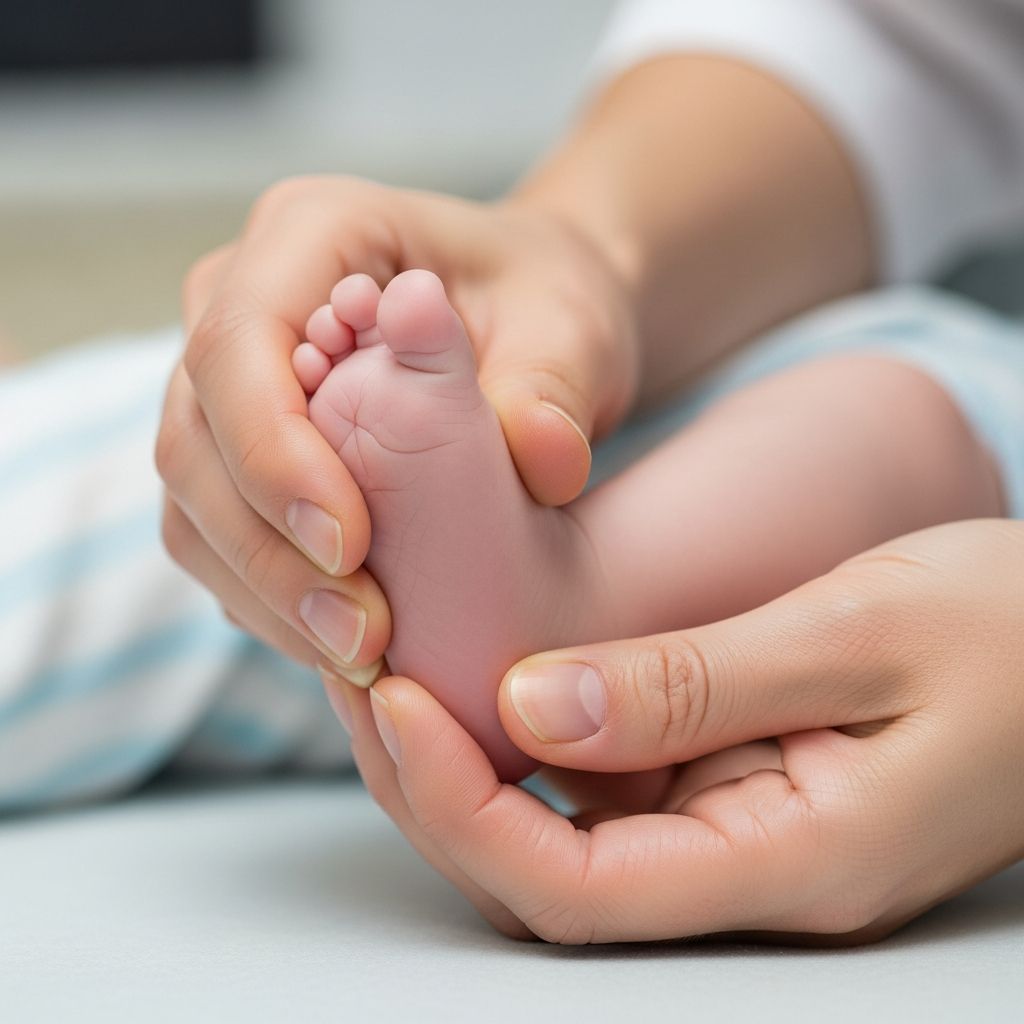
The **Ponseti method** represents a breakthrough in treating clubfoot, a congenital condition where a baby’s foot turns inward and downward. This non-invasive approach uses sequential casting, precise manipulations, and bracing to realign the foot, achieving correction in most cases without surgery. Developed by Dr. Ignacio Ponseti, it prioritizes the foot’s natural growth potential during early infancy.
Understanding Clubfoot Deformity
Clubfoot, medically termed congenital talipes equinovarus (CTEV), affects about 1 in 1,000 newborns, twisting the foot into a pointed-down, turned-in position due to tight tendons and ligaments. Untreated, it leads to lifelong mobility issues, pain, and gait abnormalities. The **Ponseti method** targets four key deformities: cavus (high arch), adductus (forefoot inward turn), varus (heel inward tilt), and equinus (toe-down posture).
Early intervention is crucial as infant tissues are highly malleable. Starting within the first few months leverages this elasticity for optimal outcomes, with success rates exceeding 90% for idiopathic cases.
Core Principles of the Ponseti Technique
The method relies on gentle, weekly manipulations followed by long-leg casts to stretch soft tissues gradually. Unlike aggressive stretching, it respects the foot’s anatomy, abducting the forefoot under the talus bone while applying counter-pressure to prevent rotation. This sequence corrects deformities progressively: first cavus, then adductus and varus, finally equinus via Achilles tenotomy if needed.
- Anatomical Focus: Secures talus head with thumb pressure during abduction.
- Biological Response: Casts soften ligaments over 5-7 days, allowing further correction.
- Non-Surgical Goal: Achieves plantigrade, flexible, pain-free feet for normal shoes and activity.
Step-by-Step Casting Process
The corrective phase spans 6-8 weeks, involving 5-7 toe-to-groin plaster casts with knees flexed at 90 degrees. Each cast is changed weekly after gentle manipulation.
Initial Cast Application
The first cast corrects cavus by dorsiflexing the first metatarsal, flattening the arch. It extends from toes to groin, molding tightly around the heel to maintain position. Worn for 5-7 days, it initiates tissue remodeling.
Subsequent Casting for Midfoot Correction
Weekly sessions advance abduction: forefoot aligns with equinus varus heel, gradually externally rotating the foot. By the third or fourth cast, hindfoot varus begins correcting indirectly. Physicians assess maintainable correction before casting to avoid over-stretching.
| Cast Number | Primary Correction | Duration |
|---|---|---|
| 1 | Cavus (high arch) | 5-7 days |
| 2-4 | Adductus & Varus | Weekly |
| 5-6 (Final) | Equinus (post-tenotomy) | 3 weeks |
Achilles Tenotomy Procedure
In 90% of cases, equinus persists, requiring percutaneous tenotomy—a quick office procedure under local anesthesia. A needle cuts the tight Achilles tendon, allowing full dorsiflexion (>10 degrees). The tendon regenerates longer during the 3-week final cast, with minimal pain managed by acetaminophen.
Bracing Phase: Preventing Relapse
After cast removal, the maintenance phase uses a **foot abduction orthosis (FAO)** or Ponseti brace: shoes on a bar holding feet at 70 degrees external rotation (unilateral) or 40 degrees (bilateral), 15 degrees dorsiflexion. Full-time wear (23 hours/day) for 3 months, then nights and naps until age 4-5.
- Compliance Key: Proper fit prevents skin issues; recurrence drops below 10% with adherence.
- Monitoring: Regular check-ups adjust brace as child grows.
This phase ensures bones and ligaments adapt permanently, avoiding surgery’s scarring and stiffness.
Outcomes and Success Metrics
Global adoption in over 100 countries confirms >90% correction rates, with functional, mobile feet. Long-term studies show 80-95% avoid surgery into adolescence, enabling sports and normal gait.
Comparison of Treatment Approaches:
| Method | Success Rate | Invasiveness | Long-Term Risks |
|---|---|---|---|
| Ponseti | >90% | Non-surgical | Low (recurrence if non-compliant) |
| Surgical | Variable | High | Scarring, stiffness, weakness |
Treating Atypical or Older Cases
For rigid, syndromic, or older children (>6 months), more casts (8-9) or minor surgery may be needed, but Ponseti remains first-line. Success in toddlers reaches 80% with extended bracing.
Practical Guidance for Families
Preparation and What to Expect
Start with a specialist trained in Ponseti. Expect weekly visits; casts may itch—avoid water exposure. Post-tenotomy, brief soreness is normal.
Care Tips During Casting
- Keep cast dry with plastic covers for baths.
- Elevate to reduce swelling.
- Report foul odor or loosening immediately.
Brace Management
Shoes should fit snugly; clean daily. Night-only phase reduces compliance barriers.
Frequently Asked Questions (FAQs)
Is the Ponseti method painful for babies?
Manipulation causes brief discomfort, but casting relieves it. Tenotomy uses numbing; most babies settle quickly.
How long does full treatment take?
Corrective phase: 6-8 weeks; bracing: 3-4 years part-time.
Can Ponseti treat both feet?
Yes, bilateral clubfoot responds equally well.
What if my child is older than 3 months?
Still effective, though longer treatment; early is ideal.
Does insurance cover Ponseti treatment?
Typically yes, as gold standard; check with provider.
Why Ponseti Outshines Traditional Methods
Surgery risks lifelong stiffness; Ponseti preserves motion by harnessing growth. Over 20 years of evidence from peer-reviewed studies affirm its superiority.
In summary, the Ponseti method empowers families with a safe, effective path to normal childhood mobility, transforming clubfoot from a disability to a manageable condition.
References
- The Ponseti Method for Clubfoot Correction — Hospital for Special Surgery. 2023. https://www.hss.edu/health-library/conditions-and-treatments/the-ponseti-method-for-clubfoot-correction
- Ponseti method — Physiopedia. 2024. https://www.physio-pedia.com/Ponseti_method
- Ponseti Method — University of Iowa. 2023. https://ponseti.medicine.uiowa.edu/what-clubfoot/ponseti-method
- Ponseti Method for Clubfoot in Children — NYU Langone Health. 2024. https://nyulangone.org/conditions/clubfoot-in-children/treatments/ponseti-method-for-clubfoot-in-children
- The Ponseti Method for Clubfoot: What to Expect — Stanford Medicine Children’s Health. 2023. https://www.stanfordchildrens.org/en/services/clubfoot/ponseti-method.html