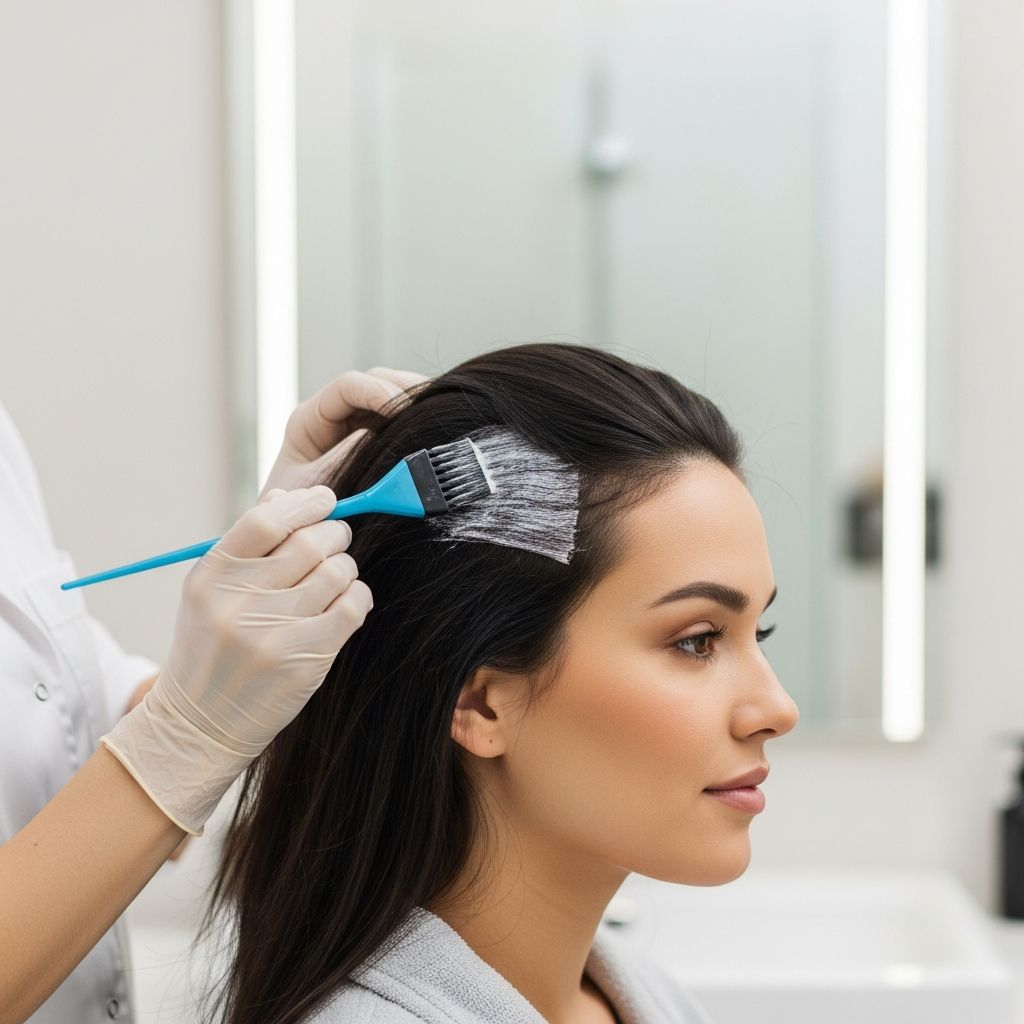
Pregnancy can change how you feel about everything you put on or in your body, including something as routine as touching up your roots. Many expectant parents wonder if coloring their hair is still safe, or if they should shelve the dye until baby arrives. This guide brings together current medical opinion and practical hair-care advice so you can make a calm, informed decision.
What Do Experts Say About Hair Dye in Pregnancy?
Large health organizations and professional bodies generally agree that using hair dye in pregnancy is unlikely to pose a risk to the developing baby when it is used as directed.
- The UK National Health Service (NHS) notes that most research shows it is safe to dye or color hair in pregnancy because exposure to dye chemicals is very low when used correctly.
- The American College of Obstetricians and Gynecologists (ACOG), as summarized for parents by KidsHealth, states that because very little dye is absorbed through the skin, coloring hair is usually considered safe in pregnancy.
- Guidance from the American Pregnancy Association highlights that semi-permanent dyes and highlights, which have limited scalp contact, are often preferred options.
Existing research is not perfect—few studies look at every specific product or combination of treatments—but the data we do have, combined with how hair dye is formulated and used, supports the view that routine, correctly applied hair color is generally compatible with a healthy pregnancy.
How Hair Dye Interacts With Your Body
Understanding how hair dye works can help explain why experts consider it low risk in pregnancy.
- Where dye acts: Most of the color change happens on the hair shaft, not inside your body. Permanent dyes open the cuticle and deposit pigment inside the hair; semi-permanent dyes mostly sit on the surface.
- Limited skin absorption: Only the small amount of dye that touches your scalp can be absorbed through the skin, and studies indicate that the quantity entering the bloodstream is very low during normal use.
- Short exposure time: Hair color is rinsed off after a set period, which further limits absorption and exposure to fumes.
For these reasons, medical organizations focus more on minimizing unnecessary exposure rather than avoiding hair dye altogether.
Timing: Is It Better to Wait Until After the First Trimester?
Even though overall risk appears low, many clinicians recommend waiting until the second trimester before doing chemical hair treatments.
- The NHS suggests some people prefer to wait until after the first 12 weeks, when the baby’s organs have formed and the theoretical risk from chemical exposure is lower.
- Several obstetric and parenting resources echo this approach as a cautious, but not mandatory, compromise—especially if you are anxious about any avoidable exposure in early pregnancy.
If you already colored your hair before realizing you were pregnant, especially early on, current guidance does not recommend any special testing or intervention. The overall risk from a one-time or occasional dye job appears to be extremely low.
Safer Ways to Color Your Hair While Pregnant
If you want to balance personal grooming with risk reduction, you can tweak how and what you use to color your hair.
Techniques With Less Scalp Contact
Choosing methods that keep dye away from your scalp reduces even the small amount of potential chemical absorption.
- Highlights, lowlights or balayage: Dye is painted onto strands and typically wrapped in foil, so it touches hair, not skin.
- Ombre or “grown-out” looks: Color is concentrated on the mid-lengths and ends, leaving the roots natural.
- Root-blending and gloss services: Some salon techniques use diluted colors and focus on softening lines rather than fully saturating the scalp.
Choosing Gentler Products
Not all color products are formulated the same way. Discuss ingredients with your stylist or read labels if you color at home.
- Semi-permanent or demi-permanent dyes: These tend to use lower levels of peroxide and may be free of ammonia. They usually fade gradually and are often suggested as gentler choices in pregnancy.
- Vegetable-based or plant dyes: Products like pure henna or other plant-based dyes that do not use synthetic oxidizing agents are frequently described as likely to be safe options, provided they are truly free of added conventional dye chemicals.
- Ammonia-free or low-odor formulas: Strong fumes can be unpleasant or trigger nausea. Ammonia-free options may feel more comfortable, though “ammonia-free” does not necessarily mean “chemical-free.”
| Color Type | How It Works | Scalp Contact | Pregnancy Considerations |
|---|---|---|---|
| Permanent dye | Opens hair cuticle, deposits lasting pigment | Usually applied from scalp to ends | Generally considered low risk when used correctly; some prefer to limit or delay in 1st trimester. |
| Semi-/demi-permanent | Deposits color mainly on surface or just under cuticle | May touch scalp, but often milder formulas | Frequently suggested as a gentler option, especially later in pregnancy. |
| Highlights/foils | Dye painted on strands and wrapped | Minimal to no scalp contact | Often preferred because chemicals primarily contact hair, not skin. |
| Plant-based/henna | Natural pigments coat or lightly penetrate hair | May touch scalp but without conventional dye chemicals | Considered likely safe when products are pure and reputable, though color options are more limited. |
Safety Tips if You Color at Home
If you choose to color your hair yourself during pregnancy, a few careful steps can further minimize any risk and improve comfort.
- Do a patch and strand test: Pregnancy can change your skin and hair. The NHS recommends testing the product on a small area of skin and a strand of hair first, since you may react differently than before pregnancy.
- Wear gloves: This protects your hands and limits additional skin exposure. Skin can be more easily irritated during pregnancy.
- Color in a well-ventilated space: Open windows or use a fan to reduce inhalation of fumes, particularly if you feel sensitive to smells or have nausea.
- Follow the timing instructions exactly: Do not leave dye on longer than recommended. The NHS specifically advises keeping to the minimum effective time and never exceeding the maximum.
- Rinse thoroughly: Wash your hair and scalp well afterward to remove all residue.
When You May Want to Skip Hair Dye
There are some situations where postponing color is the safest, simplest choice.
- Broken or irritated scalp: If you have cuts, eczema, psoriasis, infections or any open areas on your scalp, absorption can increase and irritation may worsen. Many experts advise delaying dye until skin has fully healed.
- Previous dye allergy: If you have ever had a reaction to hair color—itching, rash, swelling, difficulty breathing—do not use that product again, pregnant or not. Talk with a dermatologist or allergist first.
- Strong chemical sensitivity: If fumes have triggered headaches, asthma or severe nausea in the past, it may be more comfortable to avoid salon or at-home color until after pregnancy.
- High-risk pregnancy or specific medical advice: If your obstetric provider recommends avoiding certain exposures due to a particular condition, follow their guidance, even if the general population advice is more relaxed.
Hair Changes in Pregnancy That Can Affect Color
Prenatal hormones can make your usual hair routine behave in unexpected ways. The NHS points out that pregnancy can change your hair’s normal condition, so it might react differently to color than you are used to.
- Texture shifts: Some people find their hair becomes drier or oilier, straighter or curlier, which can influence how even or intense the color appears.
- Porosity changes: Hair may soak up pigment faster or slower than usual, so a shade you have used for years might look deeper, lighter or patchier.
- Shedding patterns: Many experience thicker hair in pregnancy and more shedding after birth. Keep this in mind when planning big color changes close to your due date.
Doing a strand test before a full application helps you and your stylist predict how your hair will respond in its current state.
Salon vs. At-Home Color During Pregnancy
There is no universal rule that one is definitively safer than the other; each has pros and cons.
- Professional salon color can offer better ventilation, precise application that keeps dye off the scalp (especially with techniques like foils), and the stylist’s experience in adjusting formulas for pregnancy-related hair changes.
- At-home kits give you more control over timing and ingredients, and allow you to choose gentler or plant-based options if desired. However, it can be easier to accidentally saturate the scalp or exceed processing time if you are not attentive.
If you go to a salon, always tell your stylist you are pregnant so they can adapt techniques, plan for extra ventilation, and choose appropriate products.
Special Note: Hair Treatments After Birth and While Breastfeeding
Much of the same reasoning used for pregnancy applies after the baby is born. Hair dye is applied externally and very little enters the bloodstream. Reviews of available research have not found clear evidence of harm to breastfed infants from parent hair dye use, and general guidance suggests it is safe when used according to instructions.
That said, the early postpartum period is physically demanding, and your hair may again be changing rapidly. Many people choose low-maintenance color or highlight techniques that grow out gracefully and require fewer long appointments.
Frequently Asked Questions About Hair Dye and Pregnancy
Q: Is it ever completely risk-free to color hair while pregnant?
No cosmetic procedure can be declared 100% risk-free for every person, but leading medical and public health organizations indicate that standard hair dye use during pregnancy exposes you to only very small amounts of chemicals and is considered unlikely to harm the baby when done as directed.
Q: Should I strip or bleach my hair during pregnancy?
Bleach and high-lift processes are more intense but still primarily act on the hair, not the bloodstream. Professional stylists and some medical sources recommend that, if you choose to bleach, you wait until after the first trimester, use foil or off-scalp techniques when possible, and ensure excellent ventilation to limit irritation from fumes.
Q: Are “natural” or “organic” hair dyes always safer?
Not necessarily. “Natural” is not a regulated term, and some products mix plant extracts with conventional dye ingredients. Pure plant-based dyes like real henna can be a reasonable option, but you should still patch-test for allergy and buy from reputable brands to avoid undisclosed additives.
Q: Can I get keratin, chemical straightening, or perms while pregnant?
Chemical straightening and perm solutions often involve longer processing times, stronger fumes and more extensive scalp contact than basic color. Some pregnancy resources and clinicians advise avoiding these treatments until after pregnancy, particularly formaldehyde-containing straighteners, out of caution.
Q: I dyed my hair before knowing I was pregnant. Should I be worried?
Based on current evidence and expert opinion, a past dye application before you realized you were pregnant is very unlikely to have caused harm, and no special measures are typically recommended. Bring it up at your next prenatal visit if you are concerned so your provider can reassure you and review any questions you have.
References
- Can I Color My Hair While Pregnant? — TheBump (expert-reviewed consumer health guidance). 2023-02-01. https://www.thebump.com/a/can-i-color-my-hair-while-pregnant
- Using Hair Dye in Pregnancy: Is It Safe? — National Health Service (NHS). 2022-11-15. https://www.nhs.uk/best-start-in-life/pregnancy/using-hair-dye-in-pregnancy-is-it-safe/
- Using Hair Dyes and Color During Pregnancy — KidsHealth / Nemours Foundation, summarizing ACOG guidance. 2023-05-10. https://kidshealth.org/en/parents/hair-color-pregnancy.html
- Hair Treatment During Pregnancy — American Pregnancy Association (PDF). 2018-01-01. https://americanpregnancy.org/wp-content/uploads/2013/03/hairtreatmentduringpregnancy.pdf
- Can You Dye Your Hair While Pregnant? — Today’s Parent. 2021-09-27. https://www.todaysparent.com/pregnancy/hair-dye-during-pregnancy/