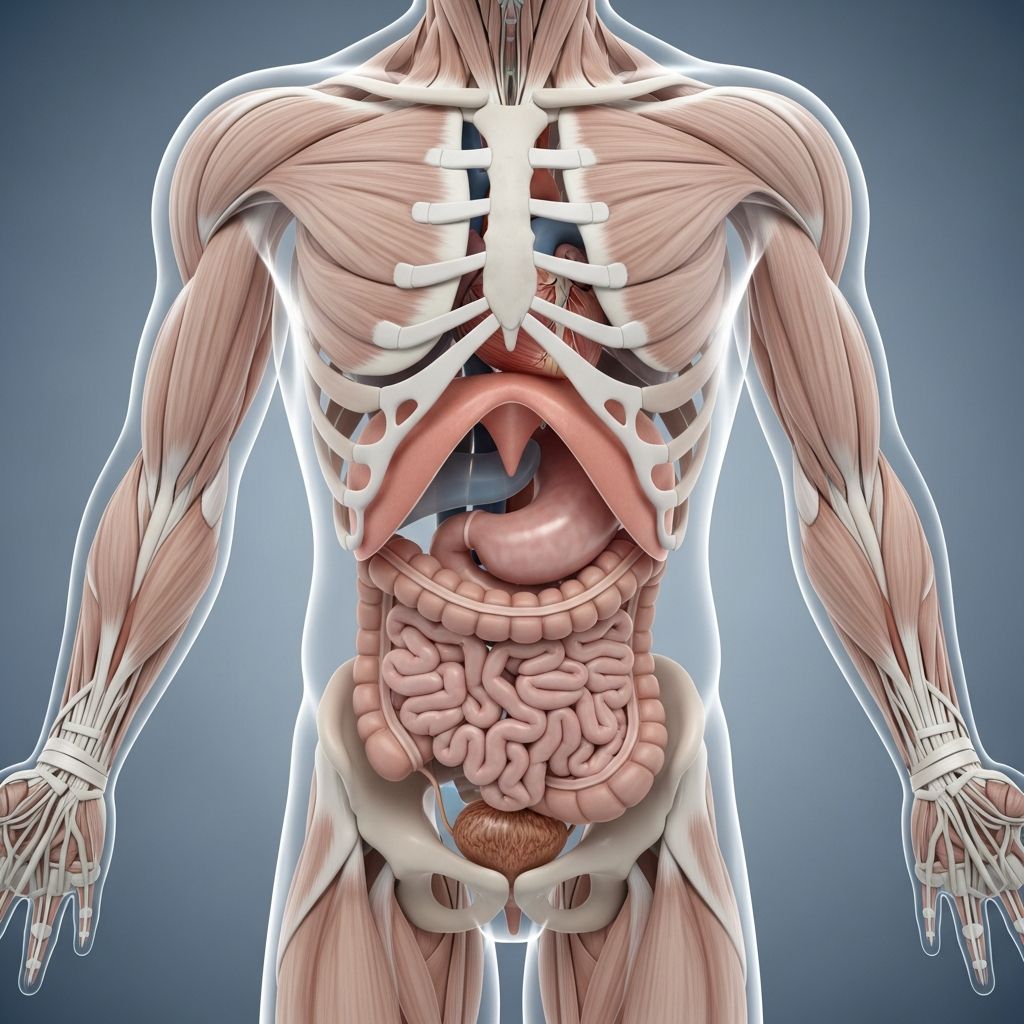
The Hidden Workforce Inside Your Body
Every time your heart beats, your lungs expand, or your stomach digests food, a silent team of muscles is at work. These are involuntary muscles — specialized tissues that operate without conscious control. Unlike the muscles you use to walk, write, or wave, involuntary muscles keep your body alive and functioning around the clock, all without you having to think about them.
What Makes a Muscle Involuntary?
Involuntary muscles are defined by one key feature: they contract automatically, driven by the nervous system rather than your will. You can’t decide to speed up your heartbeat or stop your intestines from moving food along. These actions are handled by the autonomic nervous system, which regulates internal processes without requiring your attention.
There are two main types of involuntary muscle in the human body:
- Smooth muscle
- Cardiac muscle
Each plays a distinct role in maintaining health and supporting life.
Smooth Muscle: The Silent Operator
Smooth muscle is found in the walls of many internal organs and structures. It’s called “smooth” because, under a microscope, its fibers lack the striped appearance of skeletal muscle. Instead, they look smooth and are arranged in sheets or layers.
Key locations of smooth muscle include:
- Walls of blood vessels (arteries and veins)
- Stomach and intestines
- Bladder
- Uterus (in females)
- Respiratory airways (bronchi and bronchioles)
- Iris of the eye
Smooth muscle performs a variety of essential tasks:
- Constricting and dilating blood vessels to regulate blood pressure
- Mixing and moving food through the digestive tract (peristalsis)
- Controlling the flow of urine from the bladder
- Adjusting the size of the pupil in response to light
- Helping the uterus contract during childbirth
Because smooth muscle is controlled by the autonomic nervous system, its activity is influenced by hormones, nerve signals, and local conditions (like stretch or chemical changes), not by conscious thought.
Cardiac Muscle: The Heart’s Engine
Cardiac muscle is found only in the heart. Like smooth muscle, it is involuntary, but it has a unique structure that combines features of both smooth and skeletal muscle. Under a microscope, cardiac muscle appears striated (striped), similar to skeletal muscle, but it functions automatically like smooth muscle.
The heart’s muscle tissue is specially designed to:
- Generate its own electrical impulses to trigger contractions
- Contract rhythmically and continuously throughout life
- Respond to signals from the nervous system and hormones to adjust heart rate and strength of contraction
Each heartbeat is the result of coordinated contractions of cardiac muscle cells. This automatic rhythm is maintained by the heart’s internal pacemaker system, primarily the sinoatrial (SA) node, which sends electrical signals through the heart muscle to keep it beating in a regular pattern.
How Involuntary Muscles Differ from Voluntary Muscles
To understand involuntary muscles, it helps to compare them with voluntary (skeletal) muscles. Here’s how they differ in several key areas:
| Feature | Involuntary Muscles | Voluntary Muscles |
|---|---|---|
| Control | Automatic (autonomic nervous system) | Conscious (somatic nervous system) |
| Main Types | Smooth muscle, cardiac muscle | Skeletal muscle |
| Location | Internal organs, blood vessels, heart | Attached to bones |
| Appearance | Smooth (no stripes) or striated (heart only) | Striated (striped) |
| Contraction Speed | Generally slower, sustained | Faster, more forceful |
| Conscious Control | No | Yes |
While voluntary muscles are used for movement, posture, and facial expressions, involuntary muscles are dedicated to internal regulation and survival functions.
The Role of the Autonomic Nervous System
The autonomic nervous system (ANS) is the control center for involuntary muscles. It operates largely behind the scenes, adjusting heart rate, blood pressure, digestion, and other vital processes based on the body’s needs.
The ANS has two main branches:
- Sympathetic nervous system: Prepares the body for stress or emergency (“fight or flight”). It increases heart rate, dilates airways, and redirects blood flow to muscles.
- Parasympathetic nervous system: Promotes rest, digestion, and recovery (“rest and digest”). It slows the heart, stimulates digestion, and promotes relaxation.
These two systems work in balance to keep involuntary muscles functioning appropriately. For example, when you’re active, the sympathetic system speeds up your heart and breathing. When you’re resting, the parasympathetic system slows them down.
Why Involuntary Muscles Are Vital for Survival
Involuntary muscles are essential because they manage processes that must continue without interruption. Consider what would happen if you had to consciously control:
- Your heartbeat — you’d never be able to sleep or focus on anything else.
- Digestion — you’d have to constantly “think” about moving food through your intestines.
- Blood pressure — you’d need to constantly adjust vessel diameter to maintain circulation.
Because these muscles work automatically, your body can maintain homeostasis — a stable internal environment — even when you’re not paying attention. This allows you to focus on external tasks like learning, playing, working, and socializing.
Common Conditions Affecting Involuntary Muscles
When involuntary muscles or their control systems are disrupted, various health problems can arise. Some conditions specifically involve involuntary muscle function:
- High blood pressure (hypertension): Often related to overactivity or stiffness in the smooth muscle of blood vessel walls.
- Asthma: Involves abnormal contraction of smooth muscle in the airways, leading to wheezing and breathing difficulty.
- Heart arrhythmias: Problems with the heart’s electrical system can cause irregular contractions of cardiac muscle.
- Digestive disorders: Conditions like irritable bowel syndrome (IBS) may involve abnormal smooth muscle contractions in the intestines.
- Urinary incontinence or retention: Can result from dysfunction of smooth muscle in the bladder or urethra.
These conditions highlight how critical it is for involuntary muscles to function properly. Treatments often aim to restore normal muscle tone or rhythm, either through medications, lifestyle changes, or other therapies.
How Involuntary Muscles Develop and Change Over Time
Involuntary muscles begin developing early in fetal life and continue to mature after birth. Smooth muscle in the digestive tract, blood vessels, and lungs becomes functional before birth, allowing the newborn to breathe, digest milk, and maintain circulation.
Throughout life, these muscles adapt to the body’s changing needs:
- During exercise, blood vessel smooth muscle adjusts to increase blood flow to muscles.
- In pregnancy, uterine smooth muscle grows and becomes more responsive to prepare for labor.
- With aging, cardiac and smooth muscle may become less elastic, which can affect heart function and blood pressure regulation.
Healthy lifestyle habits — such as regular physical activity, a balanced diet, and avoiding smoking — support the long-term health of involuntary muscles.
Fun Facts About Involuntary Muscles
- Your heart beats about 100,000 times a day, all thanks to involuntary cardiac muscle.
- Peristalsis — the wave-like contractions of smooth muscle in the digestive tract — can move food from your mouth to your stomach even if you’re upside down.
- The smooth muscle in your blood vessels can change the diameter of arteries and veins to help regulate blood pressure and body temperature.
- Your pupils automatically get smaller in bright light and larger in dim light, thanks to smooth muscle in the iris.
- Cardiac muscle cells are connected by special structures called intercalated discs, which help them contract in a coordinated way.
FAQs About Involuntary Muscles
Can you control involuntary muscles at all?
Not directly. You can’t decide to make your heart beat faster or your stomach digest food. However, you can influence them indirectly through breathing, relaxation techniques, and physical activity, which affect the autonomic nervous system.
What happens if involuntary muscles stop working?
If involuntary muscles fail, vital functions are disrupted. For example, if cardiac muscle stops, the heart can’t pump blood. If smooth muscle in the airways or digestive tract stops working properly, breathing or digestion becomes difficult. That’s why these muscles are so critical for survival.
Are hiccups related to involuntary muscles?
Yes. Hiccups are caused by sudden, involuntary contractions of the diaphragm (a skeletal muscle) and the glottis (involving smooth muscle and nerves). While the diaphragm is voluntary, the hiccup reflex is automatic and hard to control once it starts.
Do involuntary muscles ever get tired?
Cardiac muscle is designed to work continuously without tiring under normal conditions. Smooth muscle can fatigue under extreme or prolonged stress, but it’s generally more resistant to fatigue than skeletal muscle because it contracts more slowly and uses energy efficiently.
Can exercise strengthen involuntary muscles?
You can’t “exercise” involuntary muscles the way you do skeletal muscles, but regular physical activity improves the health of your heart and blood vessels. Aerobic exercise, for example, strengthens the heart muscle and improves blood vessel function over time.
Supporting the Health of Involuntary Muscles
While you can’t directly train involuntary muscles, you can support their function through healthy habits:
- Stay active: Regular exercise improves heart and blood vessel health.
- Eat a balanced diet: Nutrients like potassium, magnesium, and calcium are important for muscle and nerve function.
- Manage stress: Chronic stress can overactivate the sympathetic nervous system, affecting heart rate and blood pressure.
- Get enough sleep: Sleep supports overall nervous system balance and muscle recovery.
- Avoid smoking and excessive alcohol: These can damage blood vessels and heart muscle over time.
By taking care of your overall health, you help ensure that your involuntary muscles can continue their vital, behind-the-scenes work for years to come.
References
- Muscle Tissue — OpenStax Anatomy and Physiology. 2016. https://openstax.org/books/anatomy-and-physiology/pages/10-6-muscle-tissue
- The Autonomic Nervous System — National Institutes of Health (NIH) – NCBI Bookshelf. https://www.ncbi.nlm.nih.gov/books/NBK539845/
- Cardiac Muscle — British Heart Foundation. 2023. https://www.bhf.org.uk/informationsupport/heart-matters-magazine/medical/heart-muscle