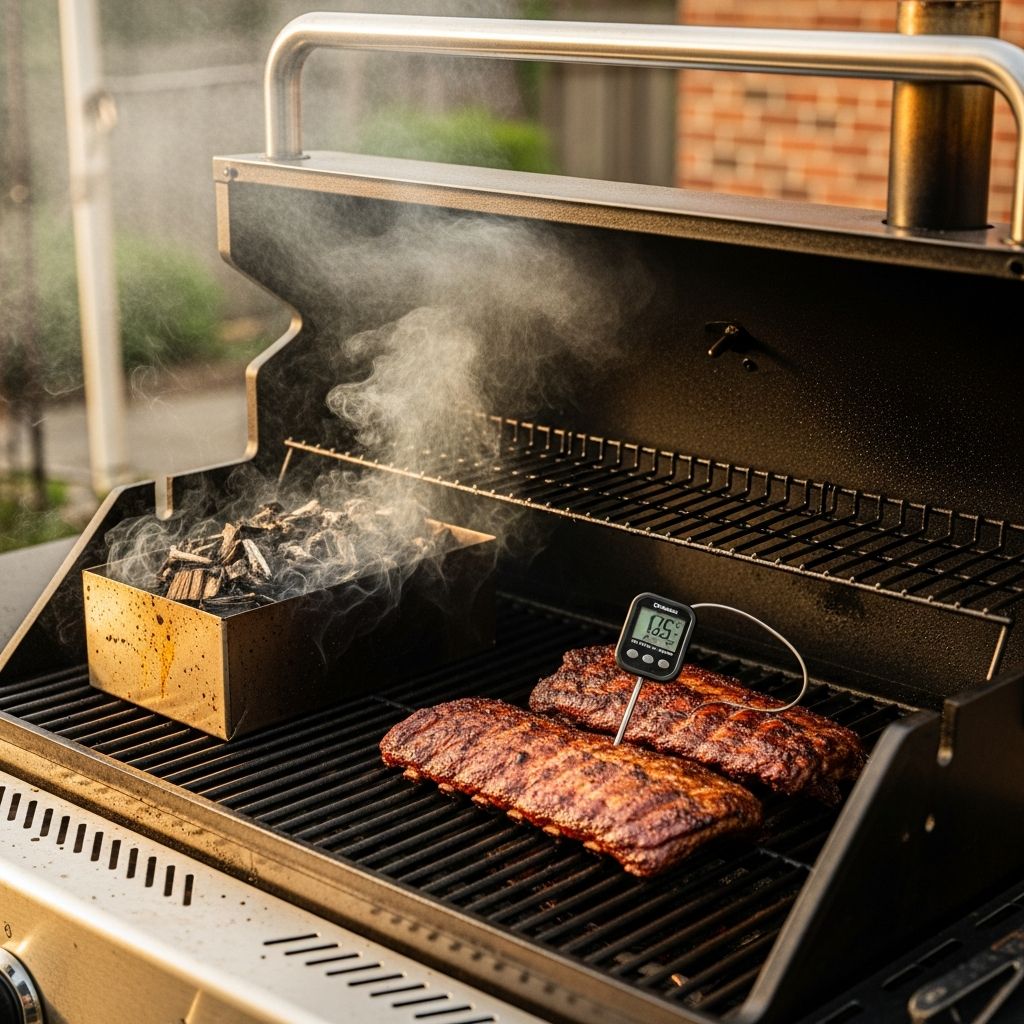
Repurposing an old gas grill into a functional smoker opens up a world of low-and-slow barbecue possibilities without the expense of new equipment. This approach leverages indirect heat, wood smoke, and simple modifications to infuse meats with rich, authentic flavors typically reserved for dedicated smokers.
Why Convert Your Gas Grill to a Smoker?
Gas grills excel at high-heat searing but fall short on sustained low temperatures needed for smoking. By adapting yours, you create a versatile cooking station capable of handling briskets, ribs, poultry, and vegetables. Benefits include cost savings—often under $50—space efficiency, and extended grill life. Proper setup ensures even heat distribution around 225-250°F, ideal for tenderizing tough cuts while imparting smoky notes from woods like hickory, cherry, or apple.
Common challenges like flare-ups or uneven smoke are mitigated through cleaning, zoning, and moisture control, turning a backyard staple into a BBQ powerhouse.
Essential Tools and Materials
Gather these inexpensive items before starting:
- Heavy-duty aluminum foil
- Wood chips or pellets (soaked for 30 minutes)
- Disposable aluminum pans
- Probe thermometer or lid gauge
- Fork or skewer for poking holes
- Optional: pellet smoker tube, lava rocks, or smoke box
Total cost rarely exceeds $30 at hardware stores. Select food-grade woods to avoid bitterness; avoid green or treated lumber.
Preparation: Cleaning and Safety First
Begin by disconnecting the propane tank and letting the grill cool completely. Remove grates, burners, and debris. Scrub interiors with a wire brush, degreaser, and hot soapy water to eliminate old fats that could ignite or taint flavors. Inspect for rust, leaks, or damage—replace faulty hoses or regulators immediately for safety.
Rinse thoroughly and dry. Reassemble burners but leave grates out initially. This step prevents acrid smoke and ensures food safety during long cooks.
Method 1: Foil Packet Smoke Generator
This beginner-friendly technique uses household foil for instant smoke production.
- Lay two sheets of heavy foil (18×24 inches) overlapping slightly.
- Spread 1-2 cups soaked wood chips in the center.
- Fold edges up to form a sealed pouch, then crimp tightly.
- Poke 20-30 holes in the top and sides with a fork for smoke release.
- Place pouch over a lit burner on low (indirect side preferred).
Preheat grill to 225°F with lid closed. Expect smoke within 10-15 minutes; refresh pouch every 45-60 minutes for extended sessions. Ideal for shorter smokes like pork tenderloin or chicken.
Method 2: Pellet Tube for Steady Smoke
Smoker tubes provide consistent smoke for 2-5 hours, perfect for larger cuts.
| Tube Size | Smoke Duration | Capacity |
|---|---|---|
| 6-inch | 2-3 hours | 0.5 lbs pellets |
| 12-inch | 4-5 hours | 1.5 lbs pellets |
- Fill tube with dry pellets (no soaking needed).
- Light one end with a torch until glowing (5-10 minutes).
- Blow out flame; place on indirect heat side.
- Position food on opposite grate.
Smoke rolls steadily at low grill temps. Re-light as needed for all-day cooks.
Method 3: Advanced Modifications for Dedicated Use
For frequent smoking, invest in permanent upgrades.
- Lava Rocks: Add to food-only side for even heat diffusion; avoid flavor side to prevent overheating.
- DIY Chip Pan: Fashion from foil or a mud pan around burners to contain chips securely.
- Temp Gauge: Drill a small lid hole and insert a threaded gauge for precise monitoring.
- Smoke Box: Stainless steel boxes sit on grates, filled with chips that smolder over direct heat.
These tweaks mimic commercial smokers, enhancing control and longevity.
Mastering Temperature and Indirect Zones
Divide your grill: light burners on one side (hot zone) for 225-250°F overall. Use the opposite side for food, rotating quarterly. Add a water pan in the hot zone—half-filled with liquid—to regulate humidity, prevent drying, and amplify smoke adhesion. Track with a dual-probe thermometer: one for ambient, one for meat internal (target 195-205°F for pulls).
Preheat 20-30 minutes, adjust knobs incrementally. Windy days? Shield with foil wind blocks.
Wood Choices and Flavor Profiles
| Wood Type | Flavor Notes | Best For |
|---|---|---|
| Cherry | Sweet, fruity | Pork, poultry |
| Hickory | Bacon-like, bold | Beef, ribs |
| Apple | Mild, subtle | Fish, veggies |
| Mesquite | Earthy, strong | Short cooks only |
Soak chips 30 minutes; mix for complexity. Over-smoking dries meat—aim for thin blue smoke.
Troubleshooting Common Issues
- No Smoke: Chips not hot enough; preheat longer or add dry chips.
- Billowing White Smoke: Too wet; use less water, ensure ventilation.
- Hot Spots: Rotate food, baffle heat with foil.
- Flare-Ups: Trim fat, clean drippings.
Maintain 225-250°F; vent adjustments help stabilize.
Recipe: Smoked BBQ Ribs on Converted Grill
Ingredients (4 servings): 2 racks baby back ribs, dry rub, BBQ sauce, wood chips.
- Remove membrane; apply rub overnight.
- Setup grill: hot zone left, water pan, foil packet right.
- Smoke 3 hours at 225°F, unwrapped.
- Wrap in foil with butter/sauce; 2 more hours.
- Sauce and rest 30 minutes. Internal 203°F.
Yield: Fall-off-bone ribs with perfect bark.
Maintenance for Longevity
Post-cook, burn off residues on high. Clean grates weekly. Store dry. Annual hose inspections prevent leaks. These habits extend your DIY smoker’s life indefinitely.
Frequently Asked Questions
What if my grill lacks a thermometer?
Install an aftermarket lid gauge via drilled hole, or use a wireless probe system for accuracy.
Can I cold smoke on a gas grill?
Limited; keep under 100°F with ice pans, but hot smoking (225°F+) is safer and more effective.
How often to refresh wood?
Every 45-90 minutes for packets; tubes last hours. Monitor smoke color.
Is it safe for whole turkey?
Yes, with water pan and probe to 165°F internal. Spatchcock for even cooking.
Propane vs. natural gas?
Both work; propane offers portability. Ensure proper BTU for low settings.
References
- How to Turn an Old Gas Grill Into a Smoker — Fatherly. 2023. https://www.fatherly.com/play/how-to-turn-an-old-gas-grill-into-a-smoker
- 2 Easy Methods to Convert Your Gas Grill into a BBQ Smoker — Bartlow’s BBQ (YouTube). 2020-08-18. https://www.youtube.com/watch?v=2Qqg_2rscNE
- How to turn your Gas Grill into a Smoker — YouTube. 2023. https://www.youtube.com/watch?v=tt4E8V8kwB8
- Turning Your Propane Grill Into a Smoker — ThermoWorks Blog. 2023-06-12. https://blog.thermoworks.com/turning-propane-grill-smoker/
- How to Smoke on a Gas Grill — Weber Grills (YouTube). 2022. https://www.youtube.com/watch?v=92z0O6cLWpw