The Modern Parenting Crisis: Why Intentionality Matters
Today’s families face unprecedented pressure to optimize every aspect of childhood. From packed schedules to competitive achievement metrics, many parents find themselves caught in a relentless cycle of rushing from one commitment to another. This rapid-paced approach to parenting often leaves families feeling disconnected, exhausted, and disconnected from what truly matters. The consequence is a growing recognition that the traditional “more is better” philosophy may be harming rather than helping our children and families.
Intentional parenting represents a fundamental shift in how we approach family life. Rather than viewing childhood as a series of milestones to achieve or opportunities to seize, this philosophy encourages parents to prioritize presence, connection, and meaningful experiences. It’s a conscious decision to step back from the frantic pace and create space for the moments that actually build strong families.
Understanding the Foundations of Intentional Parenting
At its core, intentional parenting is about making deliberate choices that align with your family’s values rather than following external pressures or societal expectations. This approach requires parents to examine their daily routines, activities, and commitments through a lens of intentionality. The goal is not to do less for the sake of doing less, but to eliminate activities that don’t serve your family’s wellbeing while protecting time for genuine connection.
The philosophical underpinning of this approach draws from the broader “slow movement,” which emerged as a counterpoint to our increasingly fast-paced society. Rather than accepting the default trajectory of overcommitment, families practicing intentional parenting ask fundamental questions: What do we actually value? How much is too much? What activities truly matter to our children’s development and our family relationships?
This intentionality extends beyond scheduling. It encompasses how parents show up emotionally, how technology is integrated into family life, and how much space children have to simply be children without constant structure or stimulation.
The Psychological Benefits for Children’s Development
Research on mindful and present parenting demonstrates significant developmental advantages for children. When parents slow down and create space for unstructured exploration, children develop crucial cognitive and emotional capacities that cannot be rushed or outsourced to organized activities.
One of the most significant benefits is the enhancement of creative thinking. When children have free time without predetermined agendas, they must generate their own entertainment and problem-solving approaches. This internal resource cultivation builds genuine confidence and self-direction. Rather than waiting for an adult to organize the next activity, children learn to navigate boredom by accessing their own imagination and ingenuity.
Additionally, children benefit from improved emotional regulation skills. When families operate at a sustainable pace, children experience fewer stress triggers and have more opportunities to observe their parents modeling calm, thoughtful responses to challenges. This teaches children that life’s difficulties can be approached with patience rather than panic.
The development of resilience also flourishes in this environment. Children who have space to make decisions, experience natural consequences, and navigate social situations independently develop stronger problem-solving abilities and greater confidence in their capacity to handle life’s challenges.
The Parental Benefits: Reclaiming Your Wellbeing
While much discussion focuses on children’s benefits, intentional parenting offers equally profound advantages for parents themselves. The constant pressure to optimize and maximize opportunities creates a state of chronic stress that undermines parental effectiveness and wellbeing.
By consciously reducing overscheduling, parents create mental space to be more emotionally available. This shift has measurable impacts on family dynamics. Parents report fewer reactive outbursts, more patience during challenging moments, and greater capacity to respond thoughtfully rather than respond impulsively to daily frustrations. When you’re not racing against the clock, you have access to your deeper emotional reserves.
This approach also reduces the pervasive anxiety that characterizes modern parenting culture. The constant comparison with other families, the fear of missed opportunities, and the burden of managing complex schedules creates a state of perpetual stress. Intentional parenting offers permission to step off this treadmill and define success on your family’s own terms.
Parents also discover improved personal wellbeing. Many report experiencing greater joy in daily family interactions, stronger sense of purpose aligned with their values, and improved relationships with their partners. The paradox is that by doing less, parents often feel more satisfied and effective in their role.
Key Pillars of Practicing Intentional Parenting
Successfully implementing this approach requires attention to several interconnected areas:
Auditing Your Family Schedule
The first step is honest assessment of your current commitments. Examine your family’s weekly schedule and ask whether each activity genuinely serves your values and your children’s development or whether it’s the result of habit, external pressure, or fear of missing out. Many families discover that they’re operating at unsustainable levels simply because they’ve never paused to question the status quo.
Consider the hidden costs of overscheduling: the stress of constant transitions, the limited time for family meals and conversations, the reduced opportunity for siblings to connect, and the elimination of downtime that children need for processing and integrating their experiences.
Prioritizing Unstructured Play
Unstructured play is not a luxury or a gap-filler when organized activities aren’t available—it’s a critical component of healthy child development. During free play, children engage their creativity, develop social skills, learn conflict resolution, and build confidence in their ability to direct their own activities.
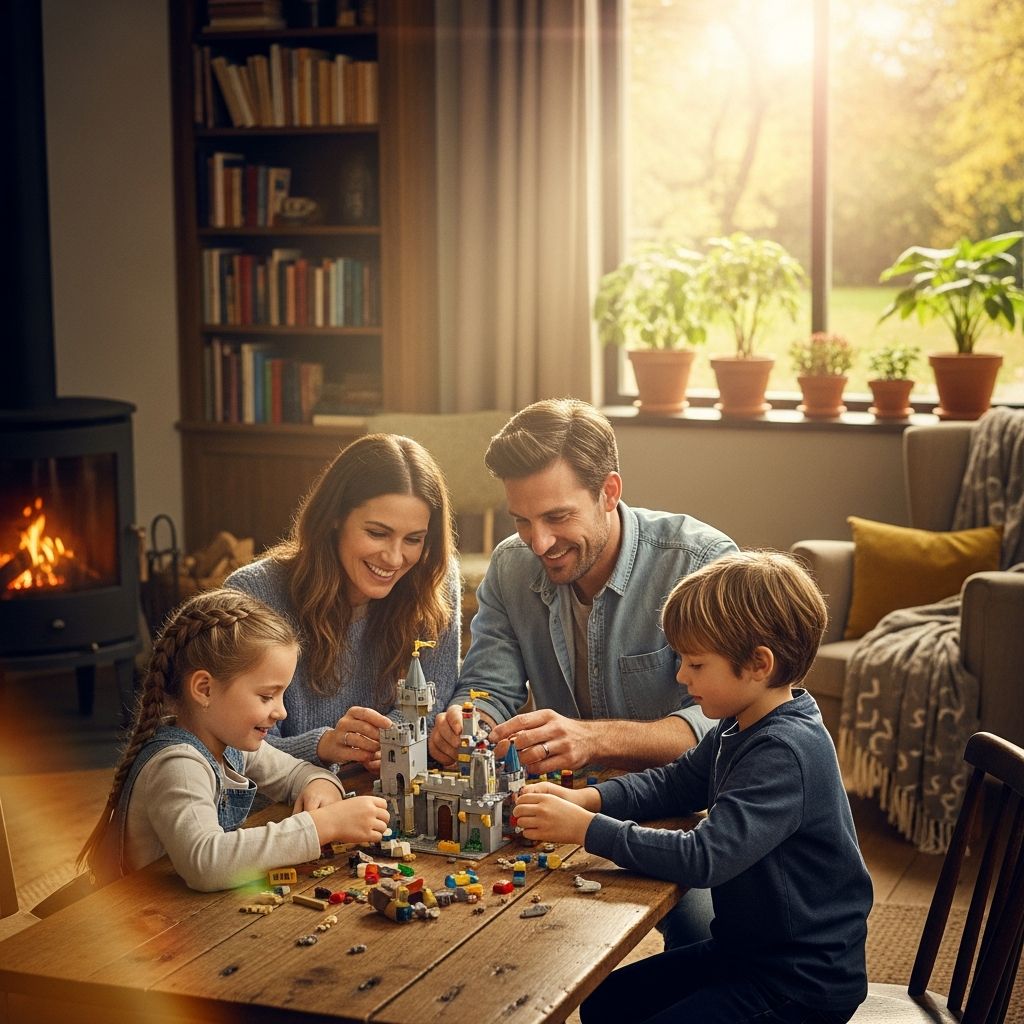
This might look like children creating elaborate games in the backyard, building with blocks without instruction, or simply having extended time to pursue interests without adult-directed objectives. The key is protecting sufficient free time so children aren’t fragmented between back-to-back structured activities.
Cultivating Mindful Presence
Technology offers unprecedented connectivity while paradoxically fragmenting our attention. Intentional parenting requires deliberate choices about when and how technology enters family life. This means designated phone-free times, particularly during family meals and playtime, and modeling the behavior you want to see in your children regarding digital wellness.
Mindful presence means giving your full attention during family interactions. When you’re together, actually be together—not physically present while mentally elsewhere or distracted by notifications.
Building Supportive Community
Practicing intentional parenting can feel countercultural when surrounded by families racing through their schedules. Seeking out like-minded families and communities that share similar values provides crucial support and normalizes this approach. Whether through parent groups, school communities, or neighborhood connections, surrounding yourself with families who validate intentional parenting reduces the pressure to conform to unsustainable norms.
Addressing Common Objections and Concerns
Many parents worry that slowing down means leaving their children behind academically or socially. However, research on mindful parenting and play-based learning demonstrates that these concerns are often unfounded. Children who have adequate downtime and freedom to pursue interests actually develop stronger academic motivation and better social skills than their overscheduled peers.
Others fear that reducing activities means denying their children valuable opportunities. The intentional parenting perspective reframes this: having fewer activities allows children to develop genuine mastery and real passion rather than accumulating a resume of shallow participation. A child who deeply engages in one sport or activity develops more confidence and skill than a child who cycles through multiple activities without sufficient practice time.
Some parents use extensive scheduling as a strategy to prevent boredom or keep children out of trouble. The intentional parenting approach suggests that boredom is not an emergency—it’s actually a necessary condition for children to develop self-motivation and creativity. The discomfort of boredom drives children to problem-solve and generate their own entertainment, building crucial internal resources.
Practical Implementation Strategies
Moving from concept to daily practice requires concrete strategies:
- Start with a single area of your family routine rather than attempting complete overhaul
- Have conversations with your children about what activities they genuinely enjoy versus what feels obligatory
- Establish phone-free family times and spaces, starting with meals
- Create a regular family meeting to discuss schedules, values, and whether current commitments align
- Build buffer time into your schedule to prevent constant rushing
- Protect at least one day weekly for completely unstructured family time
- Notice and appreciate small moments of connection rather than constantly seeking peak experiences
The Ripple Effects on Family Relationships
When families slow down, something shifts in their relational dynamics. Parents report deeper conversations with their children, siblings spending more quality time together, and increased laughter and joy in daily interactions. These are not incidental benefits—they’re the natural consequence of protecting time and presence for relationships to develop.
Many families also notice improved relationships between partners as they reclaim time for adult connection and reduce the stress-induced tension that accompanies overscheduling. When you’re not constantly in crisis management mode, you have capacity to nurture your partnership.
Sustainability and Long-Term Benefits
Unlike intensive parenting approaches that require constant optimization and achieve maximum activities, intentional parenting is sustainable across the lifespan. The principles apply whether you have toddlers, teenagers, or adult children. As children grow, the specific practices evolve, but the underlying commitment to presence and meaningful connection remains constant.
Perhaps most importantly, intentional parenting models for children what a sustainable, values-aligned life looks like. Children raised with this approach often internalize the capacity to question external pressures, prioritize their own wellbeing, and make deliberate choices rather than defaulting to cultural expectations.
Frequently Asked Questions About Intentional Parenting
Q: Will my child fall behind academically if I reduce their activities?
A: Research on mindful parenting and play-based learning indicates that children with adequate downtime and opportunities for self-directed learning often develop stronger academic motivation and performance. The key is ensuring some engagement with learning while protecting time for rest and play.
Q: How do I handle pressure from other parents about my reduced schedule?
A: Start by clarifying your family’s values and being confident in your choices. Seek out communities of like-minded families who support intentional parenting. Remember that you’re parenting your children, not managing others’ opinions.
Q: Is intentional parenting appropriate for all ages?
A: Yes, this approach is beneficial across all developmental stages. The specific practices change—infants need presence and responsiveness, older children benefit from autonomy and free play, teenagers need engaged but not controlling parents—but the underlying principle of intentional, present parenting applies throughout childhood.
Q: How do I know if I’m doing this right?
A: Rather than external metrics, consider whether your family feels more connected, whether conflicts feel more manageable, and whether you’re experiencing greater alignment between your values and your daily actions. The measure of success is how your family feels, not how it looks to outsiders.
Q: Can intentional parenting work with a busy professional schedule?
A: Absolutely. Intentional parenting isn’t about having unlimited time—it’s about making purposeful choices with the time you do have. Even parents with demanding careers can prioritize presence during family time, minimize overscheduling, and build protected time for connection.
Q: What if my child wants to do many activities?
A: Having conversations about what genuinely excites your child versus what feels obligatory helps distinguish authentic interests from external pressure. You might support deep engagement in one or two activities while declining others, helping your child develop real mastery rather than broad participation.
References
- Embracing the practice of slow parenting — Greenlight. 2025. https://greenlight.com/learning-center/parenting-and-family/slow-parenting
- What is slow parenting? Practical examples to try with your kids — Good To. 2025. https://www.goodto.com/family/how-slow-parenting-can-improve-connection-with-your-kids-with-practical-examples-to-try
- The Very Real Appeal Of Slow Parenting — Fatherly. 2025. https://www.fatherly.com/parenting/slow-parenting
- Slow parenting: Taking family life easier — Kaleido. 2025. https://www.kaleido.ca/en/blog/slow-parenting/
- The Art of Slow Parenting — Happily Family. 2025. https://www.happilyfamily.com/the-art-of-slow-parenting/
- What Is Slow Parenting? — One+True+Gift. 2025. https://www.onetruegift.com/blog/what-is-slow-parenting/