Understanding the Philosophy of Deliberate Parental Restraint
Modern parenting culture often glorifies hyperinvolvement, scheduling every moment, micromanaging decisions, and rushing to solve every problem before a child encounters difficulty. Yet emerging research and experienced parents alike are challenging this exhausting paradigm. A growing movement toward what practitioners call “intentional parental restraint” or “mindful stepping back” represents a fundamental shift in how we think about raising capable, confident children. This approach recognizes that sometimes the most powerful parenting move is knowing when not to act.
The philosophy centers on a simple yet powerful premise: children develop genuine competence, confidence, and resilience through managing their own challenges rather than having parents manage those challenges for them. This isn’t about parental neglect or indifference. Rather, it involves deliberate, thoughtful decisions to create space where children can discover their own capabilities, learn from natural consequences, and develop the executive functioning skills that will serve them throughout life.
Building Foundation Skills Through Autonomy
When parents consistently intervene in their children’s tasks and struggles, they inadvertently prevent the development of critical cognitive and emotional capabilities. Executive functioning skills—including organization, time management, planning, cognitive flexibility, sustained attention, and emotional regulation—develop through practice and experience, not instruction alone. Children need opportunities to implement these skills in real situations, with real stakes.
Research in child development indicates that children benefit tremendously when parents structure situations to promote independence rather than simply performing tasks for them. The distinction matters greatly. A parent who packs a child’s lunch prevents the child from learning to organize, plan ahead, and take responsibility for their own needs. A parent who teaches the process, establishes reasonable expectations, and then steps back allows the child to internalize these capabilities as genuinely theirs.
This approach extends across countless daily scenarios:
- Allowing a preschooler to pour cereal and set their own breakfast, even if the process is messy
- Permitting school-age children to pack their own backpacks and manage their own school materials
- Refraining from reminding teenagers about homework deadlines and allowing them to experience academic consequences
- Letting children solve peer conflicts without immediate parental intervention
- Allowing children to experience the natural consequences of losing items they haven’t properly managed
The Critical Role of Natural Consequences
One of the most challenging aspects of intentional parental restraint involves accepting and allowing natural consequences. When a child forgets their lunch because they failed to pack it, the consequence—feeling hungry at school—teaches a lesson far more powerfully than parental reminders ever could. When a child doesn’t complete their homework and receives a poor grade, they learn the connection between effort and outcome in ways that parental nagging cannot achieve.
Natural consequences operate as an extremely effective teacher because they arrive logically connected to the child’s decision or action. The brain makes stronger neural connections and forms more durable learning when experiences directly demonstrate cause and effect. This differs fundamentally from punishment imposed by an authority figure, which often breeds resentment and focuses the child’s attention on the unfairness of the punisher rather than on changing their own behavior.
Importantly, natural consequences work best within a framework of safety and reasonable risk. Parents practicing intentional restraint still intervene to prevent genuine danger. The child who refuses to wear a coat experiences being cold; they don’t experience freezing to the point of injury. The child who wants to explore climbing experiences the challenge and even modest setbacks; they don’t experience falls from dangerous heights. The framework provides boundaries within which children can learn from their own choices.
Creating Environments That Encourage Self-Directed Learning
Intentional parental restraint begins with environment design. Parents can establish physical and social spaces that invite exploration, problem-solving, and creative thinking without requiring constant supervision or direction. This might include:
- Designated exploration areas filled with open-ended materials like boxes, fabric, natural objects, and art supplies
- Accessible shelving where children can independently retrieve toys, books, and materials
- Clear cleanup systems that children can manage themselves without extensive guidance
- Kitchens or craft spaces where children can safely access age-appropriate tools and materials
When children have permission to explore within safe boundaries without constant direction, they develop what psychologists term “self-directed learning.” They practice making choices, discovering cause and effect, pursuing interests spontaneously, and problem-solving without adults suggesting solutions. This type of learning builds confidence and generates intrinsic motivation far more effectively than parent-directed activities.
Reframing Success and Progress
A significant mindset shift accompanies the practice of intentional parental restraint. Parents must redefine what constitutes success. If success means having a perfectly packed backpack, a child-prepared lunch might seem like failure because it’s disorganized or unappetizing. If success means avoiding all struggle, then letting a child work through a challenging problem represents parental shortcoming. But if success means raising a child who knows how to manage their own life, problem-solve, and recover from setbacks, then the messier path becomes the right one.
This reframing requires parents to tolerate discomfort. Watching a child struggle with tying shoes when a parent could do it in seconds creates genuine tension. Witnessing a child experience disappointment when a forgotten assignment results in a poor grade activates parental protective instincts. Yet these uncomfortable moments often contain the seeds of genuine development. The parent’s role shifts from eliminating discomfort to providing security and support while the child navigates it.
Establishing Family Systems and Boundaries
Intentional parental restraint doesn’t mean the absence of structure or family rules. Paradoxically, this approach often requires more initial structure, not less. Families practicing this philosophy typically establish clear expectations and consistent routines:
- Non-negotiable daily rhythms such as regular sleep times, meals, and transition periods
- Explicit responsibility assignments such as age-appropriate chores and household contributions
- Clear behavioral boundaries with understood consequences
- Consistent rituals that anchor family life and provide predictability
Within these frameworks of clear expectations, children experience freedom in how they meet those expectations. A child might have a non-negotiable bedtime but might choose the order of bedtime activities. They might have responsibility for tidying their room but freedom in how they organize it. This balance between structure and autonomy creates an environment where boundaries feel secure rather than restrictive.
The Distinction Between Intentional Restraint and Parental Absence
A critical misunderstanding portrays intentional parental restraint as equivalent to uninvolved parenting or benign neglect. The distinction proves fundamental. Parents practicing this philosophy remain deeply engaged—just in different ways. Rather than constantly doing for children or managing their immediate experiences, these parents engage in what might be called “anticipatory parenting.” They thoughtfully structure situations, establish systems, provide tools, and maintain careful oversight without constantly intervening.
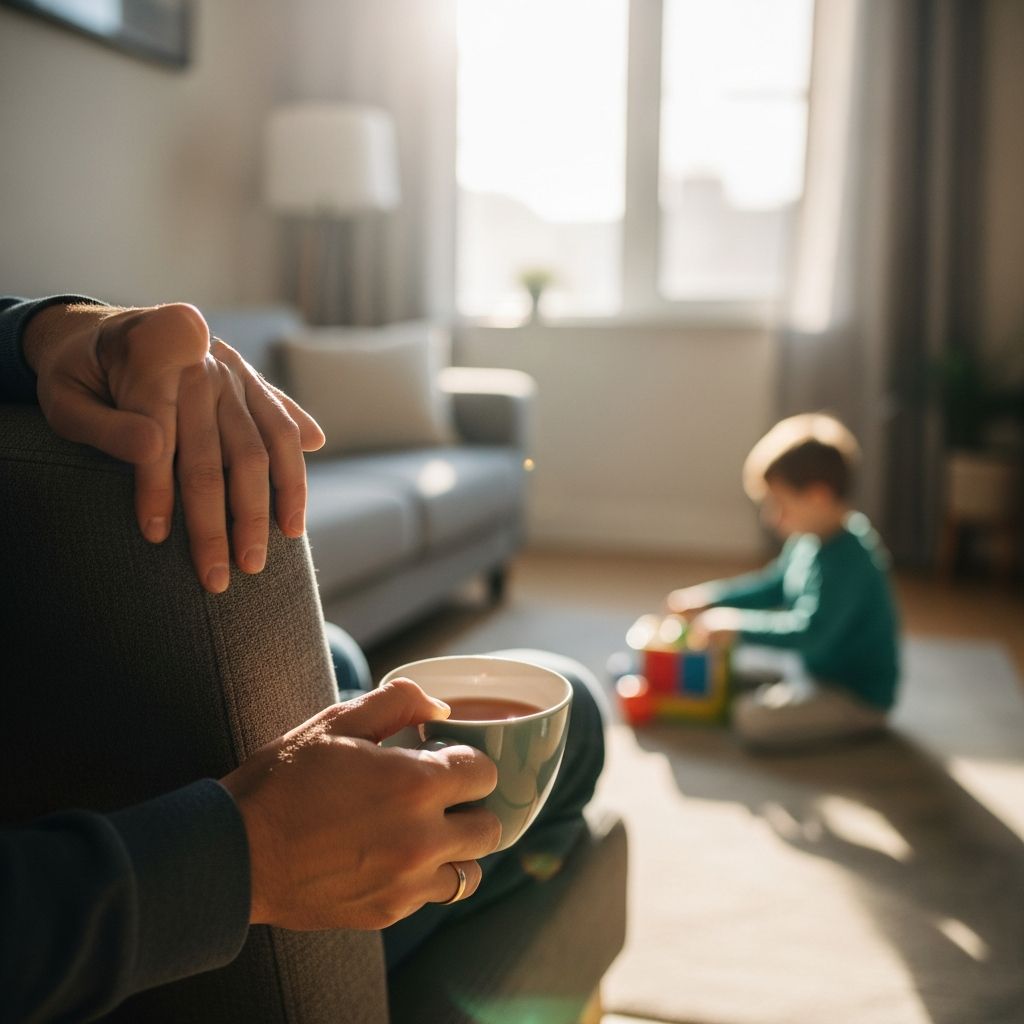
The parent sitting nearby while a child plays independently practices what some call “sittervising”—remaining present and observant for safety while refraining from directing play or solving every problem. The parent who establishes a consistent morning routine and then steps back to let the child manage it remains engaged in the system design and oversight, even as the child manages daily execution. The involved parent who permits natural consequences nonetheless provides emotional support and guidance when the child is processing disappointment or failure.
Practical Implementation Across Different Ages
The specific applications of intentional parental restraint naturally evolve as children develop. Young children benefit from safe exploration spaces and gradually increasing responsibility for basic self-care. Early elementary-age children can manage school materials, simple meal preparation, and household contributions. Middle-grade children can handle academic organization and planning, more complex household responsibilities, and greater social independence. Teenagers benefit most when parents significantly reduce involvement in decision-making and consequence management, allowing them to practice genuine autonomy.
Across all ages, the principle remains consistent: structure situations to promote capability, then step back to allow the child to manage their own experience. The specifics of those situations change as children’s abilities and responsibilities expand, but the core philosophy remains stable.
Benefits for Family Well-Being and Parental Health
Beyond the developmental benefits to children, intentional parental restraint offers significant advantages for parents and overall family functioning. When parents release the exhausting need to manage every aspect of their children’s lives, they reduce their own stress and burnout. Parental well-being and child development prove inseparable; parents who are less stressed, less resentful, and less depleted show up differently for their children.
Furthermore, families that embrace this philosophy often report stronger connections and more genuine enjoyment of time together. When parental energy isn’t consumed by constant management, parents have capacity for actual engagement—conversations, laughter, shared experiences—rather than logistics and correction. Children often experience parents as more present and more genuinely interested in them rather than constantly focused on their performance or behavior.
Addressing Common Obstacles and Concerns
Parents considering intentional parental restraint often encounter internal and external resistance. Internalized messages about “good parenting” often emphasize constant involvement and problem-prevention. Friends or family members might criticize allowing children to struggle or experience consequences, interpreting this as poor parenting. A child’s initial resistance to increased responsibility requires patience as the child adapts to new expectations.
Additionally, reframing the relationship between effort and outcome requires parents to resist the temptation to rescue when things become difficult. The impulse to help when a child struggles reflects genuine love and concern. Yet yielding to this impulse consistently prevents the very development that serves the child’s long-term well-being. Parents must consciously choose to sit with their own discomfort and their child’s struggle in service of the child’s growth.
Frequently Asked Questions
Q: Isn’t intentional parental restraint the same as being lazy or uninvolved?
A: No. Intentional parental restraint requires significant planning, structure, and thoughtfulness. Parents remain engaged in designing systems and maintaining oversight; they simply refrain from constantly intervening in the child’s direct experience. This approach demands more deliberate thought than reactive parenting.
Q: At what age can children handle increased responsibility?
A: Children show readiness for increasingly complex responsibility throughout development. Young toddlers can participate in simple tasks. Preschoolers can manage basic self-care. School-age children can handle academic organization and household contributions. Teenagers can manage most decisions affecting them, with parental guidance rather than control. The key involves matching responsibility to developmental capability.
Q: What if my child makes poor choices and suffers significant consequences?
A: Natural consequences serve as powerful teachers when they’re not dangerous. A poor grade teaches differently than parental lectures. Your role involves providing emotional support and guidance while the child processes disappointment, not rescuing them from the consequence. This supports both learning and your child’s developing resilience.
Q: How do I balance intentional restraint with keeping my child safe?
A: Safety remains non-negotiable. Parents maintain oversight and intervene to prevent genuine danger. The framework allows for managed risk and natural consequences within safe boundaries. A child experiences being cold without freezing; struggles with a puzzle without injury; navigates minor social conflict without harassment.
Q: Will my child resent me for not helping when they struggle?
A: Initially, children often express frustration or disappointment. However, as they discover their own capability and experience genuine pride in what they’ve accomplished independently, most children develop deeper confidence and self-respect. Many parents report that children actually develop stronger self-esteem through this approach than through constant praise and help.
References
- How ‘Lazy Parenting’ Can Encourage Kids to Be More Independent — Motherly. Retrieved from https://www.motherly.com/life/motherly-stories/lazy-parenting-independence/
- Why ‘Lazy Parenting’ Is Actually a Recipe for Happy Families — Motherly. Retrieved from https://www.motherly.com/parenting/lazy-parenting/
- How To Be a Good Parent Through Dedicated “Lazy Parenting” — A Fine Parent. Retrieved from https://afineparent.com/simplify-life/how-to-be-a-good-parent.html
- Could ‘Lazy Parenting’ Be the Next Big Thing? 2 Psychologists Share Why It Can Be Beneficial for Development — Good To. Retrieved from https://www.goodto.com/family/family-news/could-lazy-parenting-be-the-next-big-thing-2-psychologists-share-why-it-can-be-beneficial-for-development-but-not-everyone-agrees
- Are You A Lazy Parent? What Experts Say About Letting Things Slide — Scary Mommy. Retrieved from https://www.scarymommy.com/parenting/are-you-lazy-parent
- Ep #56: Lazy Parenting Isn’t Failing—It’s Winning — Happy Family After. Retrieved from https://happyfamilyafter.com/podcast/lazy-parenting/