When warm weather arrives, so do mosquitoes, ticks, and other biting insects. For families with babies and young children, insect repellents are more than a comfort issue—they are an important tool to help prevent bites, itching, and certain infections spread by insects.
This guide explains how insect repellents work, which ingredients are commonly used, and how to choose and apply them safely for your child. It is written for parents and caregivers who want practical, easy-to-follow advice without unnecessary medical jargon.
Why Protect Kids from Insect Bites?
Most insect bites cause only short-term redness and itching, but some insects can transmit illnesses such as West Nile virus, dengue, Lyme disease, and other infections in certain regions. Preventing bites is especially important for babies and children, whose bodies are still developing.
Good protection usually involves combining different methods: physical barriers like clothing, smart outdoor habits, and, when needed, insect repellents on the skin and clothing. Treating repellent as one part of a larger protection plan helps you use less product and still keep kids safe.
How Insect Repellents Work
Insect repellents do not kill insects; instead, they make people harder to find and less attractive to biting bugs. Many biting insects use a combination of carbon dioxide, body heat, and skin scents to locate people. Repellent ingredients change or block these signals.
Each ingredient has a different duration of action. A higher concentration typically means longer protection time, not stronger effect on the skin. Understanding this idea helps parents choose the lowest concentration that still covers the time a child will be outdoors.
Common Active Ingredients Explained
The list of insect repellent ingredients can look confusing, but most family products are built around a small set of well-studied substances. Knowing the basics makes the shopping aisle much less overwhelming.
DEET (N,N-diethyl-m-toluamide)
DEET has been widely used for decades and is one of the most studied insect repellent ingredients. It protects against many biting insects, including mosquitoes and ticks, and is found in sprays, lotions, and wipes in a range of concentrations.
- Higher percentages give longer protection time, not a stronger dose on the skin.
- Common family products contain around 5–30% DEET; very high concentrations are usually meant for special conditions.
- When used as directed, DEET-based repellents are considered safe for children old enough to use repellent on their skin.
Picaridin
Picaridin is another widely used synthetic repellent that offers protection similar to DEET against many mosquito and tick species. It is nearly odorless and tends to feel less greasy or sticky on the skin than some older products.
- Often available in concentrations around 5–20%.
- Less likely to damage plastics or fabrics compared with high-concentration DEET.
- Commonly used in sprays and lotions that families find easy to apply.
Oil of Lemon Eucalyptus and PMD
Oil of lemon eucalyptus and its refined compound, para-menthane-3,8-diol (PMD), are plant-derived ingredients that provide protection against many mosquitoes. They are not the same as pure essential oils sold for aromatherapy, which are not regulated as repellents.
- These products often have age restrictions, and many are not recommended for very young children.
- They usually have a strong scent that some children and adults notice right away.
- Protection time can be similar to some mid-range synthetic products, depending on the concentration.
IR3535 and Other Ingredients
IR3535 is another synthetic repellent used in some lotions and sprays. Like other ingredients, it is evaluated for safety and effectiveness before being sold as a regulated repellent product.
Some products may use other active ingredients, including botanical blends. For any repellent, the most important step is reading the label to confirm that it is registered or approved as an insect repellent, rather than just a fragrance or cosmetic product.
Choosing Repellent for Different Ages
Age is a major factor in deciding how to protect your child. Very young babies need a different approach from school-age kids who run around outside for hours.
| Child age | Main protection strategies | Skin repellent use |
|---|---|---|
| Newborns and young infants | Use mosquito netting over strollers and carriers, dress babies in long sleeves and pants, and avoid areas with heavy insect activity when possible. | Many guidelines advise avoiding direct use of insect repellent on the skin of very young babies. Parents rely mostly on barriers and environment control. |
| Older infants and toddlers | Continue clothing and netting, and consider adding repellent when insects are common or bite-borne illnesses are a concern. | Use products specifically labeled for use in young children, follow age directions closely, and apply only the minimum amount needed. |
| School-age children and teens | Combine clothing, behavior changes (such as avoiding heavy mosquito hours when possible), and appropriate repellents. | A wider range of repellents and concentrations is usually allowed, but label directions and safe-use rules still apply. |
Because guidance can change over time and may vary between countries, parents should also check local or national recommendations about specific ages and ingredients.
Safe Application Tips for Children
Safe use of insect repellent depends as much on how it is applied as on which product is chosen. Using too much or applying it carelessly can increase the chance of irritation or accidental exposure to the eyes or mouth.
Basic Rules Every Parent Should Follow
- Always read the entire label before first use, including active ingredient, concentration, age restrictions, and instructions.
- Use only enough repellent to lightly cover exposed skin and clothing; heavier layers do not provide extra benefit.
- Apply the product outdoors or in a well-ventilated area so children do not breathe in concentrated spray mist.
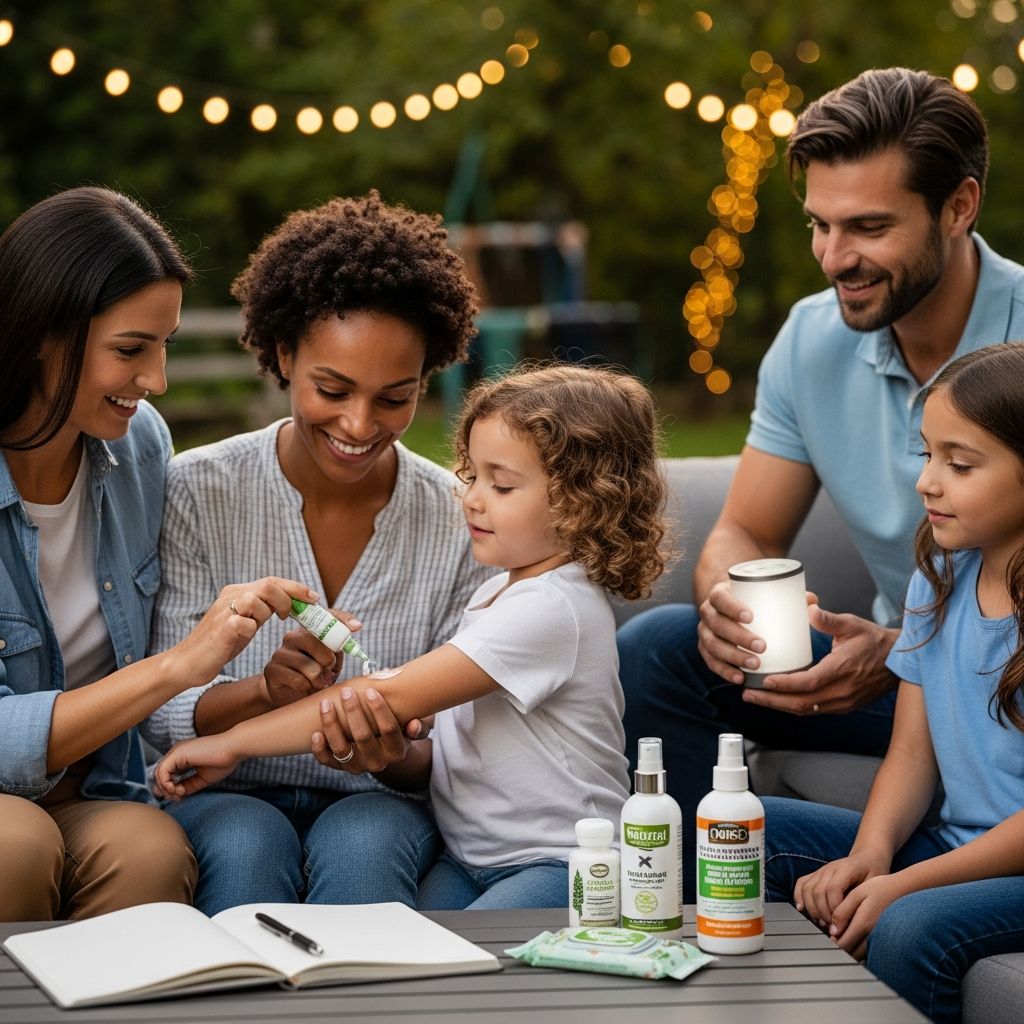
- For young children, adults should apply the repellent, not the child.
How to Apply on the Face and Body
- Spray or squeeze repellent onto your own hands first, then gently spread it on the child’s face, avoiding the eyes and mouth.
- Do not apply repellent to a child’s hands, since fingers often go into eyes, nose, or mouth.
- Avoid areas where the skin is cut, irritated, or sunburned.
- Do not use repellent under clothing; apply only to areas that remain exposed.
After-Use Cleanup
- When children come indoors, wash treated skin with soap and water.
- Wash treated clothing before it is worn again.
- Store repellents out of reach and sight of young children to prevent accidental swallowing or misuse.
Repellent Concentration and Duration
Parents often assume that a higher concentration is automatically better. In reality, higher percentages of many ingredients simply extend how long the protection lasts.
For example, a lower-concentration product might give protection for a brief evening walk, while a higher concentration could be useful for several hours outdoors in an area with many insects. Choosing the right level helps avoid reapplying too frequently without using more repellent than needed.
Combining Repellent with Sunscreen
Many outdoor days involve both sun and insects, so parents wonder whether to use separate products or a combined formula. While combination products exist, they can complicate how often each one is applied.
- Sunscreen usually needs to be reapplied more often than insect repellent.
- Using separate products allows you to reapply sunscreen without adding more repellent each time.
- If separate, apply sunscreen first, let it absorb, and then apply repellent.
Clothing and Treated Gear
Long sleeves, long pants, socks, and hats create a strong first line of defense against bites. Light-colored clothing also makes it easier to notice ticks or other insects on the fabric.
Some outdoor clothing and gear are treated with insect-killing substances such as permethrin. These items are designed to repel or kill insects on contact and are used together with skin repellent when exposure risk is high, such as in tick-heavy areas or on long hikes.
Natural and “Homemade” Options
Many parents are interested in natural or plant-based repellents. While some botanical products provide a degree of protection, they often do not last as long as standard synthetic repellents and may need frequent reapplication.
- Always look for products that are clearly labeled as insect repellents and are regulated by a health or environmental agency.
- Be cautious with homemade mixtures or undiluted essential oils, as these can cause skin irritation and may not offer reliable protection.
- Even natural products can cause allergies or rashes, so test a small area of skin first.
Recognizing and Handling Side Effects
Insect repellents are generally safe when used properly, but no product is completely risk-free. Mild skin irritation, redness, or stinging can occur, especially if used too often or on sensitive skin.
- If a child complains of burning or itching where the repellent was applied, wash the area with soap and water and stop using that product.
- If repellent gets into the eyes, rinse with plenty of clean water and seek medical help if irritation persists.
- If a child swallows repellent or shows concerning symptoms such as breathing problems, confusion, or severe rash, contact emergency services or poison control right away.
Checklist: Before You Head Outside
A simple checklist can help you avoid last-minute decisions and rushed applications. Review these points before heading into bug-prone areas:
- Know the current insect risks in your region (mosquito-borne or tick-borne illnesses).
- Choose an age-appropriate repellent with a clearly labeled active ingredient.
- Plan how long you expect to be outdoors so you can match the product’s concentration and duration.
- Dress children in protective clothing and bring a hat for added coverage.
- Pack wipes or soap and water to clean off repellent when you return indoors.
SEO-Optimized FAQs About Insect Repellent for Kids
Is insect repellent safe for babies?
Very young babies are usually protected with physical barriers such as mosquito netting, clothing, and avoiding peak insect times rather than direct repellent on the skin. Parents should follow age instructions on the product label and consult a pediatric health professional if unsure about using any repellent on an infant.
What is the best insect repellent for children?
The “best” repellent depends on your child’s age, how long you will be outside, and which insects are common where you live. Many families choose products with ingredients such as DEET, picaridin, or oil of lemon eucalyptus that are clearly labeled, regulated, and designed to protect against mosquitoes and ticks.
How often should I reapply insect repellent on my child?
Reapplication depends on the active ingredient, its concentration, and how long you stay outdoors. Always follow the directions on the label; do not reapply more often than recommended, and wash the product off once your child is indoors and no longer needs protection.
Can I put insect repellent and sunscreen on at the same time?
Yes, but it is often easier and safer to use two separate products. Apply sunscreen first, give it time to absorb, then apply insect repellent, and later reapply only the sunscreen as needed unless the label advises another repellent application.
Are natural mosquito repellents enough to protect my child?
Some natural repellents can help reduce bites, but they may not last as long or be as thoroughly tested as standard synthetic products. In areas with a high risk of insect-borne illness, many health experts recommend using well-studied, regulated repellents alongside clothing and other protective measures.
What should I do if my child has a reaction to insect repellent?
If your child develops a rash, burning, or other mild irritation where repellent was applied, wash the skin with soap and water and stop using that product. For severe reactions, eye exposure, swallowing, or any unusual symptoms, seek medical help or contact poison control immediately.
By understanding how insect repellents work and how to use them wisely, parents can keep children comfortable and better protected from the insects they encounter during outdoor play, camping trips, and family adventures.