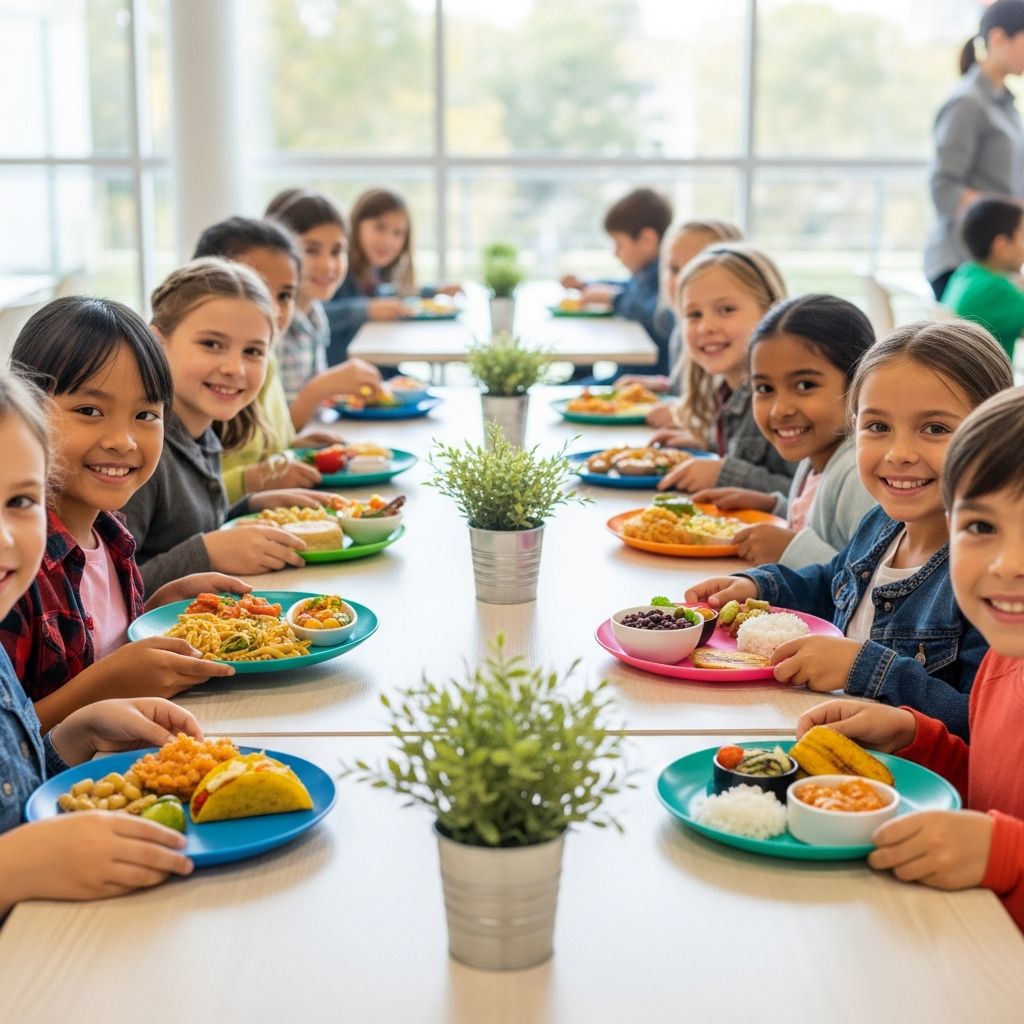
School lunches play a pivotal role in children’s daily nutrition, often accounting for a significant portion of their caloric intake. Innovative programs worldwide are redefining these meals by emphasizing fresh, local ingredients, cultural relevance, and hands-on education. These efforts not only improve health outcomes but also strengthen community economies and environmental sustainability.
Why Innovative School Lunches Matter
With over 31 million US children relying on school meals for much of their nutrition, the quality of these foods directly impacts academic performance, physical health, and lifelong eating habits. Programs that integrate local sourcing reduce food miles, support farmers, and expose students to diverse flavors. Globally, such initiatives address malnutrition while promoting equity, as seen in free meal models that ensure every child eats well.
Benefits extend beyond nutrition: students in garden-linked programs show higher vegetable consumption and better focus in class. These models challenge outdated cafeteria stereotypes, turning lunch into an engaging, educational experience.
Leading US Programs Pioneering Change
American schools are at the forefront of farm-to-school movements, partnering with local producers to deliver vibrant, nutrient-dense meals.
Baltimore’s Meatless Mondays and Farm Education
Baltimore City Public Schools launched the nation’s first district-wide Meatless Mondays, serving plant-based meals alongside locally grown produce and milk. Students visit the 33-acre Great Kids Farm to plant and harvest, bridging classroom learning with real-world agriculture.
Berkeley’s Ban on Junk and Organic Focus
In Berkeley, California, cafeterias prohibit processed foods, high-fructose corn syrup, and artificial additives. Organic fruits, vegetables, and milk dominate menus, sourced nearby to ensure freshness and minimize environmental harm.
Vermont’s All-Day Local Food Access
The Burlington School Food Project offers free breakfast and dinner to 4,000 students using Vermont farms’ bounty. Recognized by the USDA as a model, it emphasizes scratch cooking and seasonal ingredients.
Hawaii’s Garden-to-Cafeteria Freshness
Kohala Elementary in Hawaii celebrates ‘Garden to Cafeteria Day’ with student-harvested bok choy in chicken katsu dishes, partnering with the Hawaii Institute of Pacific Agriculture for immersive learning.
California’s Cultural and Scratch-Cooked Delights
Mar Vista Elementary in Oxnard serves pozole—a traditional Mexican soup—with fresh toppings, catering to its Hispanic community. Meanwhile, Marin County’s Good Earth program feeds 4,000 kids organic meals across 12 schools.
Other highlights include Portland’s yakisoba noodles from local Umi Organic, Georgia’s farmer-supported chicken and greens via Feed My School, and Arkansas’ pupusa days voted in by students.
Global Models of Nutritional Excellence
International programs offer blueprints for scalable, culturally attuned nutrition strategies.
Japan’s Balanced, Student-Led Meals
Japan’s program serves over 99% of elementary students balanced meals with vegetables, proteins, and grains reflecting national cuisine. Students serve and clean up, building responsibility and food appreciation, per the Ministry of Education.
Finland’s Universal Free Nutrition
Since 1948, Finland provides free, nutritionally complete lunches to all students, meeting one-third of daily needs with local, organic produce. 83% of students rate them healthy, thanks to nutritionist planning and communal dining.
Brazil’s Massive Local Sourcing Network
The PNAE reaches 40 million students, mandating 30% local purchases to bolster agriculture and cut malnutrition. It includes family nutrition workshops and farm visits for holistic education.
Italy and South Korea’s Fresh, Organic Standards
Rome’s schools prepare 96% of 150,000 daily meals from scratch, with 70% organic, local ingredients. Seoul serves 800,000 kids hot Korean meals like rice, protein, and kimchi, prioritizing cultural flavors.
Alaska’s Seafood Education Integration
Sitka’s Fish to Schools incorporates local catches into lunches while teaching fishing culture, enhancing omega-3 intake and regional pride.
Key Strategies for Success
Successful programs share common tactics:
- Local Partnerships: Direct farm connections cut costs and ensure freshness, as in California’s Farm to School grants totaling nearly $100 million.
- Garden Education: Initiatives like San Francisco’s Urban Sprouts let students grow and eat their harvest, boosting veggie intake.
- Chef Involvement: Trained chefs create appealing dishes, from New York’s WITS healthy swaps to Chicago’s antibiotic-free chicken.
- Student Input: Taste tests and votes, like Arkansas pupusas, increase acceptance.
- Equity Focus: Free meals via USDA’s NSLP serve millions low-cost, balanced lunches.
Challenges and Solutions Table
| Challenge | Examples | Solutions |
|---|---|---|
| Budget Constraints | High local food costs | Grants, bulk buying co-ops (e.g., Brazil PNAE) |
| Student Palate Preferences | Resistance to veggies | Taste tests, cultural dishes (e.g., pozole) |
| Supply Chain Issues | Seasonal availability | Gardens, flexible menus (e.g., Finland) |
| Staff Training | Scratch cooking skills | Chef partnerships (e.g., WITS) |
Health and Academic Impacts
These programs yield measurable gains: reduced obesity, improved attendance, and higher test scores. Finland’s model correlates with top global education rankings, while US farm-to-school links show 20-30% veggie consumption jumps. Sustainability perks include lower carbon footprints from local sourcing.
How Schools Can Replicate These Wins
Start small: audit menus, survey students, connect with farms. Leverage USDA resources and PTA healthy meal campaigns for support. Scale with grants and community buy-in for lasting change.
Frequently Asked Questions
What percentage of US kids eat school lunch daily?
Over 31 million, often their main nutrition source.
How does farm-to-school benefit the environment?
Reduces transport emissions and supports biodiversity via local, sustainable farms.
Are international free lunch models feasible in the US?
Universal free meals exist in pilots; expanding NSLP could achieve similar equity.
Can gardens really change eating habits?
Yes—students eat 2x more produce from school gardens.
What role do chefs play?
They craft tasty, healthy recipes, boosting participation via programs like School Nutrition Association successes.
References
- Sixteen School Lunch Programs Making a Difference — Food Tank. 2016-02. https://foodtank.com/news/2016/02/sixteen-school-lunch-programs-making-a-difference/
- Innovative School Lunch Programs Around the World — Learning Buddies Network. N/A. https://www.learningbuddiesnetwork.com/blog-and-news/innovative-school-lunch-programs-around-the-world-meeting-the-challenges-of-providing-healthy-meals
- 6 Amazing School Lunches From U.S. Cafeterias — FoodCorps. N/A. https://foodcorps.org/blog-amazing-school-lunches/
- School Nutrition Success Stories — School Nutrition Association. N/A. https://schoolnutrition.org/about-school-meals/school-nutrition-success-stories/
- California school lunches are going gourmet and healthy — CalMatters. 2023-08. https://calmatters.org/education/k-12-education/2023/08/school-lunches/
- National School Lunch Program — USDA Food and Nutrition Service. N/A. https://www.fns.usda.gov/nslp