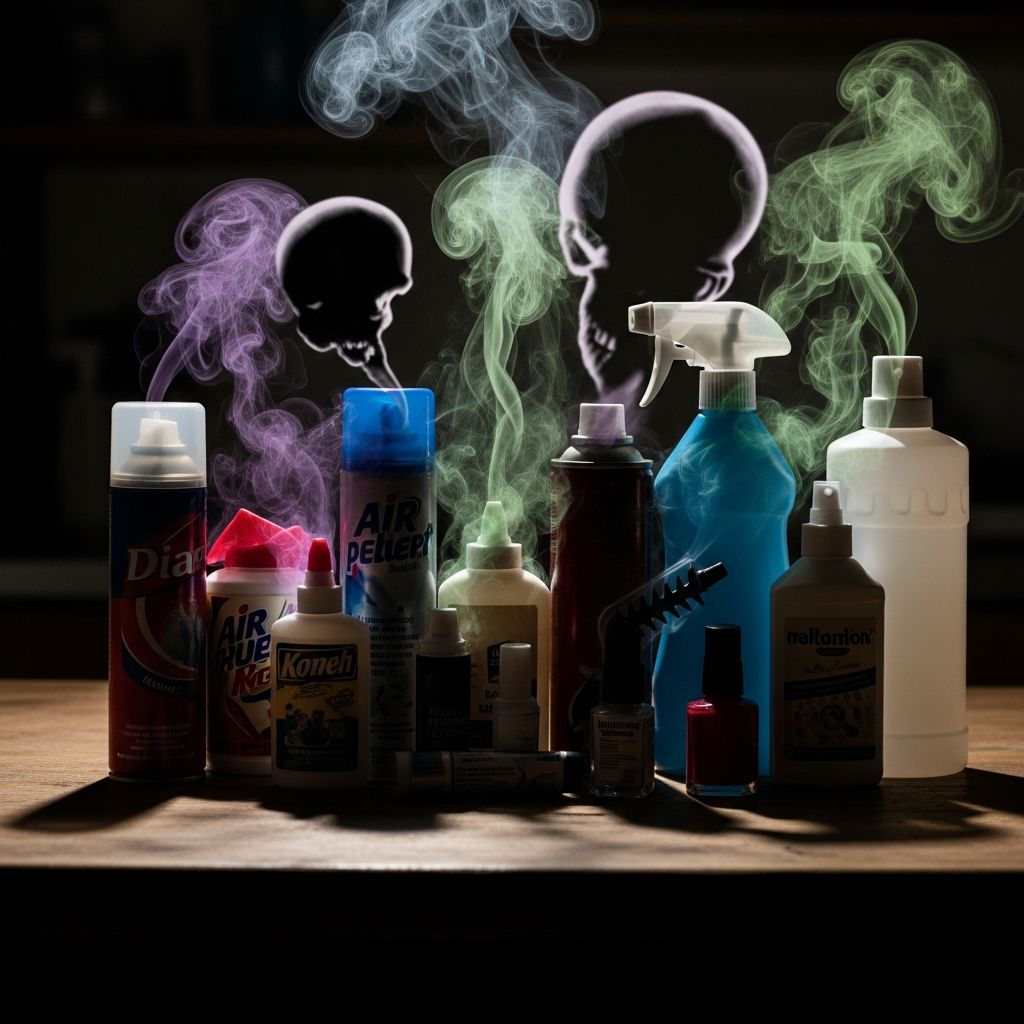
Many parents carefully lock away prescription medicines and alcohol but overlook something just as dangerous: inhalants. These are everyday products whose fumes can be misused to get high, putting kids at risk for serious health problems and even sudden death.
This guide explains what inhalants are, how young people use them, the damage they can cause, and how parents and caregivers can reduce the risks and start effective, age-appropriate conversations.
What Are Inhalants?
Inhalants are chemical substances that produce strong vapors or fumes that people intentionally breathe in to alter the way they feel. Unlike many other drugs, inhalants are usually common household or workplace products rather than items sold on the street.
These vapors act quickly on the brain, which makes inhalants especially attractive to some teens who want a fast, cheap high. Unfortunately, the same speed that creates the high can also trigger life-threatening reactions.
Common Types of Inhalant Products
Inhalants fall into several broad groups, and many of them are likely already in or around your home.
- Volatile solvents – Liquids that vaporize easily, such as paint thinner, gasoline, glue, correction fluid, or felt-tip marker fluid.
- Aerosols – Products in pressurized spray cans, such as spray paint, deodorant sprays, hair spray, and fabric protectors.
- Gases – Substances found in lighters, whipped cream chargers (often called “whippets”), and refrigerants in appliances.
- Nitrites (often called “poppers”) – Chemicals sometimes misused for their effect on blood vessels, more common among adults but important for parents to know about.
The key point is that these products have legitimate uses but become dangerous when intentionally inhaled to get high.
How Inhalants Are Misused
Inhalants are typically used in ways that concentrate the fumes and deliver them quickly to the brain. The methods may look simple, but they can be extremely harmful.
Methods Teens Might Use
- Sniffing or snorting – Breathing fumes directly from an open container, a soaked cloth, or a sprayed surface.
- Huffing – Soaking a rag or clothing with the product and holding it over the mouth and nose.
- Bagging – Spraying or pouring chemicals into a bag and then inhaling the trapped vapors.
- Inhaling from balloons or cartridges – Common with nitrous oxide, where gas is released from canisters or chargers into balloons and inhaled.
Because the equipment involved is so ordinary—bags, rags, cans—parents may not recognize these behaviors as substance use unless they know what to look for.
Why Young People Try Inhalants
Inhalant misuse is often most common in preteens and younger teens, before some young people have access to alcohol or other drugs. Understanding the reasons behind experimentation helps adults respond with empathy and prevention rather than only punishment.
Common Reasons for Experimentation
- Easy access – Products are inexpensive, legal to buy, and often already in the home.
- Curiosity and peer influence – Friends may encourage “trying something new” or share misinformation that inhalants are safer than other drugs.
- Desire to escape – Some teens use inhalants to cope with stress, emotional pain, boredom, or difficult home or school situations.
- Misunderstanding of risk – Because these products are not illegal to own, kids may assume they are less harmful than street drugs.
Emphasizing that “legal” or “everyday” does not mean “safe” is a key part of prevention.
What an Inhalant High Feels Like
Inhalants affect the brain quickly—often within seconds—and the immediate high tends to be brief. This can lead kids to keep inhaling over and over in a short period, which greatly increases the danger.
Short-Term Effects on the Body and Mind
- Feeling lightheaded, dizzy, or unsteady.
- A brief sense of euphoria or excitement.
- Slurred speech, poor coordination, or stumbling.
- Headaches, nausea, or vomiting.
- Blurred vision and confusion.
- In some cases, hallucinations or strange thoughts.
The short-lived high can be misleading. Even when a teen seems to “snap back” after a few minutes, the chemicals can continue damaging the brain, heart, and other organs.
Serious Health Risks and Long-Term Damage
Inhalant use is far from harmless experimentation. The same chemicals that strip paint, dissolve grease, or fuel engines can also injure sensitive tissue throughout the body.
Immediate Dangers
- Sudden death – In some cases, a single use can cause fatal heart rhythm problems or stop breathing.
- Accidents and injuries – Impaired coordination and judgment raise the risk of falls, burns, car crashes, and other accidents.
- Suffocation – Using bags or closed spaces to inhale fumes can cut off oxygen.
- Choking – Vomiting during intoxication can lead to inhaling vomit into the lungs.
Long-Term Physical Effects
Repeated inhalant misuse may lead to serious, sometimes permanent damage to multiple organs.
- Brain and nervous system – Memory problems, poor concentration, slowed thinking, coordination issues, and in some cases lasting brain injury.
- Heart – Increased risk of dangerous heart rhythms, heart muscle damage, and chest pain.
- Liver and kidneys – These organs work to filter toxins and can be damaged over time, affecting how the body removes waste.
- Lungs – Irritation, inflammation, and reduced ability to deliver oxygen.
- Blood and bone marrow – Interference with normal blood production, which may cause fatigue, weakness, or anemia.
Emotional and Behavioral Changes
Inhalants do not only affect the body. They can also change how a young person feels and behaves day to day.
- Increased irritability, mood swings, or sudden anger.
- Loss of interest in hobbies, friends, or school.
- Decline in grades or difficulty focusing in class.
- Symptoms of anxiety or depression.
Possible Signs a Child May Be Using Inhalants
Because inhalant use can be quick and leave little visible evidence, it is easy for adults to miss. Paying attention to multiple small clues can help you recognize a problem early.
Physical and Behavioral Warning Signs
- Unusual chemical or paint smells on breath, hair, or clothing.
- Red or irritated eyes, runny nose, or frequent nosebleeds.
- Paint or stains around the mouth, nose, or on fingers.
- Unexplained headaches, dizziness, or nausea.
- Sudden clumsiness, stumbling, or slurred speech that comes and goes.
- Changes in sleep, appetite, or energy levels.
- Secretive behavior, locking doors, or withdrawing from family activities.
Clues in the Environment
- Empty aerosol cans or solvent containers appearing in unusual places, such as bedrooms or backpacks.
- Plastic bags, rags, or clothing that smell strongly of chemicals.
- Supplies like whipped cream chargers, balloons, or tubing with no clear purpose.
- Household products disappearing faster than expected without explanation.
One sign alone might not mean inhalant use, but patterns of behavior and repeated physical symptoms should prompt a calm, direct conversation and possibly a medical checkup.
Inhalants vs. Other Substances
Every drug carries risks, but inhalants stand out because of how young experimentation may begin and how widely accessible the products are. The table below summarizes some key differences.
| Feature | Inhalants | Alcohol / Other Drugs |
|---|---|---|
| Typical age of first use | Often preteens or early teens | More often mid- to late-teens or adults |
| How they are obtained | Common household or workplace products | Purchased illegally, prescribed, or obtained socially |
| Onset of effects | Seconds to minutes | Minutes to hours, depending on substance |
| Duration of high | Very short (minutes), often leading to repeated use in quick succession | Usually longer lasting |
| Risk from single use | Potentially fatal heart or breathing problems even in healthy youth | Serious risk usually increases with dose or repeated use |
What Parents and Caregivers Can Do
Parents cannot control every situation, but there are practical steps that significantly reduce the chances of inhalant misuse and increase the likelihood of early detection.
Practical Safety Steps at Home
- Store strong chemical products in secure locations, especially in homes with children and younger teens.
- Monitor how quickly aerosol sprays, solvents, and similar items are being used.
- Choose less toxic or unscented alternatives when possible.
- Explain the real purpose of hazardous products and that they are not toys or tools for experimentation.
Building Open Communication
A strong, trusting relationship is one of the most powerful protections against any substance misuse.
- Start conversations early, using simple, age-appropriate language about safety and body health.
- Encourage questions and answer honestly, even if the topic feels uncomfortable.
- Make clear family expectations about not using substances, including inhalants, and explain the reasons behind those rules.
- Notice and praise healthy choices, such as avoiding risky situations or leaving when others are using substances.
How to Talk With Kids About Inhalants
Talking about inhalants does not plant ideas; instead, it fills in the gaps with accurate information before peers or social media do. Approach the topic thoughtfully and without scare tactics that can backfire.
Tips for Effective Conversations
- Pick calm moments, such as during a car ride or while doing an activity together, rather than starting a heavy talk in the middle of a conflict.
- Ask open-ended questions like, “What have you heard about kids sniffing products to get high?” to understand what they already know.
- Focus on concrete consequences that matter to them: impact on sports performance, school, appearance, and future plans, as well as life-threatening risks.
- Reassure them that they can always call for help for themselves or a friend without fear of automatic punishment in a crisis.
When Professional Help Is Needed
If you suspect repeated inhalant use or notice significant changes in mood, thinking, or health, involving professionals is important. Do not wait for the problem to “go away on its own.”
Steps to Take
- Schedule a visit with your child’s doctor or pediatrician and share specific concerns and observations.
- Ask about screening for substance use and possible referrals to counseling or addiction specialists.
- Consider individual and family therapy to address underlying issues such as stress, bullying, or mental health concerns.
- Work with the school counselor or nurse if school performance or behavior has changed.
Treatment may include education, therapy, and support for the whole family. Early intervention gives the best chance of reversing damage and restoring healthy development.
Responding to an Inhalant Emergency
Any suspicion that a child has inhaled dangerous fumes and is having trouble breathing, has collapsed, or is not thinking clearly should be treated as a medical emergency.
- Call your local emergency number immediately if a child is unconscious, having seizures, breathing irregularly, or not responding.
- Do not leave the person alone, and try to keep them still and on their side if they are vomiting.
- Provide as much information as possible about what they may have inhaled and when.
- Do not attempt to make them vomit or give them food or drink unless instructed by medical professionals.
Frequently Asked Questions About Inhalants
Are inhalants addictive?
Some people who misuse inhalants repeatedly can develop a strong psychological urge to keep using them, even when they know the risks. In some cases, physical dependence and withdrawal symptoms—such as headaches, mood changes, or nausea—can also appear when inhalant use stops.
Are certain inhalant products safer than others?
No inhalant used to get high is truly safe. Different products may cause damage in different ways, but all can injure the brain and other organs, and even one episode of use can sometimes be fatal. The safest choice is never to inhale products for intoxication.
Is inhalant misuse only a problem for teens from certain backgrounds?
No. Because inhalants are inexpensive and widely available, misuse can occur in any community and in families of all income levels. Assumptions about who is “at risk” can delay recognition and support for a child who needs help.
What if my child tried inhalants once?
Even a single episode is important to take seriously, both because of the health risk and because it may signal deeper issues such as stress, curiosity, or peer pressure. A calm, honest conversation and a checkup with a healthcare provider can help assess any harm and prevent further use.
How can schools and communities help?
Schools, youth programs, and community groups can provide age-appropriate education about inhalants, promote healthy coping skills, and create safe, supervised activities. Partnerships among families, educators, and health professionals make prevention messages more consistent and effective.
Key Takeaways for Families
- Inhalants are everyday products that can cause serious, sometimes fatal harm when misused to get high.
- Young people may experiment because inhalants are easy to obtain and they underestimate the risks.
- Parents can reduce danger by securing products, watching for warning signs, and having open, ongoing conversations.
- Early professional help improves the chances of recovery and protects long-term health.
By staying informed and involved, parents and caregivers can play a powerful role in protecting children and teens from the hidden dangers of inhalants.