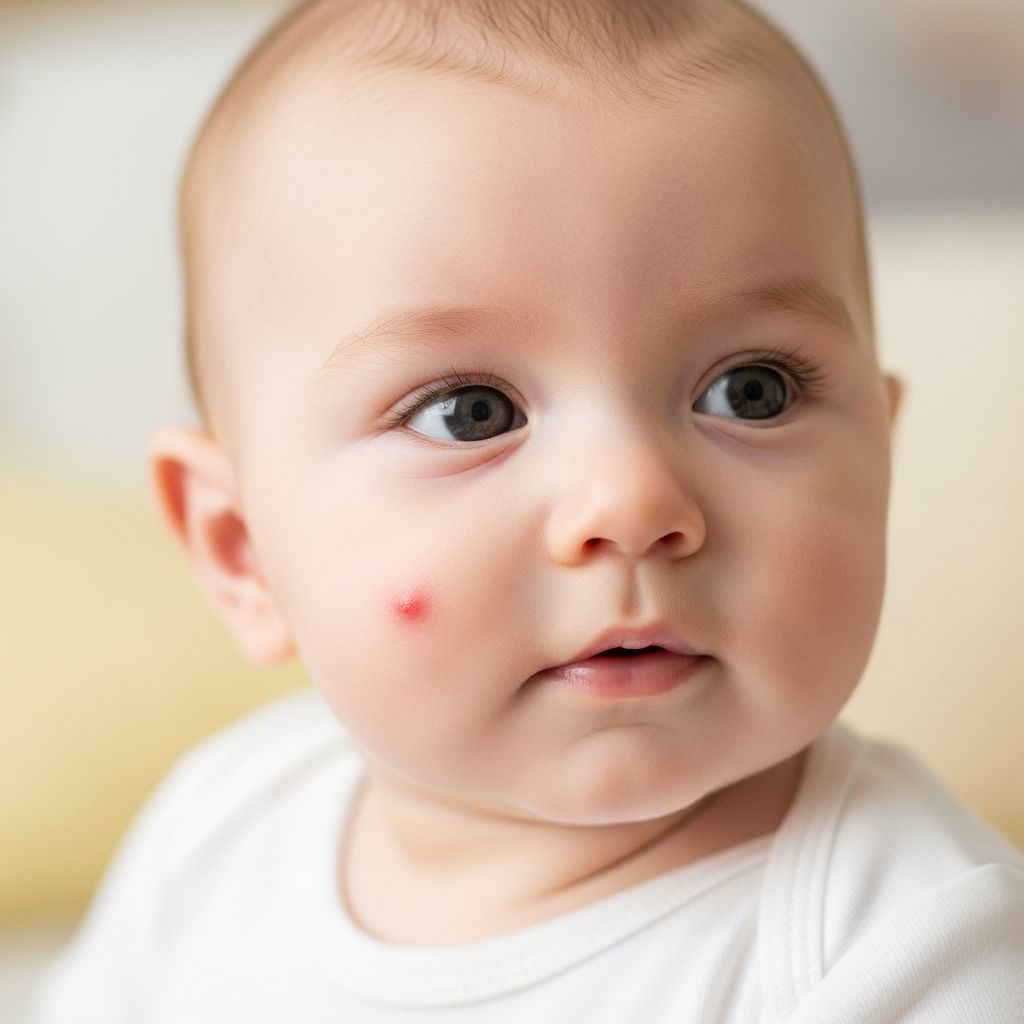
Infantile hemangiomas represent the most prevalent benign vascular tumors in young children, often appearing as distinctive red marks on the skin. These non-cancerous growths, sometimes called strawberry marks, arise from an overgrowth of blood vessel cells and affect infants predominantly during their first year of life.
Defining Hemangiomas: Benign Vascular Growths
Hemangiomas consist of clusters of immature blood vessels that form unusually in the skin or underlying tissues. Unlike malignant tumors, they pose no risk of cancer and frequently resolve without intervention. They are categorized primarily into infantile and congenital types, with infantile hemangiomas being far more common and typically emerging postnatally.
Superficial hemangiomas appear bright red and raised on the skin’s surface, resembling strawberries, while deep ones present as bluish-purple swellings beneath the skin. Mixed variants combine features of both, extending into skin and subcutaneous fat layers.
Types of Hemangiomas in Newborns and Infants
- Infantile Hemangiomas: These develop after birth, often within the first few weeks, and undergo rapid proliferation before gradual fading.
- Congenital Hemangiomas: Fully formed at birth, subdivided into rapidly involuting (RICH), which shrink quickly, and noninvoluting (NICH), which persist and may require surgery.
- Superficial: Limited to the upper skin layer, bright red and bumpy.
- Deep: Subcutaneous, with a less defined border and purplish hue.
- Mixed: Involving multiple layers for varied appearances.
Approximately 60% occur on the head or neck, with females affected five times more than males.
Timeline of Growth and Natural Resolution
Hemangiomas follow distinct phases: precursor, proliferation, plateau, and involution.
| Phase | Timing | Characteristics |
|---|---|---|
| Precursor | Birth to 1-4 weeks | Faint pink patch, telangiectasia, or bruise-like area. |
| Proliferation | 2 weeks to 6-12 months | Rapid enlargement, raised, firm texture. |
| Plateau | 9-12 months | Growth stabilizes. |
| Involution | 1-10 years | Shrinks, softens, color fades to gray; full resolution in 50-70% cases. |
During involution, residual changes like skin laxity, telangiectasias, or fibrofatty deposits may remain, but most children experience complete normalization.
Potential Complications and Warning Signs
While most hemangiomas are harmless, certain locations or sizes can lead to issues.
- Ulceration: Painful sores prone to infection, especially in diaper areas.
- Functional Impairment: Obstructing eyes, nose, mouth, or airways.
- Bleeding: Rare but serious if recurrent.
- Associated Syndromes: Such as PHACES (posterior fossa malformations, hemangiomas, arterial anomalies, cardiac defects, eye abnormalities, sternal cleft).
- Disfigurement: Large lesions impacting self-esteem.
Seek immediate care if the lesion ulcerates, bleeds, rapidly enlarges, or affects vital functions like vision or breathing.
Diagnostic Approaches for Hemangiomas
Diagnosis is primarily clinical, based on visual inspection and history. Ultrasound confirms vascular nature if needed, showing high-flow vessels. Rarely, MRI assesses deep or problematic lesions. Multidisciplinary evaluation involving dermatology, ophthalmology, or ENT specialists is recommended for high-risk cases.
Current Treatment Strategies
Observation suffices for uncomplicated hemangiomas, as 90% involute spontaneously.
Pharmacological Interventions
- Propranolol: First-line beta-blocker, oral or topical, halts growth and accelerates involution; monitored for side effects like low blood pressure.
- Corticosteroids: Systemic or intralesional for severe cases, though less favored now.
Procedural Options
- Laser Therapy: Pulsed dye laser for superficial lesions or residuals.
- Surgery: For NICH, ulcerated, or non-involuting hemangiomas post-plateau.
- Embolization: Blocks blood supply in vascular-rich lesions.
Treatment decisions hinge on size, location, and complications, managed by specialized teams.
Caring for Your Child with a Hemangioma at Home
Gentle skin care prevents ulceration: keep clean, moisturized, and padded. Avoid trauma; use protective clothing for visible areas. Monitor for changes and adhere to follow-ups. Emotional support addresses parental anxiety, as these marks often alarm new parents.
- Use fragrance-free emollients on fragile skin.
- Prevent picking or rubbing to avoid bleeding.
- Photograph progression for physician review.
- Join support groups for shared experiences.
Long-Term Prognosis and Cosmetic Outcomes
Most hemangiomas fully resolve by school age, leaving minimal scars. Residuals like atrophy or pigmentation affect 20-50%, treatable cosmetically later. Early intervention improves aesthetics and function.
Frequently Asked Questions (FAQs)
Do all hemangiomas disappear on their own?
Yes, most infantile hemangiomas involute naturally over years, though some leave minor skin changes.
Are hemangiomas painful for babies?
Typically not, unless ulcerated, which causes soreness and requires prompt care.
Can hemangiomas affect my baby’s vision or hearing?
Periocular or airway-adjacent ones can; specialist evaluation is crucial.
Is treatment safe for newborns?
Propranolol is effective and safe under medical supervision for problematic cases.
How common are hemangiomas?
They occur in 4-5% of infants, more in girls and preemies.
Preventive Insights and Myths Debunked
No known prevention exists, as causes involve endothelial proliferation, possibly genetic or placental factors. Myths like sun exposure causation are unfounded; they are not hereditary in most cases.
Early detection empowers parents. Consult pediatricians promptly for evolving marks.
References
- Hemangiomas | Children’s Hospital of Philadelphia — Children’s Hospital of Philadelphia. 2023. https://www.chop.edu/conditions-diseases/hemangiomas
- Hemangioma – StatPearls – NCBI Bookshelf — NCBI. 2023-10-01. https://www.ncbi.nlm.nih.gov/books/NBK538232/
- Hemangiomas | Rady Children’s Health — Rady Children’s Hospital. 2023. https://www.rchsd.org/programs-services/dermatology/vascular-lesion-and-birthmark-center/vascular-lesions/hemangiomas/
- Hemangioma – Symptoms and causes – Mayo Clinic — Mayo Clinic. 2023-08-16. https://www.mayoclinic.org/diseases-conditions/hemangioma/symptoms-causes/syc-20352334
- Pediatric Hemangioma and Vascular Malformations — Children’s National Hospital. 2023. https://www.childrensnational.org/get-care/health-library/hemangioma
- Hemangioma: Types, Diagnosis and Treatment Options — Nationwide Children’s Hospital. 2023. https://www.nationwidechildrens.org/conditions/hemangioma