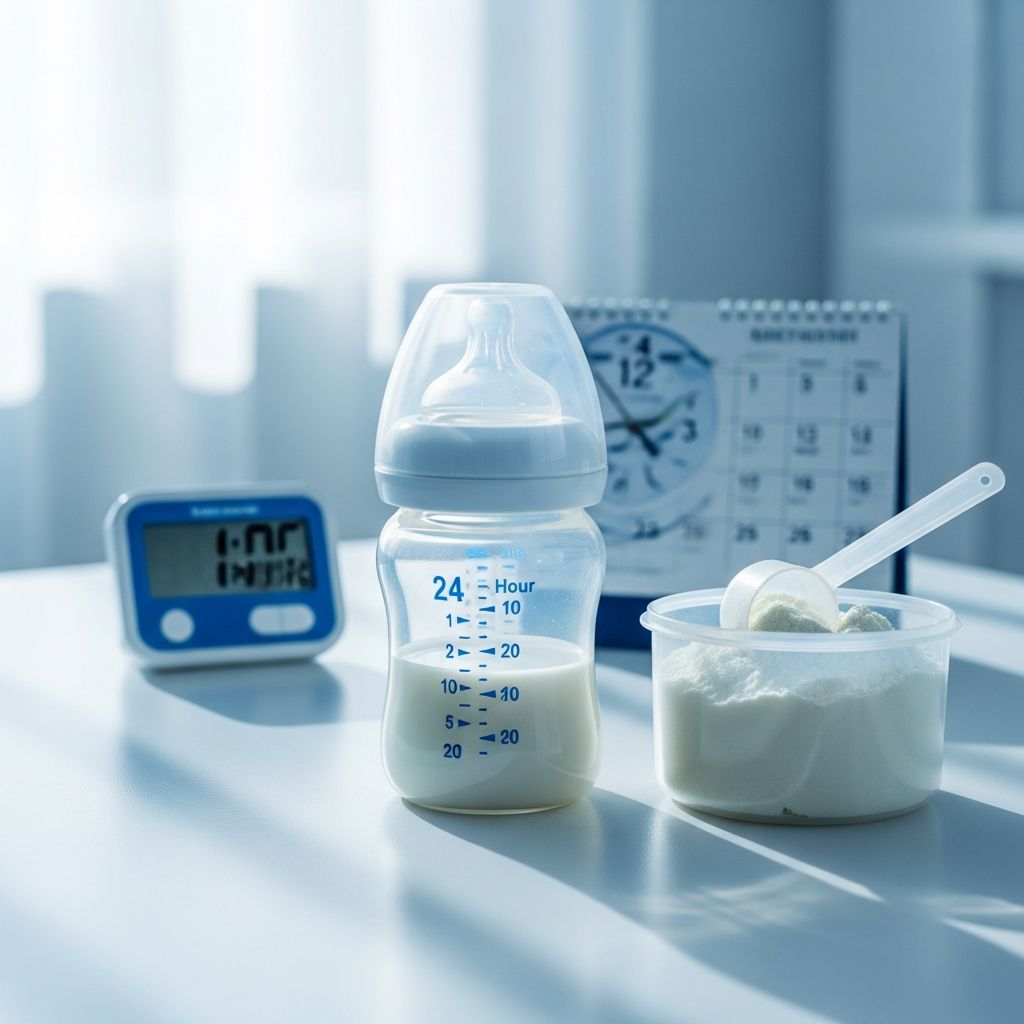
Proper storage of infant formula is vital to prevent bacterial contamination and ensure nutritional safety for newborns. Guidelines from health authorities emphasize strict time limits for prepared formula at room temperature, in refrigeration, and after feeding begins.
Understanding Risks of Improper Formula Storage
Infant formula, especially powdered varieties, can harbor bacteria like Cronobacter if not handled correctly. Leaving prepared formula out too long allows rapid bacterial multiplication in the ‘danger zone’ between 40°F and 140°F. Refrigeration slows growth but does not eliminate risks entirely, particularly after exposure to saliva.
Health agencies stress preparing fresh feeds when possible, but practical storage rules exist for busy parents. Adhering to these prevents foodborne illnesses, which can be severe or fatal in infants under 3 months.
Types of Infant Formula and Their Unique Storage Needs
Baby formulas come in three main forms: powdered, ready-to-feed (RTF), and concentrated liquid. Each has distinct preparation and storage protocols due to varying water content and contamination risks.
- Powdered formula: Mixed with water; highest bacterial risk if water temperature is inadequate during mixing.
- Ready-to-feed: Sterile until opened; convenient for travel but requires prompt refrigeration post-opening.
- Concentrated liquid: Diluted with water; similar to RTF for storage after preparation.
| Formula Type | Unopened Storage | Opened Powder Storage | Prepared/Opened Liquid Storage |
|---|---|---|---|
| Powdered | Cool, dry place | Room temp, lid tight, use in 1 month | Fridge up to 24 hrs |
| Ready-to-Feed | Cool, dry place | N/A | Fridge up to 48 hrs |
| Concentrated Liquid | Cool, dry place | N/A | Fridge up to 48 hrs |
Room Temperature Limits for Prepared Formula
Never leave prepared formula at room temperature beyond 2 hours total from preparation. If feeding starts within that window, discard after 1 additional hour. This ‘2-hour then 1-hour’ rule accounts for cumulative exposure time.
For example, mix a bottle at 10 AM; it must be refrigerated or fed by noon. If baby starts at 11 AM, finish or discard by noon. These limits apply universally across formula types to curb bacterial proliferation.
Refrigeration Guidelines for Unused Formula
Store prepared powdered formula in the fridge (35-40°F) for no more than 24 hours. Ready-to-feed and opened concentrated liquids extend to 48 hours. Always place in the back of the fridge for coldest temperatures and label with preparation date.
Avoid refreezing any formula, as it compromises quality and safety. Premade bottles should not exceed daily needs to minimize waste and risk.
Post-Feeding Disposal Rules
Discard all formula remaining in the bottle after feeding, regardless of refrigeration. Saliva introduces bacteria that multiply rapidly upon rewarming. Do not save partial feeds; this is a non-negotiable rule for infant safety.
Unopened and Opened Powder Storage Best Practices
Keep unopened cans in a cool, dry indoor spot away from heat, humidity, or sunlight. Post-opening, store powder at room temperature with a tight lid; most brands recommend use within 1 month—mark the date on the can.
Never refrigerate or freeze powder, as moisture causes clumping and spoilage. Clean the can rim before resealing to prevent contamination.
Step-by-Step Safe Preparation Process
- Wash hands thoroughly with soap and water for 20 seconds.
- Sterilize bottles, nipples, and utensils using boiling water or approved sterilizers.
- Clean preparation surface with disinfectant wipes.
- Check ‘use by’ date; use boiled, cooled water at 158°F+ for powder mixing if under 2 months old.
- Follow exact scoop ratios; shake gently.
- Test temperature on wrist—should feel neutral, not hot.
Travel and On-the-Go Feeding Tips
For outings, prepare bottles just before leaving or use RTF. Pack in insulated coolers with ice packs. Discard any formula unrefrigerated over 2 hours during travel. Hand sanitizer and sterilizing wipes are must-haves for impromptu prep.
Recognizing Spoiled or Unsafe Formula
Signs include off odors, separation, clumping, discoloration, or mold. If in doubt, throw it out. Babies may reject bad formula or show fussiness, vomiting, or diarrhea—seek medical help if symptoms appear post-feed.
Common Myths About Formula Storage
- Myth: Warming kills all bacteria. Fact: Rewarming doesn’t eliminate saliva-introduced pathogens.
- Myth: Fridge storage is indefinite. Fact: Strict 24-48 hour limits apply.
- Myth: Powder is sterile. Fact: It can contain low-level bacteria; proper water temp mitigates risk.
Frequently Asked Questions
Can I reheat refrigerated formula multiple times?
No. Discard after one use; repeated warming promotes bacterial growth.
How long can ready-to-feed formula sit out after opening?
Up to 2 hours total; then discard or refrigerate for 48 hours max.
Is it safe to microwave formula?
No—creates hot spots that can burn baby’s mouth. Use warm water bath.
What if my baby didn’t finish but seems hungry soon after?
Prepare a fresh bottle; never reuse remnants.
Does formula expire faster in hot climates?
Yes—shorter room-temp windows; prioritize refrigeration and fresh prep.
Expert Recommendations for Long-Term Safety
Consult pediatricians for preterm or immunocompromised infants, who may need stricter protocols like RTF only. Rotate stock using FIFO (first in, first out) to avoid waste. Track changes in guidelines via official sources.
Empowering parents with knowledge reduces anxiety and errors. Consistent hygiene and timing adherence safeguard infant health profoundly.
References
- Infant Formula Preparation and Storage — Centers for Disease Control and Prevention (CDC). 2023-10-12. https://www.cdc.gov/infant-toddler-nutrition/formula-feeding/preparation-and-storage.html
- Safe preparation, storage and handling of powdered infant formula — World Health Organization (WHO). 2007-05-01. https://www.who.int/publications/i/item/9789241595414
- Infant formula: 7 steps to prepare it safely — Mayo Clinic. 2024-02-15. https://www.mayoclinic.org/healthy-lifestyle/infant-and-toddler-health/in-depth/infant-formula/art-20045791
- Baby Formula Storage Guidelines — Enfamil (official product guidance). 2024-01-20. https://www.enfamil.ca/blogs/formula-feeding-and-supplementing-centre/baby-formula-storage-guidelines
- Keeping Baby Formula Safe — Ohio State University Extension (Ohioline). 2023-05-10. https://ohioline.osu.edu/factsheet/MOB-3