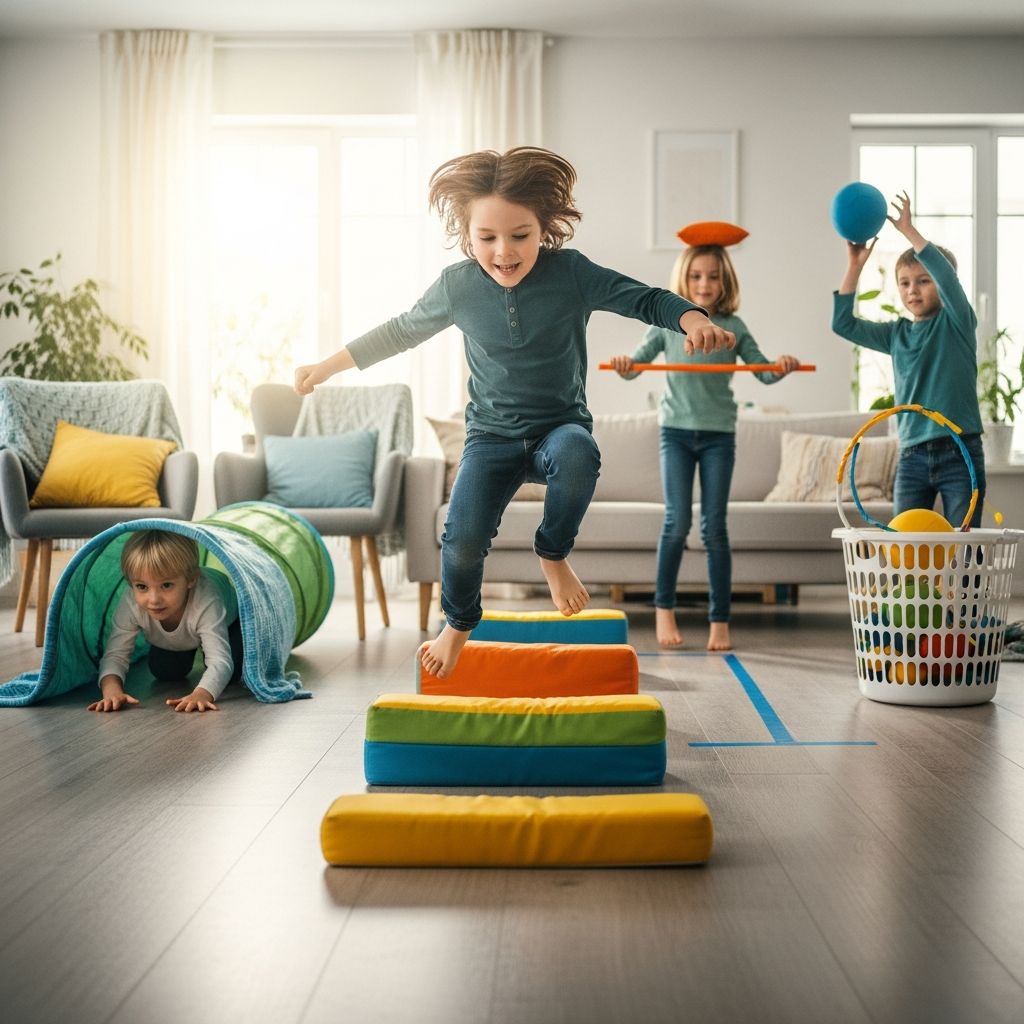
Transform any indoor space into a thrilling Olympic venue where children can channel their energy into exciting challenges. These games require minimal equipment, mostly household staples, making them ideal for families seeking active play without outdoor access. Parents can act as referees, awarding points or medals crafted from paper and string to heighten the excitement.
Why Indoor Olympics Benefit Children’s Development
Physical activities like these foster gross motor skills, balance, and coordination while enhancing cognitive abilities through strategy and counting. Research from child development experts highlights how such play reduces screen time and promotes healthy habits. For instance, structured movement games improve spatial awareness and teamwork, essential for young learners.
Setting up an event structure adds educational value: divide into opening ceremonies, multiple events, and a closing medal presentation. This mirrors real Olympics, teaching perseverance and sportsmanship in a safe environment.
Preparation Essentials for Your Home Olympics
Gather simple supplies: pillows, tape, paper plates, socks, bean bags, string, and printed score sheets. Create a schedule with 8-10 events lasting 5-10 minutes each to maintain attention spans. Designate areas like living room for races and hallways for courses to maximize space.
- Medals and Scores: Cut foil circles for medals; use a whiteboard for tallying.
- Safety First: Clear sharp objects and ensure soft landing spots.
- Age Adaptations: Simplify for toddlers, add complexity for older kids.
Dynamic Warm-Up Routines to Kick Off the Games
Begin with gentle movements to prevent injuries and build anticipation. Guide kids through a 5-minute sequence mimicking Olympic warm-ups.
- March in place with arm swings for 30 seconds.
- High-knee steps across the room.
- Arm circles forward and backward.
- Torso twists while standing tall.
- Light jumping jacks to elevate heart rates.
These routines prepare muscles and joints, as recommended by pediatric physical activity guidelines promoting gradual intensity buildup.
Obstacle Course Challenges for Agility
Construct a customizable course using furniture and cushions. Kids navigate by hopping, crawling, or balancing, timing their runs for competition.
Course Setup Ideas:
- Crawl under tables.
- Balance on pillow ‘beams’.
- Jump over rolled blankets.
- Weave through chair legs.
- End with a spin challenge.
Relay versions encourage teamwork: pass a baton like a stuffed toy. Time teams or count completions in a set period for winners.
Creative Balance and Jumping Events
Focus on precision with these low-space games. Use tape lines on floors for boundaries.
| Event Name | Objective | Materials | Scoring |
|---|---|---|---|
| Balance Beam Walk | Walk heel-to-toe on tape line | Painter’s tape | Farthest distance without falling |
| Frog Leap Relay | Jump like frogs to finish line | None | Fastest team |
| One-Foot Hops | Hop on one foot around markers | Chalk or tape | Most laps in 1 minute |
These build lower body strength and focus, adaptable for solo or group play.
Target Tossing and Throwing Competitions
Enhance hand-eye coordination with tossing games. Set up targets with hula hoops or buckets at varying distances.
- Bean Bag Bullseye: Toss bags into labeled buckets (10, 20, 30 points).
- Paper Plate Discus: Fling plates frisbee-style at a taped bullseye.
- Sock Snowball Throw: Roll socks into balls, aim at wall targets.
Compete in rounds, highest score wins gold. For teams, rotate throwers.
Skating and Sliding Indoor Adventures
Mimic winter sports safely indoors. Socks on hardwood create slippery fun.
Sock Skating Races: Place paper squares ahead; ‘skate’ by stepping from one to another. Race across the room in heats of three.
Paper Plate Skis: Hold plates under feet, glide in figure-eight patterns. Judge creativity and duration without slipping.
These events promote bilateral coordination and imaginative play.
Curling and Precision Pushing Games
Replicate curling with paper plates as stones. Tape a target on the floor; use brooms or noodles to push plates toward the center.
- Teams alternate pushes.
- Closest to center scores points.
- Bump opponents’ plates out for strategy.
Perfect for smaller spaces, teaching gentle force control.
Speed and Rhythm Challenges
Incorporate music for rhythmic events boosting endurance.
- Biathlon Mix: 20 jumping jacks then toss three cotton balls at a target.
- Rhythm Clap Runs: Run in place while clapping patterns called by parent.
- Sport Stacking Relay: Stack and unstack cups fastest (use plastic cups).
Award style points for flair.
Educational Twists: Numbers and Letters in Play
Integrate learning seamlessly. Roll dice for movement reps: 1=jump, 2=spin, etc. Or trace letters on ‘ice’ with foil and markers.
For preschoolers, count chain links matching numbers; older kids spell sight words with beads on pipe cleaners during relays.
Closing Ceremonies and Family Bonding
End with a parade, medal ceremony, and snack ‘podium’. Reflect on favorites to reinforce positive experiences. Repeat events monthly for tradition.
These games not only burn energy but strengthen family ties through shared laughter.
Frequently Asked Questions (FAQs)
Q: What age group are these games best for?
A: Ages 3-10, with easy modifications for younger or older participants.
Q: How long should a full Indoor Olympics last?
A: 45-90 minutes, including warm-up and breaks to keep energy high.
Q: Can I adapt for small apartments?
A: Yes, focus on stationary events like tossing and balance; use hallways for linear challenges.
Q: What if kids have different skill levels?
A: Use handicaps like extra points for beginners or separate divisions.
Q: Are there sensory-friendly options?
A: Opt for quiet, individual challenges like stacking or slow balances without timers.
References
- Physical Activity Guidelines for Americans, 2nd edition — U.S. Department of Health and Human Services. 2018-10-07. https://health.gov/sites/default/files/2019-09/Physical_Activity_Guidelines_2nd_edition.pdf
- Active Start: A Statement of Physical Activity Guidelines for Children Birth to Five Years — National Association for Sport and Physical Education. 2009. https://www.shapeamerica.org/standards/guidelines/activestart.aspx
- Benefits of Physical Activity for Children — Centers for Disease Control and Prevention. 2023-05-15. https://www.cdc.gov/physicalactivity/basics/children/index.htm