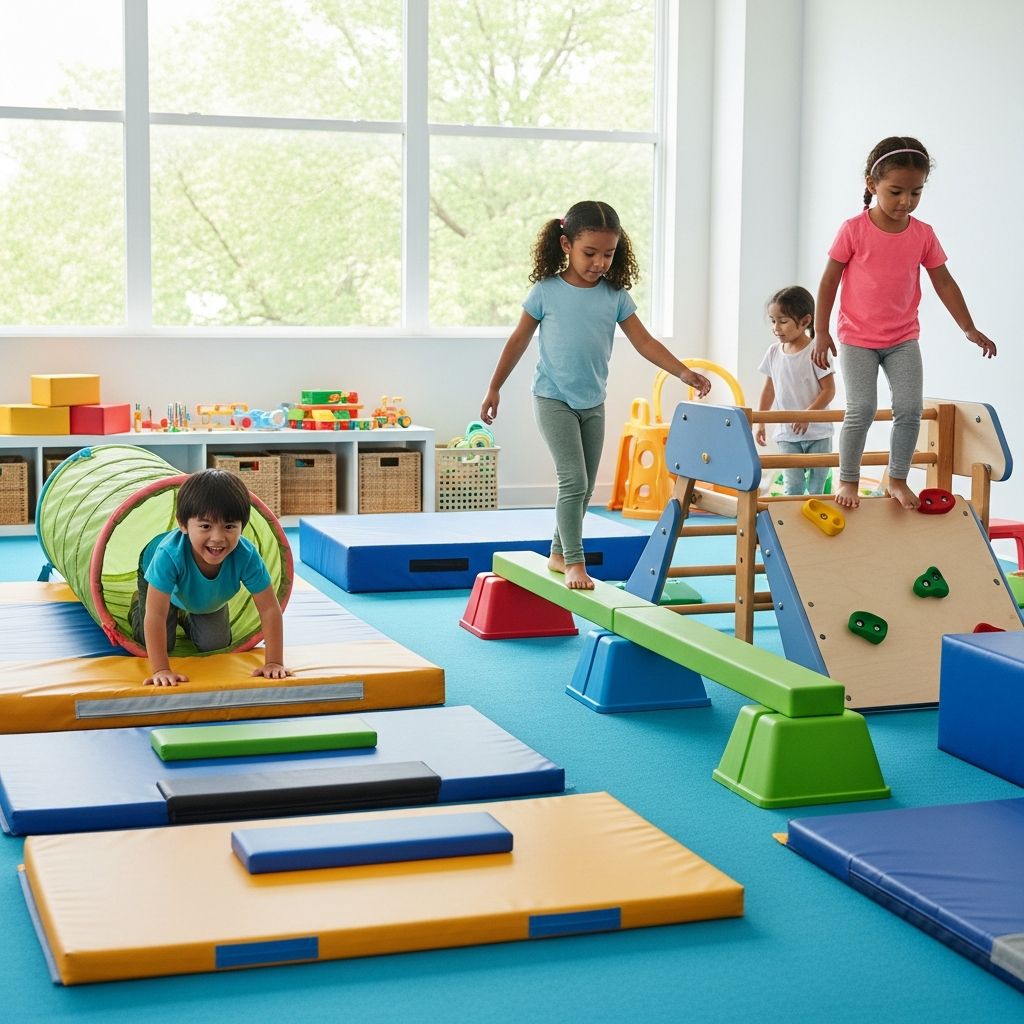
Creating an indoor obstacle course offers families a dynamic way to keep children active, even when outdoor play isn’t possible. These setups use common household objects to challenge balance, agility, strength, and problem-solving, fostering essential gross motor skills while sparking joy and laughter.
Why Indoor Obstacle Courses Matter for Child Development
Obstacle courses provide more than just entertainment; they are powerful tools for physical and cognitive growth. Activities that involve crawling, jumping, balancing, and throwing help strengthen muscles, improve coordination, and enhance spatial awareness. According to child development experts, such play supports brain-body connections crucial for overall health.
Research from pediatric therapy centers emphasizes that regular gross motor challenges like these can improve posture, endurance, and even focus in children. They’re adaptable for all ages, from toddlers mastering basic movements to school-age kids tackling complex sequences. Plus, involving kids in setup builds teamwork and anticipation.
Planning Your Indoor Adventure Setup
Start by assessing your space—living rooms, hallways, or basements work best. Clear furniture to create a safe path, aiming for 6-10 stations to maintain engagement without overwhelming small areas. Use soft mats or rugs for landing zones to prevent slips.
- Safety first: Remove sharp edges, secure loose items, and supervise closely.
- Age-appropriate challenges: Simplify for younger kids (e.g., larger steps) and add complexity for older ones (e.g., timed runs).
- Materials needed: Pillows, blankets, tape, chairs, laundry baskets, balls—items you likely have on hand.
Theme your course for extra fun: jungle trek, space mission, or pirate quest. This narrative element encourages imagination and persistence.
Essential Challenges for Every Course
Build a balanced course mixing movement types: climbing, crawling, balancing, throwing, and jumping. Here’s a core set of ideas to mix and match.
1. Summit the Peak Climb
Stack cushions or stable furniture to form a ‘mountain.’ Kids climb up, touch the top (add a sticker flag), and descend carefully. This builds leg strength and confidence in height.
2. Steady Balance Path
Tape straight or zigzag lines on the floor as a beam. For variety, place pillows as islands to step across a pretend ‘lava pit.’ Enhances core stability and focus.
3. Tunnel Crawl Quest
Drape blankets over chairs or tables to form tunnels. Add dim lights or scarves inside for sensory appeal. Great for upper body strength and spatial navigation.
4. Hoop Jump Relay
Lay hula hoops or draw circles with chalk/tape. Kids jump in and out, progressing to two-footed leaps. Promotes rhythm and lower body power.
5. Target Toss Zone
Hang baskets or boxes as goals; provide soft balls or socks. Mark throwing lines at varying distances. Sharpens hand-eye coordination.
Advanced Challenges for Bigger Kids
Elevate the excitement with these skill-building stations that demand precision and speed.
| Challenge | Skills Targeted | Setup Tips |
|---|---|---|
| Spoon Balance Carry | Fine motor, patience | Balance a ping-pong ball on a spoon across the room; use mouth-hold for difficulty. |
| Sack Hop Dash | Leg strength, agility | Pillowcase or bag; hop between markers 10-15 feet apart. |
| Number Match Run | Cognitive, speed | Post-its with numbers next to bowls of objects (e.g., 3 pom-poms); match and sort. |
| Bean Bag Head Balance | Posture, multitasking | Walk with bag on head to next station; drop = restart. |
| Somersault Roll | Body awareness, tumbling | Mat or carpet; 2-3 rolls to advance. |
Themed Obstacle Course Variations
Infuse storytelling to captivate young adventurers. Each theme repurposes challenges uniquely.
Deep Sea Voyage
Blue blankets as ocean; pillows as sharks to leap over. ‘Swim’ (crawl) through seaweed (streamers). End with treasure toss into a chest.
Forest Expedition
Chairs as trees to weave around; log rolls over towels. Bear crawl under branches (table). Spot animals (toys) to collect.
Superhero Training Ground
Weave through laser beams (string); leap tall buildings (cushions). Rescue mission: carry stuffed animal through course.
These themes make repetition fresh, encouraging multiple runs.
Customizing for Different Age Groups
- Toddlers (2-4 years): Short course, 4-5 wide stations like stepping stones and simple crawls. Focus on exploration.
- Preschoolers (4-6 years): Add mild timing; include color matching or shape hops.
- School-age (6+ years): Competitions, relays, or blindfolded elements with guidance.
Adapt for special needs: widen paths for mobility aids or add verbal cues for sensory processing.
Safety Guidelines and Best Practices
Prioritize injury prevention. Always test the course yourself. Limit sessions to 20-30 minutes to avoid fatigue. Hydrate and rest between turns.
- Use non-slip surfaces.
- No running near stairs.
- Spot young climbers.
American Academy of Pediatrics notes supervised active play reduces sedentary time, key for healthy growth.
Making It a Family Event
Turn setup into a game—kids vote on stations. Race as teams or time individually for personal bests. Prizes like extra storytime motivate. Share photos online with family for virtual cheers.
For groups, rotate roles: one builds, one times, one cheers. This teaches cooperation.
Frequently Asked Questions (FAQs)
What household items are best for indoor courses?
Pillows, blankets, tape, baskets, balls, chairs, and hula hoops provide endless options safely.
How long should a session last?
20-30 minutes keeps energy high; repeat later if enthusiasm persists.
Can I do this alone with multiple kids?
Yes—set stations in sequence; rotate supervision while they self-challenge.
What if space is limited?
Use hallways or single-room loops with 3-4 portable stations; swap midway.
Does it help with school skills?
Absolutely—builds focus, following directions, and physical stamina for better learning.
Quick-Start Course Templates
Beginner Loop (5 stations):
- Balance beam walk.
- Tunnel crawl.
- Hoop jumps.
- Toss to basket.
- Climb and flag summit.
Expert Relay (8 stations):
- Sack hops.
- Spoon carry.
- Number match.
- Bean bag balance.
- Somersaults.
- Zigzag weave.
- Target throws.
- Mountain peak.
These templates scale easily; track progress over days for achievement.
References
- Pediatric Gross Motor Development Guidelines — American Academy of Pediatrics. 2023-10-15. https://www.aap.org/en/patient-care/developmental-milestones/
- Gross Motor Skills Through Play — Centers for Disease Control and Prevention (CDC). 2024-05-20. https://www.cdc.gov/ncbddd/actearly/milestones/index.html
- Obstacle Courses for Child Development — National Association for the Education of Young Children (NAEYC). 2022-11-08. https://www.naeyc.org/resources/pubs/yc/nov2018/obstacle-courses
- Indoor Physical Activity Recommendations — World Health Organization (WHO). 2023-06-12. https://www.who.int/news-room/fact-sheets/detail/physical-activity
- Active Play for Motor Skill Development — American Physical Therapy Association. 2024-01-22. https://www.apta.org/patient-care/evidence-based-practice-resources/pediatrics