The Foundation of Indigenous Parenting: Beyond Individual Care
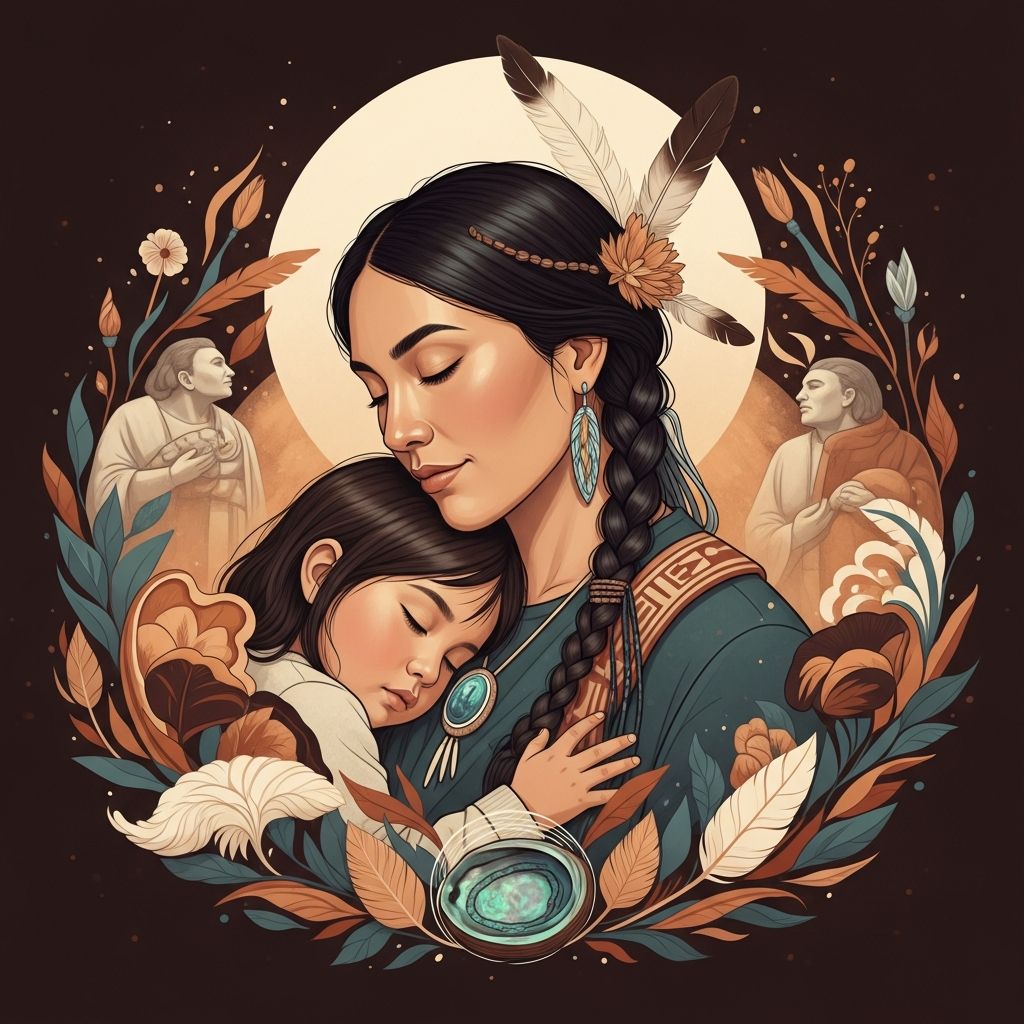
Parenting within Indigenous communities represents far more than the biological act of caring for children. It encompasses a comprehensive philosophy that intertwines cultural preservation, community responsibility, and spiritual connection. Indigenous motherhood is anchored in the recognition that raising children involves not just parents, but extended family networks, elders, and entire communities who share in the sacred work of nurturing the next generation.
This collective approach fundamentally differs from Western individualistic parenting models. Rather than viewing child-rearing as primarily the responsibility of two parents, Indigenous cultures have historically recognized that multiple caregivers strengthen children’s development and distribute the emotional and physical labor of parenting across a supportive network. This distribution creates resilience not only for the children being raised but also for the mothers and fathers who share caregiving responsibilities.
Cultural Identity as a Core Parenting Practice
One of the most significant aspects of Indigenous parenting is the intentional transmission of cultural identity to children from birth. For Indigenous mothers, pregnancy and early parenting become catalysts for deeper engagement with their own cultural heritage and their children’s connection to ancestral traditions. This process, however, is not always straightforward, particularly when mothers navigate complex intersections of identity recognition within health systems and broader society.
Mothers often encounter challenges when disclosing their Indigenous identities, facing obstacles related to surname recognition, band affiliation, and government-recognized status. Despite these barriers, Indigenous mothers persist in passing down cultural knowledge through language, traditional practices, and spiritual teachings. They teach kinship terms in mother-tongues, establish connections to traditional lands, and embed ancestral wisdom into everyday parenting decisions.
The Strength of Collective Child-Rearing Systems
Indigenous communities practice what many call the “many mothers” model of parenting, where children recognize and bond with multiple nurturing figures within their family and community structures. In villages and communities following this practice, children address their birth mothers, aunts, sisters, and other close female relatives by the same kinship term, eliminating hierarchical distinctions between these relationships.
This system offers profound benefits:
- Reduced stress and burden on individual mothers through shared caregiving responsibilities
- Enhanced autonomy and independence in children through supervised exploration and free play
- Strengthened community bonds and intergenerational connection
- Elimination of judgment and defensiveness as caregiving is collectively valued
- Children develop confidence knowing multiple trusted adults provide consistent guidance and protection
Children raised within these collective systems enjoy greater freedom to explore their environments, develop problem-solving skills, and build independence while knowing they have many protective figures watching over them. This approach contrasts sharply with parenting models that emphasize intensive, singular parental oversight.
Spiritual and Holistic Dimensions of Indigenous Motherhood
Indigenous parenting practices are deeply rooted in spiritual and holistic understandings of child development and family well-being. The concept of mothering extends beyond biological mothers to encompass anyone who brings life, nurtures life, and cultivates the development of embodied love within communities. This spiritual reverence for the mothering role permeates Indigenous cultures across North America and beyond.
Traditional practices like swaddling infants in moss bags and cradleboards carry generations of maternal Indigenous knowledge and teachings. These practices represent physical embodiments of cultural continuity, connecting current mothers to generations of ancestors who employed the same techniques. Breastfeeding, similarly, represents both a biological necessity and a form of resistance against colonial impositions on how Indigenous mothers should feed and care for their children.
Connecting with culturally safe spaces and engaging with spiritual practices enables mothers to develop a sense of safety and belonging. When health and well-being are linked with cultural and spiritual practices, and when mothers experience trusting relationships with providers who respect their Indigenous identities, both mothers and infants thrive.
Navigating Identity in Contemporary Health Systems
Indigenous mothers today face the complex challenge of maintaining cultural practices while engaging with Western health systems that may not recognize or respect Indigenous identities. Research demonstrates that mothers experience significant stress when disclosing their Indigenous identities, particularly when facing assumptions based on surnames or concerns about discriminatory treatment.
The availability of culturally safe healthcare spaces proves critical for supporting Indigenous mothers’ well-being and their capacity to foster their children’s Indigenous identity development. When providers approach Indigenous mothers with respect, understanding, and cultural humility, mothers feel empowered to embrace their cultural practices and pass these traditions to their children without fear of judgment or discrimination.
Some mothers actively resist government-defined categories of Indigenous identity, instead honoring complex intersections of cultural belonging that extend beyond official recognition systems. This resistance represents both a protection of cultural autonomy and an assertion of identity grounded in family relationships and community connection rather than bureaucratic classification.
Resilience Through Connection and Responsibility
Research on Aboriginal and Torres Strait Islander mothers identifies resilience as a central theme in Indigenous motherhood. Rather than understanding resilience as Western psychology often frames it—as individual strength overcoming adversity—Indigenous mothers demonstrate resilience grounded in holistic and collectivist values.
Four core dimensions sustain Indigenous mothers’ resilience:
| Resilience Dimension | How It Functions | Community Impact |
|---|---|---|
| Connection | Strengthening bonds with family, female relatives, and community members | Shared child-rearing responsibilities reduce individual burden |
| Learning and Growing | Transmitting cultural knowledge and developing adaptive parenting strategies | Intergenerational wisdom strengthens community cultural practice |
| Caring for Self and Others | Balancing personal well-being with family and community responsibilities | Modeling healthy self-care for children and younger mothers |
| Identity | Connecting with Indigenous cultural heritage and contemporary Indigenous identity | Children grow with strong sense of belonging and purpose |
Protective cultural factors, particularly connection with family, community, and kin networks, serve as the foundation for Indigenous mothers’ ability to combat adversity. Mothers emphasize the central role of connecting with significant female relatives who nurture their resilience, support their children’s care needs, share ways of caring, and alleviate stressors through shared child-rearing experiences.
The Emotional Journey of Indigenous Motherhood
Indigenous motherhood involves profound emotional labor that extends beyond daily caregiving tasks. Mothers engage in the challenging work of processing their own experiences with their parents while breaking cycles of trauma and establishing healthier patterns with their own children. This emotional processing represents part of the deeper spiritual and psychological work embedded in Indigenous parenting.
Yet alongside this challenging work exists profound greatness and power. Indigenous mothers carry within themselves ancestral strength, wisdom, and resilience that enable them to nurture children with depth and intention. This power flows through daily acts—wrapping babies in traditional carriers, singing lullabies in ancestral languages, teaching children stories of their people’s history, and instilling values of community responsibility and cultural pride.
Mothers describe experiencing deep contentment and calmness when engaging in traditional practices like extended breastfeeding and skin-to-skin contact, practices that align with ancestral maternal knowledge and cultural acceptance. This alignment between personal practice and cultural tradition creates profound meaning and purpose in motherhood.
Contrasting Parenting Philosophies: Indigenous and Western Approaches
Indigenous parenting philosophies often diverge significantly from Western approaches, particularly regarding children’s independence, autonomy, and engagement with their environment. In Indigenous Amazonian communities, for example, children are raised to face outward toward the world, developing environmental competence and independence rather than being kept close to parents in protective proximity.
Western parenting models sometimes appear to Indigenous communities as overly focused on intensive parental engagement and protection—what some describe as “over-mothering” that may limit children’s development of problem-solving skills, environmental awareness, and independence. In contrast, Indigenous children are encouraged to explore, take calculated risks, and develop capabilities through guided independence and community supervision.
This distinction reflects fundamentally different philosophies about children’s roles in society. Indigenous approaches view children as community members with growing responsibilities and capabilities, while some Western approaches emphasize childhood as a protected period separate from adult responsibilities.
Preserving and Restoring Indigenous Kinship Systems
In contemporary contexts, Indigenous parenting increasingly focuses on restoration of traditional kinship systems that have been disrupted by colonization, forced assimilation, and systemic policies.[10] As communities work to reclaim cultural practices, mothers and fathers actively rebuild networks of collective child-rearing and knowledge transmission.
This restoration work involves:
- Reconnecting with extended family members and strengthening kinship bonds
- Learning ancestral languages and teaching them to children
- Participating in traditional ceremonies and spiritual practices with children
- Sharing child-rearing responsibilities across family and community networks
- Documenting and transmitting traditional ecological knowledge and land-based practices
- Creating spaces for elders to actively participate in children’s upbringing
This restoration process represents not a return to an idealized past, but rather a purposeful integration of ancestral wisdom with contemporary life. Indigenous parents navigate the reality of living in modern societies while maintaining connections to traditional values and practices.
The Sacred Nature of Mothering Across Indigenous Cultures
Across diverse Indigenous cultures and regions—from North America to Australia to South America—a common thread connects the understanding of motherhood: its sacred nature and its foundational role in community continuity. The reverence for mothers as life-givers, nurturers, and cultural transmitters represents one of many things Indigenous communities hold in common across geographical and cultural boundaries.
In Lakota tradition, the word for mother is “Ina,” carrying meaning that extends beyond the individual relationship to encompass connection to the world, nourishment, bonding, and love. Similar reverence for the mother’s role appears throughout Indigenous traditions worldwide, reflecting deep cultural recognition of motherhood’s importance.
This sacredness does not make motherhood easy or uncomplicated—rather, it situates the challenges of parenting within a framework of profound meaning and community responsibility. Mothers are not expected to do this work alone, nor are they celebrated only for their sacrifices. Instead, they are supported by communities that recognize their essential role in cultural survival and community thriving.
Building Culturally Safe Support Systems
For Indigenous mothers to thrive and for children to develop strong cultural identities, culturally safe support systems prove essential. These systems require healthcare providers, educators, and community workers who approach Indigenous families with respect, cultural humility, and recognition of Indigenous peoples’ expertise regarding their own children and communities.
Culturally safe spaces enable mothers to:
- Disclose their Indigenous identities without fear of discrimination or judgment
- Practice traditional parenting methods without pressure to conform to Western models
- Receive support that integrates cultural practices with health and well-being services
- Access healthcare that respects their autonomy and decision-making regarding their children
- Connect with other Indigenous mothers and build community support networks
The development of these systems requires ongoing work to address systemic barriers and build trust between Indigenous families and institutions that have historically perpetuated harm.
Frequently Asked Questions
Q: How do Indigenous parenting practices differ from mainstream Western parenting?
A: Indigenous parenting emphasizes collective responsibility, community child-rearing, and holistic development rooted in cultural and spiritual practices, whereas mainstream Western parenting often focuses on intensive parental engagement and individual achievement. Indigenous approaches prioritize children’s independence, environmental competence, and community connection alongside nurturing relationships.
Q: What is the “many mothers” concept in Indigenous parenting?
A: The “many mothers” model recognizes that children benefit from multiple nurturing figures—mothers, aunts, sisters, and other female relatives—who share caregiving responsibilities equally. Children see these relationships as equally authoritative and protective, reducing stress on individual mothers while strengthening community bonds.
Q: How do Indigenous mothers maintain cultural identity while raising children today?
A: Indigenous mothers intentionally transmit cultural knowledge through language, traditional practices, spiritual teachings, and connection to ancestral lands and communities. Pregnancy and early parenting catalyze deeper engagement with cultural heritage, even as mothers navigate complex systems of identity recognition and potential discrimination.
Q: What role do elders play in Indigenous child-rearing?
A: Elders serve as essential knowledge keepers who transmit ancestral wisdom, teach cultural practices, and provide guidance to younger mothers and parents. They strengthen intergenerational connections and ensure cultural continuity within families and communities.
Q: How does Indigenous motherhood address resilience?
A: Indigenous mothers build resilience through connection with family and community, learning and adaptive strategies, balanced self-care, and strong cultural identity. This collective resilience differs from Western individualistic models and is grounded in holistic, community-centered values.
Q: What challenges do Indigenous mothers face in contemporary health systems?
A: Indigenous mothers navigate complex identity recognition processes, potential discrimination based on surnames or assumptions, and health systems that may not recognize or respect Indigenous practices. Access to culturally safe healthcare spaces is critical for supporting both mothers’ well-being and children’s cultural identity development.
References
- Mothers’ experiences of supporting the healthy development of their infants’ indigenous identities — Journal of Indigenous Wellbeing. 2024-05. https://journalindigenouswellbeing.co.nz/media/2024/05/Mothers-experiences-of-supporting-the-healthy-development-of-their-infants-indigenous-identities.pdf
- It gives me purpose: stories shared by Aboriginal mothers and their connections to resilience — National Center for Biotechnology Information (NCBI). 2024. https://pmc.ncbi.nlm.nih.gov/articles/PMC12444914/
- The Realities of Indigenous Motherhood — Indigenous Motherhood. 2018-10-09. https://indigenousmotherhood.wordpress.com/2018/10/09/the-realities-of-indigenous-motherhood/
- Indigenous Mothers Help Raise Each Others’ Kids — Scary Mommy. https://www.scarymommy.com/benefits-many-mothers-cultures
- The Sacredness of Motherhood: Ones Who Gave Us Life — Native Philanthropy. 2021-05-08. https://nativephilanthropy.org/blog/2021/05/08/the-sacredness-of-motherhood-ones-who-gave-us-life
- Essay Motherhood — National Museum of the American Indian, Smithsonian Institution. https://americanindian.si.edu/ancestors-know/reflections/motherhood/