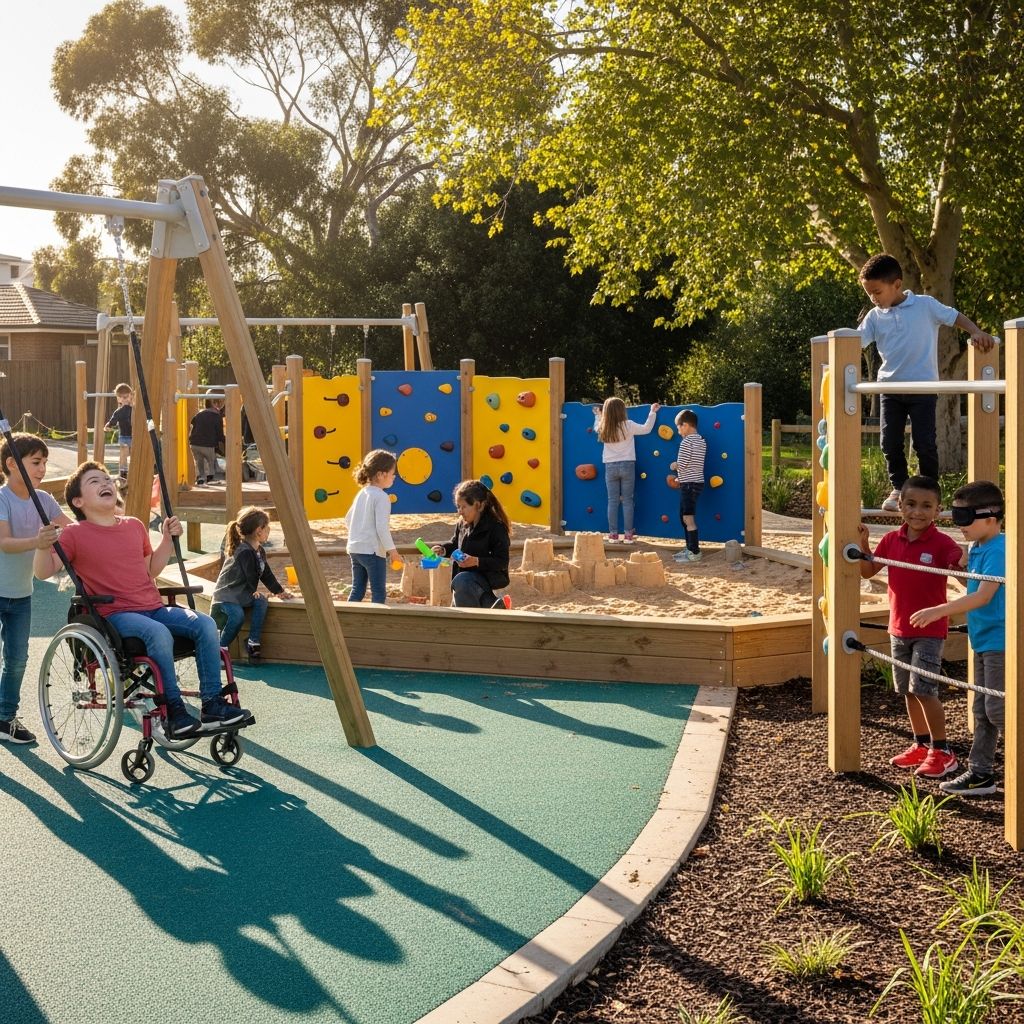
Inclusive playgrounds represent a vital evolution in public recreation spaces, designed to welcome children regardless of physical, sensory, cognitive, or developmental abilities. These environments go beyond basic accessibility to create shared play experiences that nurture growth, empathy, and community ties. By integrating universal design principles, they ensure every child can climb, swing, slide, and socialize in a supportive setting.
The Core Principles Driving Inclusive Design
At the heart of inclusive playgrounds lies **universal design**, a framework that makes spaces usable by all people without adaptation. This approach, rooted in principles from experts like Dr. Stanton-Chapman, emphasizes flexibility, simplicity, and equitable use. Key elements include ramps alongside stairs, sensory zones for varied stimulation, and equipment scaled for different mobility levels.
- Ramp access and transfers: Allow wheelchair users and those with mobility aids to reach play structures seamlessly.
- Sensory integration: Incorporate textures, sounds, and quiet retreats for children with sensory processing needs.
- Group play features: Merry-go-rounds and seesaws that require cooperation among diverse abilities.
- Wayfinding aids: Wide paths, tactile paving, and visual cues for navigability.
These features not only comply with standards like the Americans with Disabilities Act but elevate play to a truly participatory level.
Boosting Physical and Cognitive Growth for Every Child
Play is essential for development, as affirmed by Article 31 of the United Nations Convention on the Rights of the Child, which guarantees every child’s right to engage in it. Inclusive playgrounds amplify this by supporting physical activity, which research links to improved gross motor skills and overall health. Children with disabilities often face barriers in traditional spaces, limiting exercise and peer interaction; inclusive designs remove these hurdles.
For children with intellectual disabilities, these playgrounds foster problem-solving through imaginative structures and challenges tailored to individual paces. Cognitive benefits extend to all users, as diverse equipment encourages creativity, spatial reasoning, and decision-making. Physical gains include strength building via adaptive swings and climbers, while emotional resilience grows from mastering inclusive challenges.
| Ability Type | Key Benefits | Example Equipment |
|---|---|---|
| Mobility Challenges | Enhanced strength, balance | Ramp-accessed slides, transfer stations |
| Sensory Processing | Calm regulation, sensory exploration | Quiet zones, textured panels |
| Intellectual Disabilities | Cognitive growth, self-esteem | Puzzle walls, sequencing games |
| All Abilities | Motor skills, coordination | Group spinners, inclusive swings |
Forging Social Bonds and Empathy in Communities
Inclusive playgrounds transform isolated play into communal joy, promoting social inclusion where children of varying abilities interact naturally. This setup breaks stigmas, encouraging cooperation, turn-taking, and friendship-building. Children without disabilities gain empathy by playing alongside peers with differences, fostering lifelong understanding.
Communities benefit too: these spaces act as hubs, drawing families together and enhancing trust and shared goals. Families of children with disabilities report stronger belonging, reducing isolation. Social skills development—adaptation, awareness, and equality—thrives in these equitable environments.
Family Engagement and Community Impact
Beyond kids, inclusive playgrounds unite families for interactive time, vital for bonding and support networks. Parents observe their children thriving alongside others, alleviating exclusion feelings. Communities investing here signal value for diversity, setting inclusivity standards that ripple outward.
Unique experiences draw visitors, boosting local pride and tourism. In areas with few such spaces, they serve over 70 million Americans with disabilities, addressing a critical gap. Healthier, more connected neighborhoods emerge as play encourages risk-taking and exploration safely.
Real-World Examples of Inclusive Success
West Fork Park in Green Township exemplifies success, featuring ramps, sensory elements, and group play that families like Melissa Holderby’s praise for enabling shared joy. Other sites incorporate peaceful retreats and wide pathways, accommodating sensory needs while promoting navigation. These models prove inclusive design yields measurable engagement and happiness.
Overcoming Challenges in Inclusive Playground Creation
Building these spaces requires upfront investment, but long-term gains in usage and community value outweigh costs. Common hurdles include space constraints and funding; solutions involve grants, partnerships, and modular equipment. Designers prioritize proximity of varied features to spark interactions. Education on benefits sways stakeholders, emphasizing developmental returns.
Frequently Asked Questions (FAQs)
What makes a playground truly inclusive?
A truly inclusive playground uses universal design for all abilities, featuring ramps, sensory areas, group equipment, and quiet spaces to ensure equitable access and fun.
Do inclusive playgrounds benefit typically developing children?
Yes, they enhance social skills, empathy, and physical development through diverse interactions and challenges.
How do inclusive playgrounds support children with sensory issues?
They include quiet retreats, varied textures, and wayfinding to prevent overload and aid navigation.
Are there enough inclusive playgrounds in the U.S.?
No, only a small percentage exist, insufficient for 70 million with disabilities, highlighting the need for more.
What role does play have in child rights?
Article 31 of the UN Convention affirms play as a fundamental right essential for development.
Steps to Advocate for Inclusive Play in Your Area
Communities can push for change by petitioning leaders, partnering with organizations like Kids Included Together, and highlighting data on benefits. Share stories, seek funding, and prototype small features to build momentum.
References
- The Power of Inclusive Play Design: Building Communities Through Play — Westwood Parks and Recreation. 2023-05-15. https://westwoodps.com/recent-blog-posts/power-inclusive-play-design-building-communities-through-play
- The Importance of Inclusive Playgrounds — Playworld. 2024-02-10. https://playworld.com/blog/the-importance-of-inclusive-playgrounds/
- 5 Reasons Your Park Needs Inclusive Playground Equipment — Play and Park Structures. 2023-11-20. https://www.playandpark.com/blog/5-reasons-your-park-needs-inclusive-playground-equipment
- Inclusion In Playgrounds: Why Is It Important? — Kids Included Together. 2024-01-05. https://www.kit.org/inclusion-in-playgrounds/
- Benefits of Inclusive Play — Landscape Structures. 2023-08-12. https://www.playlsi.com/en/playground-planning-tools/inclusive-play/benefits-of-inclusive-play/
- Why Inclusive Playgrounds Matter — Hamilton County DD Services. 2024-03-18. https://www.hamiltonddsohio.gov/why-inclusive-playgrounds-matter/
- Why Universally Accessible Playgrounds Matter — Unlimited Play. 2023-12-01. https://unlimitedplay.org/inclusive-play-benefits/