Inauguration Day can feel distant and serious to adults, but for children it is often confusing or simply boring. With a bit of planning, the ceremony that welcomes a new president can become a playful, hands-on civics lesson the whole family enjoys. A simple bingo-style game, paired with kid-friendly explanations and activities, helps transform long speeches and solemn oaths into something concrete, visual, and memorable for young viewers.
Why Inauguration Day Matters to Kids
Children may not vote yet, but they live with the consequences of leadership decisions every day. Introducing Inauguration Day as a celebration of rules, fairness, and peaceful change gives them a first glimpse of how democracy protects everyone, including them. Instead of focusing on political sides, focus on values such as taking turns, keeping promises, and respecting the rules of the game.
When kids see adults calmly welcoming a new president, they learn that disagreements can be handled without yelling or fighting. This message is powerful in a world where most conflict they see takes place in loud online or media spaces. Highlighting the peaceful transfer of power as a tradition reinforces the idea that rules apply to everyone, even the most powerful person in the country.
Explaining Inauguration Day in Simple Terms
Before the ceremony begins, set the stage with short, clear explanations. Children do not need legal or historical detail; they need a story that makes sense in their everyday world. Connect the presidency to classroom roles, family chores, or team captains to help them understand what a leader does and why the job has limits.
- President: Describe the president as the person chosen to lead the country for a set amount of time, like a team captain chosen by the team.
- Inauguration: Explain that the inauguration is the official “first day on the job” ceremony, where the new president promises to follow important rules.
- Oath: Compare the oath to a promise kids make when they say they will take care of a pet or follow class rules.
- Peaceful change: Emphasize that people do not fight for power; they vote, count the votes, and then follow the result.
Keep language neutral and avoid blaming or praising specific politicians. Concentrate on the process, the tradition, and the shared responsibilities of citizens. Children will ask questions at their own pace; answer briefly and honestly, and return to the activities you have prepared.
Designing a Kid-Friendly Inauguration Bingo Game
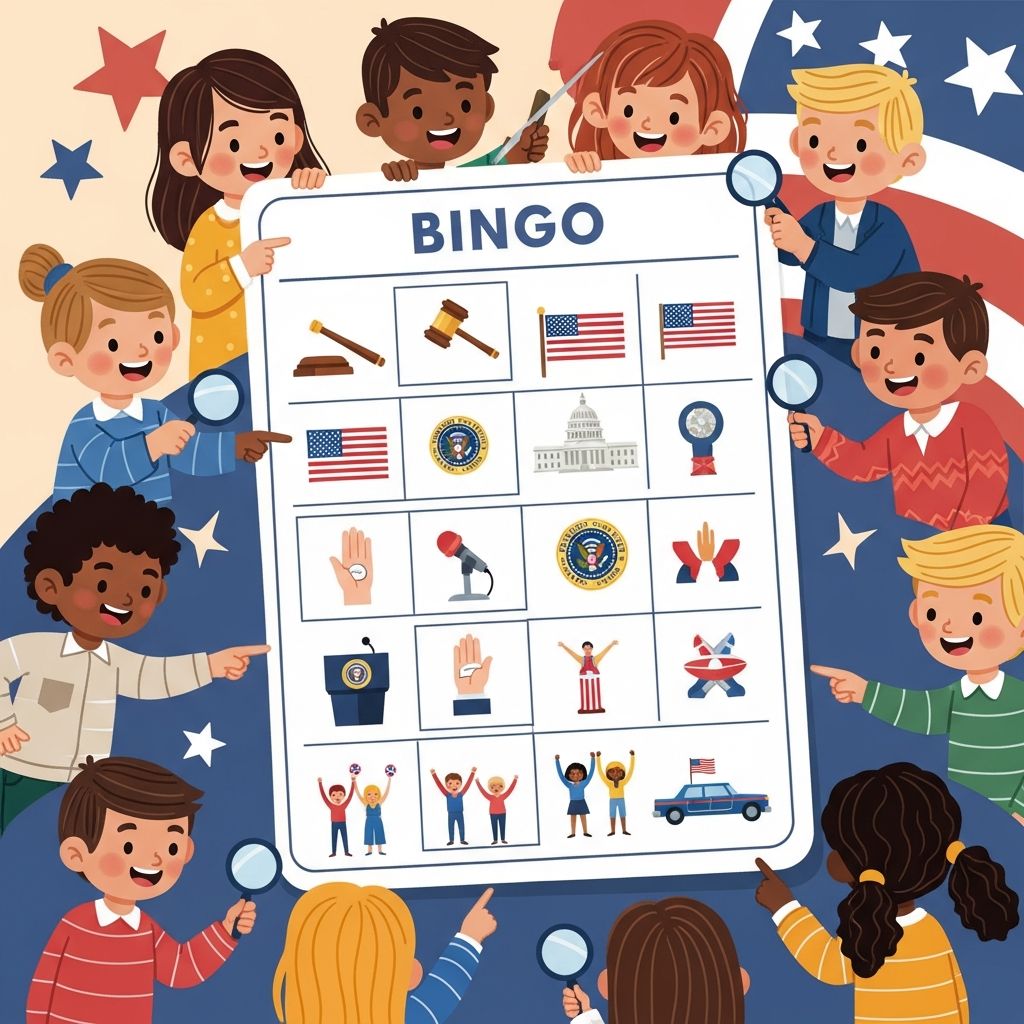
A bingo game turns passive watching into active observation. Instead of quietly enduring a long broadcast, kids hunt for images, words, and moments that appear during the ceremony. You can customize cards for different ages so that everyone at home can play together.
Use simple visuals and concrete items that are likely to appear on screen. Older children can handle abstract concepts like “promise,” “unity,” or “freedom,” while younger ones benefit from easily recognizable objects such as flags, crowds, or cameras. Laminate or slip cards into plastic sleeves if you want to reuse them for future inaugurations.
Sample Categories for Bingo Squares
Consider mixing visual items, spoken words, and actions so each part of the ceremony becomes meaningful:
- People: president, vice president, former presidents, military honor guards.
- Objects: flags, microphones, Bible or book, podium, cameras, security officers.
- Actions: hand raised during the oath, signing papers, waving to the crowd.
- Words: “promise,” “constitution,” “country,” “together,” “freedom.”
- Emotions: people smiling, clapping, or wiping away happy tears.
Let kids decorate their cards with markers or stickers before the ceremony begins. Personalizing the cards gives them ownership of the game and builds excitement for the event. They can even add their own square ideas, which creates a natural moment to talk about what they expect to see or hear.
How to Create Your Own Inauguration Bingo Cards
You do not need design software to make attractive, functional cards. A pencil, ruler, and a few sheets of paper are enough. If your family loves digital tools, you can also create a table in a word processor, print multiple cards, and then shuffle the items so each card is slightly different.
The table below offers a simple structure you can adapt. Adjust the size depending on how long you want the game to last and how old your children are.
| Row | Square 1 | Square 2 | Square 3 | Square 4 | Square 5 |
|---|---|---|---|---|---|
| Top | Flag | President speaks | Hand raised | Applause | Camera close-up |
| Second | Vice president | Song or music | Cheering crowd | Podium | Military uniforms |
| Middle | Former president | Supreme Court justice | Free space or star | Family member | Handshake |
| Fourth | Script on screen | Someone taking a photo | Close-up of the oath | Signing papers | Motorcade vehicle |
| Bottom | Word “united” | Word “America” | Word “future” | Word “freedom” | Word “together” |
Encourage kids to mark a square whenever they spot the image, word, or action on television. For early readers, draw simple icons next to the words or use only pictures. If you have mixed ages, offer varied difficulty levels so older children feel challenged and younger ones feel successful.
Rules and Variations for the Game
Once the cards are ready, agree on simple rules so the game runs smoothly. Decide what counts as a match (for example, does hearing the word “freedom” in a song line count, or only in the speech?). Clear expectations keep the focus on fun rather than arguing over details.
- Traditional bingo: First to mark five squares in a row horizontally, vertically, or diagonally wins.
- Corner pattern: The first person to fill all four corners of the card wins a small prize.
- Picture hunt: For very young children, allow them to aim for any three images instead of a full line.
- Team play: Pair a younger child with an older one so they collaborate instead of competing.
Offer small rewards like choosing dessert, picking the next family movie, or placing a homemade “Citizen of the Day” badge on the winner. Avoid rewards that focus on politics, and keep the tone light-hearted. You want children to associate civic events with curiosity and connection, not pressure.
Linking Bingo Squares to Real Civics Learning
Each square on the bingo card can become a mini-lesson. When a child marks a box, pause briefly to ask what they noticed, then offer a one-sentence explanation. Over the course of the broadcast, these tiny moments add up to a richer understanding of the presidency and government.
- When the oath appears, explain that it is a promise to follow the highest law of the country.
- When you see judges or justices, mention that they help decide if rules are being followed fairly.
- When the crowd cheers, point out that many people are there to witness history and support the peaceful start of a new term.
- When flags appear, connect them to shared identity and the idea that people can disagree and still belong to the same nation.
If children seem restless, do not force discussion. Let the game lead and keep explanations short. You can always return to specific moments later in the day with books, drawings, or simple crafts related to what they saw.
Additional Hands-On Activities to Pair with Bingo
Bingo is just one piece of a larger Inauguration Day experience. Adding crafts, writing prompts, and pretend play gives children multiple ways to process what they see. Choose one or two that fit your family’s energy level rather than trying to do everything at once.
- Create a “Family Oath” poster: After watching the presidential oath, invite everyone to write or draw one promise they want to keep this year, such as listening more carefully or helping with chores.
- Design a personal seal or logo: Provide circles cut from paper and ask kids to design a symbol that represents their values, like kindness, honesty, or courage.
- Write a kids’ inaugural speech: Encourage children to write or dictate a short speech about how they would make the world better if they were in charge of a school, team, or town.
- Host a mini parade at home: After the ceremony, march through the house with homemade flags or banners that show positive messages such as “We help each other.”
These activities reinforce the idea that leadership is not limited to high offices. Kids learn that anyone can practice responsibility, empathy, and problem-solving in their immediate community. Civics becomes less about distant buildings and more about everyday choices.
Keeping the Focus Nonpartisan and Age-Appropriate
In highly charged political times, families may worry about exposing children to anger or harsh language. A carefully planned Inauguration Day routine can model calm, respect, and listening, even when adults disagree about policies. The bingo game helps redirect attention to shared traditions instead of arguments between sides.
Consider muting the television during heated commentary or switching channels after the main events of the oath and speech. You can also record the ceremony and watch selected clips later, skipping anything that feels confusing or upsetting for young viewers. Remind kids that grown-ups often disagree about ideas, but that rules like voting and inauguration help everyone move forward peacefully.
Adapting Bingo for Different Settings
Although this guide focuses on family viewing at home, the same Inauguration Day bingo concept works beautifully in classrooms, after-school programs, and community centers. Educators can tailor cards to grade levels, learning goals, and time limits, making the activity a flexible tool for teaching civics.
- Classrooms: Use bingo during a live or recorded viewing, then follow up with reflection questions, short writing assignments, or small-group discussions.
- Libraries: Pair the game with a display of children’s books about presidents, elections, and citizenship.
- Community groups: Incorporate bingo into a larger event that includes crafts, a mock oath, or a “meet your local leaders” discussion.
Wherever it is used, the bingo game offers a low-pressure starting point for serious topics. When children feel engaged and successful in a fun activity, they are much more willing to ask questions and share opinions about how their country works.
Simple Tips for a Smooth Inauguration Day with Kids
Planning ahead prevents frustration and keeps the day from becoming overwhelming. A little structure goes a long way toward making the event enjoyable instead of exhausting. Keep expectations realistic and treat any learning that happens as a bonus.
- Choose in advance which parts of the ceremony you want to watch: the oath, a short portion of the speech, or the parade.
- Prepare snacks, crayons, and extra paper so kids can stay busy during slower moments.
- Let children take breaks and move around; they can still listen while they draw or build nearby.
- End on a positive note by asking each child to name one thing they noticed or learned.
When the day is over, tuck the bingo cards and any drawings into a folder or scrapbook. Future inaugurations will offer a chance to look back and see how children’s understanding has grown, turning a recurring national event into a personal family tradition.
Frequently Asked Questions
At what age can kids enjoy an Inauguration Day bingo game?
Even preschoolers can participate if cards use clear pictures instead of text. Older elementary students and preteens will appreciate more detailed squares that involve listening for specific words or noticing particular officials on screen.
How long should the bingo game last?
Plan for 15–30 minutes of focused play, especially with younger kids. You can run multiple short rounds rather than one long game so children can take breaks without missing the fun.
What if my child asks hard political questions?
Answer briefly and in age-appropriate language, and be honest when you do not know something. You can say that different adults have different opinions and that what matters most during the inauguration is that everyone respects the rules and the peaceful change of leaders.
Do we have to watch the entire inauguration?
Not at all. Many families choose to watch only the oath and a short section of the speech, then move to related games and activities. The goal is meaningful engagement, not endurance.
How can we include relatives or friends who live far away?
Share digital copies of your bingo cards and play together over video chat. Children will enjoy comparing which squares they marked and hearing what others noticed during the ceremony.