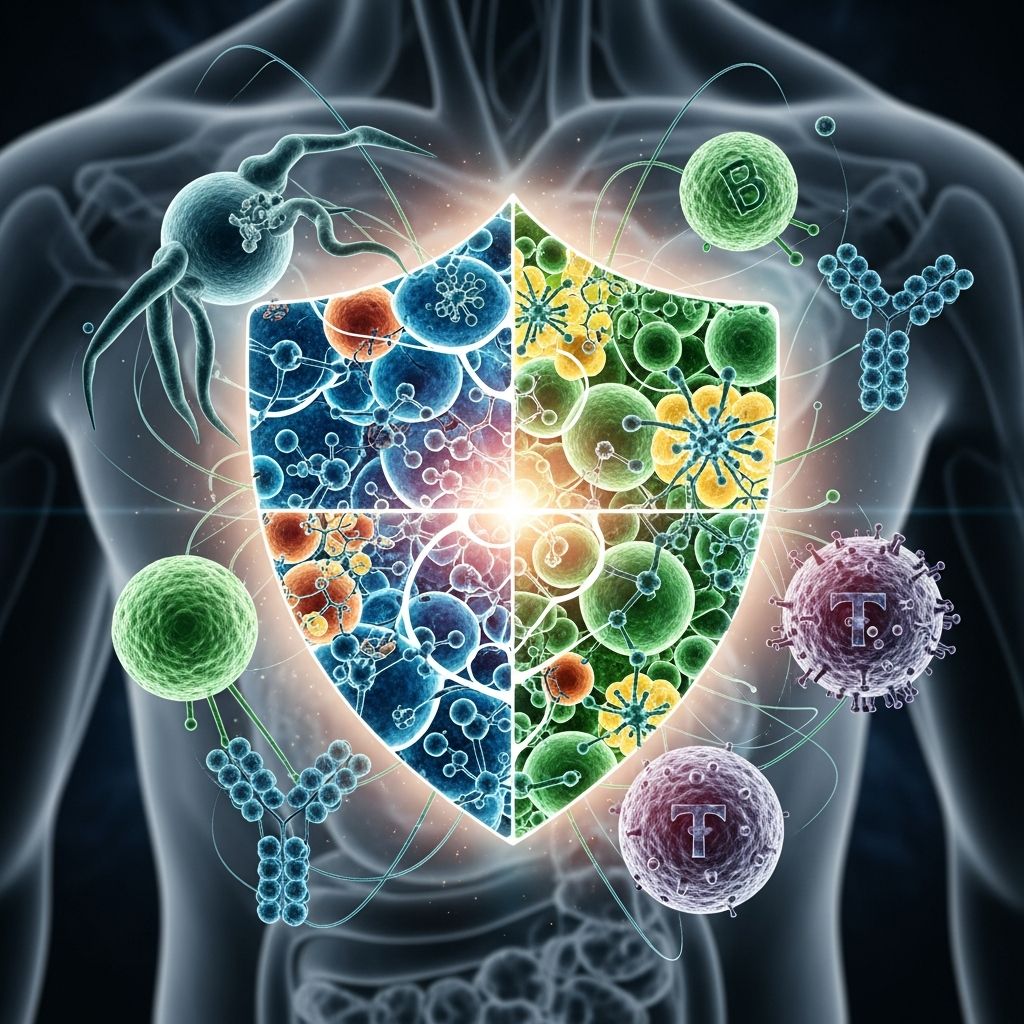
Every day, tiny germs try to get into your body. Most of the time, you do not even notice them because your immune system is busy protecting you. This special defense team is made of cells, tissues, and organs that work together to keep you from getting sick or to help you get better when you do.
What Is the Immune System?
The immune system is your body’s built-in security system. It looks for anything that does not belong, such as:
- Bacteria that can cause sore throats, ear infections, or pneumonia
- Viruses like the ones that cause colds or the flu
- Fungi that can cause skin rashes or infections
- Parasites such as certain worms or tiny organisms in water or soil
- Toxins, which are harmful chemicals made by some germs
The immune system’s job is to recognize these invaders, attack them, and protect the body’s own healthy cells at the same time.
First Line of Defense: Barriers That Block Germs
Before germs even get inside, your body has several ways to keep them out. These are called physical and chemical barriers and they are part of what scientists call the innate immune system — the protection you are born with.
Your Skin Shield
Your skin is like a full-body shield that covers everything on the outside. When your skin is not cut or broken, most germs cannot get past it.
- Natural oils on your skin can make it harder for some germs to grow.
- When you get a cut, the skin usually closes and heals to rebuild the shield.
Sticky Mucus and Tiny Hairs
Inside your nose, mouth, lungs, and digestive system, special linings help stop germs:
- Mucus is the sticky goo in your nose and throat that can trap dust and germs.
- Tiny hairs in your airways move mucus upward so you can cough or blow it out.
- Stomach acid can destroy many germs you swallow with food or drinks.
Tears, Saliva, and Other Secret Helpers
Some of your body’s liquids contain substances that can break down germs:
- Tears wash away dust and have chemicals that damage some bacteria.
- Saliva (spit) keeps your mouth moist and can help control some germs.
- Good bacteria in your intestines help block harmful germs from taking over.
The Two Main Teams: Innate and Adaptive Immunity
The immune system has two big teams that always work together: the innate (in-born) immune system and the adaptive (learning) immune system.
| Immune Team | What It Does | Speed | Memory? |
|---|---|---|---|
| Innate immunity | Fights germs in a general way (not specific to one germ). Includes skin, mucus, and certain fast-acting cells. | Very fast — often within minutes or hours. | No long-term memory of specific germs. |
| Adaptive immunity | Targets specific germs using antibodies and special white blood cells. | Slower at first — can take several days. | Has memory, so later responses to the same germ are much faster. |
White Blood Cells: The Immune System’s Heroes
White blood cells, also called leukocytes, are some of the most important fighters in your immune system. They travel in your blood and in a clear fluid called lymph.
There are many types of white blood cells, but two key groups are:
- Phagocytes – cells that can swallow and digest germs.
- Lymphocytes – cells that help your body recognize and remember specific invaders.
Phagocytes: The Clean-Up Crew
Phagocytes are like tiny vacuum cleaners inside your body. When they find germs, they surround them and break them apart.
- They act quickly as part of the innate immune system.
- They also help send signals that tell other immune cells to join the fight.
Lymphocytes: The Planners and Specialists
Lymphocytes mostly belong to the adaptive immune system. Two main kinds are:
- B cells – make antibodies, special proteins that stick to germs and mark them for destruction.
- T cells – help control the immune response and can destroy infected cells.
T cells include different roles, such as:
- Helper T cells that tell B cells and other T cells when to get active.
- Killer (cytotoxic) T cells that directly destroy cells that are infected with viruses or have become abnormal.
Antibodies: Tiny Tags That Help Take Down Germs
When your body meets a new germ, your B cells can be triggered to make antibodies. Antibodies are Y-shaped proteins that fit onto a specific germ like a key in a lock.
- They stick to the germ’s surface so immune cells can easily spot it.
- They can block germs from attaching to your body’s cells.
- They stay in your body after an infection, sometimes for years.
Because of antibodies, your immune system can respond much faster if the same germ tries to infect you again. This long-lasting protection is called immunity.
Where Immune Cells Are Made and Stored
Immune cells are created and trained in several organs and tissues spread throughout your body.
- Bone marrow – soft tissue inside your bones where most blood cells, including white blood cells, are made.
- Thymus – a small organ in your upper chest where certain T cells mature.
- Lymph nodes – small, bean-shaped structures that filter lymph and hold white blood cells ready to fight.
- Spleen – an organ on the left side of your belly that filters blood and helps fight some infections.
- Tonsils and adenoids – tissues near your throat and nose that help watch for germs entering through the mouth and nose.
How the Immune System Fights an Infection
When a germ gets past your body’s barriers and starts to cause trouble, your immune system follows several steps:
- Spotting the invader – Cells notice something foreign, like a virus or bacteria, and send alarm signals.
- Calling for help – Chemical messages attract more white blood cells to the problem area.
- Attacking – Phagocytes swallow germs, T cells destroy infected cells, and B cells release antibodies.
- Remembering – Some B and T cells turn into memory cells that stay in your body and help you react faster next time.
This whole process is why you might feel tired, get a fever, or notice swelling around a cut — it means your immune system is busy working.
How Vaccines Train Your Immune System
Vaccines are a safe way to give your immune system practice fights. They contain weakened, killed, or small pieces of a germ so your body can learn to recognize it.
- Your immune system sees the germ piece as an antigen (something foreign).
- B cells make antibodies against that antigen.
- Memory cells are formed, just like after a real infection.
Later, if the real germ tries to infect you, your immune system is already prepared and can respond much faster, often stopping you from getting seriously sick.
How the Immune System Changes as You Grow
Babies are not born with fully trained immune systems. Over time, kids build stronger defenses by meeting new germs and getting vaccines.
- At birth – Babies get some antibodies from their mothers during pregnancy and, if breastfed, through breast milk.
- Childhood – Kids meet many germs at home, school, or daycare, which helps their immune systems learn.
- Later in life – The immune system has a large library of memory cells from past infections and vaccines.
Helping Your Immune System Stay Strong
There is no magic food or pill that makes your immune system perfect, but everyday habits can help it work its best.
Healthy Habits That Support Immunity
- Getting enough sleep – During sleep, your body makes and releases important immune cells and proteins. Not enough sleep is linked to a higher chance of catching colds.
- Eating a balanced diet – Fruits, vegetables, whole grains, and protein-rich foods provide vitamins and minerals that support immune cells.
- Being active – Regular physical activity helps blood and lymph flow, moving immune cells around the body.
- Staying up to date on vaccines – Vaccines keep your immune memory fresh against serious diseases.
- Not smoking and avoiding secondhand smoke – Smoke can damage the lungs and weaken local defenses.
Hygiene: Simple Ways to Block Germs
Stopping germs before they get inside your body gives your immune system less work to do.
- Wash your hands with soap and water for about 20 seconds, especially after using the bathroom, before eating, and after playing outside.
- Try not to touch your eyes, nose, and mouth with unwashed hands.
- Cover your coughs and sneezes with a tissue or your elbow.
- Keep cuts clean and covered until they heal.
When the Immune System Has Problems
Most of the time, your immune system does a great job. Sometimes, though, it can have trouble:
- Weak or missing parts – Some kids are born with immune systems that do not work properly. These are called primary immunodeficiency conditions and can make infections more common or more serious.
- Overreactions – In allergies, the immune system strongly reacts to things that are usually harmless, like pollen or certain foods.
- Attacking the body’s own cells – In autoimmune diseases, the immune system mistakes healthy cells for invaders and attacks them.
If someone gets sick very often, has infections that are hard to treat, or feels unwell for a long time, a doctor may check how their immune system is working.
Fun Immune System Facts
- Your body makes millions of new white blood cells every day to replace old ones.
- A slight fever is one way your body makes it harder for some germs to grow.
- You can have mild infections without noticing them because your immune system clears them quickly.
- Not all germs are bad — some bacteria in your gut help your immune system stay balanced.
Frequently Asked Questions (FAQs)
Why do I still get sick if I have an immune system?
Even a strong immune system cannot block every single germ. Some germs are new to your body, some are very powerful, and sometimes your immune system is a bit tired. Getting sick once in a while is normal, and each infection helps your immune system learn and get better at fighting in the future.
Can I boost my immune system with vitamins or special drinks?
Most healthy kids get all the nutrients they need from a balanced diet and do not need special drinks or extra supplements. Doctors usually recommend focusing on good sleep, healthy food, physical activity, and vaccines instead of trying quick “boosters.”
Are all germs bad?
No. Many germs are harmless, and some are helpful. For example, good bacteria in your intestines help you digest food and support your immune system. The immune system mainly targets germs that can cause disease.
Why do my lymph nodes swell when I’m sick?
Swollen lymph nodes, like small bumps under your jaw or in your neck, usually mean your immune system is actively fighting an infection. Lymph nodes fill with extra immune cells and trapped germs, which makes them feel larger than usual.
Can stress affect my immune system?
Long-lasting stress can make it harder for the immune system to work at its best. Relaxing activities, time with friends and family, exercise, and enough sleep can all help keep stress levels healthier and support your body’s defenses.
References
- Immune System Overview — University of Rochester Medical Center, Golisano Children’s Hospital. 2023-05-10. https://www.urmc.rochester.edu/childrens-hospital/allergy/immune-system-overview.aspx
- How to Boost Your Child’s Immune System — Ann & Robert H. Lurie Children’s Hospital of Chicago. 2023-02-14. https://www.luriechildrens.org/en/blog/how-to-boost-your-childs-immune-system/
- All About the Immune System — Nemours KidsHealth for Parents. 2022-08-01. https://kidshealth.org/en/parents/immune.html
- Your Immune System (for Kids) — Nemours KidsHealth for Kids. 2022-08-01. https://kidshealth.org/en/kids/immune.html
- In Brief: The Innate and Adaptive Immune Systems — Institute for Quality and Efficiency in Health Care (IQWiG), via NCBI Bookshelf. 2015-03-26. https://www.ncbi.nlm.nih.gov/books/NBK279396/
- Immune System Explained — Better Health Channel, Victorian State Government. 2023-06-01. https://www.betterhealth.vic.gov.au/health/conditionsandtreatments/immune-system
- Immune System — Britannica Kids. 2021-09-01. https://kids.britannica.com/kids/article/immune-system/353285