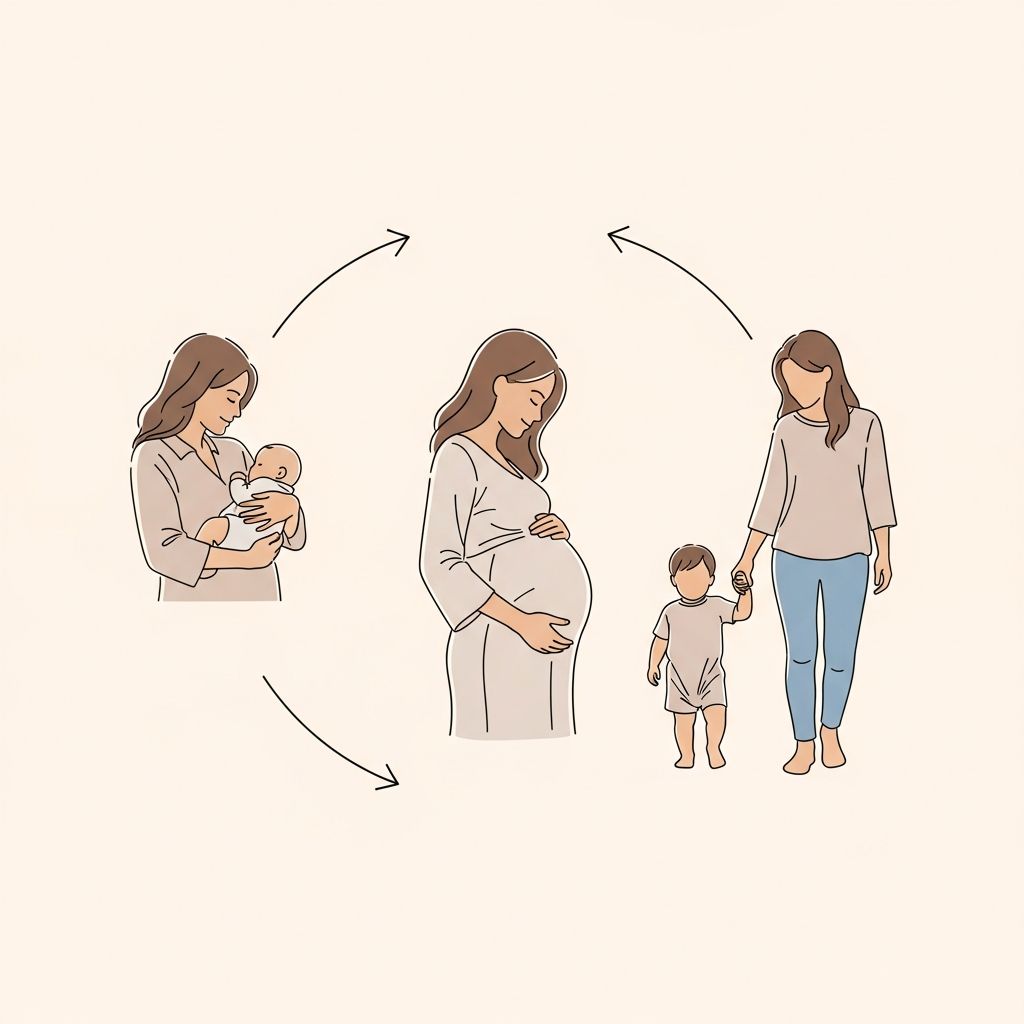
Determining the right time to welcome a new child involves balancing personal readiness, family dynamics, and medical advice. Health organizations recommend waiting 18 to 24 months after a live birth before conceiving again to allow maternal recovery and reduce risks, though individual factors play a key role.
Understanding Interpregnancy Intervals
The interpregnancy interval is the time from one birth to the conception of the next child, distinct from the age difference between siblings. This period is crucial for replenishing nutrients, healing the body, and stabilizing mental health post-delivery. Short intervals under 18 months heighten risks like preterm birth and low birth weight, while gaps exceeding five years may introduce other challenges such as fertility declines in older parents.
Medical consensus from bodies like the American College of Obstetricians and Gynecologists (ACOG) emphasizes at least 18 months for optimal outcomes. This window supports better nutrition, emotional bonding with the first child, and resolution of any postpartum conditions.
Health Implications of Close Spacings
Pregnancies spaced less than 18 months apart, especially under six months, correlate with elevated maternal and infant risks. These include preterm delivery before 37 weeks, infants with low birth weight, maternal anemia, and rare but serious issues like uterine rupture in subsequent labors.
- Preterm birth risk: Babies born too soon face breathing difficulties and long-term developmental hurdles.
- Low birth weight: Associated with nutritional deficits from inadequate maternal recovery time.
- Maternal strain: Physical exhaustion and emotional fatigue from overlapping demands of newborns.
Experts note these risks peak with intervals under six months but persist up to 18 months. Double board-certified OB-GYN Kecia Gaither advocates for 18-24 months to mitigate them effectively.
Advantages and Drawbacks of Narrow Age Gaps
Children born 12-24 months apart share similar developmental stages, turning siblings into instant companions. Parents often appreciate ‘getting the hard parts over with’ simultaneously—diapers, tantrums, and teething align, streamlining logistics once past infancy.
| Pros of 12-24 Month Gaps | Cons of 12-24 Month Gaps |
|---|---|
| Shared milestones ease parenting routines | Intense physical and emotional demands on parents |
| Lifelong close friendships and playmates | Reduced one-on-one attention for older child |
| Similar interests in toys and activities | Higher health risks for mother and baby |
However, the older child’s lingering infancy means divided attention, potentially sparking regression like bedwetting. Parental bandwidth stretches thin without the regulatory support young children crave.
Benefits of Wider Spacings
Gaps of three years or more let the older child gain independence—potty trained, in school, capable of grasping a sibling’s arrival. Parents enjoy focused bonding phases per child, easing transitions.
- Individual attention: Ample one-on-one time fosters secure attachments.
- Older sibling maturity: Helps with baby care, reducing parental load.
- Maternal optimization: Time to address conditions like gestational diabetes or hypertension.
Yet, large gaps over four years mimic ‘only child’ phases anew, with teens resenting baby interruptions to their freedoms. Natalie V., a mother of three, found three years ideal after experiencing both close and wider spacings.
Medical Recommendations and Variations
ACOG advises 18-24 months ideally, not exceeding five years, to balance risks. Mayo Clinic echoes this, adjusting for high-risk cases: older mothers over 35, C-section histories, preterm labor, preeclampsia, or IVF pregnancies may need longer waits.
| Group | Recommended Minimum Wait |
|---|---|
| Standard healthy pregnancies | 18-24 months |
| Post C-section or preterm history | 24+ months |
| Mothers over 35 | Individualized, often longer |
| Preeclampsia or stillbirth survivors | Consult specialist |
University of Utah Health stresses physical and mental recovery, plus chronic condition management, in their spacing guidelines.
Real-World Family Patterns
U.S. data from the CDC’s National Survey of Family Growth shows 17.5% of families space first and second children 13-24 months apart, matching 17.2% at 25-36 months—common choices reflecting practical realities. Parents like Jillian D. target 2.5 years for playmate potential without total overlap.
Trends vary culturally and economically; some embrace close spacings for built-in support networks, others prioritize career or financial stability with wider gaps.
Factors Influencing Your Decision
Physical Recovery
Postpartum bodies need time to rebuild iron stores, uterine strength, and hormonal balance. Breastfeeding depletes nutrients, amplifying short-spacing risks.
Emotional and Mental Health
Postpartum mood disorders affect up to 20% of mothers; adequate spacing prevents exacerbation from compounded stress.
Financial and Logistical Readiness
Double childcare costs, gear duplication, and sleep deprivation timing impact budgets. Career pauses compound with close births.
Partner and Support Dynamics
Shared parenting loads lighten with mature older children; assess relationship resilience.
Sibling Relationship Dynamics
Close ages breed competitive bonds or unbreakable alliances; wider gaps promote mentor-like roles. No universal ‘best’ exists—5+ year gaps alter dynamics significantly, per experts.
Practical Planning Tips
- Track cycles post-birth; effective contraception until ready.
- Consult OB-GYN early for personalized timelines.
- Prioritize nutrition, exercise, mental health check-ins.
- Discuss family visions openly with partners.
- Prepare older children via books, ultrasounds for inclusion.
Frequently Asked Questions
What’s the minimum safe time between pregnancies?
At least 18 months from birth to next conception minimizes risks like preterm birth, per ACOG guidelines.
Are two kids in diapers at once manageable?
Possible for resilient families, but expect high exhaustion; many prefer staggering phases.
Does spacing affect sibling rivalry?
Close ages may intensify competition initially; wider gaps often lead to protective bonds.
Can I plan spacing after miscarriage?
Wait one full cycle typically, but consult your doctor for tailored advice.
Is 3 years a good age gap?
Often ideal—older child understands changes, parents recover fully.
References
- Baby Spacing: The Optimal Amount of Time Between Pregnancies — University of Utah Health. 2024-03. https://healthcare.utah.edu/healthfeed/2024/03/baby-spacing-optimal-amount-of-time-between-pregnancies
- Family planning: Get the facts about pregnancy spacing — Mayo Clinic. https://www.mayoclinic.org/healthy-lifestyle/getting-pregnant/in-depth/family-planning/art-20044072
- Child Spacing: Is There an Ideal Age Gap Between Children? — Healthline. https://www.healthline.com/health/birth-control/child-spacing-gap-between-children
- Best Age Gap Between Kids — The Bump. https://www.thebump.com/a/best-age-gap-between-kids
- How Long Most Parents Wait Between Children — FiveThirtyEight / CDC National Survey of Family Growth. https://fivethirtyeight.com/features/how-long-most-parents-wait-between-children/