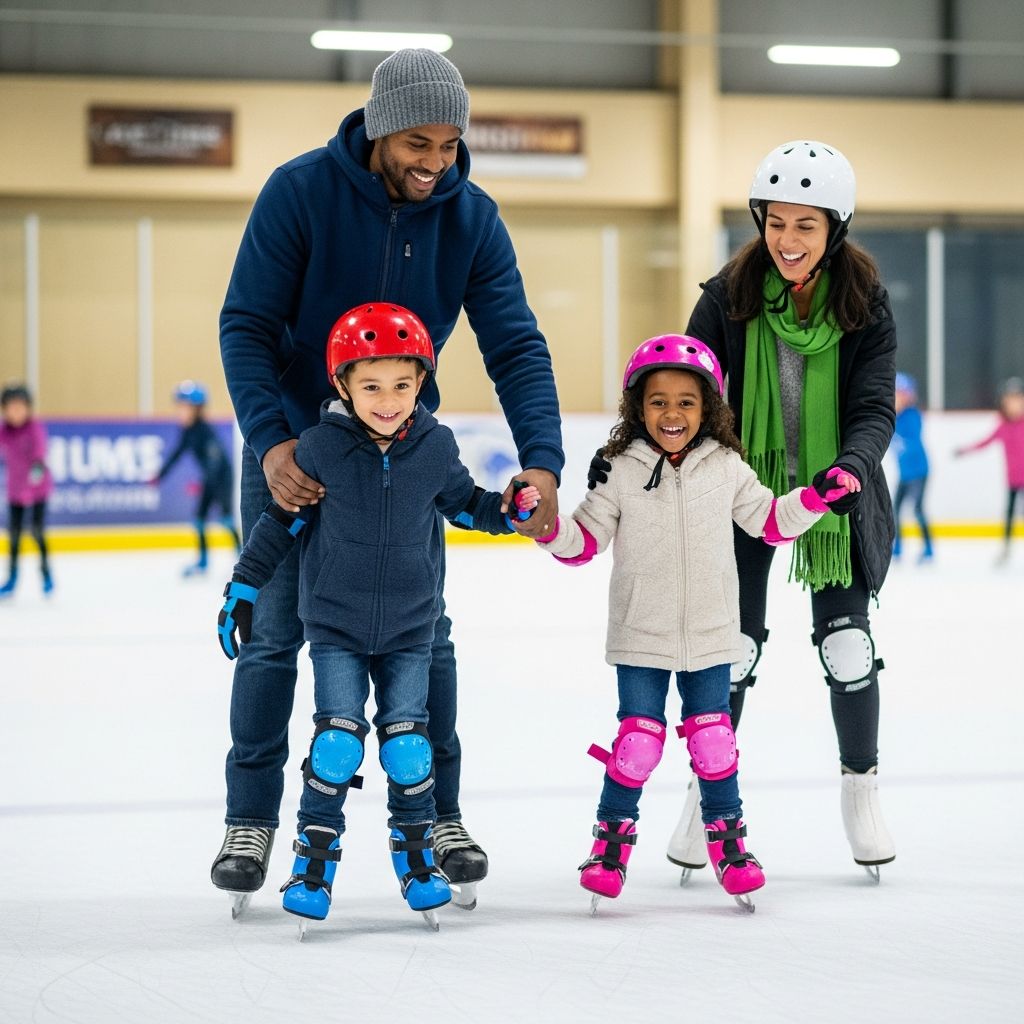
Winter brings thrilling opportunities for family bonding on the ice, but safety must come first to turn gliding into joyful memories rather than mishaps. This guide equips parents with practical strategies to protect children during ice skating sessions, drawing from proven practices to cover equipment choices, skill-building, and on-ice behavior.
Selecting the Right Equipment for Protection and Performance
Proper gear forms the cornerstone of safe skating. Ill-fitted or inadequate equipment heightens injury risks, particularly for novices prone to frequent falls.
- Skates: Opt for skates that hug the foot snugly without pinching. Oversized models fail to stabilize ankles, inviting twists, while undersized ones rub blisters and cramp toes. Blades demand sharpness to slice cleanly through ice; blunt edges snag ruts, triggering slips. Rental users should inspect blades for wear, feeling distinct edges along their length without lengthwise stroking to avoid cuts.
- Protective Padding: Helmets shield heads from impacts, essential for youth and beginners. Wrist guards, knee pads, and elbow pads cushion extremities during tumbles, distributing force to avert fractures or sprains.
- Clothing Layers: Layer flexibly for mobility in chilly rinks. Waterproof gloves or mittens guard hands from cold and abrasions. Thin socks prevent blisters inside boots, and hats retain body heat.
Lacing technique matters: Tighten progressively from toe to ankle for support, ensuring circulation by wiggling toes. These choices enhance control and comfort, setting beginners up for success.
Preparation Routines to Prime Muscles and Minds
Adequate warm-up mitigates strains by loosening muscles before blade contact. Dedicate 5-10 minutes to dynamic stretches like leg swings, arm circles, and knee bends off-ice. This routine boosts blood flow, especially vital in cold environments where tissues stiffen.
Mentally rehearse fundamentals: Visualize balanced posture with bent knees and forward gaze. Families benefit from group warm-ups, fostering shared readiness and reducing intimidation for kids.
Fundamental Techniques for Novice Skaters
Building core skills curbs accidents. Progress methodically from stance to propulsion.
| Skill | Description | Benefits |
|---|---|---|
| Athletic Stance | Feet shoulder-width, knees flexed softly, weight centered over toes, arms loose at sides. | Lowers gravity center for stability, eases weight shifts. |
| Marching Drill | Stand still, lift knees alternately as if marching, blades flat on ice. | Familiarizes blade feel, builds leg strength without forward motion. |
| V-Push Glide | Toes out in V, push inside edges outward gently, glide on one foot then alternate. | Initiates smooth propulsion, teaches edge awareness. |
| Snowplow Stop | Toes inward like pizza slice, heels out, scrape blades to generate friction. | Controlled halt prevents collisions, vital for crowded rinks. |
Practice these near rink edges, using barriers for support. Consistent repetition ingrains muscle memory, transforming wobbly starts into confident glides.
Mastering Safe Falling and Recovery
Falls are inevitable for learners; proper form minimizes harm. Teach children these sequences on mats before ice trials.
- Backward Fall: Tuck chin to chest, arms across body, land padded bottom-first like sitting in an invisible chair. Avoid arm extension to prevent shoulder dislocations.
- Forward Fall: Bend elbows slightly, extend arms forward to buffer face and chest, roll shoulders to dissipate energy. Keep hands blade-free.
- Recovery: Roll to side, assume kneel with hands on ice for leverage, rise using legs while grabbing rail if nearby. Clear path swiftly to evade traffic.
Prohibit grabbing others; it cascades into dual injuries. Drills build reflexes, reducing fall frequency over time.
Navigating Rink Dynamics and Etiquette
Rinks operate like highways: Predictable flow preserves safety. Counterclockwise circulation dominates; join seamlessly without diagonal cuts.
- Scan left-right before entry.
- Maintain arm’s-length spacing from others.
- Hug boards if unsteady, practicing stops against padding.
- Yield to faster skaters; novices claim inner lanes.
- Supervise young ones vigilantly, especially amid crowds.
Outdoor venues demand extra caution: Verify ice thickness (minimum 4 inches for single skaters per safety standards), shun cracks or thin spots, and skate solo or in pairs on approved surfaces. Reservations curb overcrowding.
Benefits of Structured Lessons and Coaching
Group or private instruction accelerates safe proficiency. Certified coaches dissect postures, correct errors, and instill habits overlooked in self-teaching. Beginners gain rapid balance mastery, slashing injury odds by 50% in initial sessions per rink studies.
Family classes promote unity, with siblings motivating each other. Even one lesson equips foundational safety knowledge, like emergency stops under duress.
Common Hazards and Avoidance Strategies
Beyond falls, risks include blade lacerations (rare but serious), hypothermia from inadequate dress, and collisions from erratic paths. Counter with blade awareness—never skate shoeless—and thermal layers. Inspect rinks for debris; report hazards promptly.
For figure skating variants, add blade covers off-ice. Speed skaters prioritize helmets with face cages.
Age-Specific Guidance for Family Skating
- Toddlers (3-5): Use supportive trainers or hold hands constantly; short sessions (20 mins) with full padding.
- Kids (6-12): Independent with supervision; mandate helmets, encourage lessons.
- Teens/Adults: Model best practices; refresh skills yearly.
Frequently Asked Questions (FAQs)
What protective gear is non-negotiable for kids?
Helmets and padding for wrists, knees, elbows are must-haves for young or new skaters to protect against common impact zones.
How do I know if skates fit correctly?
Feet should feel secure with room for toe wiggle; ankles locked without pain. Test by standing and flexing.
Is outdoor ice safe for skating?
Only on designated, thick ice (4+ inches); check for uniformity and avoid unverified ponds.
Should beginners take lessons?
Absolutely—structured guidance prevents bad habits and boosts confidence swiftly.
How to stop safely as a beginner?
Use snowplow: Toes in, heels out, forming a V scrape for friction-based halt.
References
- Safety Tips: Ice Skating — Nemours KidsHealth. 2023. https://kidshealth.org/en/parents/safety-ice-skating.html
- Gliding into Safety: Tips to Stay Injury-Free While Ice Skating — Baylor College of Medicine Blogs. 2023-12-26. https://blogs.bcm.edu/2023/12/26/gliding-into-safety-tips-to-stay-injury-free-while-ice-skating/
- 6 Ice Skating Tips For Beginners — The St. James. 2023. https://www.thestjames.com/blog/6-ice-skating-tips-for-beginners-the-st-james
- Ice Skating Safely: The Do’s and Don’ts of Preventing Injury — Core Orthosports. 2023. https://www.coreorthosports.com/ice-skating-safely-the-dos-and-donts-of-preventing-injury/
- Ice Skating Safety — National Safety Council via Naugatuck CT Gov. 2023. https://www.naugatuck-ct.gov/filestorage/119/364/409/Ice_Skating_Safety_NSC.pdf