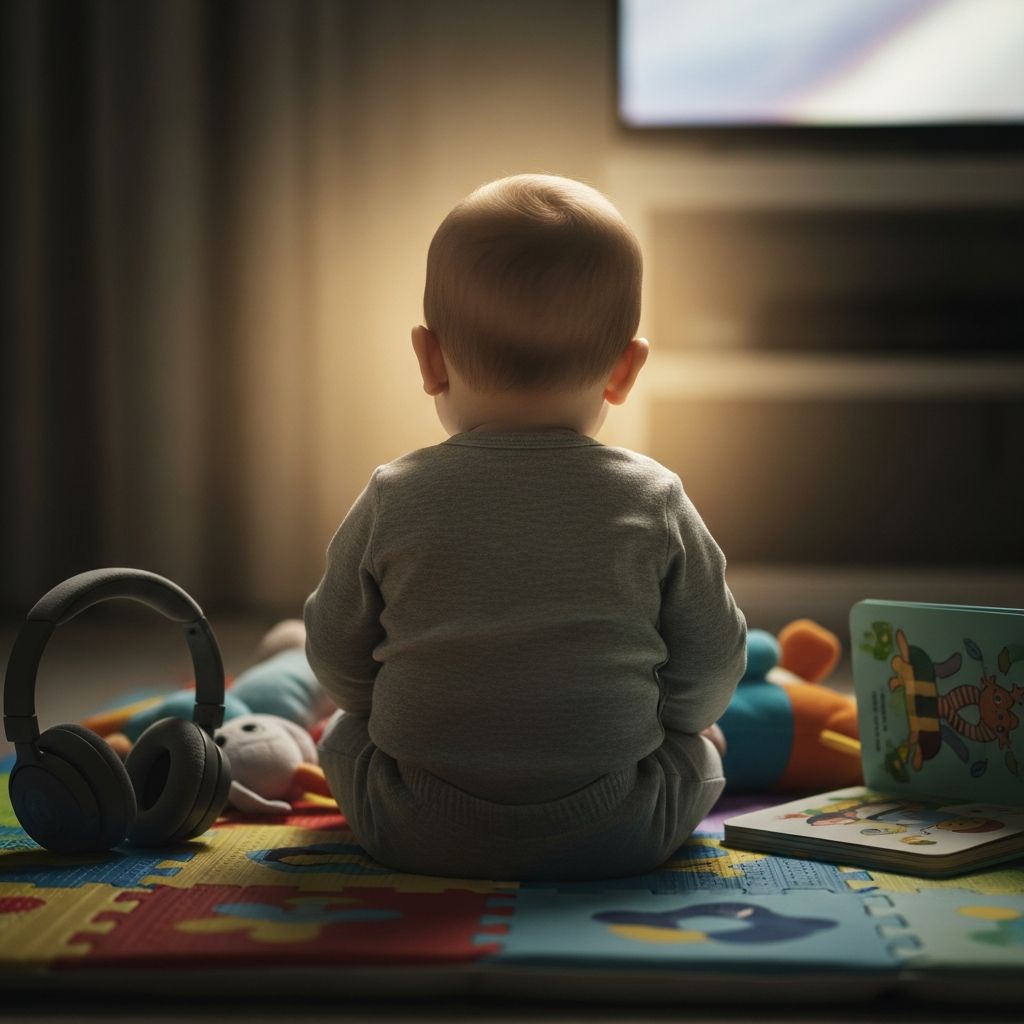
Exposure to television audio in the background or directly can influence a baby’s early development in complex ways. Recent studies reveal potential risks to sensory processing, attention, and parent-child interactions, though some older research shows neutral effects on cognition when factors like family background are considered.
Understanding Sensory Processing in Babies
Sensory processing refers to how infants interpret and respond to stimuli from their environment, including sights, sounds, touches, and smells. Healthy processing allows babies to engage appropriately with the world, fostering exploration and learning. Disruptions can lead to over- or under-sensitivity, impacting daily behaviors.
Research from Drexel University indicates that TV viewing in the first two years correlates with atypical sensory responses by age 33 months. Babies with screen exposure at 12 months showed a 105% higher chance of low registration—failing to notice or respond to stimuli like their name being called.
- Low registration: Reduced responsiveness to surroundings, appearing disengaged.
- Sensation seeking: Craving intense stimuli, like excessive touching or noise.
- Sensory sensitivity: Overreaction to lights, sounds, or textures.
- Sensation avoiding: Efforts to block overwhelming inputs, such as covering ears.
Each extra hour of TV at 18 or 24 months raised odds of these issues by 20-23%, even after adjusting for preterm birth, caregiver education, and playtime.
Brain Activity Changes from Early TV Exposure
Screen time alters brain wave patterns in infants. A Singapore study tracking over 400 children found that more TV at 12 months linked to elevated theta waves versus beta waves at 18 months. Higher theta/beta ratios signal lower alertness and inattention risks.
By age 9, these infants faced executive function challenges, like impulse control and focus. Factors such as parental interaction quality likely amplify effects, as active babies might get more screen time during routines.
| Age of Exposure | Screen Time Impact | Observed Outcome |
|---|---|---|
| 12 months | Increased hours | Stronger theta waves, inattention |
| 18 months | EEG measured | Executive function delays by age 9 |
| General | Background TV | Reduced parent talk, passive interactions |
Background TV specifically reduces triadic interactions (infant-caregiver-object) and boosts solitary play, persisting beyond socioeconomic factors.
Language Development and Interaction Disruptions
TV noise in the home diminishes parent-child verbal exchanges, critical for vocabulary growth. When TVs play, caregivers speak less and interact more passively, stunting infants’ language skills.
Studies link infant TV viewing to lower cognitive and language scores at age 3, though adjustments for maternal factors neutralize some associations. Background exposure harms play engagement for both child and parent, fostering dysregulation like poor soothability and attention lapses.
Broader Developmental Concerns
Beyond senses and speech, early TV ties to autism-like traits, ADHD risks, sleep issues, and problem-solving delays due to sensory hyperconnectivity. Repetitive behaviors in autism correlate with these processing atypicalities.
Even non-interactive viewing (TV/DVD) shows effects; interactive video chats may differ per AAP. Parents often turn to screens from fatigue, lacking alternatives.
Official Guidelines for Media in Infancy
The American Academy of Pediatrics (AAP) advises no screens for children under 18-24 months, except live video chats. For ages 2-5, limit to 1 hour daily of high-quality content.
These stem from evidence of developmental harms outweighing unproven benefits. Prioritize human interaction over passive media.
Practical Approaches for Parents
Replace TV with enriching alternatives to support growth:
- Daily reading aloud to build language and bonding.
- Sensory play with textures, sounds, and toys for processing skills.
- Outdoor walks or caregiver-led games for attention and executive function.
- Screen-free zones during meals and bedtime to enhance focus and sleep.
- Model healthy habits; co-view if introducing media later, discussing content.
For toddlers showing sensory signs, reduce screens and consult occupational therapists for targeted exercises.
Does Any TV Help Infant Learning?
Claims of educational baby media lack robust support. No controlled trials prove broadcast TV benefits under-3s, and DVDs may drop language scores by 17 points per hour.
Human faces and voices drive learning best; fast-paced screens overwhelm developing brains.
Frequently Asked Questions
Is any screen time okay for babies under 1 year?
No, AAP recommends avoiding screens entirely except live chats, as even brief exposure heightens sensory risks.
What if TV is just on in the background?
Background TV cuts parent talk by up to 770 words/hour and disrupts infant focus, harming language and play.
Can TV ever benefit my toddler’s development?
Limited, co-viewed quality programming after age 2 may help, but direct interaction trumps passive watching.
How much screen time is safe at 24 months?
AAP caps at 1 hour/day for 2-5 year-olds; each extra hour raises sensory issues by 20%.
What signs suggest my baby has sensory processing issues?
Disengagement, overstimulation from noise/lights, or sensation seeking warrant professional evaluation.
Future Research Directions
Ongoing studies explore mechanisms like brain hyperconnectivity and cultural variations in dysregulation. Longitudinal data will clarify if screen reduction reverses effects.
Parents: Track exposure, opt for interactive play. Healthy starts yield lasting gains.
References
- Exposure to TV may affect babies’ and toddlers’ ability to process the world around them, new study suggests — Medical Xpress / Drexel College of Medicine. 2024-01-17. https://medicalxpress.com/news/2024-01-exposure-tv-affect-babies-toddlers.html
- Putting Your Toddler in Front of the TV? You Might Hurt Their Ability… — Drexel University. 2024-01-17. https://drexel.edu/news/archive/2024/January/Putting-Toddler-In-Front-of-TV-Atypical-Sensory
- Background TV and infant-family interactions: Insights from home… — PubMed / International Congress of Infant Studies. 2024. https://pubmed.ncbi.nlm.nih.gov/38700093/
- Babies and screen time: New research calls for caution — Boston Children’s Hospital Answers. N/A. https://answers.childrenshospital.org/screen-time-infants/
- The effects of screen time on children: The latest research… — CHOC Health. N/A. https://health.choc.org/the-effects-of-screen-time-on-children-the-latest-research-parents-should-know/
- Considering the impacts of television exposure on toddlers’ dysregulation… — Child and Family Blog. N/A. https://childandfamilyblog.com/considering-the-impacts-of-television-exposure-on-toddlers-dysregulation-does-culture-matter/
- Television Viewing in Infancy and Child Cognition at 3 Years of Age… — PMC / Pediatrics. 2014. https://pmc.ncbi.nlm.nih.gov/articles/PMC4042392/