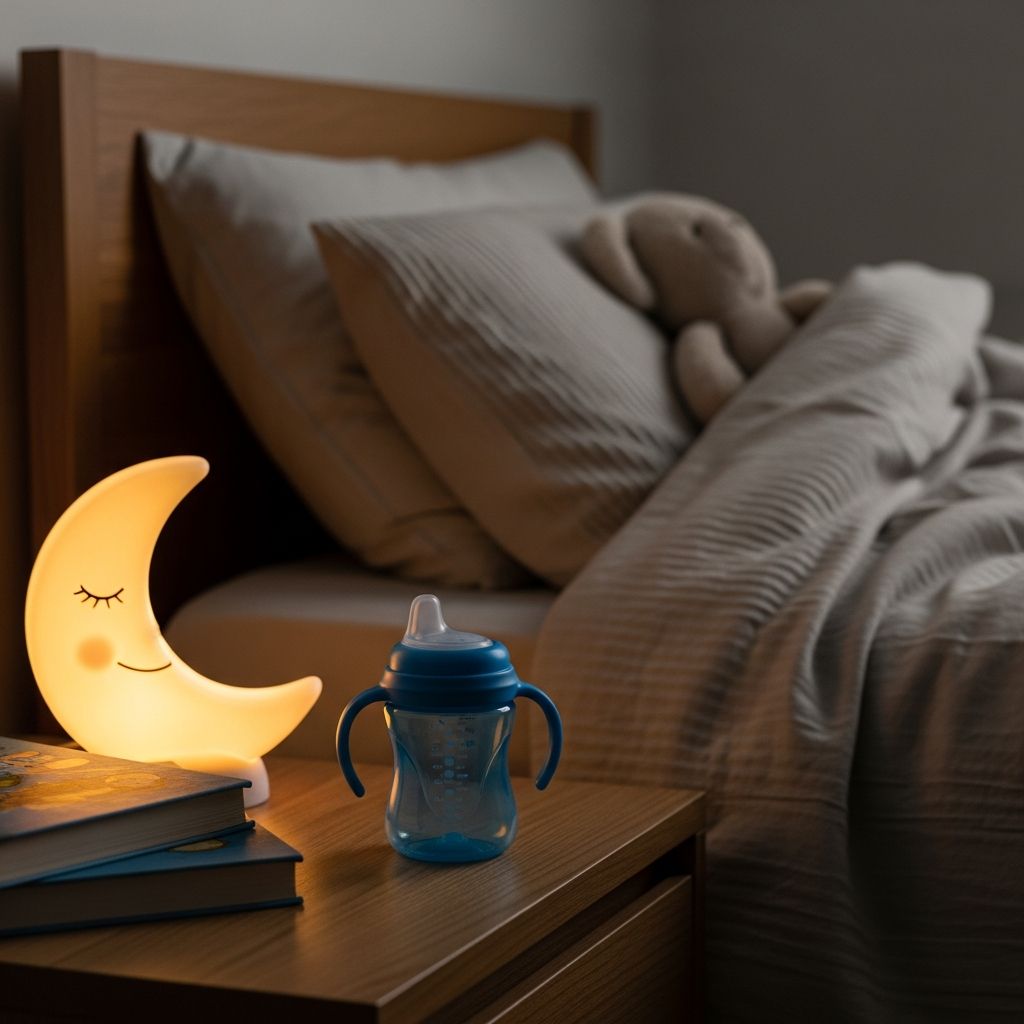
Many toddlers fall asleep every night with a sippy cup in hand, and for exhausted parents it can feel like the only thing standing between everyone and total meltdown. Yet relying on a bedtime sippy cup can quietly create dental, sleep, and behavior issues over time. This guide explains why the habit is hard to break, how to transition gently, and what to do when your child protests.
Why Bedtime + Sippy Cup Becomes Such a Strong Habit
From a toddler’s point of view, the bedtime cup is more than a drink; it is a predictable signal that sleep is coming and a comforting way to wind down. Over many nights, the brain pairs the feeling of sucking and sipping with falling asleep, so the cup begins to feel essential, not optional. Parents understandably reinforce the pattern because it works quickly and seems kinder than listening to prolonged crying.
On top of that, evenings are when everyone’s energy is lowest, which makes it much harder to experiment with new routines. It is common for parents to promise themselves they will change things “soon,” only to find that weeks and months pass with the same bedtime cup ritual still in place.
Hidden Downsides of the Bedtime Sippy Cup
While a bedtime cup can look harmless, recurring night-time sipping can create a cluster of issues over time. The biggest concern is usually oral health, because sugars in milk and juice can sit on the teeth for hours overnight when saliva flow is lower. This prolonged contact can encourage cavity-causing bacteria and early enamel damage.
There can also be indirect effects on sleep and behavior. Children who depend on a cup to fall asleep may wake fully each time they lose it or run out of drink, and then call for a refill. Over time, this can prevent them from learning other, more flexible self-soothing skills, such as cuddling a toy, listening to a story, or using simple breathing techniques.
Common Concerns Linked to Night Sipping
- Increased risk of cavities when milk or juice sits on teeth for long stretches.
- More frequent night wakings when the child seeks refills or cannot find the cup.
- Over-reliance on sucking to cope with tiredness, stress, or boredom.
- Higher total liquid intake overnight, which can lead to heavy diapers or bedwetting.
Is Your Child’s Bedtime Cup a Problem? A Quick Check
Not every bedtime drink is automatically harmful. The risk depends on what is in the cup, how often your child sips, and whether teeth are cleaned afterward. A small, supervised drink of water before brushing is very different from a child falling asleep with a cup of milk in the bed and refilling it through the night.
Use the quick checklist below to evaluate your situation and decide how urgently you want to change the routine.
| Question | If Mostly “Yes” | Suggested Priority |
|---|---|---|
| Does your child fall asleep with the cup in their mouth or within reach? | The cup acts as a sleep crutch and may bathe teeth in liquid for hours. | High – consider changing the habit soon. |
| Is the cup filled with milk, juice, or any sweetened drink? | Sugars can remain on teeth overnight, increasing cavity risk. | High – plan a transition to water, then to no cup. |
| Are there multiple refills during the night? | Night waking may be tied to the cup, not true thirst. | Medium to high – gradual weaning usually helps. |
| Does brushing happen before the child has their last sip? | Brushing first means drink residue sits on teeth afterward. | Medium – adjust routine so brushing is last. |
| Does your child refuse to sleep without the cup? | This suggests strong dependence on the cup as a sleep signal. | Medium – start building new sleep cues. |
Planning the Transition: Choose Your Pace
Before removing the bedtime cup, it helps to pick a strategy: slow and gradual or faster and more direct. Both can work; the right choice depends on your child’s temperament, your tolerance for pushback, and what else is going on in your family’s life. If there are big changes already happening—new sibling, new childcare, travel—slowing the pace is usually kinder to everyone.
In either case, aim for consistency once you begin. Toddlers adapt more easily when they receive the same message several nights in a row instead of a mix of old and new rules that change with each bedtime.
Gradual Weaning Approach
The gradual method gently reduces how much and when your child drinks at night. This works well for strong-willed children or families who are anxious about sleep disruption. Progress can be slower, but crying is often shorter and less intense.
- Start by keeping the cup but reducing the amount of liquid a little every few nights.
- Shift the main drink earlier in the evening, adding a calm bedtime snack and water.
- Introduce new, cozy bedtime cues (songs, stories, back rubs) before touching the cup routine.
Faster “Big Change” Approach
The quicker approach sets a clear cut-off and replaces the bedtime sippy cup with new rituals within a short window, usually a few days. Some children handle clarity and structure very well and move on quickly after an intense but brief protest phase. Parents choosing this style need to be ready for a few rough evenings and should pick a time when they have extra support and patience.
Whichever path you select, preparing your child with age-appropriate conversations and involving them in small choices can make a big difference in how they respond.
Step-by-Step: Gentle Gradual Weaning Plan
The step-by-step plan below assumes your child currently falls asleep with a sippy cup of milk or juice. You can stretch or compress each step to fit your child’s pace. Many families spend 3–7 nights at each stage before moving to the next one.
Step 1: Change the What, Not the When
Begin by changing what is in the cup while keeping the timing and the rest of the routine the same. If your child drinks milk or juice at bedtime, dilute the drink slightly with water for a few nights, then continue increasing the water ratio until the cup is entirely water.
- Explain the change ahead of time in simple, calm language.
- Use a visual cue, like saying you are giving the cup “gentle water for sleepy teeth.”
- Offer extra cuddles or stories to soften the disappointment.
Step 2: Move Drinking Earlier
Once the cup contains only water, begin shifting most of the drinking to earlier in the routine. Offer water with dinner and, if needed, a small cup of water with a light snack 30–45 minutes before bed. Make toothbrushing the final step before stories or songs so that nothing but saliva touches the teeth afterward.
If your child insists on water right after brushing, allow just a small sip from an open cup in the bathroom rather than a full sippy cup in bed. This keeps the ritual feeling acknowledged while reducing prolonged sipping.
Step 3: Keep the Cup, Change the Location
The next shift is about where the cup lives. Instead of letting the cup travel into the bed or crib, set a new rule that it “sleeps” on a nearby shelf or nightstand. Your child may still see it and even take a final sip before lying down, but it no longer shares the pillow.
- Choose a special spot for the cup together and give it a playful name.
- Remind your child that they can ask for a sip before lights-out, but the cup stays in its place.
- Stay calm if they test the rule; gently walk them back to bed and restate the boundary.
Step 4: Replace the Cup with New Sleep Cues
When your child falls asleep more easily without constant sipping, begin phasing out the “bedroom cup” altogether and lean into other calming rituals. Children are much more likely to surrender an old comfort item if something new and interesting shows up at the same time.
- Introduce a new comfort object (soft toy, small blanket, or a special pillow).
- Add a predictable, soothing sequence such as: story, song, short cuddle, lights-out.
- Use simple, repeated phrases that mark the end of the night, like “It’s sleepy time now, your body knows what to do.”
Handling Protests, Tears, and “I’m Thirsty!”
Some resistance is normal when changing a long-standing sleep habit. Toddlers express discomfort loudly, but your calm, consistent response teaches them that they can survive the change and still feel safe. The goal is not to avoid every tear, but to make sure your child feels supported while they learn a new way to fall asleep.
It is also important to distinguish between genuine thirst and a learned request that appears the moment bedtime begins. Most children who eat and drink well during the day do not need large amounts of water overnight, though offering a brief sip can be reasonable during illness or very hot weather.
Practical Ways to Respond
- Validate the feeling: “You really miss your cup. It was part of bedtime for a long time.”
- Hold the limit: “We’re all done with cups in bed. We can cuddle or read another page instead.”
- Offer a small, controlled sip in the bathroom if thirst seems genuine, then return to bed.
- Keep your tone steady and warm, even if your child yells or bargains.
Supporting Better Sleep Without the Sippy Cup
Removing the bedtime cup is only one piece of the sleep puzzle. Building a predictable wind-down process helps your child feel secure and less dependent on any single object to fall asleep. Think of bedtime as a series of small, reliable steps that gently guide an overstimulated brain into a more relaxed state.
Rather than aiming for perfection, look for routines that are simple enough to repeat on busy nights and flexible enough to take on trips or to grandparents’ homes. Your child’s brain learns to expect sleep after the same sequence, which can shorten settling time even after big changes, like weaning off the cup.
A Sample Toddler-Friendly Bedtime Flow
- Light snack and drink of water at the table.
- Bath or quick wash-up and pajamas.
- Toothbrushing as the last “bathroom” step.
- Two short stories in bed or on a cozy chair.
- Song, cuddle, lights out, and a simple “goodnight” phrase.
When to Talk with a Professional
Most families can handle the bedtime sippy cup transition on their own with patience and a clear plan. However, certain signs suggest that checking in with a pediatrician, pediatric dentist, or child sleep specialist could be helpful. Early guidance can prevent minor issues from becoming more serious or harder to treat.
Bring up bedtime habits at regular checkups so your child’s providers can offer tailored advice and check for early changes in teeth or growth. They may also reassure you that some short-term sleep disruption is normal and temporary during transitions.
Signs to Seek Extra Help
- Visible spots or discoloration on teeth, or complaints of tooth pain.
- Frequent night waking that continues long after the cup is gone.
- Persistent battles around sleep that leave the whole family highly stressed.
- Concerns about growth, weight gain, or daytime behavior related to poor sleep.
Frequently Asked Questions (FAQs)
1. What age is best for stopping the bedtime sippy cup?
Many families begin weaning off bedtime bottles and sippy cups sometime between the first and third birthday. The exact timing depends on your child’s development and family circumstances, but earlier is usually easier because habits are not as deeply ingrained. If your child is older and still very attached to the cup, a gradual plan with extra reassurance typically works best.
2. Is water in a bedtime sippy cup okay?
Plain water is much safer for teeth than milk or juice because it does not feed the bacteria that cause cavities. However, even a water-only cup can become a strong sleep crutch if your child believes they cannot fall asleep or go back to sleep without it. In the long run, most families benefit from moving all drinks to before lights-out and letting the bed be a place for rest only.
3. My child screams without the cup. Should I give in?
Big reactions are a normal response to change, especially when a toddler is already tired at the end of the day. If you stay calm, stick with the new limit, and offer comfort in other ways, the crying usually decreases after a few nights. Going back and forth—sometimes allowing the cup, sometimes not—tends to make protests louder and longer because your child is trying to find the version of you that says “yes.”
4. How do I know if my child is truly thirsty at night?
If your child eats well during the day, drinks regularly with meals, and has a small drink before brushing, they are usually not genuinely dehydrated at bedtime. Signs of true thirst often include dry lips, very dark urine, or illness that affects fluid needs. In those cases, offering a small drink of water is reasonable, but you can still avoid leaving a large cup in bed.
5. What if my toddler shares a room with a sibling?
Room sharing can make parents worried about waking another child during the transition away from the bedtime cup. If possible, frame the change as a “team challenge” for the whole room, with both children earning a small morning privilege for quiet cooperation. You might also use white noise or a fan to soften the sound of short-lived protests while keeping your response calm and consistent.
6. Are straw cups better than traditional sippy cups at bedtime?
Straw cups can support oral muscle development differently than hard-spout sippy cups and may be recommended by some professionals for daytime use. However, when it comes to bedtime, the main issues are what is in the cup, how long it sits on the teeth, and whether the cup is used as a sleep crutch. For sleep, the goal is still to phase out any cup in bed, regardless of design.
Key Takeaways for Tired Parents
- A bedtime sippy cup is a powerful habit because it soothes quickly, not because your child can never sleep without it.
- Switching to water first, then moving drinks earlier, and finally removing the cup from the bed usually makes the change smoother.
- Predictable routines, patient reassurance, and clear, calm limits help your child build new sleep skills that last long after the sippy cup is gone.