The shift from bottle to cup marks a key milestone in your child’s development, fostering independence while safeguarding their health. Pediatric experts recommend beginning this process around 6 months and completing it by 12-18 months to avoid risks like tooth decay and obesity.
Understanding the Importance of Bottle Weaning
Babies often form strong attachments to bottles, which provide not just nutrition but also comfort and security. However, prolonged bottle use beyond the first year can lead to several health concerns. Extended reliance on bottles increases the likelihood of dental cavities, particularly when used for bedtime feeds, as reduced saliva production during sleep fails to neutralize milk sugars. It also correlates with excessive calorie intake from milk, heightening obesity risks, and may displace solid foods, leading to nutrient deficiencies such as iron and zinc.
Additionally, ongoing bottle use after 12 months has been linked to ear infections, speech delays, and challenges with solid food consumption due to over-reliance on liquids. Transitioning to cups supports oral motor skill development, encourages balanced eating habits, and aligns with natural growth stages.
Optimal Timing for Starting the Switch
Introduce cups as early as 6 months, coinciding with the introduction of solids, to familiarize your baby with the new vessel. By 12 months, aim to eliminate bottles entirely, though some children may need until 18 months. Delaying beyond this can intensify attachment, making the process more resistant.
Avoid initiating weaning during stressful periods, such as starting daycare or family changes, to minimize resistance. Monitor your child’s readiness: signs include interest in self-feeding and improved hand-eye coordination.
Step-by-Step Strategies for Weaning
Parents can choose between gradual or immediate approaches, tailored to their child’s temperament and routine. Both methods emphasize consistency, positivity, and patience.
Gradual Weaning Method
This technique minimizes disruption by phasing out bottles one by one. Start with daytime feeds, preserving bedtime routines longer if needed. Here’s a sample 3-week plan:
- Weeks 1: Replace the mid-morning or afternoon bottle with a cup offering the same milk. Maintain all other bottles.
- Weeks 2: Eliminate a second bottle, such as the morning one, introducing cup use at meals.
- Weeks 3: Transition the final bedtime bottle, replacing it with cuddles, stories, or a special cup ritual.
Throughout, dilute remaining bottle contents progressively—start with half milk and half water, increasing water until the bottle holds only water, reducing appeal. Offer cups frequently at mealtimes and snacks to build positive associations.
Immediate Weaning Method
Suitable for older toddlers or when gradual efforts stall, this bold approach requires resolve. Stow bottles out of sight, cease offering them entirely, and redirect requests to cups filled with milk or water. Provide ample distractions like snacks or play.
Expect initial fussing, but most children adapt within days as they forget the bottle’s presence. Pair with extra comfort measures to address emotional needs.
Choosing the Right Cups for Success
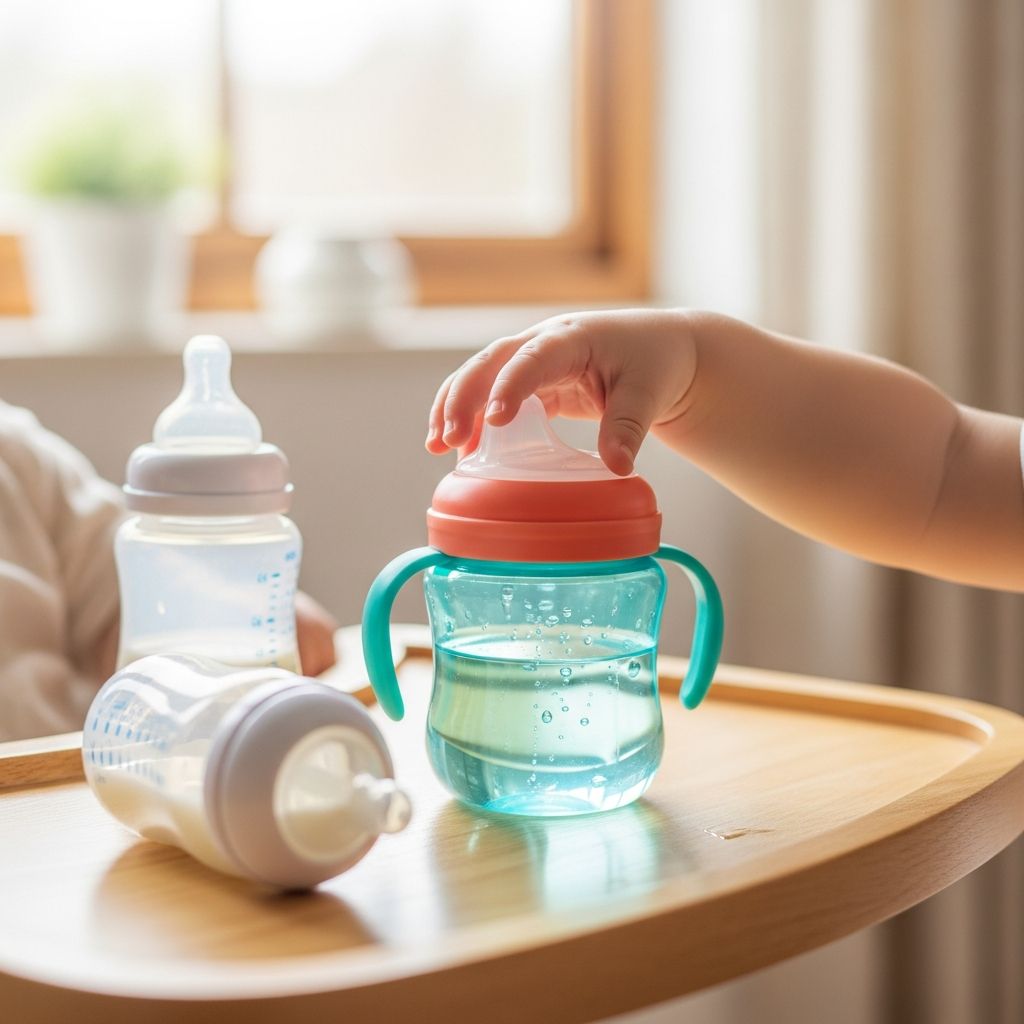
Select cups that match your child’s age and skills. Begin with soft-spouted sippy cups at 6 months for spill-proof practice, then progress to open cups or straw cups by 12 months to refine sipping muscles.
Make it engaging: opt for colorful, themed designs or allow sticker decoration for ownership. Model cup use by drinking from your own during family meals. Free-flow cups promote better oral development over prolonged sippy use.
Addressing Common Challenges During Transition
Resistance is normal, especially if bottles signify comfort. Replace with alternatives:
- Bedtime soothing: Extra hugs, lullabies, books, or a lovey.
- Emotional needs: Quality time through play, reading, or chores.
- Hunger cues: Offer solids or cup drinks promptly.
Praise every success lavishly to reinforce progress. If struggles persist, consult your pediatrician to rule out underlying issues.
Recommended Daily Fluid Intake by Age
Understanding limits prevents over-drinking. Here’s a guideline from health authorities:
| Age | Water | Juice | Milk |
|---|---|---|---|
| 6-12 Months | 4-8 oz (0.5-1 cup) | None | Breast milk or formula |
| 1-3 Years | 8-24 oz (1-3 cups) | <4 oz (0.5 cup) | 16 oz (2 cups) |
Long-Term Benefits of Early Weaning
Successful transitions yield healthier eaters with robust dental health, appropriate weight gain, and advanced self-feeding skills. Children weaned timely consume more nutrient-dense solids, supporting cognitive and physical growth. It also paves the way for mealtime independence, reducing parental stress.
Frequently Asked Questions (FAQs)
What if my child refuses the cup?
Persist with offers at every meal, demonstrate use, and experiment with types. Dilute bottles simultaneously to shift preference.
Can I wean while breastfeeding?
Yes, pumped milk in cups follows the same steps; direct breastfeeding continues unaffected.
Is it okay to use sippy cups long-term?
Limit to transition; switch to open cups by 18 months to avoid dental misalignment.
What about nighttime bottles?
Eliminate last, replacing with comforting routines to prevent cavities.
When should I seek professional help?
If weaning stalls past 18 months or accompanies growth issues, contact your GP or pediatrician.
References
- Weaning off the bottle — Raising Children Network. 2023. https://raisingchildren.net.au/babies/breastfeeding-bottle-feeding-solids/weaning/weaning-off-bottle-feeding
- From Bottle to Cup: Helping Your Child Make a Healthy Transition — American Academy of Pediatrics. 2024. https://www.healthychildren.org/English/ages-stages/baby/feeding-nutrition/Pages/Discontinuing-the-Bottle.aspx
- Stopping the Bottle — Nemours KidsHealth. 2023. https://kidshealth.org/en/parents/no-bottles.html
- Cup Training (Weaning From the Bottle) — Utah WIC. 2024. https://wic.utah.gov/families/nutrition-education/infants/cup-training-weaning-from-the-bottle/
- Bottle Weaning — Texas WIC. 2023. https://texaswic.org/health-nutrition/baby/bottle-weaning
- When Should Babies Stop Using Bottles? — Colgate (citing UCSF Benioff Children’s Hospital). 2024. https://www.colgate.com/en-us/oral-health/infant-oral-care/when-should-babies-stop-using-bottles