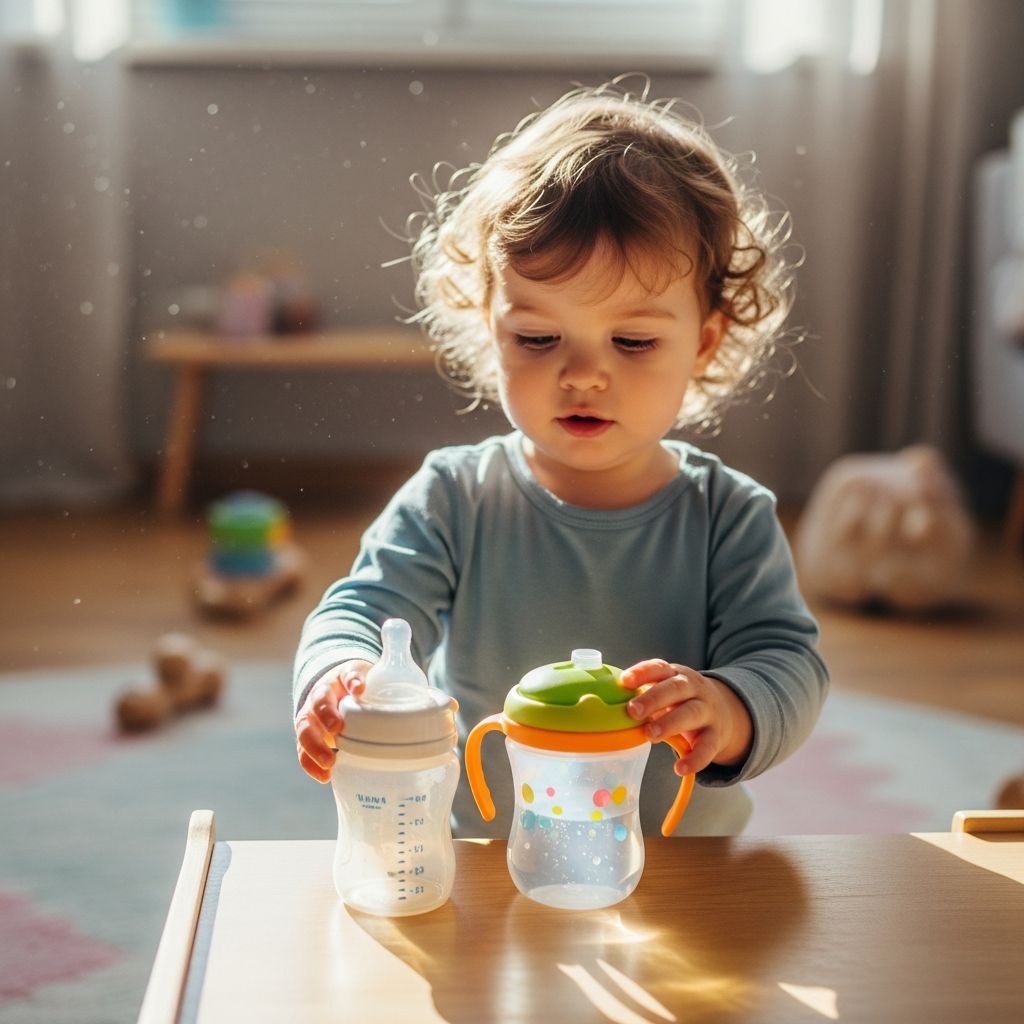
For many toddlers, the bottle is far more than a way to drink milk. It is comfort, routine, and a familiar friend at the end of a long day. Asking a young child to give that up can feel daunting, but with empathy, planning, and consistency, the transition can be surprisingly peaceful.
This guide offers a calm, connection-focused approach to helping your toddler move from bottle to cup. It avoids power struggles and prioritizes emotional safety, while still giving clear, practical steps you can start using right away.
Why Letting Go of the Bottle Matters
Before starting, it helps to understand why this change is worth the effort. When you are confident in your reasons, it is easier to stay calm and consistent when your toddler protests.
- Healthy teeth and mouth development: Ongoing bottle use, especially with milk or juice at night, can increase the risk of tooth decay and may affect how your toddler’s jaw and mouth muscles develop.
- Balanced nutrition: Children who rely heavily on bottles often fill up on milk instead of trying a variety of solid foods, which can limit exposure to new textures and nutrients.
- Sleep and self-soothing: Learning to fall asleep without a bottle supports healthier sleep habits and helps your child practise other ways to calm down, like cuddling, breathing deeply, or listening to a story.
Thinking of bottle weaning as a developmental step—rather than a battle to win—shifts the tone of the whole process.
Understanding Your Toddler’s Attachment to the Bottle
It is tempting to see bottle use as a simple habit, but for many toddlers it is deeply emotional. Recognizing what the bottle represents helps you plan a kinder transition.
- Comfort object: The bottle may function like a pacifier or a favorite blanket, signaling safety and closeness with you.
- Transition cue: For children who use bottles before naps or bedtime, drinking signals that sleep is coming and helps them wind down.
- Connection symbol: The bottle is often tied to cuddles and one-on-one attention, especially in busy households.
When you help your toddler give up the bottle, you are not just removing something; you are inviting them to use new ways to feel safe and connected. That is why it is so important to add new comforting rituals as you remove old ones.
Choosing Your Overall Approach
There is no single “right” way to do this. Families typically use one of three general approaches, or blend them depending on the child’s temperament and what is happening in life at the moment.
| Approach | How It Works | Best For | Possible Challenges |
|---|---|---|---|
| Gradual step-down | Reduce bottles one at a time over days or weeks, replacing each with a cup and extra comfort. | Most toddlers; parents who prefer gentle, slower changes. | Requires consistency; can be confusing if the plan keeps changing. |
| Quick or “cold-turkey” change | Stop offering bottles altogether after a chosen day and switch fully to cups. | Children who adapt quickly; families needing a clear, firm boundary. | Intense protests at first; needs strong follow-through and emotional support. |
| Hybrid method | Drop daytime bottles gradually, then remove bedtime or nap bottles more directly after new routines are established. | Children very attached to bedtime bottles; parents wanting balance of gentle and decisive steps. | More moving parts to track; important not to slide back to old routines. |
Whichever path you choose, success depends less on speed and more on two things: clear limits and strong emotional connection.
Preparing for a Smooth Transition
A little preparation reduces resistance and helps your toddler feel included in the process. Think of this as “setting the stage” before the main change begins.
Pick a low-stress window
- Avoid starting during big life changes, such as moving, a new sibling arriving, starting daycare, or a caregiver being away.
- Choose a time when you can offer extra patience, attention, and cuddles—perhaps a quiet week at home or a long weekend.
Talk about the change ahead of time
Even young toddlers benefit from simple, consistent explanations. You do not need long speeches; a brief, repeated message works best.
- Use short phrases like: “Bottles are for babies. You are getting bigger, so you will drink from cups now.”
- Keep your tone warm and calm, as if you are sharing good news rather than giving a punishment.
Introduce a “special cup”
- Let your child help choose a cup with a fun color or favorite character.
- Present it as a privilege of growing up: “This is your big-kid cup. We will use it for milk and water.”
For some toddlers, involving them in picking or decorating their cup (adding stickers, for example) increases their sense of control and makes the transition feel more exciting.
Gradual Daytime Weaning: A Gentle First Step
Starting with daytime bottles is often easier because children are more awake, distracted by play, and less emotionally fragile than at bedtime.
Step 1: Map the current routine
- Write down when your toddler usually has bottles: morning, before nap, afternoon, bedtime, night-wakings.
- Notice which bottles seem most about hunger and which are clearly about comfort or habit.
Step 2: Replace one bottle at a time
Begin with the bottle your child seems least attached to—often a midday or afternoon one.
- On day one, at that usual bottle time, offer milk or water in the special cup instead.
- Sit with your toddler, model sipping from your own cup, and offer extra warmth through eye contact and gentle conversation.
- If they protest, stay calm: “You really want your bottle. It is hard when things change. The bottle is finished now, but I will sit with you while you drink from your cup.”
Step 3: Stabilize before moving on
- Give a few days for your child to adjust to that first change before removing another bottle.
- Once the first replacement feels routine, move on to the next easiest bottle.
Many families follow an order such as: midday bottle first, then afternoon, then morning, leaving bedtime or nap bottles for later once your child is more familiar with cups.
Rethinking the Bedtime Bottle
For most toddlers, the bedtime bottle is the hardest to let go. It is often linked with cuddling, dim lights, and the transition from busy day to restful night.
Create a new soothing routine
Instead of simply removing the bottle and leaving a gap, build a new, predictable sequence that still feels cozy:
- Example bedtime flow: Bath → pajamas → brush teeth → books and cuddles → song or quiet talk → lights out.
- Keep the order the same each night so your child quickly learns what to expect.
- Include physical closeness—snuggling, back rubs, or holding hands—to replace the comfort the bottle once provided.
Move milk earlier
If your toddler is used to drinking milk right before sleep, you can shift that part of the routine instead of removing it immediately.
- Offer milk in a cup in the kitchen or living room, at the start of the bedtime routine rather than in bed.
- After milk, brush teeth so your child does not fall asleep with milk on their teeth.
- Then move into stories and cuddles in bed, without bringing drinks into the sleeping area.
Over several nights, this helps your toddler separate “milk” from “falling asleep,” making it easier to eventually skip the milk portion entirely if you choose.
Handling Big Feelings Without Going Backward
Even with a kind, thoughtful plan, some tears and protests are normal. Your response to those feelings has more impact than the specific schedule you follow.
Stay calm and confident
- Expect some resistance and plan your own self-care: take deep breaths, tag-team with another adult if possible, and remind yourself that your child is not being “bad”—they are grieving a familiar comfort.
- Hold the limit kindly: “I hear you. You want your bottle. The bottles are all done now. You can have milk in your cup, and I will stay with you.”
Offer extra connection
When toddlers lose a comfort item, they need more of you to fill that gap.
- Build in extra cuddles during the day so your child does not feel that closeness is disappearing along with the bottle.
- Use simple emotion words: “You are sad the bottles are gone.” Naming feelings helps children feel understood and less alone with their frustration.
Over time, if the rules stay consistent and connection remains strong, protests typically decrease, and the new routine starts to feel safe.
Practical Tips and Creative Tricks
Every child is unique, but the following ideas often make the experience smoother and more manageable.
- Keep bottles out of sight: Once you have decided which bottles are gone, store them where your toddler cannot see them. Visible bottles can trigger sudden cravings and arguments.
- Offer snacks strategically: If your child was getting many calories from bottles, they may be hungrier as you reduce them. Provide nutritious snacks at predictable times so hunger does not add to their upset.
- Use water, not milk, at night: If your toddler wakes asking for a bottle, you can slowly shift from milk to water and then fade out the night-time drink altogether.
- Introduce a new comfort item: A special stuffed animal, small pillow, or blanket can become part of the bedtime ritual as the bottle fades away.
- Celebrate progress: Notice small wins out loud: “You drank from your cup at snack time today! That is a big kid choice.”
Sample Transition Plan (Hybrid Approach)
The following is an example of how a family might phase out bottles over two to three weeks. This is just a template—feel free to adjust pace and order to fit your child.
| Days | Change | Notes |
|---|---|---|
| Days 1–3 | Replace midday bottle with cup. Keep all other bottles the same. | Sit with your toddler at this time, offer extra praise and cuddles. |
| Days 4–6 | Replace afternoon bottle with cup. Continue morning and bedtime bottles. | Introduce or strengthen bedtime routine (bath, books, snuggles). |
| Days 7–9 | Replace morning bottle with cup. Only bedtime bottle remains. | Offer a solid breakfast to balance fewer morning calories from milk. |
| Days 10–12 | Move bedtime milk into a cup earlier in the evening, then brush teeth. | No bottles in bed; maintain calm, predictable pre-sleep routine. |
| Days 13–14 | Stop offering bottles entirely. Use cups only. | Expect some protests; stay consistent and offer extra comfort. |
Some toddlers will adjust faster; others may need extra days at each step. The pace matters less than your ability to stay steady and connected.
Common Challenges and How to Respond
Parents often run into similar sticking points when helping toddlers give up the bottle. Here are some of the most frequent worries and ideas for handling them.
“My toddler refuses the cup and barely drinks”
- Offer drinks regularly throughout the day rather than pressuring them to finish a full cup at once.
- Try different cup styles (straw cups, open cups, or spout cups) to see what your child prefers.
- Remember that toddlers often drink more when they are relaxed and distracted, such as during meals or while sitting beside you.
“They scream for the bottle at bedtime”
- Hold your boundary firmly but kindly. It is usually more confusing if you give in some nights and not others.
- Increase bedtime connection: longer stories, gentle massage, or lying with them for a few extra minutes can soften the loss of the bottle.
- If your toddler is extremely distressed and sleep becomes unmanageable, it is acceptable to pause the process and try again in a week or two with a clearer plan.
“Grandparents or other caregivers keep using bottles”
- Share your plan with all caregivers in advance. Explain that consistency will help the child adjust faster, even if there are a few hard days at first.
- Provide alternative comfort tools—such as the special cup, a cozy blanket, or a familiar bedtime book—to caregivers so they can support the new routine.
Supporting Yourself as a Parent
This transition is a milestone for you as well as your child. It can stir up memories of babyhood and mixed feelings about your toddler growing more independent.
- Notice any guilt that arises and gently reframe it: you are not taking away comfort; you are guiding your child toward new skills and healthier habits.
- Talk with supportive friends, partners, or parent groups about your plan so you feel less alone in the process.
- Celebrate your own patience and effort, not just the end result. Even on bumpy days, showing up calmly for your child is an achievement.
FAQs About Toddlers and Bottle Weaning
1. When is a good age to start weaning from the bottle?
Many families begin easing away from bottles around the first birthday, but plenty of toddlers continue using them longer. What matters most is choosing a time when your child is reasonably well, life at home is relatively stable, and you feel ready to guide and support the change. If your child has been using bottles heavily past toddler age, it can still be helpful to shift now rather than waiting for a “perfect” moment that never comes.
2. Should we go cold turkey or gradual?
That depends on your child’s temperament and your own capacity. A slow, step-by-step approach usually works well for sensitive toddlers who struggle with abrupt changes. A more direct, all-at-once method may suit children who adapt quickly or families that find gradual change too confusing to maintain. If you are unsure, you can start gradually and, if your toddler seems to cling even harder with every small shift, consider a clearer cutoff point combined with extra emotional support.
3. Is it harmful if my toddler keeps one bottle at bedtime?
Keeping a single bedtime bottle for a while is common, and many families do this successfully as a transition step. The main concerns are dental health and sleep habits, especially if your child falls asleep with milk on their teeth or wakes repeatedly for refills. Moving the bottle earlier in the evening, brushing afterward, and building strong non-bottle sleep cues can reduce these risks and make it easier to retire that final bottle when both of you are ready.
4. What if my child eats less when we remove bottles?
It is normal for appetite to shift as liquid calories change. Toddlers may seem to eat less for a few days while they adapt to new routines. Offer regular meals and snacks with a variety of textures and food groups, and avoid pressuring them to clean their plate. If your child is energetic, growing steadily, and generally well, brief fluctuations are usually not cause for concern. For questions about growth or specific nutritional needs, consulting a pediatric professional is always wise.
5. Are pacifiers and bottles the same issue?
Pacifiers and bottles can both be powerful comfort tools, but they serve slightly different roles. The bottle combines comfort with nutrition and is more directly tied to dental health and eating patterns. Many of the same gentle weaning principles apply to pacifiers—clear limits, new comfort rituals, and emotional support—but it is often easier to tackle one change at a time. Some families address bottle use first, then revisit pacifiers once the new drinking routine is well established.
Final Thoughts
Helping a toddler give up the bottle is not just a logistical project; it is an emotional journey that asks both of you to grow. When you approach the transition with empathy, preparation, and calm consistency, your child learns more than how to drink from a cup. They also learn that change can feel hard and still be safe, that their big feelings are welcome, and that you will stay close and kind as they take each new step toward independence.