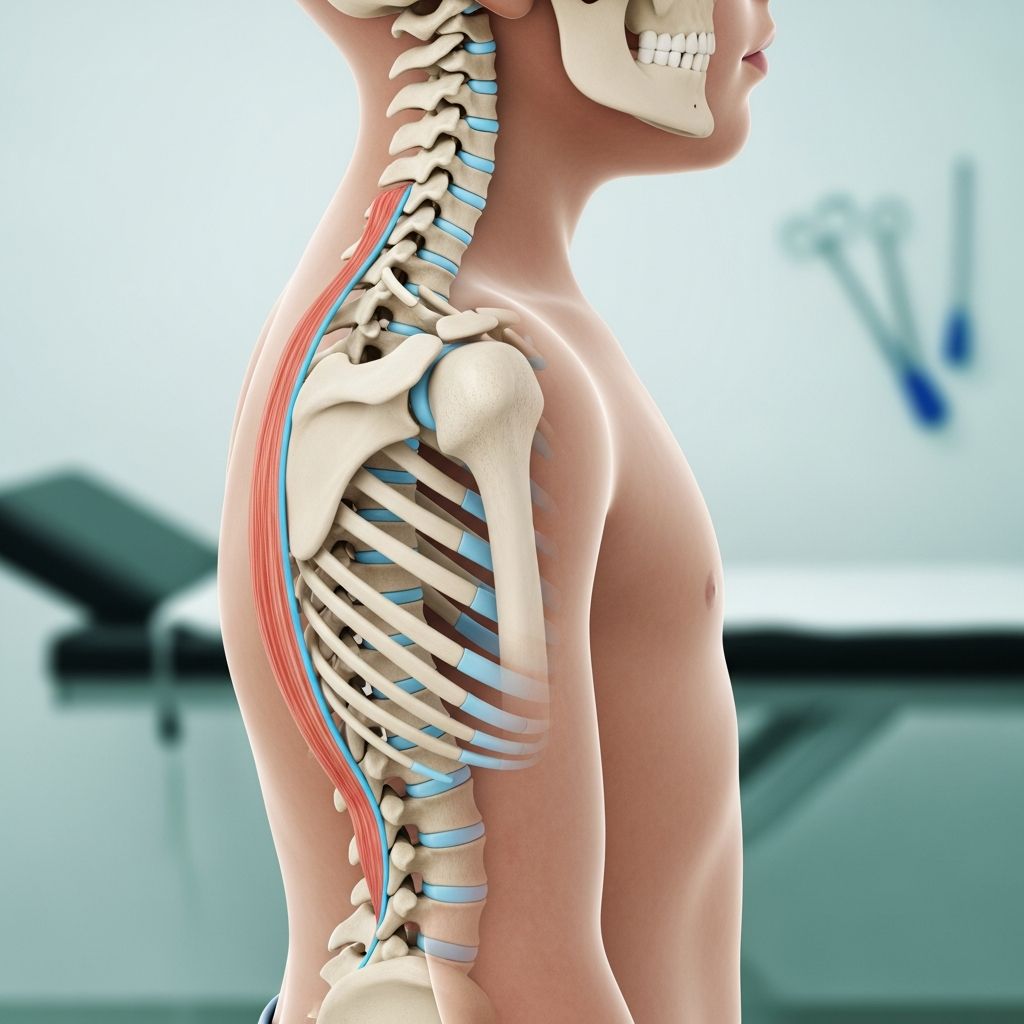
Kyphosis refers to an exaggerated forward curve in the spine’s thoracic region, leading to a rounded upper back appearance often described as a hunch. While a mild natural curve is normal, excessive kyphosis can affect posture, cause discomfort, and impact daily activities in children. This guide explores its forms, identification, management, and support for families, drawing from established medical knowledge.
Normal Spine Anatomy Versus Kyphosis
The human spine features natural curves: inward at the neck and lower back (lordosis) and outward at the mid-back (kyphosis), typically measuring 20-45 degrees. Kyphosis becomes problematic when this curve exceeds 50 degrees, creating visible rounding. In children, distinguishing normal growth variations from pathological changes is crucial for timely intervention.
- Thoracic kyphosis: Natural outward curve for balance and shock absorption.
- Hyperkyphosis: Abnormal excess, potentially flexible (postural) or rigid (structural).
- Impact on kids: Growth spurts during puberty can highlight or worsen curves.
Common Types Affecting Young People
Children’s kyphosis varies by cause and onset. Postural kyphosis stems from slouching habits and corrects with posture awareness. Structural forms are more fixed.
| Type | Description | Age of Onset | Key Features |
|---|---|---|---|
| Postural | Flexible rounding from poor habits | Any age | Corrects when lying down; no pain usually |
| Scheuermann’s (Juvenile) | Wedged vertebrae during growth | 10-15 years | Rigid curve >45 degrees; back pain common |
| Congenital | Birth defect in vertebrae formation | Infancy | Progressive; may involve neurology |
Scheuermann’s disease, the most frequent structural type in adolescents, involves irregular vertebral growth, leading to wedging and stiffness. Congenital cases arise from fetal spinal development issues, while nutritional deficiencies like vitamin D lack can contribute to rickets-related kyphosis.
Recognizing Early Warning Signs
Parents often spot kyphosis during growth spurts when clothing fits oddly or school screenings flag it. Key indicators include:
- Prominent shoulder blades or uneven shoulders.
- Rounded upper back unrelieved by standing tall.
- Mild to moderate back pain, worsening with activity.
- Fatigue after sitting or standing long periods.
- In severe instances: breathing issues or nerve-related leg weakness.
Children may not complain, mistaking it for growing pains, so vigilance during sports physicals or routine checkups is vital. Unlike scoliosis’s side bend, kyphosis appears frontally as forward stoop.
How Specialists Diagnose the Condition
Diagnosis starts with physical exams: observing standing/sitting posture, checking curve flexibility by lying supine—if it flattens, it’s likely postural.
- X-rays: Confirm curve degree (Cobb angle); assess vertebral shape.
- MRI/CT: For nerve compression or congenital anomalies.
- Bone scans: Rule out infection/tumors if pain persists.
Pediatric orthopedists use these to classify severity: mild (<60 degrees) often needs observation; moderate (60-75) bracing; severe (>75) surgery consideration. Early detection during puberty maximizes non-surgical success.
Non-Surgical Management Strategies
Most pediatric cases respond to conservative care, focusing on pain relief, curve stabilization, and habit correction.
Physical Therapy and Exercises
Targeted exercises strengthen back extensors, improve flexibility, and promote upright posture. Programs include:
- Wall angels: Sliding arms up/down against wall.
- Superman holds: Lying prone, lifting arms/legs.
- Cat-cow stretches: Alternating arching/rounding back.
Therapy twice weekly for 3-6 months yields measurable curve reduction in postural cases.
Bracing for Growing Kids
Custom braces worn 16-23 hours daily halt progression in Scheuermann’s during growth. Types include:
| Brace Type | Use Case | Duration |
|---|---|---|
| Milwaukee brace | Severe thoracic curves | Until skeletal maturity |
| Kyphologic brace | Moderate Scheuermann’s | 12-18 months |
| Nighttime extension brace | Mild cases | 8 hours nightly |
Compliance is key; studies show 70% curve stabilization with consistent use. Pain decreases notably within months.
Pain Management and Lifestyle Adjustments
NSAIDs like ibuprofen ease discomfort; ergonomic school bags and desks prevent worsening. Encourage swimming/yoga for low-impact strengthening.
When Surgery Becomes Necessary
Surgery is rare, reserved for curves >75 degrees, neurological deficits, or failed bracing. Procedures fuse vertebrae with rods/screws to straighten and stabilize.
- Posterior fusion: Most common; back incisions for hardware.
- Anterior/posterior combo: For rigid congenital kyphosis.
- Recovery: 6-12 months; bracing post-op; high success in pain relief (90%).
Risks include infection or rod breakage, but modern techniques minimize them. Timing aligns with growth end to avoid repeat operations.
Potential Long-Term Effects and Complications
Mild kyphosis rarely causes issues, but severe untreated cases risk:
- Chronic pain from muscle strain.
- Reduced lung capacity compressing chest.
- Nerve impingement: Numbness, weakness, incontinence.
- Psychosocial: Self-esteem dips from appearance.
Early treatment averts most; adults with childhood kyphosis often lead active lives post-correction.
Prevention Tips for Families
While structural types aren’t fully preventable, habits matter:
- Promote active posture from toddlerhood.
- Limit screen slouching; use standing desks.
- Ensure balanced nutrition (calcium/vitamin D) for bone health.
- Annual pediatric exams catch issues early.
School scoliosis screens often detect kyphosis too—follow up promptly.
Supporting Your Child Emotionally
Appearance changes can affect confidence, especially teens. Open talks, peer support groups, and counseling help. Celebrate therapy wins to build resilience.
Frequently Asked Questions (FAQs)
Can kyphosis resolve without treatment?
Postural kyphosis often improves with exercises and awareness; structural needs monitoring/bracing.
Does it affect height?
Severe curves may slightly reduce height; correction restores it.
Is it hereditary?
Scheuermann’s has genetic links; congenital is developmental.
When to worry about back pain?
If persistent, with curve or breathing issues, seek orthopedic eval.
Can sports worsen it?
Contact sports risky for severe cases; low-impact recommended.
References
- Kyphosis – StatPearls — NCBI Bookshelf / NIH. 2023-10-25. https://www.ncbi.nlm.nih.gov/books/NBK558945/
- Kyphosis — NHS. 2023-06-12. https://www.nhs.uk/conditions/kyphosis/
- Kyphosis: MedlinePlus Medical Encyclopedia — MedlinePlus / NIH. 2024-01-15. https://medlineplus.gov/ency/article/001240.htm
- Scheuermann’s Kyphosis — Nemours KidsHealth. 2023-11-01. https://kidshealth.org/en/parents/scheuermann-kyphosis.html
- Kyphosis: What It Is, Causes, Symptoms, Types & Treatment — Cleveland Clinic. 2024-02-20. https://my.clevelandclinic.org/health/diseases/17671-kyphosis
- Kyphosis — Northwestern Medicine. 2023-09-10. https://www.nm.org/conditions-and-care-areas/orthopaedics/kyphosis